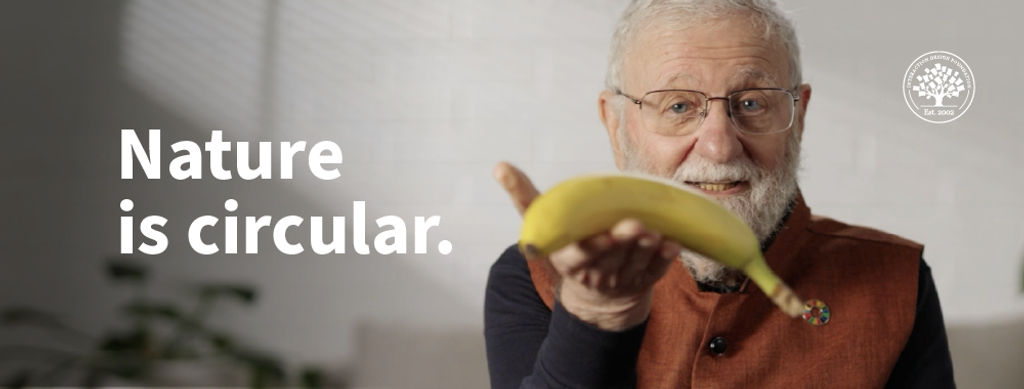
Circular Design

Your constantly-updated definition of Circular Design and collection of videos and articles.
Be a conversation starter: Share this page and inspire others!

98 Shares

What is Circular Design?

Circular design is the practice of creating durable, reusable, repairable and recyclable products that generate zero waste to support a circular economy.

Transcript

In circular design, designers consider all stages of a product's lifecycle and ensure that it is sustainable from manufacturing to disposal. Some examples of the decisions involved in circular design are:

  • Raw material: what is the source material, and how can we extract it sustainably?

  • Product specifications: is the product reusable, repairable and recyclable?

  • Manufacturing process: is it energy-efficient, and does it generate any waste?

  • Distribution and use: How much energy does it take to deliver and use the product/service? Where does this energy come from?

  • Disposal: Can the product be dismantled? Can we use the parts as-is in the manufacturing process again? Can we return the raw materials to the earth?
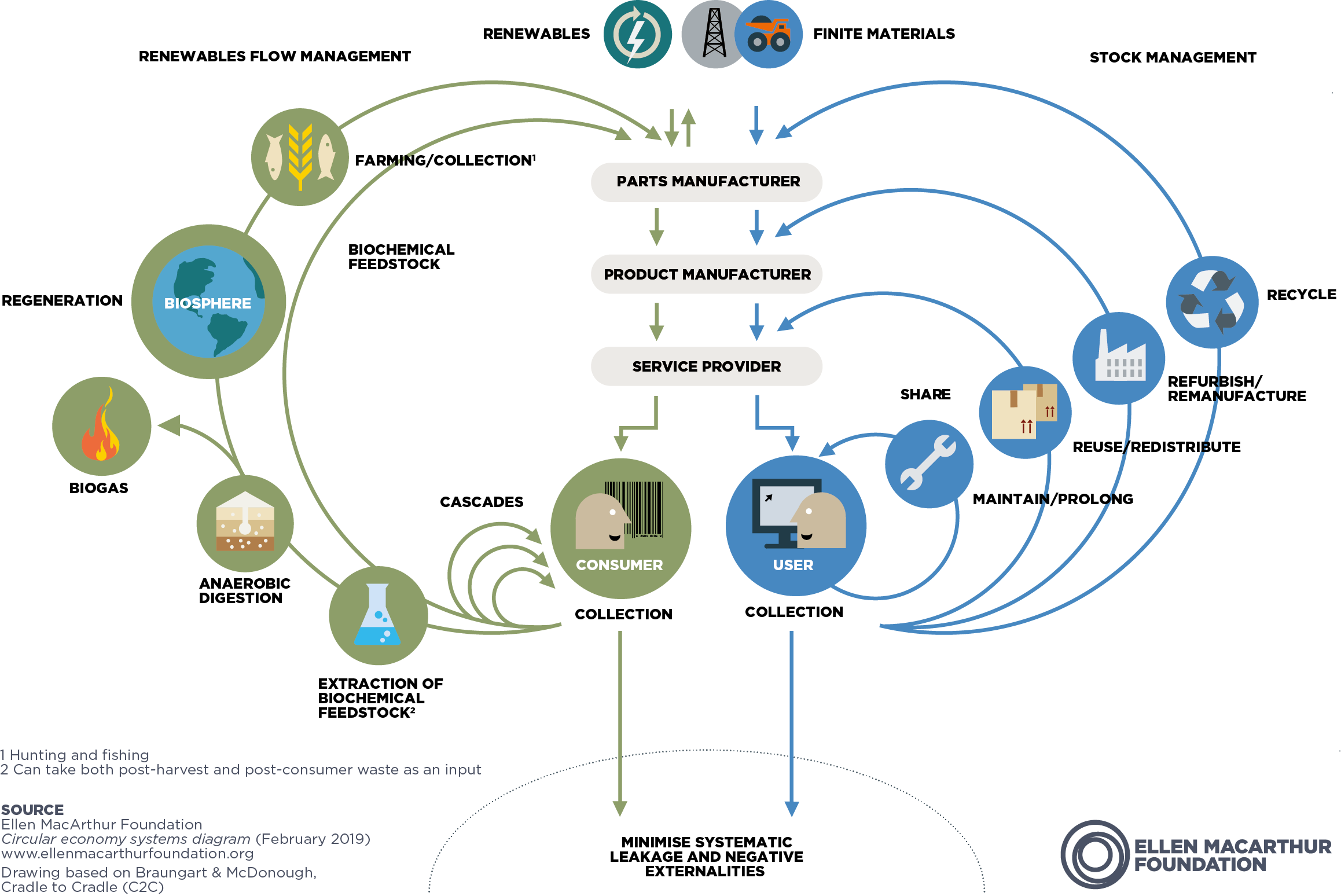
The circular economy butterfly diagram by the Ellen MacArthur Foundation illustrates how circular design minimizes waste while working with renewable and non-renewable materials.

© Ellen MacArthur Foundation, Fair Use

The Three Principles of Circular Design

  1. Eliminate waste and pollution, including toxic substances that harm the soil and water and reduce emissions. Almost every product generates waste, so we need to redesign everything. Design plays a key role here.

  2. Circulate products and materials at their highest value for as long as possible. A recycled product must be energy-efficient in the recycling process. Further, recycling should not result in a substantially inferior product. For example, we can build machines to last a long time and be dismantlable so manufacturers/service providers can easily repair their parts and reuse them in new products. They should be recyclable so that we do not mine more resources from the earth.

  3. Regenerate natural systems by returning natural resources to the earth. For example, we can convert food waste to compost and return it to the soil to regenerate farmlands.

Circular design sounds overwhelming. However, UX pioneer Don Norman explains that we can seek inspiration from nature. Nature creates, packages, delivers and disposes off materials with zero waste. 

Circular design isn't easy, but it’s possible. Here's how we can start:

  1. Learn about different materials and new techniques to manufacture.

  2. Shift from a product mindset to a system mindset.

  3. Transform business models from selling products to selling services and experiences.

Circular design is essential to create a circular economy and, ultimately, a healthy, life-sustaining planet. Given the precarious state of the planet, it is imperative that we adopt circular design as fast as possible and secure a better future.

The good news is that as a designer, you already have many of the skills needed to practice circular design. To know how you can leverage your design knowledge and skills and take the first steps to create circular designs, take the course Design For a Better World with Don Norman

Questions About Circular Design?
We've Got Answers!

How does circular design differ from traditional design?

Circular design differs from traditional design by focusing on sustainability and reuse rather than a linear “take, make, dispose” model.

Here’s how they compare:

  • Traditional design follows a linear process—materials are extracted, products are created, used, and then they’re discarded as waste.

  • Circular design creates closed loops where products, components, and materials get reused, repaired, or recycled instead of being thrown away.

For example, Fairphone designs modular smartphones where users can replace parts instead of buying a new device. In contrast, traditional smartphones often become electronic waste when a single component fails.

By adopting circular design, companies reduce waste, lower costs, and create more sustainable products.

For more on circular design, take our course: Design For a Better World with Don Norman.

Watch as the Godfather of UX Design, Don Norman explains important points about circular design:

Transcript

What are the main principles of circular design?

Circular design focuses on sustainability by keeping products, materials, and resources in use for as long as possible. It follows these key principles:

  • Design for durability—Create products that last longer and withstand wear and tear.

  • Reuse and repair—Make components easy to fix, replace, or repurpose instead of discarding them.

  • Recycling and material recovery—Use materials that can be broken down and reprocessed into new products.

  • Regenerative resources—Prioritize renewable, biodegradable, or non-toxic materials to minimize environmental impact.

  • Modularity and adaptability—Design products with interchangeable parts so users can upgrade or customize instead of replacing them entirely.

  • Closed-loop systems—Ensure materials stay in continuous cycles of use rather than ending up as waste.

For example, Patagonia designs clothing with recycled fabrics and offers repairs to extend product life. IKEA experiments with furniture rental programs to keep products in circulation.

By following these principles, designers create more sustainable, cost-effective, and environmentally friendly solutions for users—and for the planet.

For more on circular design, take our course: Design For a Better World with Don Norman.

Watch as the Godfather of UX Design, Don Norman explains important points about circular design:

Transcript

How does circular design support a circular economy?

Circular design keeps products and materials in use longer—thereby reducing waste and supporting a circular economy. Instead of the traditional “take, make, dispose” model, it focuses on reuse, repair, and recycling.

By designing durable and repairable products, brands reduce the need for constant replacement. Modular designs let users upgrade or replace parts instead of discarding entire products. Using recycled or biodegradable materials lowers waste, conserves resources, and helps safeguard the future of the environment.

Businesses benefit, too. Circular design cuts production costs by reusing materials and creates new revenue streams through take-back programs or refurbishing services. Brands like Patagonia repair clothing, and Fairphone makes modular smartphones to extend their lifespan.

A circular economy thrives when companies design with sustainability in mind. Fewer resources go to waste, and products stay valuable longer. This approach reduces environmental impact while driving innovation and long-term growth.

Watch as Don Norman explains important points about the circular economy:

Transcript

Enjoy our Master Class, Exclusive: Design for a Better World, a Discussion with Don Norman, Founding Director – Design Lab, University of California, San Diego. Co-Founder, Nielsen Norman Group.

How do designers create products that last longer?

Designers create long-lasting products by focusing on durability, repairability, and timeless design.

They choose strong, high-quality materials that resist wear and tear. Reinforced stitching, scratch-resistant coatings, and weatherproof materials help products stay functional over time.

They also design for easy repairs. Modular components let users replace or upgrade parts instead of having to throw the whole product away. Brands like Fairphone and Patagonia make repair kits and replacement parts available to extend product life.

Timeless design plays a role, too. Avoiding trendy styles and unnecessary complexity ensures products remain useful and desirable for years—long after fads have passed.

Last, but not least, designers test products extensively. They simulate real-world conditions to ensure longevity—whether it’s stress-testing a phone’s battery or durability-testing a shoe’s sole.

By prioritizing these factors, designers reduce waste, save consumers money, and create sustainable, high-value products.

Watch as Don Norman explains important points about the circular economy:

Transcript

Take our course: Design For a Better World with Don Norman.
What are some examples of circular design?

Circular design focuses on sustainability by keeping products and materials in use longer. Here are some real-world examples:

  • Fairphone—A modular smartphone with replaceable parts, letting users repair or upgrade instead of replacing the entire device.

  • Patagonia Worn Wear—A program that repairs and resells used clothing, reducing waste and extending product life.

  • Adidas Futurecraft Loop—A fully recyclable sneaker designed to be remade into new shoes at the end of its life.

  • Loop by TerraCycle—A zero-waste shopping platform that delivers products in reusable packaging, which customers return for cleaning and reuse.

These designs reduce waste, conserve resources, and support a circular economy. By prioritizing durability, repairability, and recyclability, brands—and the designers who take the initiative to design circularly—create more sustainable products that benefit both consumers and the environment.

Read Fairphone’s story.

Watch as Don Norman explains important points about the circular economy:

Transcript

How can UX designers support circular design?

UX designers can support circular design by making sustainability easy and intuitive for users.

“Circular designers” can create interfaces that encourage repair and reuse—like clear step-by-step repair guides or product tracking apps that show when maintenance is needed. Brands like Fairphone provide user-friendly repair instructions to extend product life.

They can create seamless return and recycling experiences, too. Simple take-back programs, easy-to-find drop-off locations, and reminders for recycling make sustainable choices effortless. IKEA’s Buy Back & Resell program, for example, makes returning used furniture straightforward.

UX designers use nudges and incentives to promote circular behavior. Gamification, rewards for recycling, or clear eco-impact stats help users make greener choices.

By designing for durability, reuse, and recycling, UX designers help businesses and consumers transition to a circular economy. They make sustainability not just possible—but easy and enjoyable, too, and a great way ahead.

Take our course: Design For a Better World with Don Norman.
Watch as Don Norman explains important points about circular design:

Transcript

What are the biggest challenges in circular design?

Circular design faces challenges that make implementation difficult for businesses and designers.

  • High production costs—Durable, repairable, and recyclable materials often cost more than their traditional “counterparts.”

  • Consumer habits—Many people still prefer convenience over sustainability, choosing cheap, disposable products instead of long-lasting ones.

  • Complex supply chains—Designing for reuse and recycling requires tracking materials across a product’s entire lifecycle, which adds complexity to the process.

  • Limited infrastructure—Many regions lack proper recycling, repair, and take-back systems, making circular products (ironically) harder to sustain.

  • Company resistance—Some businesses hesitate to adopt circular models because they rely on frequent product sales for revenue, another major “obstacle.”

Despite these challenges, brands like Fairphone, Patagonia, and IKEA show that circular design can work with the right strategies. Educating consumers, improving recycling systems, and shifting business models toward reuse and repair will help overcome these barriers and make brands more “circular” in a circular economy.

Watch as Don Norman explains important points about the circular economy:

Transcript

Take our course: Design For a Better World with Don Norman.
What are some highly cited scientific articles about circular design?

de Jesus, A., & Mendonça, S. (2018). Lost in transition? Drivers and barriers in the eco-innovation road to the circular economy. Ecological Economics, 145, 75–89.

This paper examines the transition toward a Circular Economy (CE) by analyzing the role of Eco-Innovation (EI). The authors use a dual approach, leveraging both academic literature and policy reports, to identify key drivers and barriers in this shift. The study finds that soft factors—such as institutional, regulatory, and market-driven forces—support the transition, while hard barriers—such as technological constraints, economic lock-ins, and infrastructure limitations—impede it. By adopting a systemic innovation perspective, the authors provide an evidence-based framework for policymakers and businesses. This work is significant in understanding how transformative innovation can facilitate structural economic changes toward sustainability and resilience.

Tecchio, P., McAlister, C., Mathieux, F., & Ardente, F. (2017). In search of standards to support circularity in product policies: A systematic approach. Journal of Cleaner Production, 168, 1533–1546.

This paper addresses a critical barrier to the Circular Economy (CE)—the lack of standardized metrics and requirements for resource efficiency in EU product policies. The authors propose a systematic framework to identify standardization needs, ensuring material efficiency requirements are effectively integrated into policy. By categorizing material efficiency into key policy goals—embodied impact reduction, lifetime extension, and residual waste reduction—the study provides a structured approach to sustainable engineering. The framework, tested on electronic displays and washing machines, highlights the role of industry, policymakers, and researchers in shaping CE standards. This research is essential for developing regulations that drive sustainable product design and waste minimization.

McDonough, W., & Braungart, M. (2002). Cradle to Cradle: Remaking the Way We Make Things. North Point Press.

This seminal work challenges traditional manufacturing processes by advocating for a circular approach where products are designed for continuous reuse, either as biological or technical nutrients. The authors propose a paradigm shift from the linear "cradle-to-grave" model to a regenerative "cradle-to-cradle" framework, influencing sustainable design and industrial ecology.

Charter, M. (Ed.). (2019). Designing for the Circular Economy. Routledge.

This comprehensive collection explores strategies and methodologies for integrating circular economy principles into product and service design. It addresses topics such as sustainable materials, business models, and design innovation, providing practical insights for professionals aiming to implement circular practices.

How do regulations affect circular design?

Regulations play a massive role in circular design by pushing companies to reduce waste, improve sustainability, and design for longevity.

  • Right-to-repair laws—Call for companies to make spare parts, repair manuals, and tools available so consumers can fix products instead of replacing them.

  • Recycling mandates—Make manufacturers use recyclable materials and take responsibility for product disposal. Many countries require electronics and packaging to be recyclable.

  • Eco-labeling requirements—Ensure transparency by requiring businesses to disclose environmental impact, helping consumers make informed choices.

  • Bans on single-use plastics—Push companies to design reusable or biodegradable alternatives.

  • Extended Producer Responsibility (EPR)—Hold companies accountable for a product’s entire lifecycle, encouraging better design and material choices.

For example, the EU’s Circular Economy Action Plan drives sustainable product design across industries. Regulations like these encourage companies to adopt circular practices, benefiting both consumers and the environment.

Read this piece about how the EU’s circular action plan paves the way for a cleaner and more competitive Europe.

Earn a Gift Earn a Gift, Answer a Short Quiz!

1
2
3
4
1
2
3
4
Question 1
Question 2
Question 3
Get Your Gift
Interaction Design Foundation logo

Question 1

What is the primary goal of circular design?

1 point towards your gift

  • To create products that generate zero waste and support a circular economy.
  • To focus solely on aesthetic appeal in product design.
  • To produce high-cost products that are economically viable.
Interaction Design Foundation logo

Question 2

Which of the following is NOT one of the three principles of circular design?

1 point towards your gift

  • Circulate products and materials at their highest value for as long as possible.
  • Eliminate waste and pollution from the design process.
  • Make sure that all products are made from non-renewable resources.
Interaction Design Foundation logo

Question 3

How does circular design influence the manufacturing process of products?

1 point towards your gift

  • It ensures the process is energy-efficient and generates minimal waste.
  • It focuses on rapid production regardless of the waste it generates.
  • It maximizes the use of energy-intensive processes.

Learn More About Circular Design

Make learning as easy as watching Netflix: Learn more about Circular Design by taking the online IxDF Course Design for a Better World with Don Norman.
Why? Because design skills make you valuable. In any job. Any industry.

In This Course, You'll

  • Get excited when you use humanity-centered design to improve lives and solve global challenges. Don Norman's insights aren't just game-changing, they're world-changing. Between 2030 and 2050, the climate crisis is projected to cause about 250,000 additional deaths every year. This course gives you the tools to use Design Thinking and timeless, human-centered skills to drive positive change and shape a more sustainable future. You'll learn to solve real-world problems like climate change, inequality, wars, and waste. You'll get the confidence and practical methods to create solutions that make a real impact, locally and globally.

  • Make yourself invaluable with in-demand skills to tackle both small and large-scale projects. You'll discover how to mobilize people towards common goals, overcome resistance to change, and move into leadership roles that influence systemic change. This course will give you the tools to solve complex socio-technical problems in any industry. You'll position yourself as an expert in eco-friendly solutions. You'll learn how to drive lasting business success with circular design solutions that reverse harm and design a better world.

  • Gain confidence and credibility as you use design as a way of thinking to influence entire ecosystems! No matter your background, you'll apply your new skills from day one. Step-by-step, you'll learn to apply incremental modular design, measure what truly matters, and incorporate AI into your work. You'll master timeless human-centered skills like empathy, ethics, systems thinking, creativity, and deep societal insight that form the foundation of humanity-centered design. As AI accelerates ideation, prototyping, and simulation in complex challenges, these uniquely human perspectives become even more powerful: They turn AI into your superpower for creating meaningful, ethical, and genuinely sustainable design outcomes that only your human insight can deliver. It's easier than you think! The optional portfolio case study helps you identify organizations that truly make a difference, and quickly spot those that are merely superficial. With downloadable templates and guided projects, the Design for a Better World course gives you the tools to build real expertise and create solutions that make a difference.

It's Easy to Fast-Track Your Career with the World's Best Experts

Master complex skills effortlessly with proven best practices and toolkits directly from the world's top design experts. Meet your expert for this course:

  • Don Norman: Father of User Experience (UX) Design, author of the legendary book “The Design of Everyday Things,” co-founder of the Nielsen Norman Group, and former VP of the Advanced Technology Group of Apple.

Get an Industry-Recognized IxDF Course Certificate

Increase your credibility, salary potential and job opportunities by showing credible evidence of your skills.

IxDF Course Certificates set the industry gold standard. Add them to your LinkedIn profile, resumé, and job applications.

Course Certificate Example

Be in distinguished company, alongside industry leaders who train their teams with the IxDF and trust IxDF Course Certificates.

Our clients: IBM, HP, Adobe, GE, Accenture, Allianz, Phillips, Deezer, Capgemin, Mcafee, SAP, Telenor, Cigna, British Parliament, State of New York

All Free IxDF Articles on Circular Design

Read full article
Use Circular Design To Reverse Harm - Article hero image
Interaction Design Foundation logo

Use Circular Design To Reverse Harm

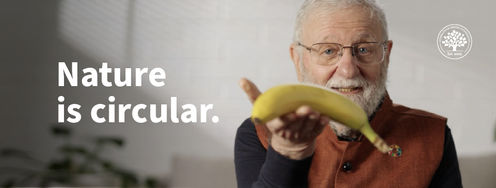
Nature is circular. Nothing ever goes to waste. The banana peel we discard degrades into nutritious compost for plants. Even the remains of deceased animals and humans disintegrate into the soil. Human engineering and design, on the other hand, are linear processes. And that has put us on a one-way

Social shares
417
Published
Read Article

Use Circular Design To Reverse Harm

Use Circular Design To Reverse Harm

Nature is circular. Nothing ever goes to waste. The banana peel we discard degrades into nutritious compost for plants. Even the remains of deceased animals and humans disintegrate into the soil. Human engineering and design, on the other hand, are linear processes. And that has put us on a one-way highway to a global wasteland. How can we move from linear economies to a more natural, circular one? Grand old man of UX design, Don Norman answers in this video.

Transcript

Circular Design

The circular economy requires circular design. The three principles of circular design are:

  1. Eliminate waste and pollution, including toxic substances that harm the soil and water and reduce emissions. Design plays a key role here. Almost every product generates waste, and so we need to redesign everything. 

  2. Circulate products and materials at their highest value for as long as possible. For example, we can build machines to last a long time and be dismantlable so their parts can be repaired easily and reused in new products. They should be recyclable so that no more resources are mined from the earth.

  3. Regenerate natural systems by returning natural resources to the earth. For example, food waste can help regenerate farmlands.

The circular economy butterfly diagram by the Ellen MacArthur Foundation illustrates how we can minimize waste using both renewable and non-renewable materials.

© Ellen MacArthur Foundation, Fair Use

The Take Away

Today, we have a linear economy. We collect raw materials from the earth, and we transform the raw materials into products which we sell to consumers. When the products are not working any longer or when they’re not trendy anymore, we consumers discard them as waste. 

A circular economy generates zero waste. Once a component enters the cycle, it continues to be used for a long time. And once it is unusable, it can degrade naturally.

To create a circular economy, people from different disciplines must work together, think strategically about materials, and ensure they are reusable. Sustainable design is paramount. Today, manufacturers combine different natural materials to create artificial materials. While the original components of these new materials degrade naturally, the artificial ones, once made, cannot be unmade. One of the biggest challenges is the conflict between circular manufacturing and aesthetics. In an attempt to make something that's small, thin and lightweight, companies have made it impossible to reuse materials because they've combined them in ways that are difficult or even impossible to separate. This conflict between aesthetics and circularity is challenging, but with concerted action, an excellent opportunity for businesses. 

References and Where to Learn More

Learn more about circular design in Don Norman’s book Design for a Better World: Meaningful, Sustainable, Humanity Centered.

Additional resources from the book “Design for a Better World” are available at the Resources for DBW website.

Read more articles and essays by Don Norman on JND.org.

Watch this video interview with Dame Ellen MacArthur on What is a circular economy? (~10 minutes)

See more about Circular Economy here.

Feel Stuck?
Want Better Job Options?

AI is replacing jobs everywhere, yet design jobs are booming with a projected 45% job growth. With design skills, you can create products and services people love. More love means more impact and greater salary potential.

At IxDF, we help you from your first course to your next job, all in one place.

See How Design Skills Turn Into Job Options
Privacy Settings
By using this site, you accept our Cookie Policy and Terms of Use.
Customize
Accept all

Be the One Who Inspires

People remember who shares great ideas.

Share on:

Academic Credibility — On Autopilot

Don't waste time googling citation formats. Just copy, paste and look legit in seconds.