A circular economy is an economic system that keeps resources in use for as long as possible. Materials are recycled, reused, made renewable or regenerated to reduce waste.
An ideal circular economy should have renewable energy and products that reduce the use of non-renewable materials. As opposed to unusable waste, circular disposal methods generate new resources. For example, compost from food scraps creates new soil to grow crops. If non-renewable resources are used, the products should be kept functional as long as possible through repair, recycling and remanufacturing.
Circular economies are the key to sustainable and resilient societies, driven by principles of sustainable design. These practices can heal, or at least not actively harm, the ecosystem. A circular economy puts less strain on the ecosystem and creates a reliable source of resources for generations.
This model seeks to reduce or eliminate unsustainable practices like deforestation or strip mines. These systems can better avoid shortages and societal collapses when resources run out.
However, the goal in the short term is to create economies that can become more circular, even if a perfectly circular economy isn’t able to be implemented.
How Do We Make a Circular Economy?
Many elements go into the transition to a circular economy, and it won't happen in a single day. Government incentives and other policy changes can help businesses justify more circular business practices, such as taxes on waste or incentives for renewable energy. Governments can pass and maintain right-to-repair laws that allow people a legal means to repair their products, which increases the product's overall lifespan. But what does a circular economy look like?
The circular economy butterfly diagram by the Ellen MacArthur Foundation is an excellent example of how a circular economy should look. This diagram demonstrates how each stage of a product can use recycled or reused materials to manage resources better.
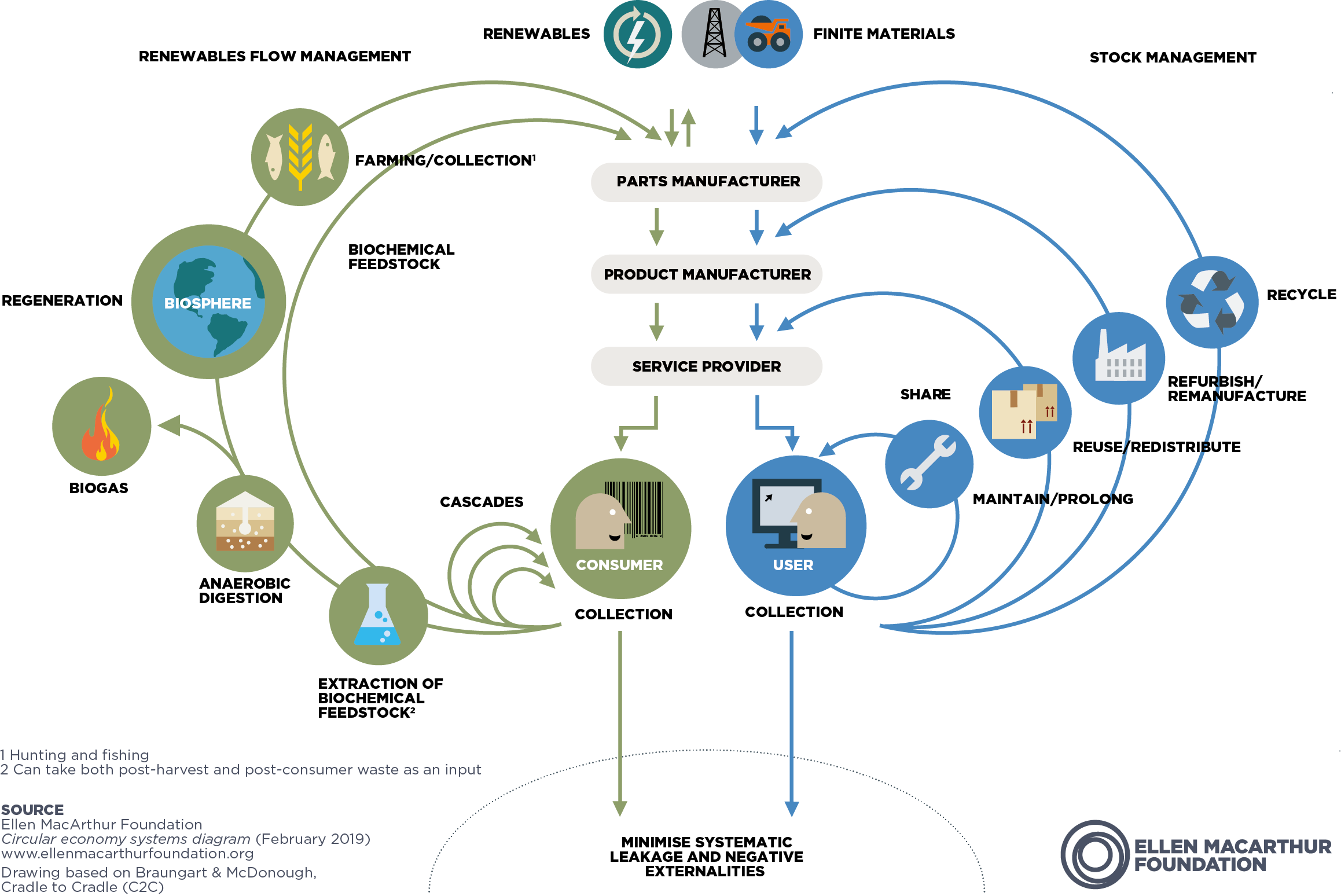
The circular economy butterfly diagram by the Ellen MacArthur Foundation illustrates how we can minimize waste using both renewable and non-renewable materials.
© Ellen MacArthur Foundation, Fair Use
For regenerating resources, like food or wood, disposal makes new material, usually through decomposition. Artificial Intelligence (AI) can optimize these processes by enhancing resource recovery and recycling efficiency. Processes like chemical treatment or composting accelerate this process and make materials useful more quickly.
Finite materials like iron or copper need to be recycled into raw materials and returned to the parts manufacturers to make more products again.
Product manufacturers can refurbish or remake broken products to maintain the use of the product for far longer. Incremental modular design can enable easy upgrades and repairs.
Service providers can coordinate ways to reuse or redistribute working products to those who need them. If products are easy and legal to repair, end users can use the product for as long as possible.
All of these reduce waste and maximize the usage of every scrap of material.
It’s important to remember that lasting change doesn’t happen overnight. Every effort we can make to make it more circular will make an impact. Designers and professionals from all backgrounds must work together to reform our economy in bits and pieces to create a sustainable economy for countless generations.
What is a Circular Design?
Like many complex, large-scale solutions, a circular economy requires designers to apply human-centered design principles for user-friendly and effective solutions. Circular designs support a more circular economy with durable, reusable, repairable, and recyclable products.
To create a circular product, designers should consider a product's entire lifecycle, from raw material to distribution, use, disposal, and reuse. This way, designers can create a positive environmental and social impact at every stage.
Designers should consider using organic, renewable materials in physical products. We can also help design means of reusing or recycling material into new products.
Even digital products can help create a circular economy. Designers can push to support older devices and combat forced obsolescence, which causes waste.
Energy-efficient software can reduce energy usage in a variety of digital devices. The apps we choose to design can promote other types of reuse, like online thrift stores, and educate people about recycling. Even intangible products can be greener and help design a better world.
The Principles of Circular Design
The circular economy requires circular design. The three principles of circular design are:
Eliminate waste and pollution, including toxic substances that harm the soil and water and reduce emissions. Design plays a key role here. Almost every product generates waste, so we need to redesign everything.
Circulate products and materials at their highest value for as long as possible. For example, we can build machines to be long-lasting and easy to take apart and repair with reusable parts. These recyclable materials reduce the need for metal mines, which can harm our ecosystem.
Regenerate natural systems by returning natural resources to the earth. For example, food waste can help regenerate farmlands.
Examples of Circular Design
Several companies have leveraged circular design practices to preserve resources and reduce waste. While not circular economies unto themselves, they contribute to a more circular system overall. Here are a few notable examples:
Kalundborg, Denmark, has established an industrial symbiosis network. These companies exchange waste and by-products, which can be valuable resources for other industries. For example, excess steam and hot water from a power plant are used by nearby factories to reduce energy consumption.
Copenhagen, Denmark, has adopted policy changes and infrastructure to promote a circular economy by recycling and reducing waste with organizational innovation and public-private innovation (PPI) partnerships.
Patagonia, a clothing manufacturer, encourages customers to repair and reuse their products with repair services and guides. This approach extends the life cycle of their products and reduces the need for new purchases.
Platforms like Lyft and Uber let people share vehicles for transportation, which reduces the need for cars. This approach reduces the overall demand for automotive manufacturing and parking lots. Airbnb has a similar approach to accommodations, which reduces the need to build hotels.
Interface, a carpet manufacturer, has implemented closed-loop recycling systems. They remove old carpets, separate the fibers, and use them as raw materials for new carpet production. This process reduces material demand and keeps resources in circulation.
These examples highlight different circular economy aspects and demonstrate innovative approaches across various industries and sectors.
Designers and professionals from all backgrounds must work together to reform our economy in bits and pieces. Only then can we have a fair and sustainable economy for countless generations.