Agile design is a flexible and iterative approach that applies Agile principles to the realm of design and user experience. This methodology comes from the Agile framework, which emphasizes adaptability, collaboration and customer feedback. Agile design diverges from traditional design processes as it incorporates a mindset of managing unpredictability and complexity in project environments.
UX Designer and Author of Build Better Products and UX for Lean Startups, Laura Klein explains why Agile methods emerged in design:
Why is Agile Design Important?
Agile design is a dynamic approach to design work that values flexibility, collaboration and customer feedback. It is valuable for UX (user experience) designers in various ways. This process integrates UX design in Agile methodologies and enables teams to iterate quickly on design projects in alignment with Agile development and UI/UX design principles. When organizations adopt Agile and UX design, they can create user-centric products that they can adapt to changing requirements. They can also enhance the UX design Agile process as they work in well-informed, frequent design sprints.
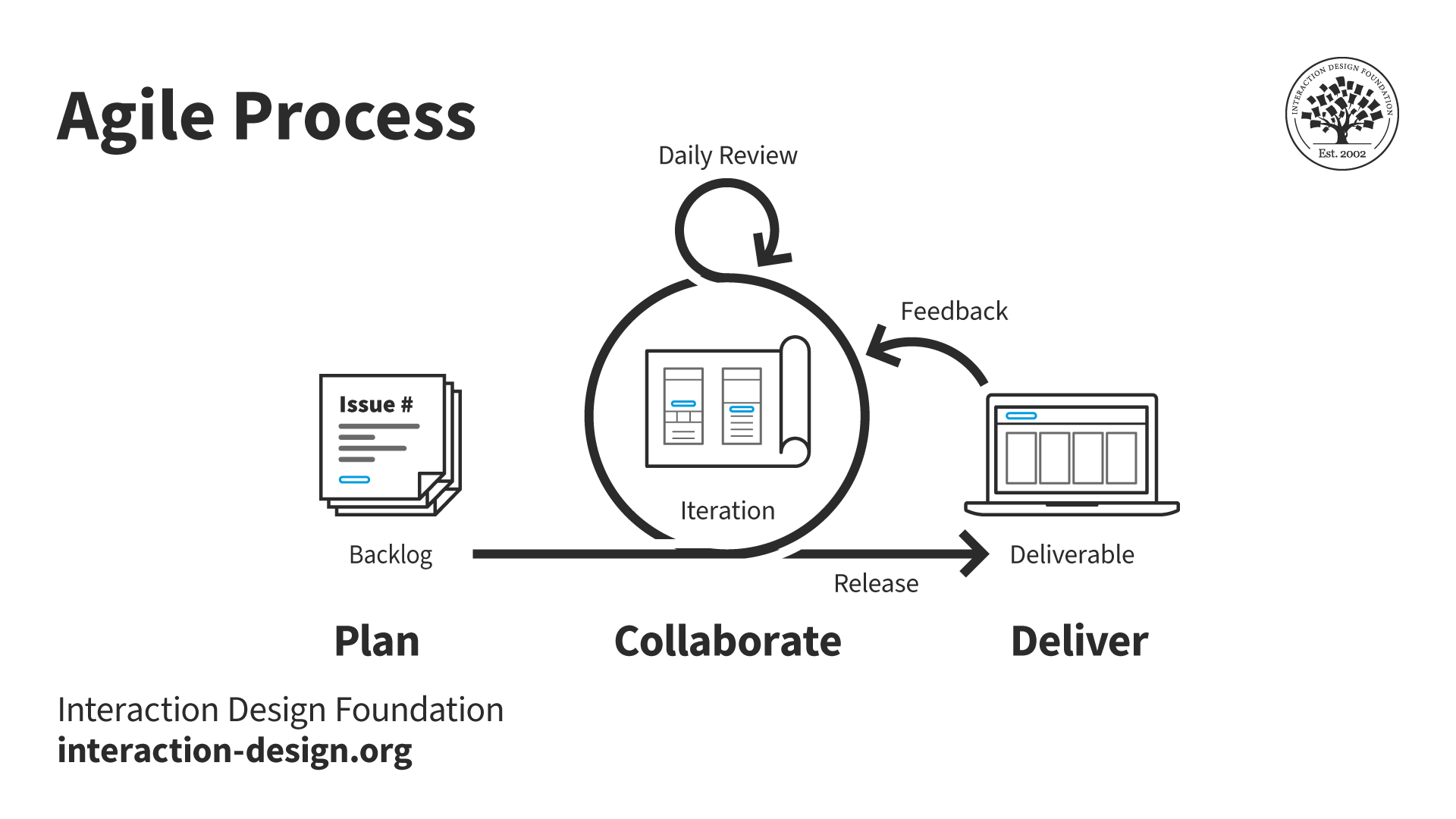
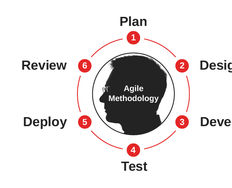
The Agile design process is cyclical and iterative.
© Interaction Design Foundation, CC BY-SA 4.0
Agile methodology in the UX design sense involves a cycle where design and product teams who take an Agile approach face uncertainties, propose solutions, obtain feedback and make necessary adjustments. This iterative process is crucial in Agile design. It lets design teams evolve their work continuously as they respond to real user feedback and adapt to changing project requirements for a product or service they intend to develop or improve. Various Agile methods like Scrum, Kanban and Scrumban provide structured yet flexible environments that support this dynamic approach to design and development projects.
Scrum is a framework for Agile project management to assist teams in structuring and managing work.
Kanban is an Agile workflow management method for managing and improving work systems.
Scrumban merges two main Agile methodologies, Scrum and Kanban, into one process to tackle projects.
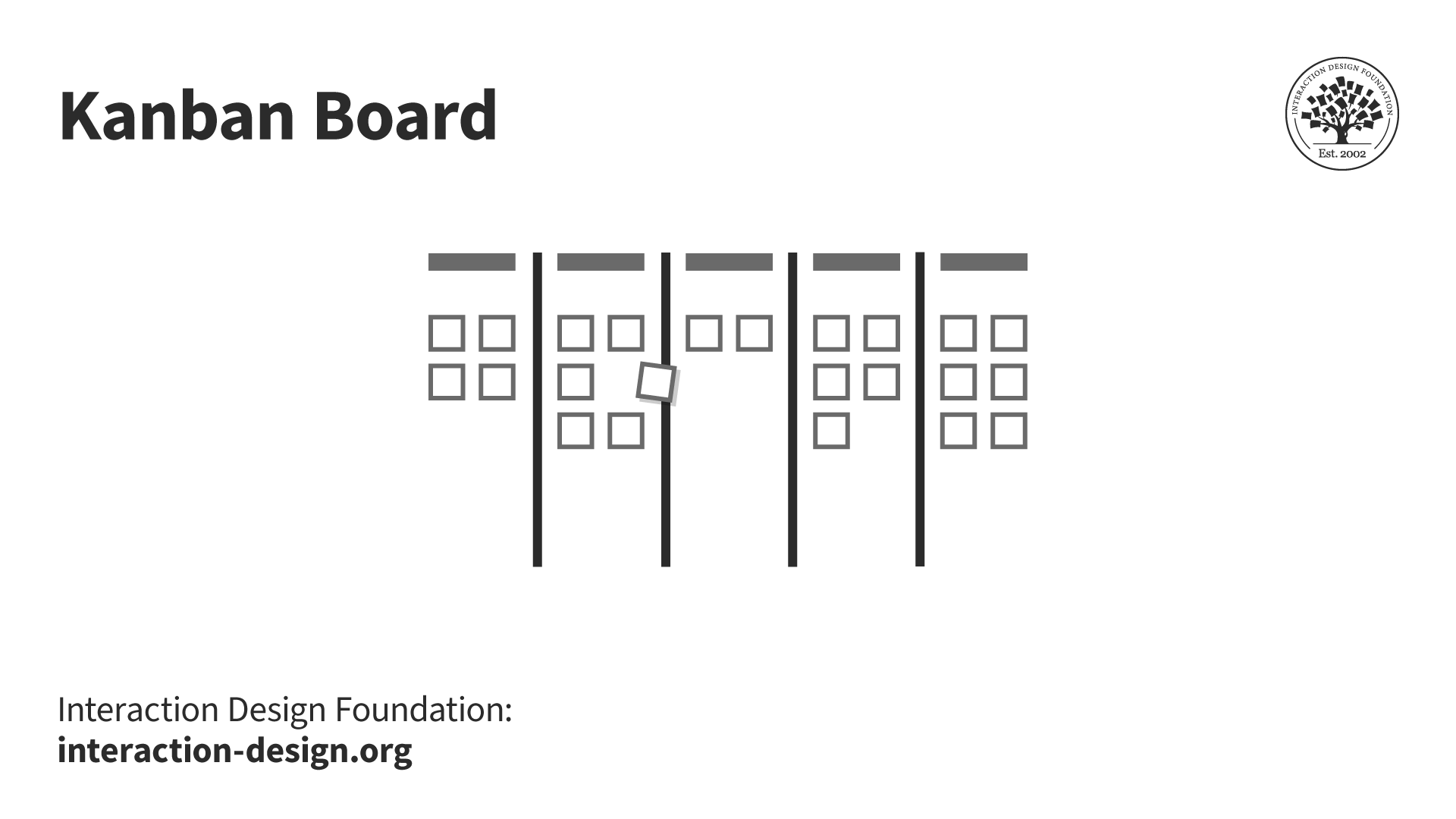
An example of a Kanban board, complete with tasks in progress, pending matters and completed work units.
© Interaction Design Foundation, CC BY-SA 4.0
Agile methodology is not just a framework but a mindset that embraces change and uncertainty. The Agile movement stems from the Agile Manifesto of 2001. It also incorporates Agile development. The Agile Manifesto emerged to challenge the traditional Waterfall process of product design where teams work in silos and hand over to other teams and departments on completion of their share of a project for a final product. Agile embraced new principles such as customer collaboration over contract negotiation.
Laura Klein explains why Agile tried to replace Waterfall:
Software development teams particularly saw the need for a high level of response and iteration during the product development process. With its emphasis on sprint planning, close cross-functional team collaboration and more, Agile soon offered something different. Teams who worked on software projects found they could enjoy tighter and more timely control over their software development process. For example, as they worked and met in frequent intervals called design sprints, they were able to discover and meet product requirements as these came to light through iterations.
What are the Characteristics, Roles and Responsibilities of an Agile Design Team?
In practice, Agile design is about more than just following steps; it's about fostering a culture of collaboration and continuous improvement. Design teams work closely with other departments like development and marketing to ensure that the design not only looks good but also works well and meets strategic business objectives. Several factors enhance this cross-functional collaboration. They are regular meetings and feedback loops. These are integral components of Agile methodologies that help keep projects on track and aligned with user needs and business goals.
To implement Agile design effectively requires a shift in thinking from a traditional, rigid process to a more fluid and adaptable approach. It challenges teams to embrace uncertainty and use it as a catalyst for innovation and refinement. As such, Agile design can lead to products that not only meet but exceed user expectations. Agile teams can provide solutions that are both innovative and highly tailored to user needs via dynamic sprint-oriented approaches to their design and development work.
Characteristics of Agile Design Teams
A dynamic and collaborative nature is a signature of Agile design teams. This is an essential quality to foster an environment where flexibility and rapid iteration are priorities. It’s also a vital requirement for product managers, or team leads, to ensure throughout the design process.
Agile teams are inherently self-organizing. This means they have the autonomy to make decisions and manage their workflows without strict oversight. This increases their authority and responsibility. It also enhances their ability to respond swiftly to changes. The structure of these teams is cross-functional. It allows members from different disciplines such as UX design, software development and quality assurance to work closely together. This setup not only fosters a deeper understanding and appreciation of each other's roles. It also encourages skill sharing and personal growth within the team.
Laura Klein explains the value of cross-functional teams in Agile:
Key Roles in an Agile Design Team
An Agile design team typically includes several key roles, each with distinct responsibilities:
Team lead (Scrum master): Facilitates the team's process, organizes tasks and ensures that the team adheres to Agile practices. A team lead acts as a coach to empower the team and help remove obstacles that may hinder their progress.
Product owner: Represents the client's interests and focuses on the business side of product development. They maintain the product backlog, prioritize tasks based on business value and ensure that the team's deliverables meet the customer's needs.
Team members: This group includes professionals with various expertise—developers, designers, testers and more. They are responsible for executing tasks and creating the product. Each member brings their specialized knowledge to the table. They therefore contribute to a well-rounded and competent team.
Stakeholders: Although not involved in the day-to-day activities, stakeholders play a crucial role as they define the project's scope and objectives. They provide essential feedback that influences the project direction. They are key to the project's overall success.
Collaborative Dynamics and Agile Methodology
In practice, Agile principles guide the interaction among these roles. Such principles include continuous improvement and responsiveness to change. Regular meetings, such as daily stand-ups and sprint reviews, are crucial to ensure all team members align with the project goals. These gatherings allow for timely updates and immediate feedback. They foster a transparent and communicative environment.
Moreover, Agile design teams often utilize tools like the Agile Team Roles matrix or RACI (Responsible, Accountable, Consulted, Informed) matrix to clarify each member's responsibilities and ensure there are no gaps in the team's capabilities. This proactive approach helps to balance the team's workload and streamline communication. It’s vital for the Agile design's iterative nature.
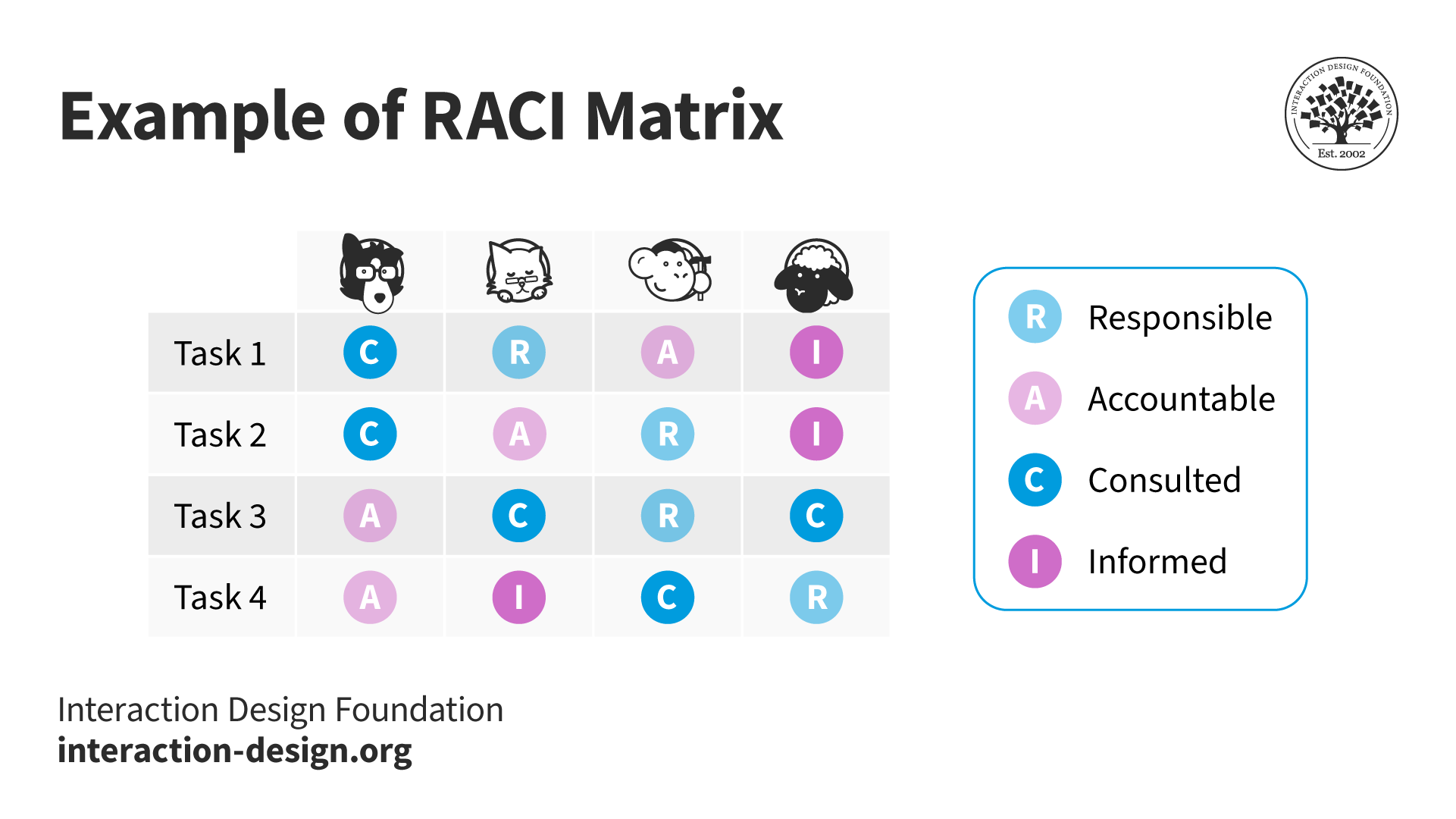
An RACI Matrix helps identify who does what.
© Interaction Design Foundation, CC BY-SA 4.0
When organizations understand the diverse roles within an Agile design team and how they interconnect, they can better structure their teams to enhance efficiency and innovation. This setup not only supports a high-performing team. It also leads to products that truly resonate with users. It therefore helps achieve business objectives more effectively.
Advantages and Challenges of Agile Design
Advantages of Agile Design
1. Enhanced Flexibility and Responsiveness
Agile design practices allow for continuous adaptation to changing requirements. This adaptation is crucial in dynamic project environments. Such flexibility ensures that the product evolves with the user's needs and market demands. It also maintains relevance and effectiveness.
2. Increased Collaboration and Communication
As it emphasizes teamwork and regular feedback, Agile design fosters a collaborative culture. Designers, developers and stakeholders engage frequently, which enhances understanding and alignment on project goals. This continuous communication helps them to identify potential issues early and find quicker resolutions.
3. Customer-Centric Development
Agile design prioritizes user feedback and involvement throughout the design process. This approach helps teams to create products that truly meet the users' needs and expectations. It therefore increases customer satisfaction and loyalty.
4. Rapid Prototyping and Testing
Agile methods support the quick creation of prototypes and encourage regular testing. This not only speeds up the development process but also ensures that teams test their products in real-world scenarios. This enhances the quality and usability of the final deliverable.
Author and Human-Computer Interaction Expert, Professor Alan Dix explains prototyping:
5. Improved Project Visibility and Risk Management
One of the standout advantages of Agile design is the increased transparency throughout the project lifecycle. Regular sprint meetings and progress assessments provide stakeholders with a clear view of the project status at any point in time. This visibility allows for better risk prediction and management. Team members can identify potential issues and address them promptly. Also, the iterative nature of Agile design means that teams can continually reassess and mitigate risk. This significantly reduces the likelihood of project failure.
6. Cost Efficiency and Predictability
Agile teams operate within set time frames (sprints) that make it easier to manage budgets and predict costs. Since work splits into manageable chunks, it becomes simpler to assign resources efficiently and measure team performance. This structured yet flexible approach not only improves productivity. It also provides stakeholders with a more reliable estimation of project costs and timelines.
Laura Klein explains important points about Agile relating to an important aspect of design, user research, in this video:
Challenges of Agile Design
1. Predictability and Scope Management
Due to its flexible nature, Agile design can sometimes lead to challenges in predicting timelines and managing project scopes. The iterative process, while beneficial, can complicate long-term scheduling and resource allocation.
2. Risk of Overwhelming Changes
With the ability to make frequent adjustments comes the risk of constant changes. That risk can overwhelm the team and lead to burnout. Also, without careful management, this can cause the project to deviate from its original goals.
Laura Klein explains some helpful points about types of changes and more in this video:
3. Documentation and Knowledge Transfer
Agile design often prioritizes working software over comprehensive documentation. This can pose challenges when new team members join the project, as there may be insufficient documentation to quickly bring them up to speed.
4. Team Dependency
The success of an Agile design project heavily relies on the team's dynamics. A highly collaborative environment demands that all team members are proactive, communicative and adaptive. In scenarios where team dynamics are not optimal, the project's success could be in jeopardy. Also, it takes good project management to ensure teams don’t slide into an AgileFall approach, where they might adopt practices such as turning to longer intervals between meetings or even “re-siloing,” and possibly drive up the amount of documentation and remove managerial fingers from the “pulse” of the project at critical moments.
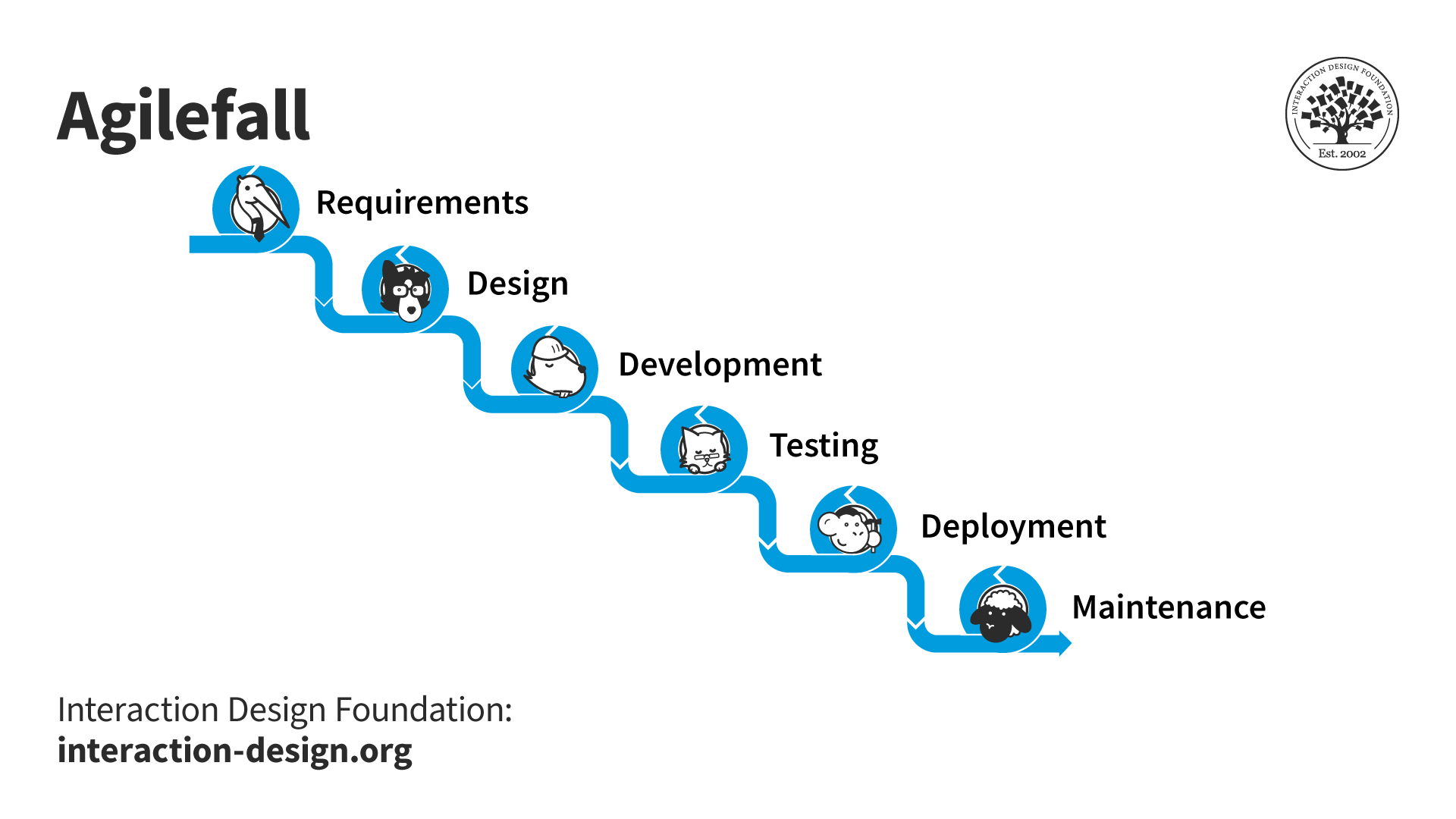
The phenomenon of AgileFall, when elements of Waterfall can dilute an Agile approach to design.
© Interaction Design Foundation, CC BY-SA 4.0
Steps, Best Practices and Tips for Effective Agile Design
Agile Design Steps
An Agile design process typically follows several key steps where Agile project management ensures that design team members:
1. Understand: They grasp the core needs and goals of the project.
2. Research: They gather insights and data that inform the design.
3. Sketch: They develop initial concepts and ideas.
4. Design: They craft the visual and functional aspects of the project.
5. Prototype: They create prototypes to test ideas in a tangible form.
6. Test: They evaluate the design through user testing and feedback.
7. Refine: They make improvements based on feedback and testing results.
These steps are not linear. Instead, team members often revisit steps repeatedly throughout a project. They ensure that the design remains aligned with user needs and project goals. This iterative loop supports a high degree of flexibility and responsiveness in problem solving, discovery of pain points, and more. The Agile approach is particularly effective in projects with high uncertainty or evolving specifications.
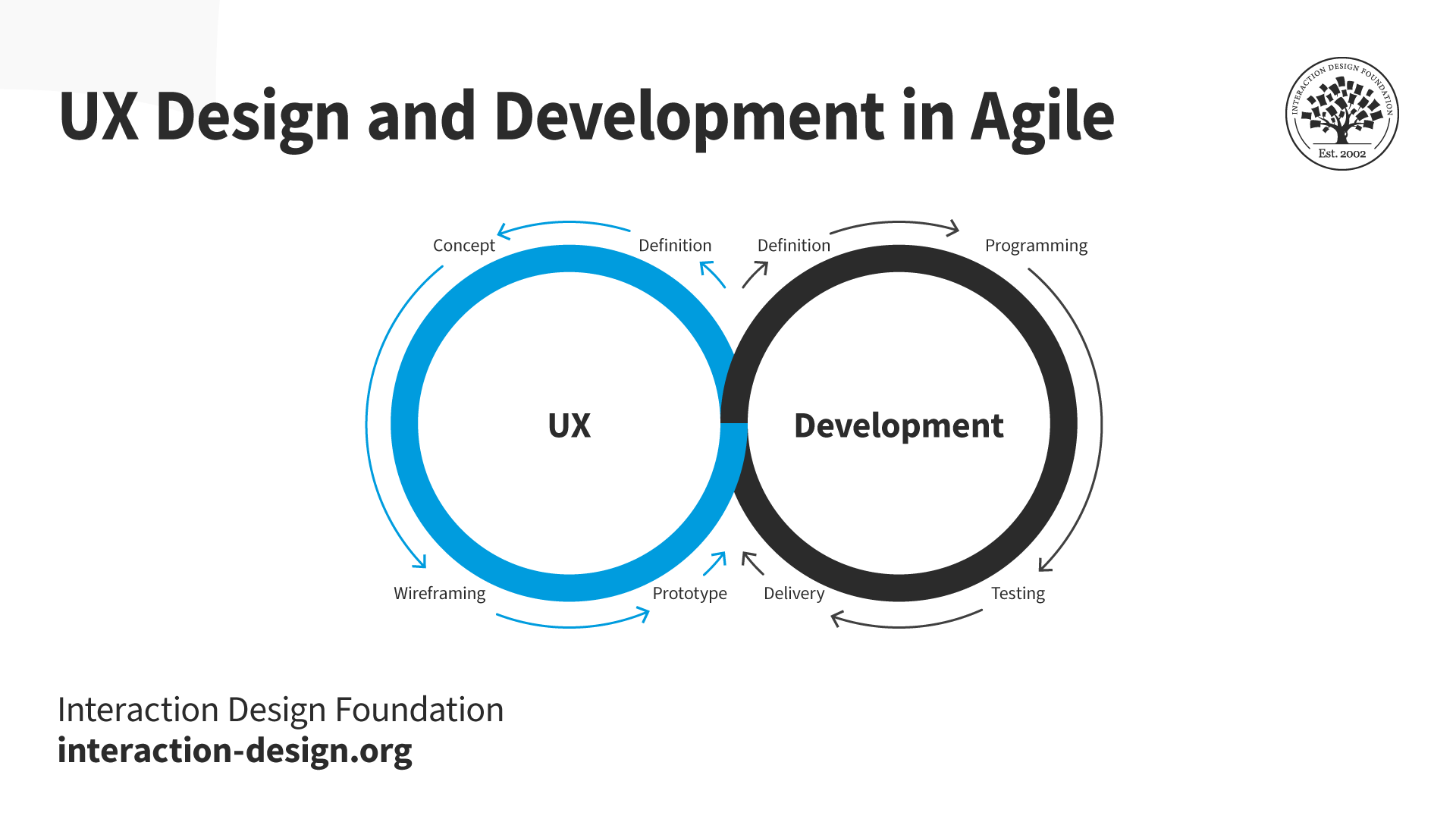
Agile design involves UX designers and developers working closely together for the best results.
© Interaction Design Foundation, CC BY-SA 4.0
Best Practices
1. Define Clear Roles and Responsibilities
In Agile design, clarity in roles is paramount. For instance, to adopt the core principle of Scrum, one can define three main roles: the product owner, the Scrum master and the development team. Each role has specific responsibilities that contribute to the project's success. Namely, the product owner manages the product backlog and ensures that the team delivers value to the business. The Scrum master facilitates Scrum processes and resolves impediments that hinder the team's progress. Lastly, the development team drives the development of the product features. The clear delineation of roles helps to reduce confusion and enhances productivity.
2. Foster Collaboration Through Cross-Functional Teams
Agile thrives on the synergy of cross-functional teams, where members from different disciplines collaborate to achieve project goals. This integration includes individuals with varied skills—from UX designers to developers and testers. They work together to navigate complexities and innovate solutions. Regular activities like daily stand-up meetings, sprint retrospectives and product backlog refinement are crucial. These interactions not only align the team towards common objectives. They also promote a culture of continuous feedback, which is vital for Agile environments.
3. Emphasize Continuous Improvement and Adaptability
Agile and Scrum methodologies are not static; they require a commitment to ongoing learning and adaptation. This involves regular training on new tools and methodologies. It also means to revisit and refine processes that may no longer serve the team effectively. To implement Agile requires a mindset that embraces change—teams must be willing to experiment and learn from each iteration. Practices such as sprint reviews and retrospectives support this culture of continuous improvement. Teams reflect on what worked and what didn’t. They then make necessary adjustments to improve future sprints.
Overall, it’s essential to realize the potential—and pace of involvement—that an Agile design approach calls for. Agile is a valuable and popular answer to the needs of many brands, and it’s well-suited to UX and UI (user interface) design. With uses in such areas as extreme programming (XP) and ranging in potential across the many aspects of website and app design and far beyond, Agile methodology and design has transcended from its origins in the tech industry to become a preferred business model across a diverse range of sectors.
Remember, Agile design is more than a methodology; it’s a versatile tool. Teams from various industries can use it to transform, innovate and produce winning products time and again. Agile design’s principles of flexibility, continuous improvement and customer-centricity make it an ideal approach to modern business challenges.