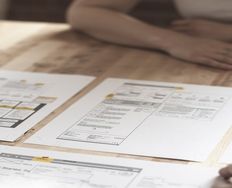
Three persona profile pictures and their names. Financial Fiona, Support-Seeker Sally, and Urgent Diagnosis Don.

Personas for Mobile UX Design

• 40 min read

871 Shares

To design successful user experiences, it's critical to understand your users. One way to learn about your users is with user personas. Here, we’ll explore the benefits of personas in UX design and provide a step-by-step guide on how to create compelling user personas that inform your design choices. 

In this video, HCI expert, Professor Alan Dix explains what personas are and why they help you in the design process.

Transcript

Whether you're designing a website, app, or product, understanding your users through user personas can guide you to more successful outcomes for both you and your users.

Personas are fictional representations of your target audience that help you empathize with them and understand their goals and motivations. Carefully crafted personas can help you make better design decisions.

The user persona is one of the most valuable tools in UX work. It allows the entire design and development team to keep real user stories in mind as they work. This results in better-tailored products for the end user and, thus, ones that are more likely to succeed. There are two types of personas UX designers create: 

  • The Proto-Persona: In some cases, designers may need more resources or time to conduct extensive user research before they start a project. In such situations, they create a proto-persona as a helpful tool for early-stage design. A proto-persona is a “quick and dirty” persona based on whatever research they can get from other sources, such as market research or demographic data.

  • The Evidence-based Persona: This is a fictional representation of a target audience created through user research methods such as interviews, observations, task analysis, contextual interviews, and ethnography.

One of the many benefits of user personas is to have your team focus on an outcome, which is to design in alignment with the users' wants and needs. They also help prevent scope creep and self-referential design, that is, design as if you were the user.
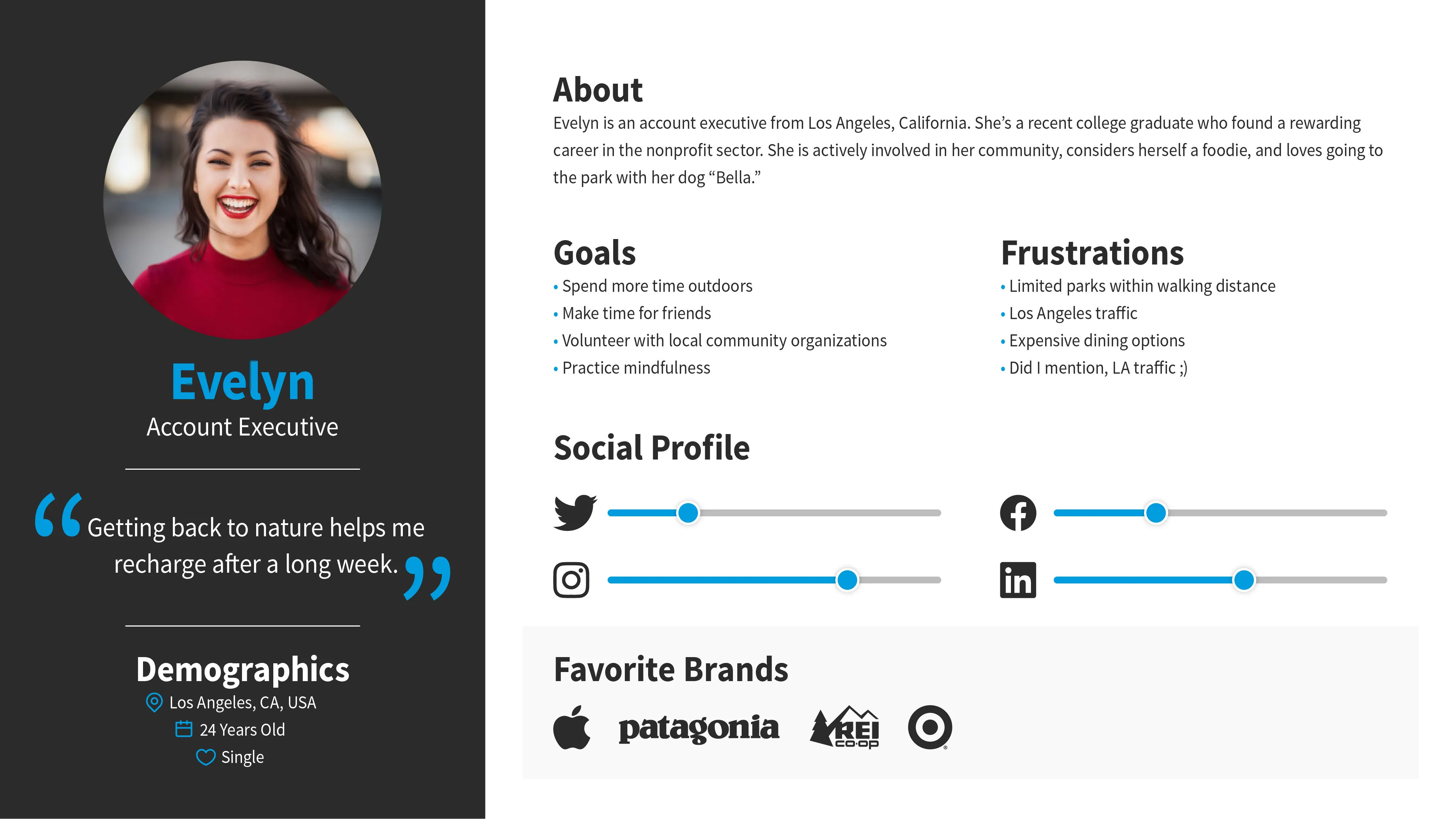
In UX design, personas are fictional representations of a target user group. The primary purpose of a persona is to provide a clear picture of the group's demographics, as well as their goals, needs, behaviors and pain points.

© Interaction Design Foundation, CC BY-SA 4.0

The primary purpose of a persona in UX design is to provide a clear picture of the target user group: this includes information about demographics, goals, needs, behaviors and pain points. Combine personas with scenarios to create the most effective products.

There are four key uses of the persona in product design:

  • To validate the decisions made by the design team: Personas help designers create specific designs for particular user groups.

  • To prioritize features: Personas help you to establish priorities when ideas conflict for resources or time.

  • To understand users' needs and goals: Personas should be available during ideation sessions to inspire and keep the team grounded and focused on the user.

  • To test designs: Refer to your personas during critique sessions or iterations of the product.

Mobile User Personas: Considerations and Differences from Traditional Personas

Consider the unique constraints and opportunities presented by mobile devices when you create mobile user personas.

© BullRun, CC BY-NC 2.0

The process to create mobile user personas is the same as the one followed to make any other type of persona. But when it comes to mobile user personas, you need to take into account several unique considerations that differ from traditional user personas. Mobile users are often on the go, multitasking, and have limited attention spans. As a result, their goals may vary significantly from those of desktop users.

Ethnographic research is very important—your research should be observation-based and conducted "in the wild" to establish how users behave. Mobile user personas should consider location, connectivity, and device usage patterns.

Additionally, mobile user personas should focus on the key tasks users want to accomplish when using the app or website. This requires that you, as a designer, have deep knowledge of specific features and functionality that mobile users need while "on the fly."

Craft Your First User Persona: A Step-by-Step Guide

Role-based personas are important to understand user behavior and preferences. When you create a persona and take into account the many hats they might wear, you can better understand how they might interact with your products. 

Here, you'll explore the important concept of context of use and discover how it can inform your design decisions.


Transcript

The design of user personas is a crucial step to ensure that products meet the needs of your users. Here's a step-by-step guide on how to create effective user personas, plus a downloadable template:
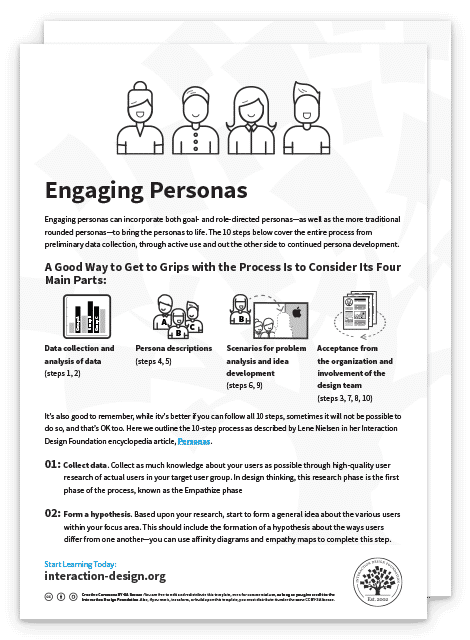
Advance Your Career With This Free Template for “Engaging Personas”
Engaging Personas
We respect your privacy
Get 1 powerful email each week: Design a life you love!

Step 1: Define Your Target Audience

Who are you designing for? What are their objectives, motivations, and pain points? Recruit users who are representative of your target audience. 

Step 2: Conduct User Research

This can include interviews with potential users, observations of people using similar products or services, task analysis, contextual interviews, and ethnography. The goal is to gather as much information as possible about your users.

Step 3: Analyze Your Data

Look for patterns in the information you gathered, then group the people that display such patterns together. 

Step 4: Create Your Personas

Give each persona a name, photo (if possible), background story, personality traits, goals, motivations, behaviors, and pain points. Make sure each persona feels real so stakeholders and team members can better understand the target audience. For this, try and use verbatim notes from your research.

Step 5: Validate Your Personas

Finally, it's important to validate your personas by testing them with real users. This will show you if they accurately reflect the needs and expectations of your target audience. Use feedback from these tests to make any necessary adjustments to your personas and continue to refine them as needed.

The Take Away

When it comes to mobile UX, context of use becomes a critical part of the persona, and to create effective ones, it's important to understand where and how users will interact with your product.

For example, if you're designing a mobile app for hikers, understanding the context in which they'll be using the app, such as a mountain trail with limited connectivity, can help you create user personas that account for these constraints. 

To make these personas more relatable and actionable for stakeholders and team members, deliver them as stories that help them connect with the user's needs. Doing so ensures that everyone involved in the project understands their audience and can make better design decisions based on their needs.

References and Where to Learn More

Check out Dan Rosenberg’s Master Class webinar on Actionable Personas.

Learn about Whitney Quesenbery’s persona guidance.

Read 5 Persona Distinctions: How to use Personas properly.


Hero Image: © Interaction Design Foundation, CC BY-SA 4.0

Learn More in This Course:

Human-Computer Interaction: The Foundations of UX Design

14 days
13 % booked
View Course

What You Should Read Next

  • Read full article
    What is Interaction Design? - Article hero image
    Interaction Design Foundation logo

    What is Interaction Design?

    Interaction design is an important component within the giant umbrella of user experience (UX) design. In this article, we’ll explain what interaction design is, some useful models of interaction design, as well as briefly describe what an interaction designer usually does.A simple and useful unders

    Social shares
    1.5k
    Published
    Read Article
  • Read full article
    Apple’s Product Development Process – Inside the World’s Greatest Design Organization - Article hero image
    Interaction Design Foundation logo

    Apple’s Product Development Process – Inside the World’s Greatest Design Organization

    Apple’s Product Development Process may be one of the most successful design processes ever implemented. With a valuation that exceeds $2 trillion, there’s a lot that designers can learn from Apple and introduce into their own design environments.Apple is a notoriously secretive business. In Steve J

    Social shares
    1.4k
    Published
    Read Article
  • Read full article
    Shneiderman’s Eight Golden Rules Will Help You Design Better Interfaces - Article hero image
    Interaction Design Foundation logo

    Shneiderman’s Eight Golden Rules Will Help You Design Better Interfaces

    Follow Ben Shneiderman’s 'Eight Golden Rules of Interface Design' if you want to design great, productive and frustration-free user interfaces. Apple, Google and Microsoft are among some of the highly successful companies whose well-designed products reflect Shneiderman’s rules. The characteristics

    Social shares
    1.4k
    Published
    Read Article
  • Read full article
    How to Change Your Career from Graphic Design to UX Design - Article hero image
    Interaction Design Foundation logo

    How to Change Your Career from Graphic Design to UX Design

    If there’s an occupation that is 100% linked with the public’s idea of what design is all about, it’s graphic design. From the familiar golden arches of the McDonald’s brand to the typography and colors of movie posters, graphic designers create some of the most iconic and ubiquitous designs around

    Social shares
    1.4k
    Published
    Read Article
  • Read full article
    The Grid System: Building a Solid Design Layout - Article hero image
    Interaction Design Foundation logo

    The Grid System: Building a Solid Design Layout

    Now that we’ve seen some grids at work in the Rule of Thirds article, let’s examine them a little more deeply. As a concept that deals so fundamentally with the fabric and background of our work as designers, it’s easy to overlook the power of grids and think more about the elements we want to creat

    Social shares
    1.4k
    Published
    Read Article
  • Read full article
    The Principles of Service Design Thinking - Building Better Services - Article hero image
    Interaction Design Foundation logo

    The Principles of Service Design Thinking - Building Better Services

    Service design is all about taking a service and making it meet the user’s and customer’s needs for that service. It can be used to improve an existing service or to create a new service from scratch. In order to adapt to service design, a UX designer will need to understand the basic principles of

    Social shares
    1.4k
    Published
    Read Article
  • Read full article
    A Simple Introduction to Lean UX - Article hero image
    Interaction Design Foundation logo

    A Simple Introduction to Lean UX

    Lean UX is an incredibly useful technique when working on projects where the Agile development method is used. Traditional UX techniques often don’t work when development is conducted in rapid bursts – there’s not enough time to deliver UX in the same way. Fundamentally Lean UX and other forms of UX

    Social shares
    1.3k
    Published
    Read Article
  • Read full article
    Dieter Rams: 10 Timeless Commandments for Good Design - Article hero image
    Interaction Design Foundation logo

    Dieter Rams: 10 Timeless Commandments for Good Design

    Let’s pay a virtual visit to a famous industrial designer’s workshop. By examining the principles of his winning approach, we can incorporate vital elements into our designs in the “less is more” age.As user experience practitioners, most of us have worked with Nielsen and Molich’s 10 heuristics or

    Social shares
    1.3k
    Published
    Read Article
  • Read full article
    The 7 Factors that Influence User Experience - Article hero image
    Interaction Design Foundation logo

    The 7 Factors that Influence User Experience

    User Experience (UX) is critical to the success or failure of a product in the market but what do we mean by UX? All too often UX is confused with usability which describes to some extent how easy a product is to use and it is true that UX as a discipline began with usability – however, UX has grown

    Social shares
    1.3k
    Published
    Read Article
  • Read full article
    How to Do a Thematic Analysis of User Interviews - Article hero image
    Interaction Design Foundation logo

    How to Do a Thematic Analysis of User Interviews

    You have been in the field talking to users and you now find yourself with a massive amount of audio, notes, video, pictures, and interesting impressions. All that information can be overwhelming, and it’s difficult to know where to start to make sense of all the data. Here, we will teach you how to

    Social shares
    1.3k
    Published
    Read Article

Top Articles

Top Topic Definitions

Feel Stuck?
Want Better Job Options?

AI is replacing jobs everywhere, yet design jobs are booming with a projected 45% job growth. With design skills, you can create products and services people love. More love means more impact and greater salary potential.

At IxDF, we help you from your first course to your next job, all in one place.

See How Design Skills Turn Into Job Options
Privacy Settings
By using this site, you accept our Cookie Policy and Terms of Use.
Customize
Accept all

Be the One Who Inspires

People remember who shares great ideas.

Share on:

Academic Credibility — On Autopilot

Don't waste time googling citation formats. Just copy, paste and look legit in seconds.

Feel Stuck? Want Freedom?

Join 326,020+ designers who get one powerful email each week. Learn to design a life you love.

Next email in
1
day
16
hrs
25
mins
18
secs

Free forever. No spam. Unsubscribe anytime.