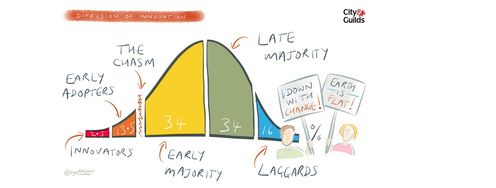
People don’t often make their decisions by themselves with no input from others. We turn to family, friends, media, opinion makers, colleagues, etc. to get their input. This is particularly true of decisions which may impact on our happiness to a great extent.
Why does this matter in a design context? It matters because when we try to drive product adoption we must consider the social systems in which the users are found. By considering these systems we can attempt to influence not just an individual user but the entire social system. If a social system is convinced by our attempts at influence it can add its own weight of influence to adoption decisions and drive the rate of diffusion of our innovation throughout that system.
There are three key social systems to consider with respect to adoption:
Organizations
Let’s take a look at each system in turn:
1. Thought Leadership
Within any given social network there are those who have greater levels of influence than others. There are both leaders and followers. Leaders are those with the highest levels of influence. Leadership may be static (e.g. a US President during their term of office is always the nation’s leader) or fluid where leadership positions are conferred due to specifics of expertise within a group and give way to other leaders when other levels of expertise are required.
Thought leaders are those which take in messages from outside of the social network (often from media) and then translate that message, in their own terms, to their networks.
In his work; “Social Theory and Social Structure”, Robert K Merton the sociologist says there are two types of thought leader: monomorphic and polymorphic.
A monomorphic thought leader is someone who is considered by their peers to have a great deal of expertise in a single field. For example, David Bailey the photographer would be a thought leader in the realms of photography but it is unlikely his opinion on say, knitting, would be as highly valued. The monomorphic thought leader is one with the background to understand information and with more information on a topic than others within that field.
Polymorphic thought leaders, on the other hand, are considered to be experts in multiple domains. They may (or may not) have expertise in all these domains, however they are perceived to have such expertise or the personality or intelligence to be worthy of such leadership.
Elihu Katz in his work, “Personal Influence”, says that thought leaders have one or more of three qualities that enable their position of leadership:
Expression of values
Professional competence
The attributes of their social network
 Author/Copyright holder: Atos. Copyright terms and licence: CC BY-SA 2.0
Why does this matter?
It matters because if we can influence thought leaders in a positive way; they will influence their followers in a positive way. It also means that there is a level of risk to a product launch in that if thought leaders are alienated or influenced negatively – they will pass on this negative feeling to their followers.
Thought leaders are more highly trusted and respected by their followers than the media is. They exert more influence because people tend to prefer a personal recommendation when making a purchasing decision than one made by an impersonal agency (such as the media).
Designers and marketers will want to work with thought leaders early in the process of design through to product launch to build the right relationships and ensure that products are seen in the right light.
2. Digital Social Networks
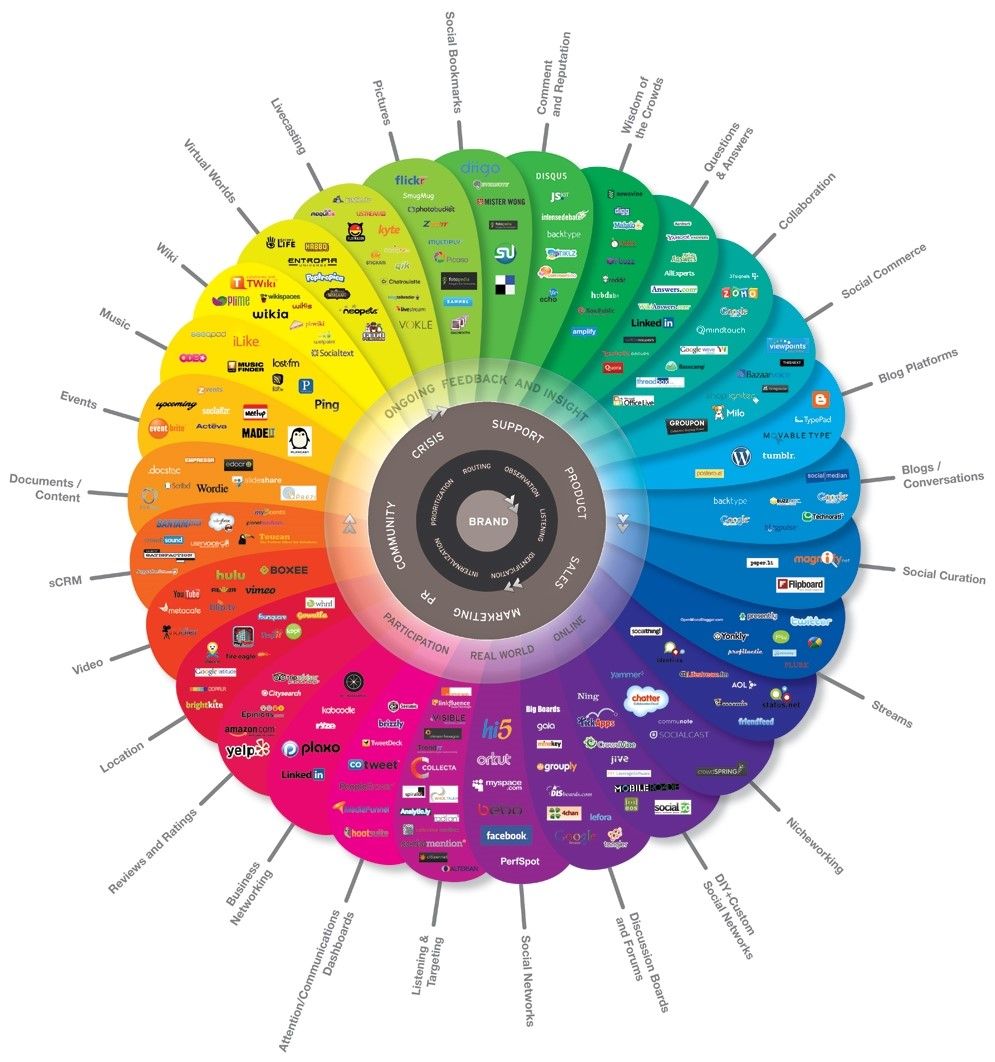 Author/Copyright holder: Brian Solis and JESS3. Copyright terms and licence: CC BY 2.5
Before the dawn of the internet people relied solely on localized social networks to obtain their information. They trusted those around them and those who they interacted with regularly. This could be problematic as their adoption of new products would depend on the competence of others within their localized social network.
The internet, however, has led to the rise of wider, more robust social networks. Networks such as Facebook, LinkedIn, Twitter, etc. enable ideas and information to flow freely between individuals who may never have met in person but who are connected through professional or personal interests. This should, in theory, mitigate the flow of poor information and lead to better decision making. As Mindy Kaling, the actress, says; “People take things at face value on social media. Earnestness is the assumption.”
This means that designers and marketers who can tap into these social networks and learn to work with them can provide their products with a greater chance of adoption.
The actual impact of digital social networks on adoption is not fully understood. This is because the phenomenon is too new to have been fully researched and there are strong views on whether or not marketing, etc. in these channels is effective. Much of the information available on this is confusing.
For example, in 2012, Forbes reported that General Motors had pulled their $10 million advertising budget from the Facebook social network. General Motors announced publicly that “people don’t buy cars on Facebook”. Yet, in 2013, as reported in Advertising Age – General Motors began to advertise on Facebook again.
Without detailed, tried and tested heuristics for working with digital social networks it is important that designers and marketers try to develop their own “rules of thumb” for these interactions. They should build key performance indicators that can be measured and try to ensure that these measures can be related to product adoption. A recent adage suggests that; “likes don’t equal purchases” and it’s important to remember this when designing metrics for digital social networks.
3. Organizations
It is important to recognize that organizations adopt products differently from individuals. In an organization it is much more likely that decisions will be made on polling opinion from an internal network of individuals or indeed on a democratic basis from that network.
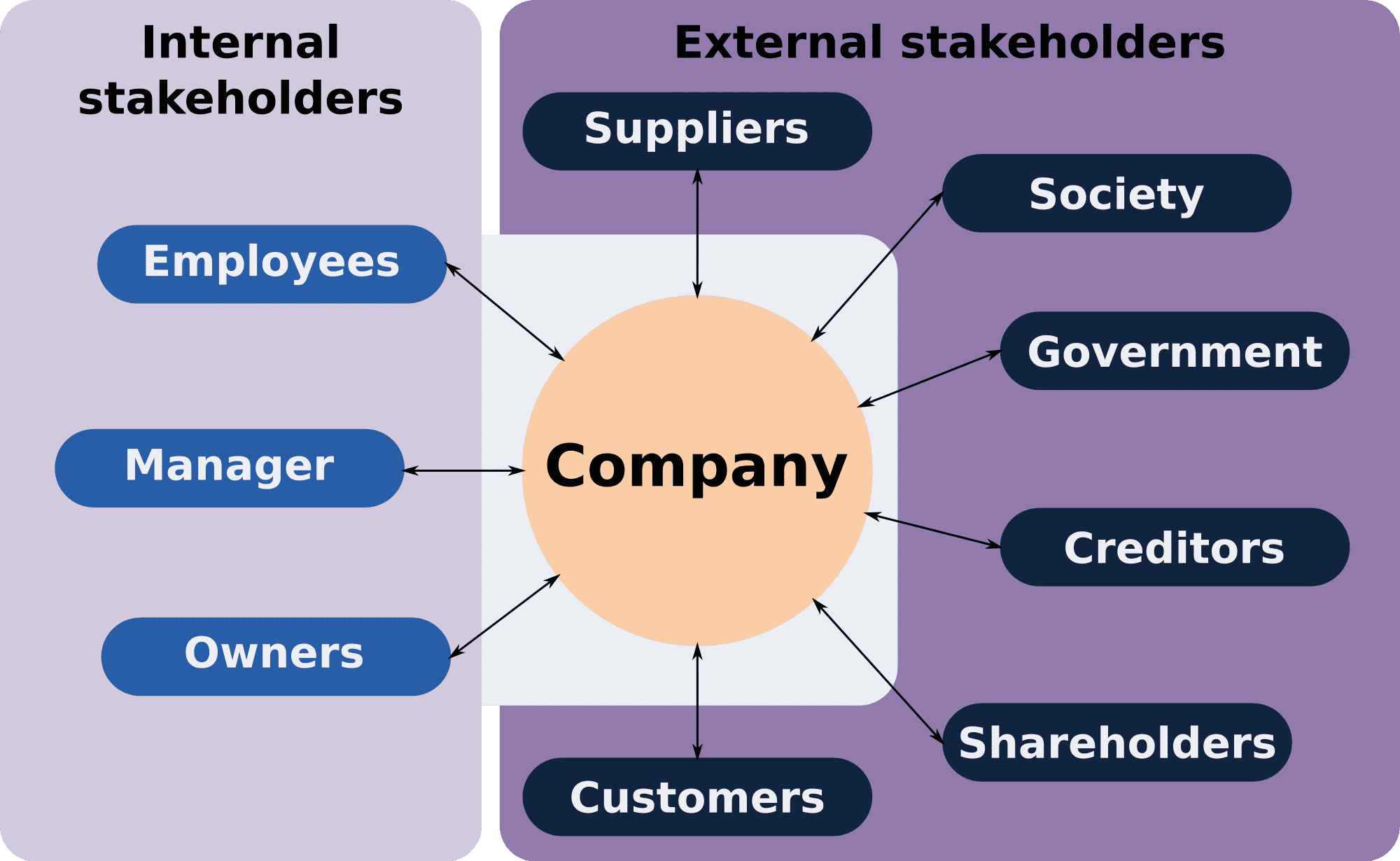 Author/Copyright holder: Grochim. Copyright terms and licence: CC BY-SA 3.0
In the 5th Edition of Everett Rogers’ “Diffusion of innovations”, which is considered to be the classic text for innovation diffusion study, he offers two forms of decision making in organizations:
Collective decisions – when adoption of a new product requires the consensus of a group of people within an organization
Authority decisions – when decision making is in the hands of a small number of powerful individuals within the organization. These individuals, however, will normally be influenced by a larger group of people within that organization
This is important to designers, marketers and sales people because it suggests that in order for a product to be adopted within an organization – they must focus their efforts on a broad range of people in that organization rather than on a single decision maker.
It is also important to recognize the role of the “product champion” in organizations. These are the people that when an adoption decision has been made will be empowered to drive that innovation within their business and break through any barriers to adoption. Designers and marketers, in particular, will want to work closely with potential product champions to accommodate their needs for organizational adoption.
The Take Away
Social systems are important to the adoption of products. Thought leaders can influence others to adopt products. There is the potential for digital social networks to allow the access to and possible influence of millions of potential users. Organizational decision making is social by nature and it’s important to influence the whole network rather than just a decision maker to drive adoption.
References
Merton, R. K. (1957). Social theory and social structure. Glencoe: Free Press.
Katz, Elihu; Lazarsfeld, Paul F. (1957). Personal influence (E. ed.). New York: Free Press
Forbes Magazine on GM’s decision to pull its Facebook adverts
Advertising Age on GM’s decision to return to Facebook advertising
Rogers, Everett (16 August 2003). Diffusion of Innovations, 5th Edition. Simon and Schuster. ISBN 978-0-7432-5823-4
Hero Image: Author/Copyright holder: Alexander van Dijk. Copyright terms and licence: CC BY-SA 3.0