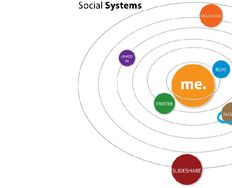
We know, almost instinctively, that networks hold value. Human beings are by nature social creatures and our own social networks (not just those online) provide a framework for our behaviors and structure to our lives. Yet, the value of networks in business is often overlooked. Designers looking to drive adoption and appropriation of products, in particular, will want to examine their own value networks and ask critical questions regarding those networks for both the product design and the design and execution of marketing for the product.
What is a Value Network?
There are many different types of value network but broadly speaking they may be placed into two categories: internal value networks and external value networks.
An external value network consists of those people and other interactions which lay outside of the business in question; these can include customers, users, business intermediaries, business partners, stakeholders, suppliers, etc.
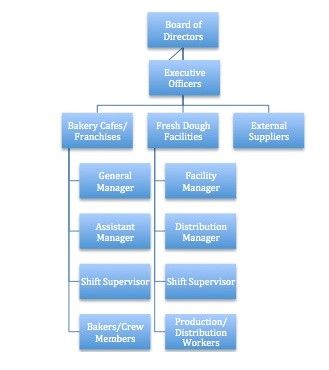
Whereas an internal value network lies within the business in question; it is the combination of processes and relationships inside the business. The value in these networks is generally considered to be created through the creation of effective relationships between those conducting roles within businesses. In fact, internal value networks aren’t limited to business – they exist wherever two or more people work together to create anything (education, civil service, the army, etc.)
Author/Copyright holder: Joea6432. Copyright terms and licence: CC BY-SA 3.0
How are Value Networks Described?
In general value networks are described by nodes (which are representations of the actors or actions within the network) and the relationships between those nodes. The relationships are seen in terms of either tangible or intangible benefits between the nodes.
Tangible benefits are those which involved the exchange of goods, services or revenues. They also include anything directly related to this such as: contracts for provision of services and goods, invoices and receipts, confirmations of payment, etc.
Intangible benefits are those that include knowledge and/or favors. So for example, a thought leader who shares information with their Facebook friends is providing an intangible benefit to those friends. An innovator who agrees to help test your product in exchange for early access is both giving and receiving an intangible benefit.
There are also four common types of value network: Clayton Christensen’s networks, Fjeldstad and Stabells networks, Normann and Ramirex’ constellations and Verna Allee’s networks. Each of these is a slightly different way of looking at value created in a network.
Clayton Christensen’s Networks
In his book “The Investor’s Dilemma”, Christensen the analyst says; “The collection of upstream suppliers, downstream channels to market, and ancillary providers that support a common business model within an industry. When would-be disruptors enter into existing value networks, they must adapt their business models to conform to the value network and therefore fail that disruption because they become co-opted.”
Which is a fancy way of saying; a network consists of everything outside a business that supports that business and that it’s hard to break in to such networks and make big changes because of the expectation that you will conform to that network model.
This is useful to designers who are looking to develop revolutionary products. They must understand that if the current product model lays within a well-developed network; there will be large amounts of inertia to overcome in order to have their products adopted.
 Author/Copyright holder: Oftcc. Copyright terms and licence: CC BY-SA 3.0
Christensen also provides some additional sage advice; “The job, not the customer, is the fundamental unit of analysis for a marketer who hopes to develop products that customers will buy.”
Fjeldstad and Stabell’s Networks
Writing for the Strategic Management Journal in their article “Configuring value for competitive advantage: On chains, shops and network” Stabell and Fjeldstad offer up the idea of value configurations.
Their value networks are based on the concept that value networks include certain components:
Customers
Services – which are used by all the customers and which allow for interaction (though not always direct interaction) between those customers
A service provider
Contracts or agreements which allow access to services
This is a different approach from Christensen. In Christensen’s networks; value exists independently of customers whereas in Fjeldstad and Stabell’s model – customers are a key component of the value network.
An obvious Fjeldstad and Stabell network would be Facebook. Facebook provides the service, they provide a contract (a user agreement) to access those services, and the customers sign up for those services and they may interact directly with each other through the value network that Facebook provides.
A slightly less obvious example would be insurance companies. The insurance company provides the service, insurance, and the contracts to use that service. The customers sign up to their policies contractually. While they do not necessarily interact directly with each other; their premiums are pooled to cover “shared risk” and as such they indirectly interact with each other with the value network facilitating this interaction.
Designers can map these value networks to ensure they have all the building blocks for value creation in place.
Normann and Ramirez Value Constellations
This approach was proposed in the Harvard Business Review in 1993 by Normann and Ramirez. Instead of fixed value models such as those mentioned previously; Normann and Ramirez see value models as dynamic, fluid systems. In which the objective is to continuously improve relationships and roles within the model to create as much value as possible.
This offers an interesting approach to designers as they iterate their products and work; it requires that they ask where can value best be created and how can it be achieved? This could be approached by mapping the nodes and relationships between nodes and asking the question of each relationship – it is also important to ask; “which relationships are missing which could create further value?”
Verna Allee’s Networks
Verna Allee, in their book “The Future of Knowledge” offers a more generalist approach to value networks arguing that a value network is simply a web of relationships that will generate either or both of tangible and intangible value.
She also developed a system for analyzing the value within networks, which will not be covered here but is referred to in the references below, which has become highly valued for reporting non-financial value within businesses. Allee recommends that every business become involved in value network analysis because of the powerful ability to transform thinking on problems when every problem is expressed in terms of value creation.
This approach, whilst substantially more involved than other value network approaches, should fit comfortably with UX design work. UX designers ask; “where can I create value for my users?” Verna Allee’s approach extends that to ask; “where can value be created for anyone within the network?”
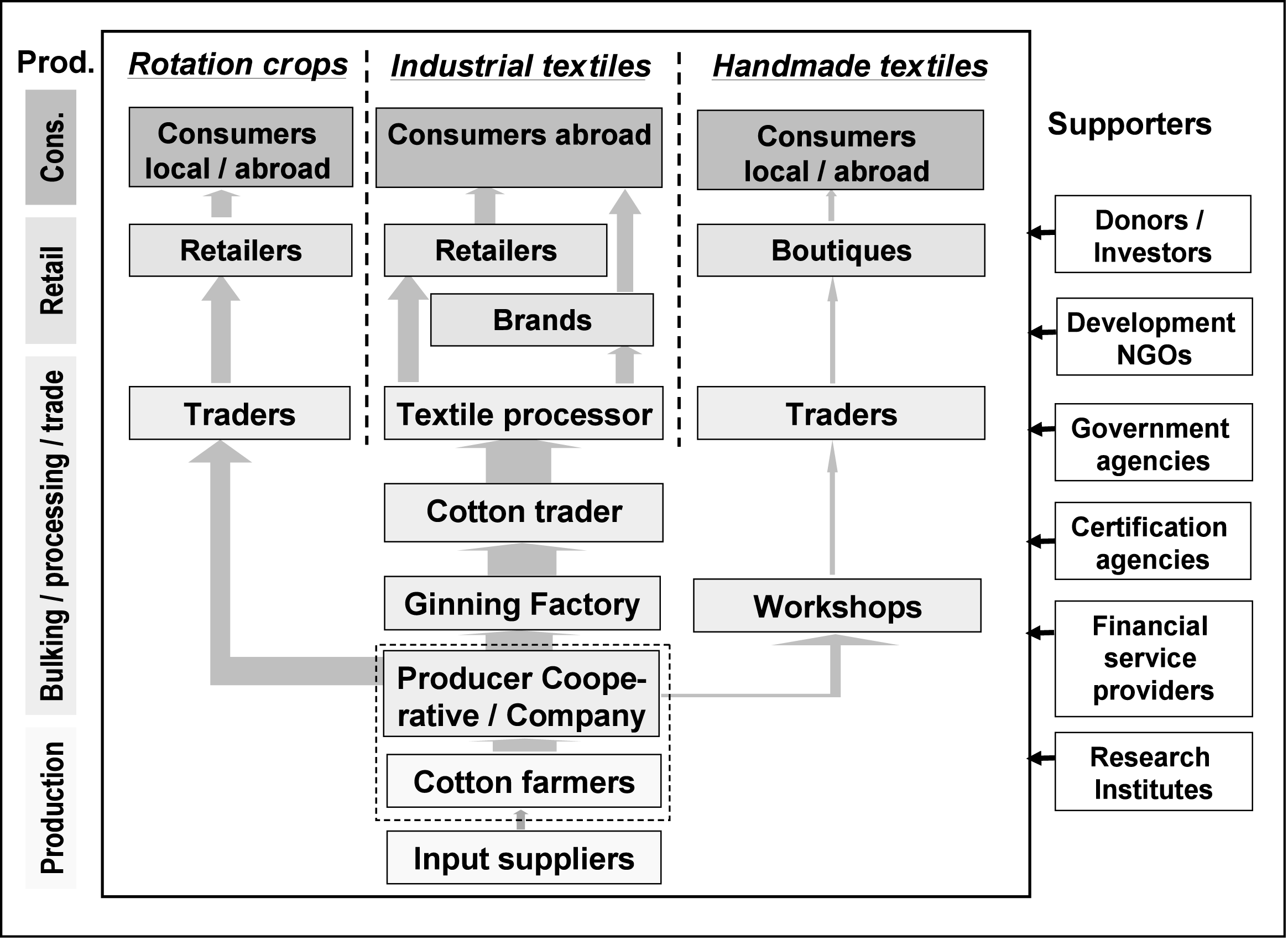
 Author/Copyright holder: josef.stuefer. Copyright terms and licence: CC BY 2.0
The Take Away
There are many ways to consider value networks from a business perspective. What is important is the understanding that networks can create value for anyone selling a product or service. Those networks can either drive adoption or impede adoption depending on how the relationships within them are approached. Designers may find it highly beneficial to map their own value networks and examine where they can create the most value.
References
Christensen, C.; The Innovator's Dilemma: The Revolutionary Book that Will Change the Way You Do Business, Collins Business Essentials
Stabell, Charles B., and Fjeldstad, Ø. "Configuring value for competitive advantage: On chains, shops, and networks" Strategic Management Journal 19, 1998
Normann, R. and Ramírez, R.From Value Chain to Value Constellation: Designing Interactive Strategy, Harvard Business Review, 71, July/August 1993, pp. 65–77
Allee, V. The Future of Knowledge: Increasing Prosperity through Value Networks, Butterworth-Heinemann 2003
Wikipedia examines Value Network Analysis in brief here
Hero Image: Author/Copyright holder: Martin Grandjean. Copyright terms and licence: CC BY-SA 3.0