Appropriation in UX/UI Design

Your constantly-updated definition of Appropriation in UX/UI Design and collection of videos and articles.
Be a conversation starter: Share this page and inspire others!

591 Shares

What is Appropriation in UX/UI Design?

In a user experience (UX) design context, appropriation refers to the use of a product in a way the designer did not intend. This form of appropriation is generally considered positive, because it increases the ways people can use a design. An example of appropriation would be using newspapers as rags for cleaning windows. Thus, designs become versatile.

Appropriation of a design for a new use is likely to create new sales and possibly even new markets for a product. Although designers cannot control when or how users will appropriate a design, they can create designs that encourage users to do this. Human-Computer Interaction Professor Alan Dix describes seven guidelines for designing for appropriation:

  1. Allow for interpretation by leaving at least some parts of the system open for the user to determine how they should be used.

  2. Provide visibility by providing more information about a system’s state than you expect the user to require.

  3. Expose intentions: making the intentions for the use of a product clear to the user can help keep appropriation within acceptable limits.

  4. Support the user; don’t control what they can do.

  5. Plugability and configuration: design products so users are able to modify them freely.

  6. Encourage sharing within a community of users.

  7. Learn from appropriation: if you can discover how your designs are being appropriated, you can begin to adopt those appropriations into your designs.

Appropriation—whose literal meaning is taking something for one’s own purposes, usually without the owner’s consent—thus, appropriately, expands the scope and potential for designers to access new and unexpected realms, thanks largely to giving their products’ users free rein. In some cases, designers may find the moderately selling creation they have in their intended market achieving far greater success due to its ‘misuse’ elsewhere.

Learn More About Appropriation in UX/UI Design

Make learning as easy as watching Netflix: Learn more about Appropriation in UX/UI Design by taking the online IxDF Course Get Your Product Used: Adoption and Appropriation.

Why? Because design skills make you valuable. In any job. Any industry.

In This Course, You'll

  • Get excited about how you can use design to get more people to use your products repeatedly and enthusiastically! Did you know that 95% of new products fail shortly after launch? Usability and user experience alone won't guarantee success. In this course, you'll discover how to turn prospects into customers and customers into passionate advocates. It's easier than you think, even if you're completely new to design, because you already have transferable skills like strategic thinking, curiosity, and communication. Your skills in adoption and appropriation empower you to create products that people integrate into their lives.

  • Make yourself invaluable with powerful design skills that directly increase adoption, drive business growth, and fast-track your career. Learn how to strategically engage early adopters and achieve critical mass for successful product launches. As AI becomes part of how products are developed, tested, and scaled, you stay in demand when you can design experiences people connect with and choose to return to. These timeless human-centered design skills help you guide AI so faster production still leads to ethical experiences that people can trust and love.

  • Gain confidence and credibility with bite-sized lessons and practical exercises you can immediately apply at work. Master the Path of Use to understand what drives usage and captivates people. You'll use the economics of design, network effects, and social systems to drive product adoption in any industry. Analyze real-world product launch successes and failures, and learn from others' mistakes so you can avoid costly trial and error. This course will give you the hands-on design skills you need to launch products with greater confidence and success.

It's Easy to Fast-Track Your Career with the World's Best Experts

Master complex skills effortlessly with proven best practices and toolkits directly from the world's top design experts. Meet your expert for this course:

  • Alan Dix: Author of the bestselling book “Human-Computer Interaction” and Director of the Computational Foundry at Swansea University.

Get an Industry-Recognized IxDF Course Certificate

Increase your credibility, salary potential and job opportunities by showing credible evidence of your skills.

IxDF Course Certificates set the industry gold standard. Add them to your LinkedIn profile, resumé, and job applications.

Course Certificate Example

Be in distinguished company, alongside industry leaders who train their teams with the IxDF and trust IxDF Course Certificates.

Our clients: IBM, HP, Adobe, GE, Accenture, Allianz, Phillips, Deezer, Capgemin, Mcafee, SAP, Telenor, Cigna, British Parliament, State of New York

All Free IxDF Articles on Appropriation in UX/UI Design

Read full article
Appropriation and Design: A Tale of Two Concepts - Article hero image
Interaction Design Foundation logo

Appropriation and Design: A Tale of Two Concepts

‘Appropriation is an unusual word for designers in that it has two very distinct meanings. Both are relevant to designers and both need careful consideration but for very different reasons.Appropriation is either:The use of pre-existing objects/images within a design or art with marginal amounts of

Social shares
704
Published
Read Article
Read full article
Useful, Usable, and Used: Why They Matter to Designers - Article hero image
Interaction Design Foundation logo

Useful, Usable, and Used: Why They Matter to Designers

Today, we’re going to take a look at three contexts of the concept of use: useful, usable and used. The first two terms, useful and usable, are bandied around a lot in terms of user experience and design while the third term, used, barely gets a mention. Yet, as we’ll come to see it may be the most

Social shares
868
Published
Read Article
Read full article
Emotional Drivers for User and Consumer Behavior - Article hero image
Interaction Design Foundation logo

Emotional Drivers for User and Consumer Behavior

In his paper; “Conditional Reflexes” the scientist Ivan Pavlov proved that a dog could be conditioned to respond to a stimulus. He presented a dog with food and the dog began to salivate. He also rang a bell every time he presented the food. Eventually he could ring the bell and cause the dog to sal

Social shares
688
Published
Read Article
Read full article
Guidelines for Design for Appropriation - Article hero image
Interaction Design Foundation logo

Guidelines for Design for Appropriation

Appropriation occurs when a user takes a design and puts it to use in a way that wasn’t anticipated by the designer. This can have real benefits for a product; it enables the product to become more useful and can increase the product’s appeal to different audiences and increase its market life too.

Social shares
534
Published
Read Article
Read full article
Appropriation: The Reasons that Users Appropriate Products - Article hero image
Interaction Design Foundation logo

Appropriation: The Reasons that Users Appropriate Products

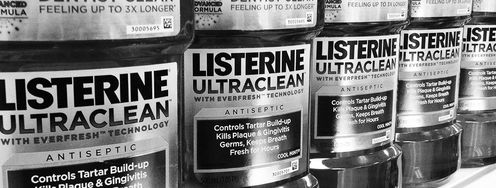
When you get up in the morning do you brush your teeth? You almost certainly do. If you use a mouthwash, such as Listerine, as part of your teeth cleaning ritual then we’ve got a nasty surprise for you. Did you know that Listerine wasn’t invented as a breath freshener? It was first marketed 133 year

Social shares
510
Published
Read Article
Read full article
The Dynamics of Use – Design Considerations - Article hero image
Interaction Design Foundation logo

The Dynamics of Use – Design Considerations

The use of a product may be considered as a cycle. Before a user is aware of a product they exist outside of that cycle. Once they are aware of it, they may be considered as being in a state of “pre-use”. If awareness sparks interest they may begin to use the product. This may be a single event or i

Social shares
467
Published
Read Article

Appropriation: The Reasons that Users Appropriate Products

Appropriation: The Reasons that Users Appropriate Products

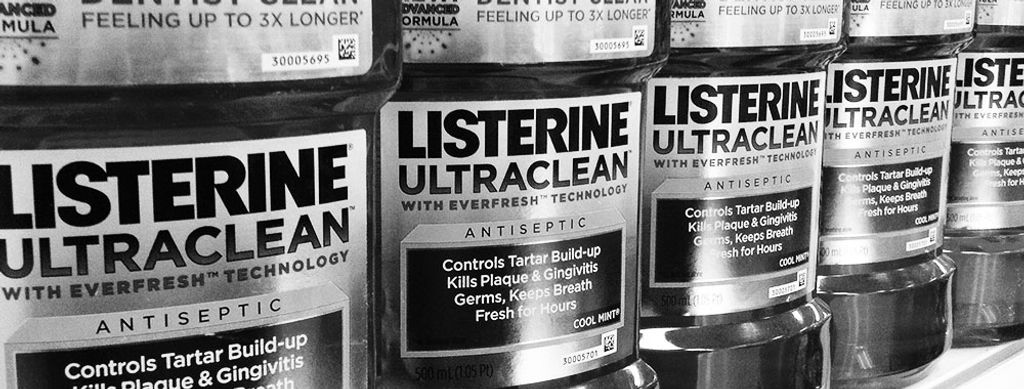
When you get up in the morning do you brush your teeth? You almost certainly do. If you use a mouthwash, such as Listerine, as part of your teeth cleaning ritual then we’ve got a nasty surprise for you. Did you know that Listerine wasn’t invented as a breath freshener? It was first marketed 133 years ago for something entirely different; as a surgical antiseptic and as a cure for gonorrhea.

It was the appropriation of Listerine in the 1920s that enabled it to become a cure for bad breath. That’s good news for the shareholders in Listerine because the brand was nearly appropriated in the 1880s as a cure for sweaty feet which, perhaps unsurprisingly, didn’t actually catch on.

Appropriation is good news for designers. It enables a design to be put to different purposes from those originally intended. Sometimes, the appropriation extends the use of a product and in other cases, like in the example of Listerine, that appropriation eventually supersedes the original use of the product.

But why do users appropriate products? What are the driving forces behind this change in use?

Accidental Appropriation

Author/Copyright holder: SElefant. Copyright terms and licence: CC-SA 3.0

Sometimes appropriation occurs simply by chance. Viagra is a great example of this. It wasn’t invented to improve the sex lives of those suffering from erectile dysfunction; it was invented to treat hypertension, angina and other forms of heart disease.

Yet when Viagra entered clinical trials it soon became apparent to male testers that there was a certain side effect that may or may not have been embarrassing depending on when you took the pill. Viagra was immediately reinvented as a cure for erectile dysfunction and as the world’s best known treatment for the condition – the accidental appropriation of the drug may be one of the most successful appropriations in history.

Situatedness
Author/Copyright holder: JISC. Copyright terms and licence: CC BY-NC-ND 2.0 UK

Situatedness is the appropriation of a product based on the environmental situation faced by a user. This situation is very different from the one faced by the designers during the design phase of a product.

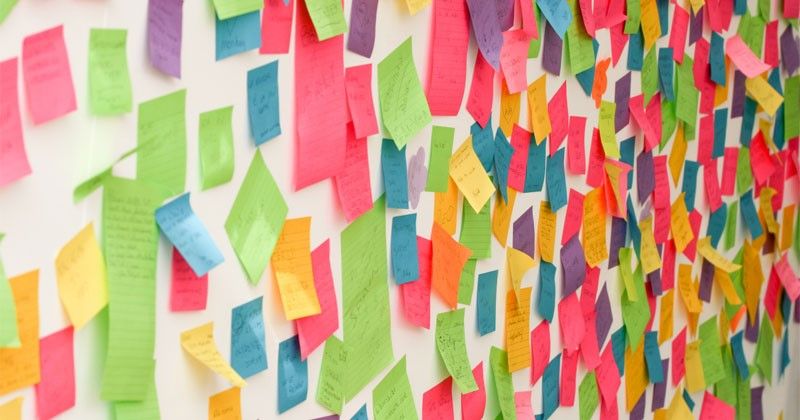
In the case of the Post-It note; the product only came to light thanks to appropriation to a situation by the inventor of the product. The project that he had been working on was a research project to develop an extra-strength glue. The adhesive on a Post-It note was created and found to have failed to deliver “extra-strength” in fact it was incredibly weak.

The inventor needed a bookmark, however, and reasoned that this weak glue would be excellent for keeping pages marked in his book. So he coated a piece of paper with it and began to use it as a bookmark.

When his appropriation was noticed at 3M, the company he was working for, the Post-It Note was born. It has become one of the world’s most successful products.

Dynamics

Environments change and products may be appropriated in a response to those changes. This kind of appropriation may be temporary, for example the use of a bed sheet over a window to block smoke or dust from the outside or it may be permanent (if dusty conditions were to continue forever).

Subversion

Subversion when taken literally is “the act of trying to destroy an established system” which sounds rather terrifying when it comes to appropriating products. But really in the case of subverting products it’s more about the use of the product for ways contrary to the original purpose.

It’s worth noting that these are often unpleasant moments of appropriation. GCHQ and the NSA (the British and American security agencies) were outed by Edward Snowden for trying to subvert anti-virus software so that they could insert their own viruses into people’s systems to keep tabs on them.

Author/Copyright holder: Defence Images. Copyright terms and licence: CC BY-SA 2.0

Ownership

The final reason for appropriating products is ownership; by taking a product and using it for something it wasn’t originally intended for – it confers a feeling of ownership on the user of that product. The product is no longer a designer’s creation, it is the user’s own creation to reach a solution to a problem. This ownership of a product will also induce a sense of pride and self-worth in a user. Positive emotions are likely to increase the user’s loyalty to a specific product and appropriation to create ownership is something that should be encouraged wherever possible.

The Take Away

There are many reasons for appropriation but the most common are accidental, situatedness, dynamics, subversion and ownership. Designers shouldn’t fear appropriation – the Post-It Note, Viagra and Listerine’s success all come from the products being appropriated in one way or another. Appropriation in the majority of cases is a positive thing which encourages additional use of a product. However, there are some cases particularly when a product is subverted that appropriation may be detrimental to a product from the designer’s perspective.

References

Listerine and gonorrhea – Huffington Post

Understanding Viagra at Wikipedia

Edward Snowden, GCHQ, NSA and the subversion of anti-virus software

Hero Image: Author/Copyright holder: Mike Mozart. Copyright terms and licence: CC BY 2.0

Feel Stuck?
Want Better Job Options?

AI is replacing jobs everywhere, yet design jobs are booming with a projected 45% job growth. With design skills, you can create products and services people love. More love means more impact and greater salary potential.

At IxDF, we help you from your first course to your next job, all in one place.

See How Design Skills Turn Into Job Options
Privacy Settings
By using this site, you accept our Cookie Policy and Terms of Use.
Customize
Accept all

Be the One Who Inspires

People remember who shares great ideas.

Share on:

Academic Credibility — On Autopilot

Don't waste time googling citation formats. Just copy, paste and look legit in seconds.