Appropriation: The Reasons that Users Appropriate Products

• 7 min read

510 Shares

When you get up in the morning do you brush your teeth? You almost certainly do. If you use a mouthwash, such as Listerine, as part of your teeth cleaning ritual then we’ve got a nasty surprise for you. Did you know that Listerine wasn’t invented as a breath freshener? It was first marketed 133 years ago for something entirely different; as a surgical antiseptic and as a cure for gonorrhea.

It was the appropriation of Listerine in the 1920s that enabled it to become a cure for bad breath. That’s good news for the shareholders in Listerine because the brand was nearly appropriated in the 1880s as a cure for sweaty feet which, perhaps unsurprisingly, didn’t actually catch on.

Appropriation is good news for designers. It enables a design to be put to different purposes from those originally intended. Sometimes, the appropriation extends the use of a product and in other cases, like in the example of Listerine, that appropriation eventually supersedes the original use of the product.

But why do users appropriate products? What are the driving forces behind this change in use?

Accidental Appropriation
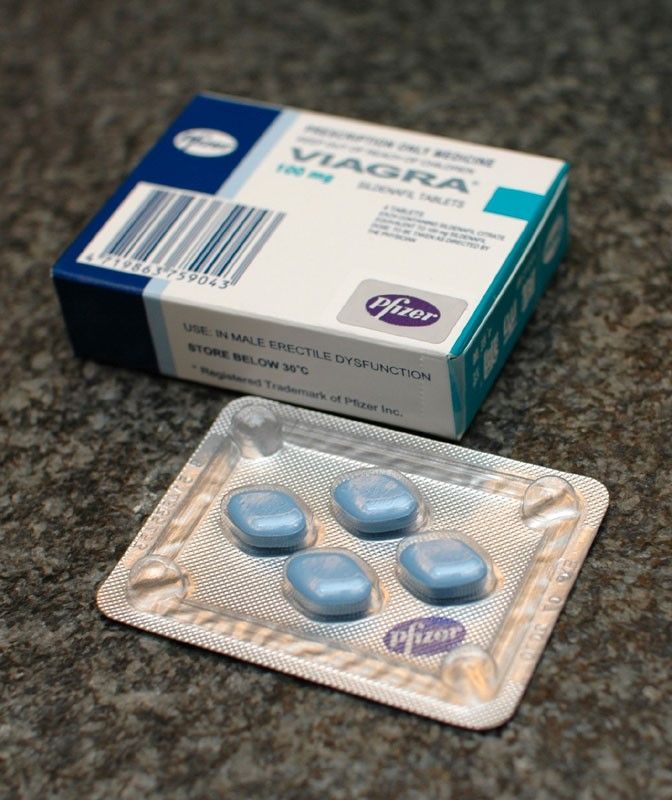
Author/Copyright holder: SElefant. Copyright terms and licence: CC-SA 3.0

Sometimes appropriation occurs simply by chance. Viagra is a great example of this. It wasn’t invented to improve the sex lives of those suffering from erectile dysfunction; it was invented to treat hypertension, angina and other forms of heart disease.

Yet when Viagra entered clinical trials it soon became apparent to male testers that there was a certain side effect that may or may not have been embarrassing depending on when you took the pill. Viagra was immediately reinvented as a cure for erectile dysfunction and as the world’s best known treatment for the condition – the accidental appropriation of the drug may be one of the most successful appropriations in history.

Situatedness
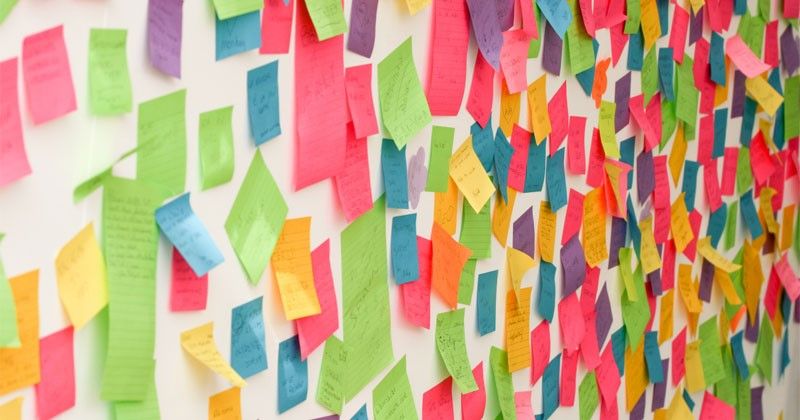
Author/Copyright holder: JISC. Copyright terms and licence: CC BY-NC-ND 2.0 UK

Situatedness is the appropriation of a product based on the environmental situation faced by a user. This situation is very different from the one faced by the designers during the design phase of a product.

In the case of the Post-It note; the product only came to light thanks to appropriation to a situation by the inventor of the product. The project that he had been working on was a research project to develop an extra-strength glue. The adhesive on a Post-It note was created and found to have failed to deliver “extra-strength” in fact it was incredibly weak.

The inventor needed a bookmark, however, and reasoned that this weak glue would be excellent for keeping pages marked in his book. So he coated a piece of paper with it and began to use it as a bookmark.

When his appropriation was noticed at 3M, the company he was working for, the Post-It Note was born. It has become one of the world’s most successful products.

Dynamics

Environments change and products may be appropriated in a response to those changes. This kind of appropriation may be temporary, for example the use of a bed sheet over a window to block smoke or dust from the outside or it may be permanent (if dusty conditions were to continue forever).

Subversion

Subversion when taken literally is “the act of trying to destroy an established system” which sounds rather terrifying when it comes to appropriating products. But really in the case of subverting products it’s more about the use of the product for ways contrary to the original purpose.

It’s worth noting that these are often unpleasant moments of appropriation. GCHQ and the NSA (the British and American security agencies) were outed by Edward Snowden for trying to subvert anti-virus software so that they could insert their own viruses into people’s systems to keep tabs on them.

Author/Copyright holder: Defence Images. Copyright terms and licence: CC BY-SA 2.0

Ownership

The final reason for appropriating products is ownership; by taking a product and using it for something it wasn’t originally intended for – it confers a feeling of ownership on the user of that product. The product is no longer a designer’s creation, it is the user’s own creation to reach a solution to a problem. This ownership of a product will also induce a sense of pride and self-worth in a user. Positive emotions are likely to increase the user’s loyalty to a specific product and appropriation to create ownership is something that should be encouraged wherever possible.

The Take Away

There are many reasons for appropriation but the most common are accidental, situatedness, dynamics, subversion and ownership. Designers shouldn’t fear appropriation – the Post-It Note, Viagra and Listerine’s success all come from the products being appropriated in one way or another. Appropriation in the majority of cases is a positive thing which encourages additional use of a product. However, there are some cases particularly when a product is subverted that appropriation may be detrimental to a product from the designer’s perspective.

References

Listerine and gonorrhea – Huffington Post

Understanding Viagra at Wikipedia

Edward Snowden, GCHQ, NSA and the subversion of anti-virus software

Hero Image: Author/Copyright holder: Mike Mozart. Copyright terms and licence: CC BY 2.0

Learn More in This Course:

AI for Designers

12 days
13 % booked
View Course

What You Should Read Next

  • Read full article
    What is Interaction Design? - Article hero image
    Interaction Design Foundation logo

    What is Interaction Design?

    Interaction design is an important component within the giant umbrella of user experience (UX) design. In this article, we’ll explain what interaction design is, some useful models of interaction design, as well as briefly describe what an interaction designer usually does.A simple and useful unders

    Social shares
    1.5k
    Published
    Read Article
  • Read full article
    Apple’s Product Development Process – Inside the World’s Greatest Design Organization - Article hero image
    Interaction Design Foundation logo

    Apple’s Product Development Process – Inside the World’s Greatest Design Organization

    Apple’s Product Development Process may be one of the most successful design processes ever implemented. With a valuation that exceeds $2 trillion, there’s a lot that designers can learn from Apple and introduce into their own design environments.Apple is a notoriously secretive business. In Steve J

    Social shares
    1.4k
    Published
    Read Article
  • Read full article
    Shneiderman’s Eight Golden Rules Will Help You Design Better Interfaces - Article hero image
    Interaction Design Foundation logo

    Shneiderman’s Eight Golden Rules Will Help You Design Better Interfaces

    Follow Ben Shneiderman’s 'Eight Golden Rules of Interface Design' if you want to design great, productive and frustration-free user interfaces. Apple, Google and Microsoft are among some of the highly successful companies whose well-designed products reflect Shneiderman’s rules. The characteristics

    Social shares
    1.4k
    Published
    Read Article
  • Read full article
    How to Change Your Career from Graphic Design to UX Design - Article hero image
    Interaction Design Foundation logo

    How to Change Your Career from Graphic Design to UX Design

    If there’s an occupation that is 100% linked with the public’s idea of what design is all about, it’s graphic design. From the familiar golden arches of the McDonald’s brand to the typography and colors of movie posters, graphic designers create some of the most iconic and ubiquitous designs around

    Social shares
    1.4k
    Published
    Read Article
  • Read full article
    The Grid System: Building a Solid Design Layout - Article hero image
    Interaction Design Foundation logo

    The Grid System: Building a Solid Design Layout

    Now that we’ve seen some grids at work in the Rule of Thirds article, let’s examine them a little more deeply. As a concept that deals so fundamentally with the fabric and background of our work as designers, it’s easy to overlook the power of grids and think more about the elements we want to creat

    Social shares
    1.4k
    Published
    Read Article
  • Read full article
    The Principles of Service Design Thinking - Building Better Services - Article hero image
    Interaction Design Foundation logo

    The Principles of Service Design Thinking - Building Better Services

    Service design is all about taking a service and making it meet the user’s and customer’s needs for that service. It can be used to improve an existing service or to create a new service from scratch. In order to adapt to service design, a UX designer will need to understand the basic principles of

    Social shares
    1.4k
    Published
    Read Article
  • Read full article
    A Simple Introduction to Lean UX - Article hero image
    Interaction Design Foundation logo

    A Simple Introduction to Lean UX

    Lean UX is an incredibly useful technique when working on projects where the Agile development method is used. Traditional UX techniques often don’t work when development is conducted in rapid bursts – there’s not enough time to deliver UX in the same way. Fundamentally Lean UX and other forms of UX

    Social shares
    1.3k
    Published
    Read Article
  • Read full article
    Dieter Rams: 10 Timeless Commandments for Good Design - Article hero image
    Interaction Design Foundation logo

    Dieter Rams: 10 Timeless Commandments for Good Design

    Let’s pay a virtual visit to a famous industrial designer’s workshop. By examining the principles of his winning approach, we can incorporate vital elements into our designs in the “less is more” age.As user experience practitioners, most of us have worked with Nielsen and Molich’s 10 heuristics or

    Social shares
    1.3k
    Published
    Read Article
  • Read full article
    The 7 Factors that Influence User Experience - Article hero image
    Interaction Design Foundation logo

    The 7 Factors that Influence User Experience

    User Experience (UX) is critical to the success or failure of a product in the market but what do we mean by UX? All too often UX is confused with usability which describes to some extent how easy a product is to use and it is true that UX as a discipline began with usability – however, UX has grown

    Social shares
    1.3k
    Published
    Read Article
  • Read full article
    10 Free-to-Use Wireframing Tools for UX Designers in 2026 - Article hero image
    Interaction Design Foundation logo

    10 Free-to-Use Wireframing Tools for UX Designers in 2026

    Wireframes help you quickly ideate and test your ideas. While paper wireframes are the fastest to create, digital wireframes look more polished and presentable. If you are looking for a pocket-friendly wireframing tool, look no further.Whether you prefer browser-based apps or offline desktop tools,

    Social shares
    1.3k
    Published
    Read Article

Top Articles

Top Topic Definitions

Feel Stuck?
Want Better Job Options?

AI is replacing jobs everywhere, yet design jobs are booming with a projected 45% job growth. With design skills, you can create products and services people love. More love means more impact and greater salary potential.

At IxDF, we help you from your first course to your next job, all in one place.

See How Design Skills Turn Into Job Options
Privacy Settings
By using this site, you accept our Cookie Policy and Terms of Use.
Customize
Accept all

Be the One Who Inspires

People remember who shares great ideas.

Share on:

Academic Credibility — On Autopilot

Don't waste time googling citation formats. Just copy, paste and look legit in seconds.

Feel Stuck? Want Freedom?

Join 326,029+ designers who get one powerful email each week. Learn to design a life you love.

Next email in
1
day
13
hrs
31
mins
23
secs

Free forever. No spam. Unsubscribe anytime.