Emotional Drivers for User and Consumer Behavior

• 7 min read

688 Shares

In his paper; “Conditional Reflexes” the scientist Ivan Pavlov proved that a dog could be conditioned to respond to a stimulus. He presented a dog with food and the dog began to salivate. He also rang a bell every time he presented the food. Eventually he could ring the bell and cause the dog to salivate without any food being present. The act of the dog salivating at the ring of the bell is what is known as a “conditioned response”.

Why is this important? Because many people have mistaken emotional drivers for behavior for conditioned responses. It is true that emotions drive our behavior and that we are more or less likely to do something because of the way we feel at any given point; however, there is no specific emotional trigger that results in all users salivating for your product – no matter how many buttons that you push to get there.

Emotional Drivers for Behavior and Why They Matter to Designers
Author/Copyright holder: Toddatkins. Copyright terms and licence: CC0 1.0

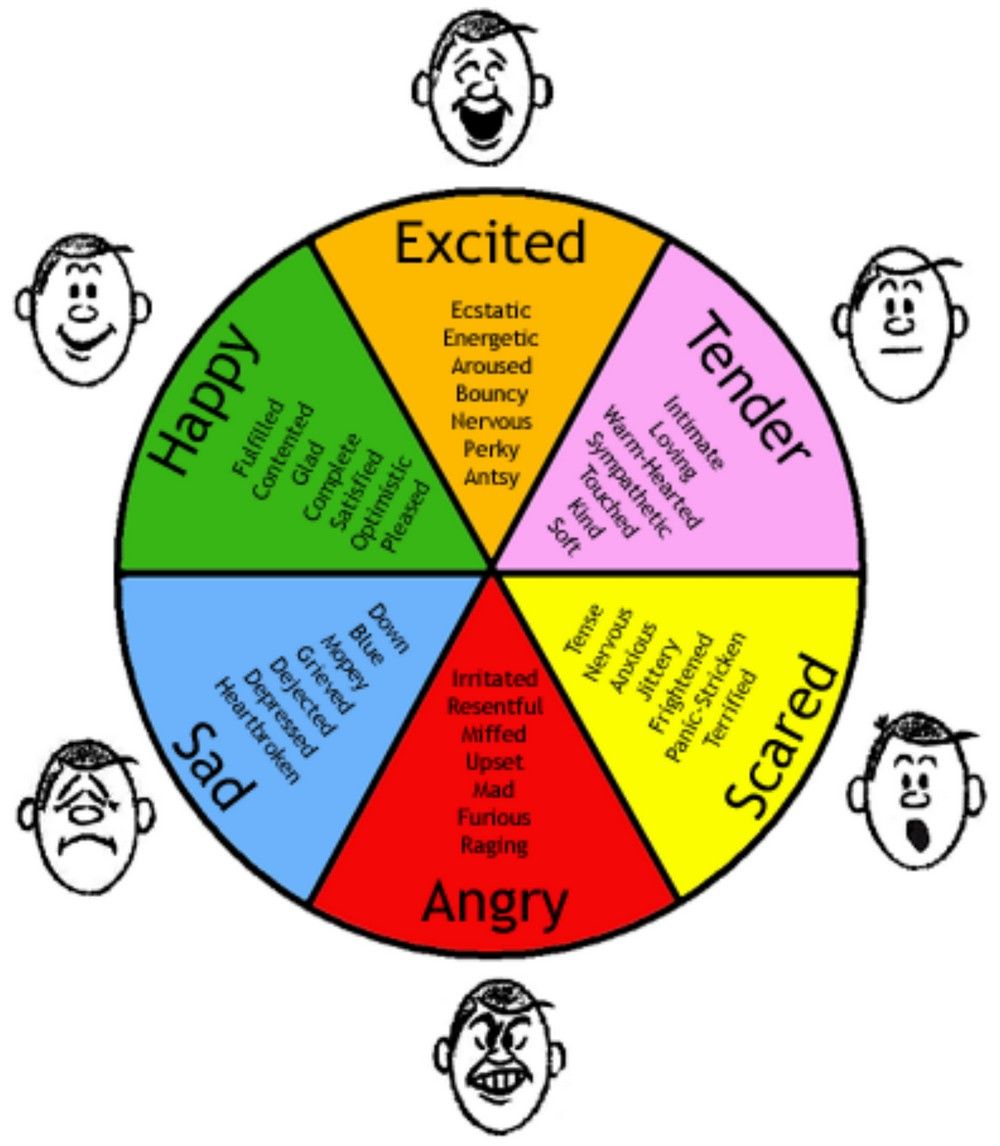
Much of human behavior is driven by emotion rather than reason. Writing in Psychology Today, Peter Noel Murray PhD, describes the roles of emotion in consumer behavior as evaluated in research:

  • Magnetic resonance imagery (MRI) which scans the brain shows that when a customer evaluates a brand it is emotion (feelings plus experiences) that is used to conduct the evaluation and not the information that the person has (brand attributes, benefits, features, facts, etc.)

  • Advertising research shows that emotion content is 3 times more likely to influence a purchasing decision than content is in television advertising and twice as likely to influence purchasing decisions rather than content in print advertising (it seems likely that this will also correlate to internet advertising)

  • The Advertising Research Foundation’s research demonstrate that the “likeability” of a brand is the best prediction of sales for that brand

  • Positive emotions invoked by a brand are better indicators of customer loyalty than trust in that brand or other evaluations based on information/facts

Why is this the case?

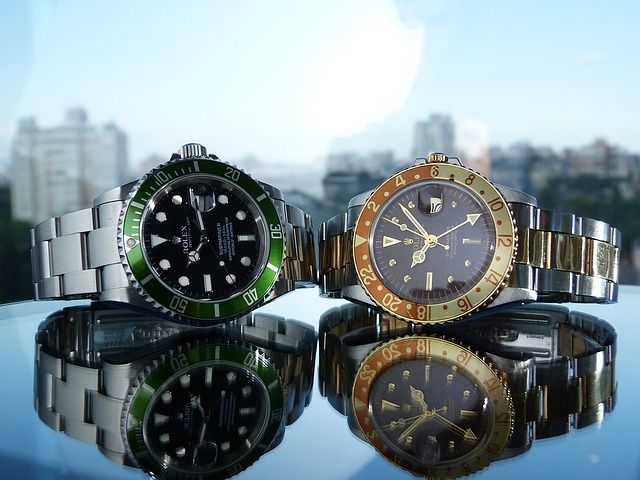
Emotions compel human beings to take action. If we are confronted by an angry person it may be fear that causes us to flee or rage that causes us to fight. If we feel insecure we might buy a status symbol such as a Rolex or Rolls-Royce to combat that insecurity. If we feel happy we might burst into song. And so on..
Author/Copyright holder: Mauriciodss. Copyright terms and licence: Public Domain

For designers this is important because it means that a product which consists of nothing but attributes, features and data in the minds of users – is a product that will have a hard time being adopted by the market.

An emotional brand response is more likely to create adoption of products. If a user cares about the emotional story that is projected to them – they are going to want to investigate that story further.

The product as a brand must tell an emotional story to connect with consumers. This means there is an overlap between traditional user experience activities and marketing activities. Marketers will try to create the emotional story in the marketing but if the product reflects that story it is more likely to sustain loyalty and increase the chances of appropriation (when users find alternative uses for a product that were not intended by their creators).

Iterative Emotional Stories

Design and indeed marketing are iterative processes. An idea is refined over and over again until such time as it is no longer required. The same holds true for emotional design and there is a great source of emotional research that is often missed during the evaluation of products.

When a design is appropriated by a user; that appropriation is likely to create a series of positive emotions. The user will feel pleased with themselves, they may also feel pride in what they have created.

Author/Copyright holder: auqA|Water's channel. Copyright terms and licence: Fair Use.

These emotional stories which are created through appropriation are rarely incorporated in the emotional story of the product as told by the creators. Yet, they may be a rich source of emotion which can be easily tapped and shared with users not just to create an emotional response but also to provide stimulation for further appropriation of the product itself. The more a product is used, whether it is used for the designer’s intended purpose or not, the more longevity it has in the market and the more useful it becomes and in turn the more likely it is that a user will purchase the product.

The Take Away

Human beings are emotional creatures and much of our actions are a response to our emotions rather than to a reasoned process. Research shows a clear link between emotional connections with a product and sales and longevity. Cooperation between design and marketing can create emotional stories that make products easier to be adopted and then appropriated. Appropriation itself is a rich source of emotional stories and should be investigated carefully during iterations of both design and marketing approaches.

References

Pavlov, I. P. (1927/1960). Conditional Reflexes. New York: Dover Publications (the 1960 edition is not an unaltered republication of the 1927 translation by Oxford University Press).

Inside the Consumer Mind, Psychology Today

Hero Image: Author/Copyright holder: skeeze. Copyright terms and licence: Public Domain

Learn More in This Course:

AI for Designers

12 days
13 % booked
View Course

What You Should Read Next

  • Read full article
    What is Interaction Design? - Article hero image
    Interaction Design Foundation logo

    What is Interaction Design?

    Interaction design is an important component within the giant umbrella of user experience (UX) design. In this article, we’ll explain what interaction design is, some useful models of interaction design, as well as briefly describe what an interaction designer usually does.A simple and useful unders

    Social shares
    1.5k
    Published
    Read Article
  • Read full article
    Apple’s Product Development Process – Inside the World’s Greatest Design Organization - Article hero image
    Interaction Design Foundation logo

    Apple’s Product Development Process – Inside the World’s Greatest Design Organization

    Apple’s Product Development Process may be one of the most successful design processes ever implemented. With a valuation that exceeds $2 trillion, there’s a lot that designers can learn from Apple and introduce into their own design environments.Apple is a notoriously secretive business. In Steve J

    Social shares
    1.4k
    Published
    Read Article
  • Read full article
    Shneiderman’s Eight Golden Rules Will Help You Design Better Interfaces - Article hero image
    Interaction Design Foundation logo

    Shneiderman’s Eight Golden Rules Will Help You Design Better Interfaces

    Follow Ben Shneiderman’s 'Eight Golden Rules of Interface Design' if you want to design great, productive and frustration-free user interfaces. Apple, Google and Microsoft are among some of the highly successful companies whose well-designed products reflect Shneiderman’s rules. The characteristics

    Social shares
    1.4k
    Published
    Read Article
  • Read full article
    How to Change Your Career from Graphic Design to UX Design - Article hero image
    Interaction Design Foundation logo

    How to Change Your Career from Graphic Design to UX Design

    If there’s an occupation that is 100% linked with the public’s idea of what design is all about, it’s graphic design. From the familiar golden arches of the McDonald’s brand to the typography and colors of movie posters, graphic designers create some of the most iconic and ubiquitous designs around

    Social shares
    1.4k
    Published
    Read Article
  • Read full article
    The Grid System: Building a Solid Design Layout - Article hero image
    Interaction Design Foundation logo

    The Grid System: Building a Solid Design Layout

    Now that we’ve seen some grids at work in the Rule of Thirds article, let’s examine them a little more deeply. As a concept that deals so fundamentally with the fabric and background of our work as designers, it’s easy to overlook the power of grids and think more about the elements we want to creat

    Social shares
    1.4k
    Published
    Read Article
  • Read full article
    The Principles of Service Design Thinking - Building Better Services - Article hero image
    Interaction Design Foundation logo

    The Principles of Service Design Thinking - Building Better Services

    Service design is all about taking a service and making it meet the user’s and customer’s needs for that service. It can be used to improve an existing service or to create a new service from scratch. In order to adapt to service design, a UX designer will need to understand the basic principles of

    Social shares
    1.4k
    Published
    Read Article
  • Read full article
    A Simple Introduction to Lean UX - Article hero image
    Interaction Design Foundation logo

    A Simple Introduction to Lean UX

    Lean UX is an incredibly useful technique when working on projects where the Agile development method is used. Traditional UX techniques often don’t work when development is conducted in rapid bursts – there’s not enough time to deliver UX in the same way. Fundamentally Lean UX and other forms of UX

    Social shares
    1.3k
    Published
    Read Article
  • Read full article
    Dieter Rams: 10 Timeless Commandments for Good Design - Article hero image
    Interaction Design Foundation logo

    Dieter Rams: 10 Timeless Commandments for Good Design

    Let’s pay a virtual visit to a famous industrial designer’s workshop. By examining the principles of his winning approach, we can incorporate vital elements into our designs in the “less is more” age.As user experience practitioners, most of us have worked with Nielsen and Molich’s 10 heuristics or

    Social shares
    1.3k
    Published
    Read Article
  • Read full article
    The 7 Factors that Influence User Experience - Article hero image
    Interaction Design Foundation logo

    The 7 Factors that Influence User Experience

    User Experience (UX) is critical to the success or failure of a product in the market but what do we mean by UX? All too often UX is confused with usability which describes to some extent how easy a product is to use and it is true that UX as a discipline began with usability – however, UX has grown

    Social shares
    1.3k
    Published
    Read Article
  • Read full article
    10 Free-to-Use Wireframing Tools for UX Designers in 2026 - Article hero image
    Interaction Design Foundation logo

    10 Free-to-Use Wireframing Tools for UX Designers in 2026

    Wireframes help you quickly ideate and test your ideas. While paper wireframes are the fastest to create, digital wireframes look more polished and presentable. If you are looking for a pocket-friendly wireframing tool, look no further.Whether you prefer browser-based apps or offline desktop tools,

    Social shares
    1.3k
    Published
    Read Article

Top Articles

Top Topic Definitions

Feel Stuck?
Want Better Job Options?

AI is replacing jobs everywhere, yet design jobs are booming with a projected 45% job growth. With design skills, you can create products and services people love. More love means more impact and greater salary potential.

At IxDF, we help you from your first course to your next job, all in one place.

See How Design Skills Turn Into Job Options
Privacy Settings
By using this site, you accept our Cookie Policy and Terms of Use.
Customize
Accept all

Be the One Who Inspires

People remember who shares great ideas.

Share on:

Academic Credibility — On Autopilot

Don't waste time googling citation formats. Just copy, paste and look legit in seconds.

Feel Stuck? Want Freedom?

Join 326,020+ designers who get one powerful email each week. Learn to design a life you love.

Next email in
1
day
15
hrs
21
mins
19
secs

Free forever. No spam. Unsubscribe anytime.