Product Adoption

Your constantly-updated definition of Product Adoption and collection of videos and articles.
Be a conversation starter: Share this page and inspire others!

1,479 Shares

What is Product Adoption?

The design process has an objective. It's not to create usable and useful products (though these are both important considerations when designing products), but rather to create products people use. Adoption is the process by which people become users of a product, and it is adoption which will enable users to discover that a product is usable and useful and enable them to become long-term users of a product.

Product adoption is one of the most important business goals. If your product is adopted, you create a customer base and gain a position within the market. Product adoption marks the transition between the product being unknown and foreign to becoming used and welcomed by the users.

Product adoption depends on the particular user. There are different types of adopters within your potential customer base, and each has different values.

The basic types of adopters can be divided into 5 groups: innovators, early adopters, early majority, late majority and laggards.

The innovators and the early adopters are the first groups to show interest in adopting the new product. The laggards are the most resistant to change and are the last to welcome any new innovation or change into their lives.

Learn More About Product Adoption

Make learning as easy as watching Netflix: Learn more about Product Adoption by taking the online IxDF Course Get Your Product Used: Adoption and Appropriation.

Why? Because design skills make you valuable. In any job. Any industry.

In This Course, You'll

  • Get excited about how you can use design to get more people to use your products repeatedly and enthusiastically! Did you know that 95% of new products fail shortly after launch? Usability and user experience alone won't guarantee success. In this course, you'll discover how to turn prospects into customers and customers into passionate advocates. It's easier than you think, even if you're completely new to design, because you already have transferable skills like strategic thinking, curiosity, and communication. Your skills in adoption and appropriation empower you to create products that people integrate into their lives.

  • Make yourself invaluable with powerful design skills that directly increase adoption, drive business growth, and fast-track your career. Learn how to strategically engage early adopters and achieve critical mass for successful product launches. As AI becomes part of how products are developed, tested, and scaled, you stay in demand when you can design experiences people connect with and choose to return to. These timeless human-centered design skills help you guide AI so faster production still leads to ethical experiences that people can trust and love.

  • Gain confidence and credibility with bite-sized lessons and practical exercises you can immediately apply at work. Master the Path of Use to understand what drives usage and captivates people. You'll use the economics of design, network effects, and social systems to drive product adoption in any industry. Analyze real-world product launch successes and failures, and learn from others' mistakes so you can avoid costly trial and error. This course will give you the hands-on design skills you need to launch products with greater confidence and success.

It's Easy to Fast-Track Your Career with the World's Best Experts

Master complex skills effortlessly with proven best practices and toolkits directly from the world's top design experts. Meet your expert for this course:

  • Alan Dix: Author of the bestselling book “Human-Computer Interaction” and Director of the Computational Foundry at Swansea University.

Get an Industry-Recognized IxDF Course Certificate

Increase your credibility, salary potential and job opportunities by showing credible evidence of your skills.

IxDF Course Certificates set the industry gold standard. Add them to your LinkedIn profile, resumé, and job applications.

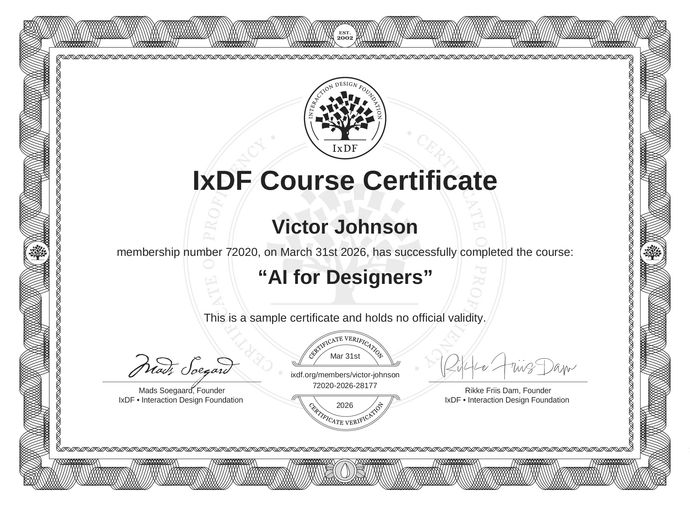
Course Certificate Example

Be in distinguished company, alongside industry leaders who train their teams with the IxDF and trust IxDF Course Certificates.

Our clients: IBM, HP, Adobe, GE, Accenture, Allianz, Phillips, Deezer, Capgemin, Mcafee, SAP, Telenor, Cigna, British Parliament, State of New York

All Free IxDF Articles on Product Adoption

Read full article
Adoption and Design: How to Turn Prospects into Users - Article hero image
Interaction Design Foundation logo

Adoption and Design: How to Turn Prospects into Users

It doesn’t matter how amazing a product is; if no-one is using it, then it hasn’t succeeded. Adoption is the process of prospective users becoming actual users of a product. It is adoption that is the objective of design; more so than user experience, usability, utility, etc. History is full of prod

Social shares
590
Published
Read Article
Read full article
Appropriation and Design: A Tale of Two Concepts - Article hero image
Interaction Design Foundation logo

Appropriation and Design: A Tale of Two Concepts

‘Appropriation is an unusual word for designers in that it has two very distinct meanings. Both are relevant to designers and both need careful consideration but for very different reasons.Appropriation is either:The use of pre-existing objects/images within a design or art with marginal amounts of

Social shares
704
Published
Read Article
Read full article
Useful, Usable, and Used: Why They Matter to Designers - Article hero image
Interaction Design Foundation logo

Useful, Usable, and Used: Why They Matter to Designers

Today, we’re going to take a look at three contexts of the concept of use: useful, usable and used. The first two terms, useful and usable, are bandied around a lot in terms of user experience and design while the third term, used, barely gets a mention. Yet, as we’ll come to see it may be the most

Social shares
868
Published
Read Article
Read full article
Social Systems and Their Role in Product Adoption - Article hero image
Interaction Design Foundation logo

Social Systems and Their Role in Product Adoption

People don’t often make their decisions by themselves with no input from others. We turn to family, friends, media, opinion makers, colleagues, etc. to get their input. This is particularly true of decisions which may impact on our happiness to a great extent.Why does this matter in a design context

Social shares
630
Published
Read Article
Read full article
How to Achieve Critical Mass for a Product Launch - Article hero image
Interaction Design Foundation logo

How to Achieve Critical Mass for a Product Launch

The concept of critical mass originates in physics; it refers to the volume of a nuclear product required to sustain a chain reaction in a nuclear explosion. However, critical mass in marketing requires a very different product – users – to ensure a “chain reaction” of sales. The idea of critical m

Social shares
754
Published
Read Article
Read full article
The Diffusion of Innovation – Strategies for Adoption of Products - Article hero image
Interaction Design Foundation logo

The Diffusion of Innovation – Strategies for Adoption of Products

The diffusion of innovation is the process by which new products are adopted (or not) by their intended audiences. It allows designers and marketers to examine why it is that some inferior products are successful when some superior products are not.The idea of diffusion is not new; in fact it was or

Social shares
1.1k
Published
Read Article

Adoption and Design: How to Turn Prospects into Users

Adoption and Design: How to Turn Prospects into Users

It doesn’t matter how amazing a product is; if no-one is using it, then it hasn’t succeeded. Adoption is the process of prospective users becoming actual users of a product. It is adoption that is the objective of design; more so than user experience, usability, utility, etc. History is full of products that provided great user experiences which were 100% usable and useful and yet still failed to make the impact that they should have done.

This means that designers need to consider adoption of their designs as part of their work. In larger organizations much of the work to have products adopted will be the responsibilities of the marketing team – in smaller organizations the UX designer may have a key role to play. In either case, the UX team should be working with marketing to ensure that products are best prepared for being adopted by the target user base.

Elon Musk, the entrepreneur and founder of Tesla Motors says; “great companies are built on great products.” We add they’re only great products if they’re used widely.

How to Turn Prospects Into Users – The Pre-Design Phase

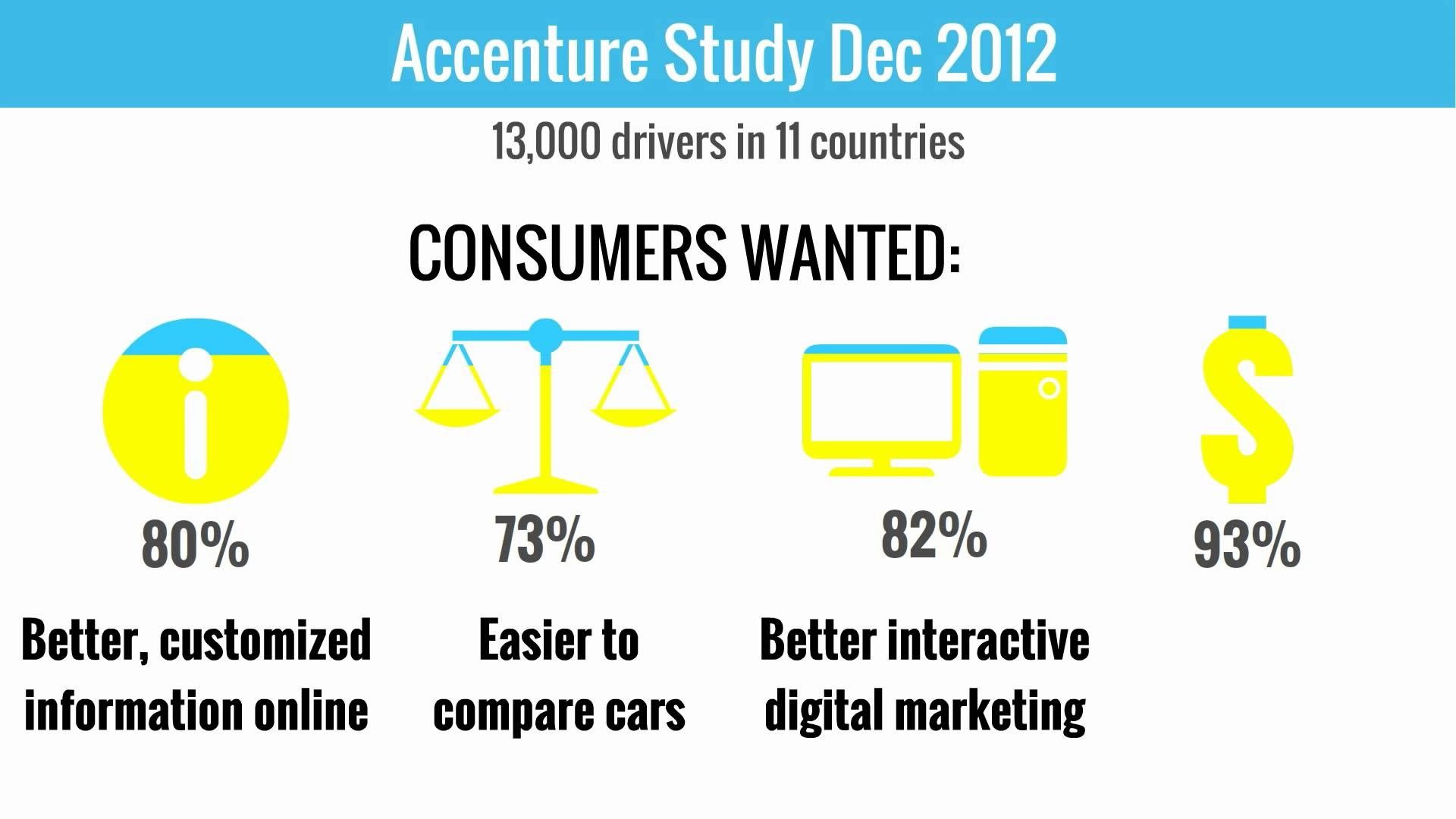
User research will help you understand what your users want from a product. Market research, on the other hand, will help you understand:

  • If the potential user base is large enough to make adoption of a product profitable

  • How that user base learns of new products and where marketing interventions can help educate and introduce users to your products

  • What the likely costs are of creating enough awareness to drive adoption – if you don’t have the budget, you may struggle to get your product in front of the right people

  • What the likely strategy for adoption might be for your users

This may seem pretty obvious but many products go to market without this simple evaluation from market research. A product without an economic market is unlikely to succeed (unless another larger market is discovered after the product is launched). A product which cannot be economically marketed (e.g. you must be able to recover marketing costs, development costs, any other costs plus a profit) is also unlikely to succeed.

If market research suggests that a product is unlikely to be adopted – it shouldn’t be designed but rather the design team should examine alternative products which have more likelihood of profitable adoption.
Author/Copyright holder: NewWheelsNZ. Copyright terms and licence: Fair Use.

How to Turn Prospects Into Users – The Design Phase

Designers need to ensure that at a bare minimum they are releasing a minimum viable product which is both useful and usable. Ideally, the principles of user experience should be brought to bear on the product and one which is desirable is preferable to one which is only useful and usable. This requires user research both for the design and to test the designs.

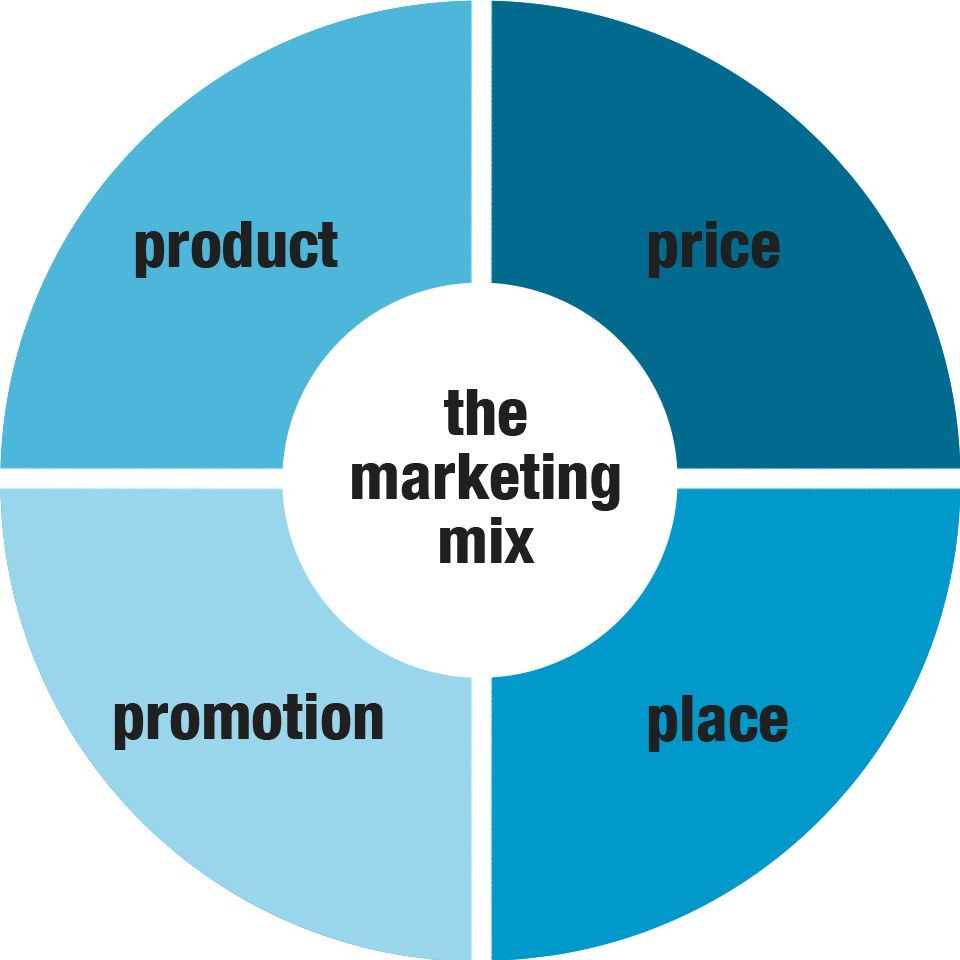
Marketers should be working with the design team to release news of the development of the product to interested parties within the user base. They should also be preparing their efforts for the launch of the product. The objective for the marketing team during this phase is not to create insatiable demand or unrealistic expectations but rather a sense of interest and to drive anticipation for release.

Key activities include:

  • Making sure any web presence or social media for the product is kept up to date

  • Make sure that they have a list of journalists/media resources that might be persuaded to deliver launch announcements or reviews of the product

  • Building a database of influencers (those with large impact on your user community) and reaching out to them to share advance news and insight into the product

  • Building a list of industry analysts who might be interested in the product

  • Developing clear marketing messages that express the benefits to users of the product

  • Developing any materials that may be needed (such as brochures, flyers, adverts, etc.) for launch

  • Booking any media space for advertising for launch (banner adverts, print, radio, etc.)

  • Running a pre-launch “teaser” campaign when a launch date is confirmed (and only when it is confirmed)

This preparation for launch is a vital part of an adoption strategy. It builds awareness in prospective users and ensures that when you do launch the product – you are ready to take advantage of initial interest in it.
Author/Copyright holder: Ryan Van Etten. Copyright terms and licence: CC BY 2.0

How to Turn Prospects Into Users – The Launch Phase and Beyond

While designers will tend to take a back seat during the launch it is important that:

  • Someone is available to assess initial user feedback and to make changes if critical flaws are identified.

  • Someone is available to brief the marketing department if questions are raised from the press or analysts.

  • Someone is available to support influencers in getting to grips with using the product.

The marketing team will have the majority of responsibility for a product launch.

Many companies separate launch into a “soft launch” (where a small group of users is invited to use a product and no official announcement is made regarding product availability) and a “hard launch” (which is when the product is announced to the world) to ensure that initial flaws can be ironed out during a soft launch and the best possible version of the product released at a hard launch.
Author/Copyright holder: Pexels. Copyright terms and licence: Free to Use.

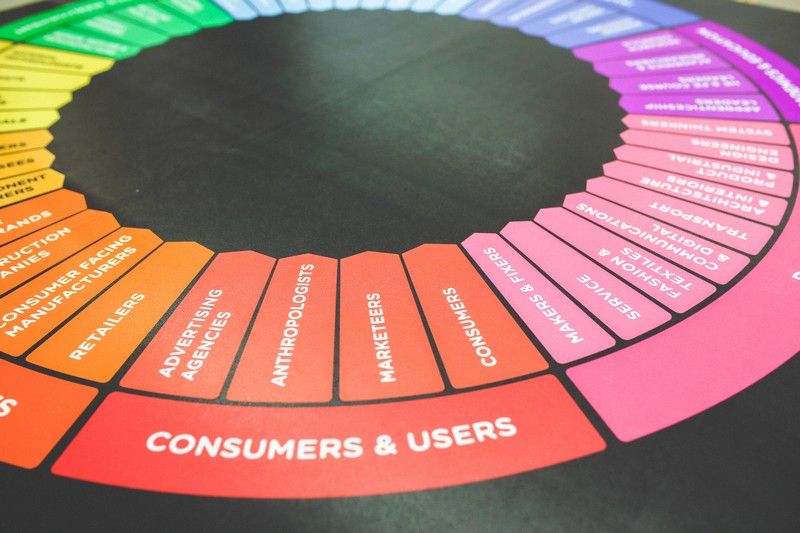
Marketing activities include:

  • Press releases and outreach activity need to begin 6-8 weeks before launch and continue throughout the launch and beyond.

    • Influencers and bloggers should be involved early – get them in to your “soft launch” give them exclusive access

    • Analysts should be briefed early and requests for meetings should be made in very clear terms

    • Social media needs seeding with “leaks” – these can include pictures of a possible final product and snippets of data

    • Keep creating announcements constantly; you may not get a media representative to write about you at launch but if you deliver regular news – you increases your chances of it happening eventually

  • Get channel partners, distributors, etc. involved in the marketing push – they have a financial interest in doing so. Make it easy for them to get involved.

  • Where possible offer free trials, recommend a friend schemes, in depth videos of the product in use (or even being taken apart), demonstrations, etc. and make these available through every channel available to you

  • Ensure you have meaningful metrics available to measure adoption. Facebook likes are not sales. By all means monitor the spread of coverage that you have but always look for concrete confirmation that your product is being adopted and if it’s not – adapt your strategy.

All these activities provide the right environment to create adoption. If your designers have developed a useful, usable and desirable product and your marketing team can effectively reach your user base; you have a good chance of success. However, success is not guaranteed in any circumstance – sometimes you’re just in the right place at the wrong time; these measures will help you reduce the chances of that but cannot eliminate them.

If you want something to guide your marketing efforts you might want to remember what Seth Godin, the entrepreneur and multi-million selling author; “Our job is to connect to people, to interact with them in a way that leaves them better than we found them, more able to get where they’d like to go.”

The Take Away

Adoption is driven both by designers and marketers. The design team needs to create useful, usable, desirable products which are based on user research. Marketers need to establish that the user base is economically viable and can be reached within the budget available to them. Then when the product begins design, marketers should be preparing the ground for their launch strategy – designers should always be available to support the marketing team in better understanding and promoting the product. This will give the best chances of delivering a successful widely-adopted product.

References

Entrepreneur magazine offers their 6 steps to a successful product launch here

Hero Image: Author/Copyright holder: Ana Zdravic. Copyright terms and licence: CC BY-SA 3.0

Feel Stuck?
Want Better Job Options?

AI is replacing jobs everywhere, yet design jobs are booming with a projected 45% job growth. With design skills, you can create products and services people love. More love means more impact and greater salary potential.

At IxDF, we help you from your first course to your next job, all in one place.

See How Design Skills Turn Into Job Options
Privacy Settings
By using this site, you accept our Cookie Policy and Terms of Use.
Customize
Accept all

Be the One Who Inspires

People remember who shares great ideas.

Share on:

Academic Credibility — On Autopilot

Don't waste time googling citation formats. Just copy, paste and look legit in seconds.