What changes when presenting feels easy? Your audience leans in from the very first moment. They’re hooked on every word. They nod, take notes, and act on your ideas. You click to your final slide and see it in their faces: they get it. People remember what you say, and they remember you. That’s what happens when you know how to structure a clear, confident presentation. These skills don't just help you speak well; they help you influence decisions, strengthen your reputation, and open new doors in your career.
Think about the moments that shape your career. Pitching to a client. Presenting your strategy to leadership. Training your team on a new process. Defending your budget. Every single one needs you to stand up and communicate clearly.
When you present well, you become visible. You become the person leaders trust to represent the team. You become someone clients want to work with.
In this video, Morgane Peng, Head of Product Design & AI Transformation at Societe Generale, explains why presentations skills are the secret to easily grow your career.
1. Know Your Audience Before You Build Anything
Imagine you cook dinner for guests without knowing if they're vegetarian, allergic to anything, or hate spicy food. You might make something delicious, but it's completely wrong for the people eating it. You might be doing this in your presentations. Brilliant content that doesn't match your audience needs won’t work.
You need to shift your focus from what you want to say to what your audience needs to hear. You start by truly understanding your audience. Who will be in the room? What pressures are they facing? What do they already know, and what do they need to learn? What examples will make sense to them?
Tools like stakeholder maps help you consider each person in your audience and what matters to them. When you use this perspective, you make different choices. You adjust your vocabulary. You choose different examples. You focus on different benefits. You used to get polite nods, but now you move people to action because you create a real human connection. You speak to what your audience actually cares about.
In this video, Morgane Peng explains stakeholder maps and how to use them to your advantage.
2. Give Your Message a Strong, Clear Structure
When you master structure, your audience relaxes into your presentation. They follow you effortlessly, seeing exactly where you're taking them and why each piece matters.
Structure turns a jumble of information into a clear journey.
© Interaction Design Foundation, CC BY-SA 4.0
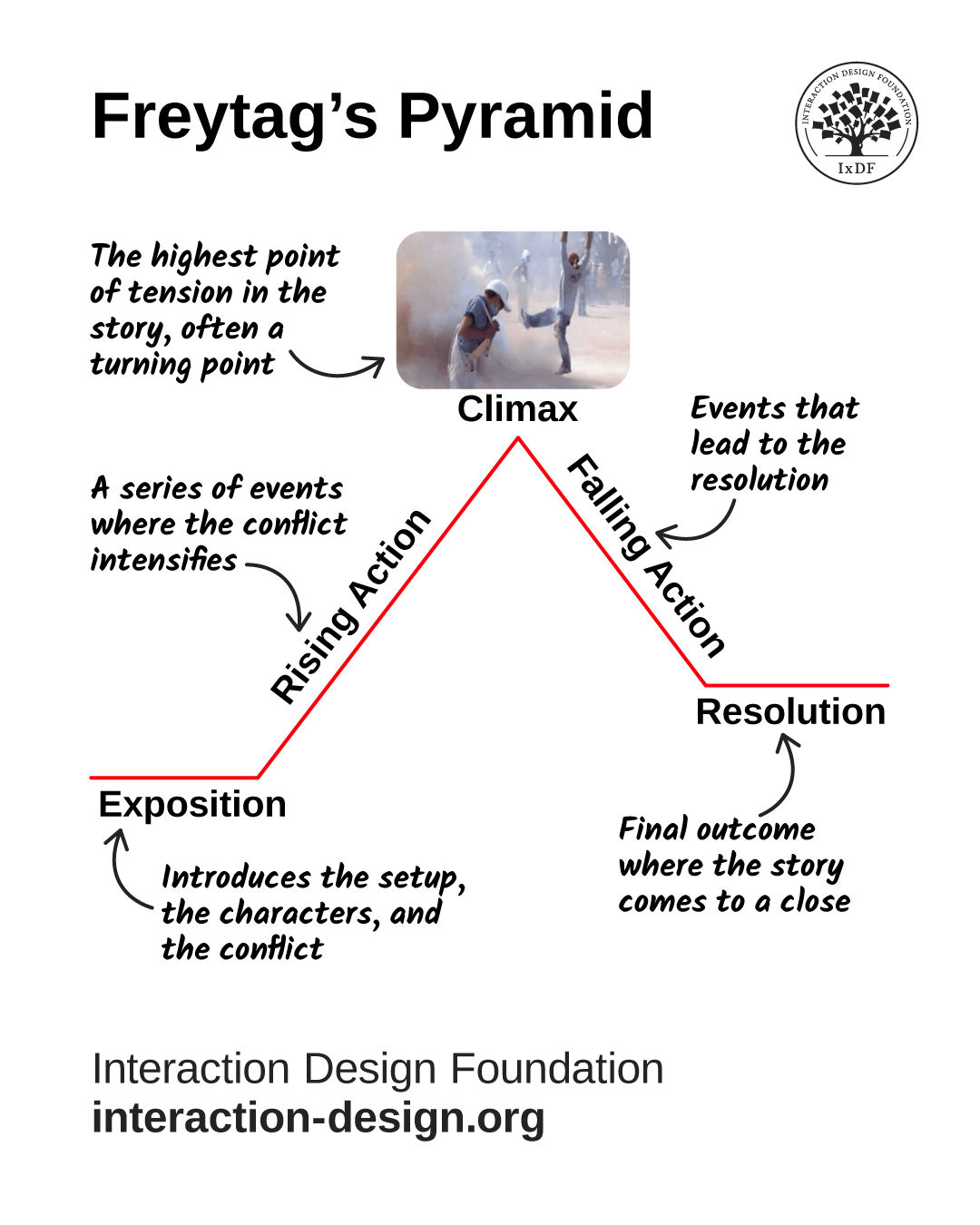
One way to give your work structure is to use Freytag's Pyramid. First, you create tension by introducing a problem or challenge. You build that tension as you explore why it matters. Then you guide your audience to a resolution or solution. This structure mirrors how humans naturally engage with stories, which makes it powerful especially for presentations that need to persuade or inspire.
© Interaction Design Foundation, CC BY-SA 4.0
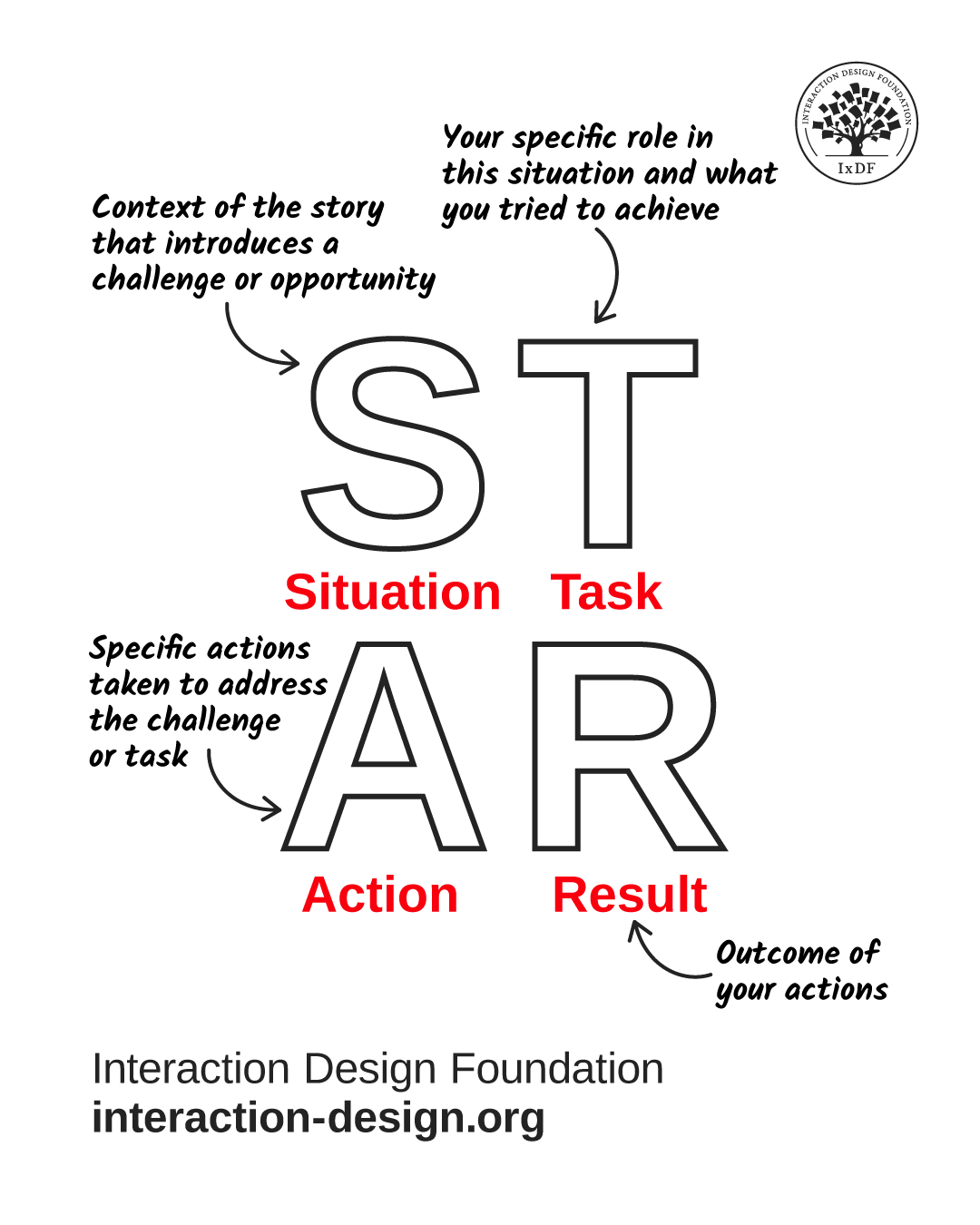
The second framework is STAR: Situation, Task, Action, Result. Here, you set the context, explain what needed to happen, walk through what you did, and show what you achieved. This framework is clean and logical, and is ideal for presenting projects, case studies, or any time you need to prove results.
When you apply structure, your presentations become easier to follow. Your audience relaxes because they can see where you are taking them. They remember your key points because the structure helps information stick. And they walk away knowing exactly what you want them to do.
On a personal level, structure reduces anxiety. You never stare at a blank screen wondering how to organize your thoughts, because you have frameworks that work. When you create a presentation in this way, you’ll have a clear beginning, middle, and end. This confidence shows when you present. You speak with more certainty because you trust your structure, and that certainty makes people trust you.
3. Build Trust with Warmth and Competence
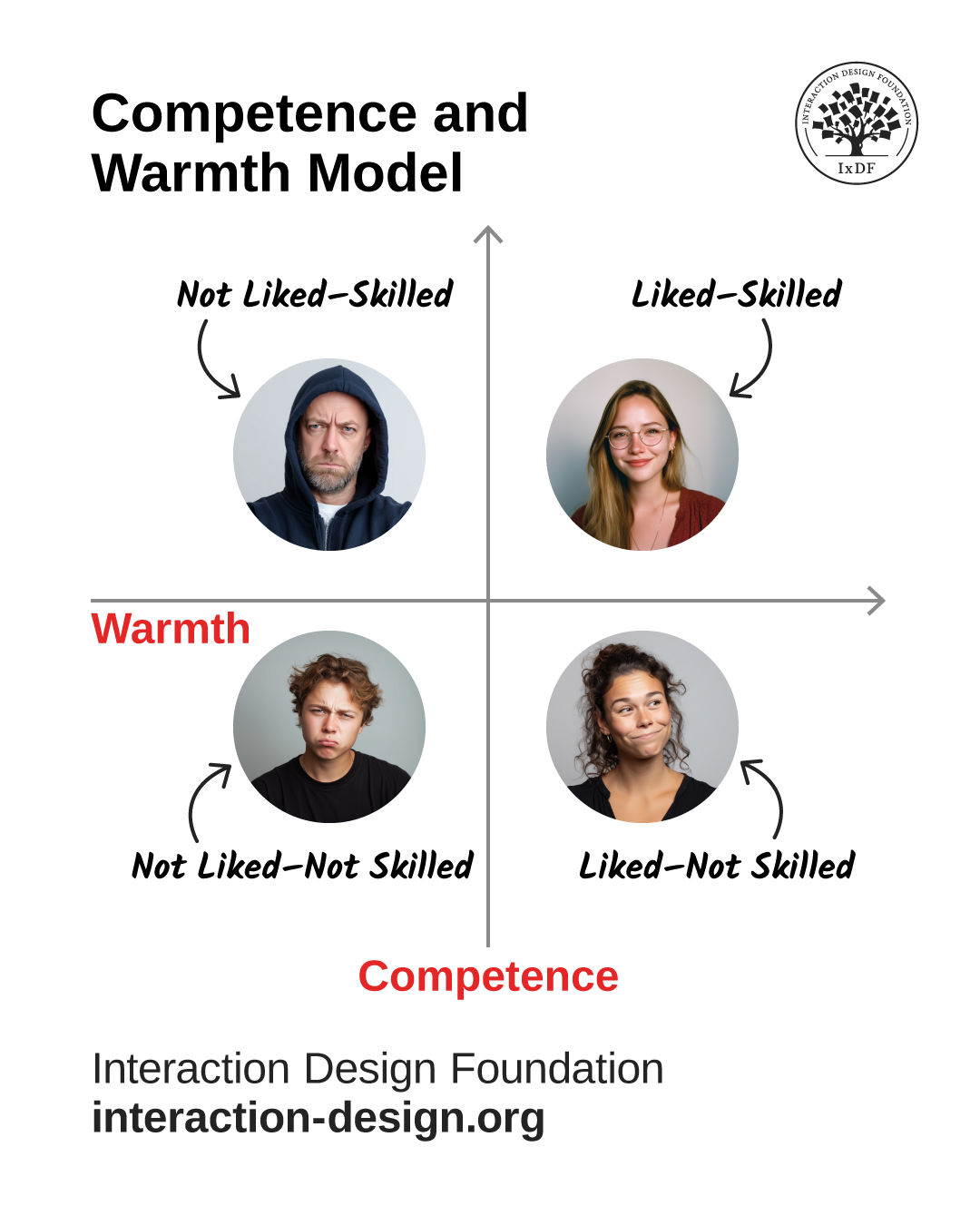
People make fast decisions about whether to trust you. Within the first few minutes of your presentation, they’re asking themselves two questions: Does this person know what they are talking about? And do they care about people like me? These questions relate to what researchers call warmth and competence, and you need both to build trust.
Competence means you know your material. You speak confidently about your topic. You have data to support your claims. You can answer questions without panic. You've clearly done the work, and your audience sees it.
Warmth is more subtle, but just as important. You communicate warmth when you connect with your audience on a human level. Acknowledge the challenges your audience faces. Use examples they can relate to. Show empathy for their situation. Keep your posture open and approachable. Make eye contact that says, "I see you."
© Interaction Design Foundation, CC BY-SA 4.0
When you communicate warmth and competence, people don't just respect your expertise. They actually like you. Your audience turns from skeptics into supporters who share your vision and want your ideas to succeed.
These positive effects go beyond strong presentations; they build strong careers. People start reaching out for projects. They recommend you for opportunities and remember you when positions open up, all because you showed you're both skilled and human in your presentations.
Start with small changes. Share a story about a challenge you faced (warmth). Have clear data ready (competence). If you don't know the answer to a question, say so. Admitting you don't have all the answers shows warmth, while confidently explaining what you do know shows competence.
Practice both and watch how people respond to you differently.
4. Don’t Just Talk, Listen
The best presenters talk less than you think. Here’s why listening separates good presenters from great ones.
Active listening means you stay connected to your audience while you present. You watch their body language. You notice when someone looks confused, and you pause to check in. When someone asks a question, you do not just answer. You reflect back to make sure you understood: "So you want to know how this would scale?"
This includes giving your full attention and focus to your audience, giving feedback through nodding or asking clarifying questions, reflecting back what you hear, and showing empathy without being judgmental.
When you listen actively during your presentation, your audience stops being passive receivers of information. They become participants. They ask better questions. They engage more deeply. The energy in the room shifts from a lecture to a conversation.
Active listening isn’t just useful for presentations; it also makes you better at every interaction. You learn to read rooms. You catch concerns before they become objections. You understand what people mean, not just what they say.
People remember presenters who made them feel heard. You become unforgettable when you transform your presentation from a monologue into a genuine conversation. You become someone people want to work with. You become someone who gets results because you bring people along instead of just talking at them.
And personally, presenting becomes less lonely for you. You are not performing to a crowd. You are having a conversation with real people who are right there with you. That shift makes presenting feel less scary and more natural.
In this video, Morgane Peng describes the value of active listening and how you can start doing it today.
5. Design Slides That Support (Not Steal) the Spotlight
© Interaction Design Foundation, CC BY-SA 4.0
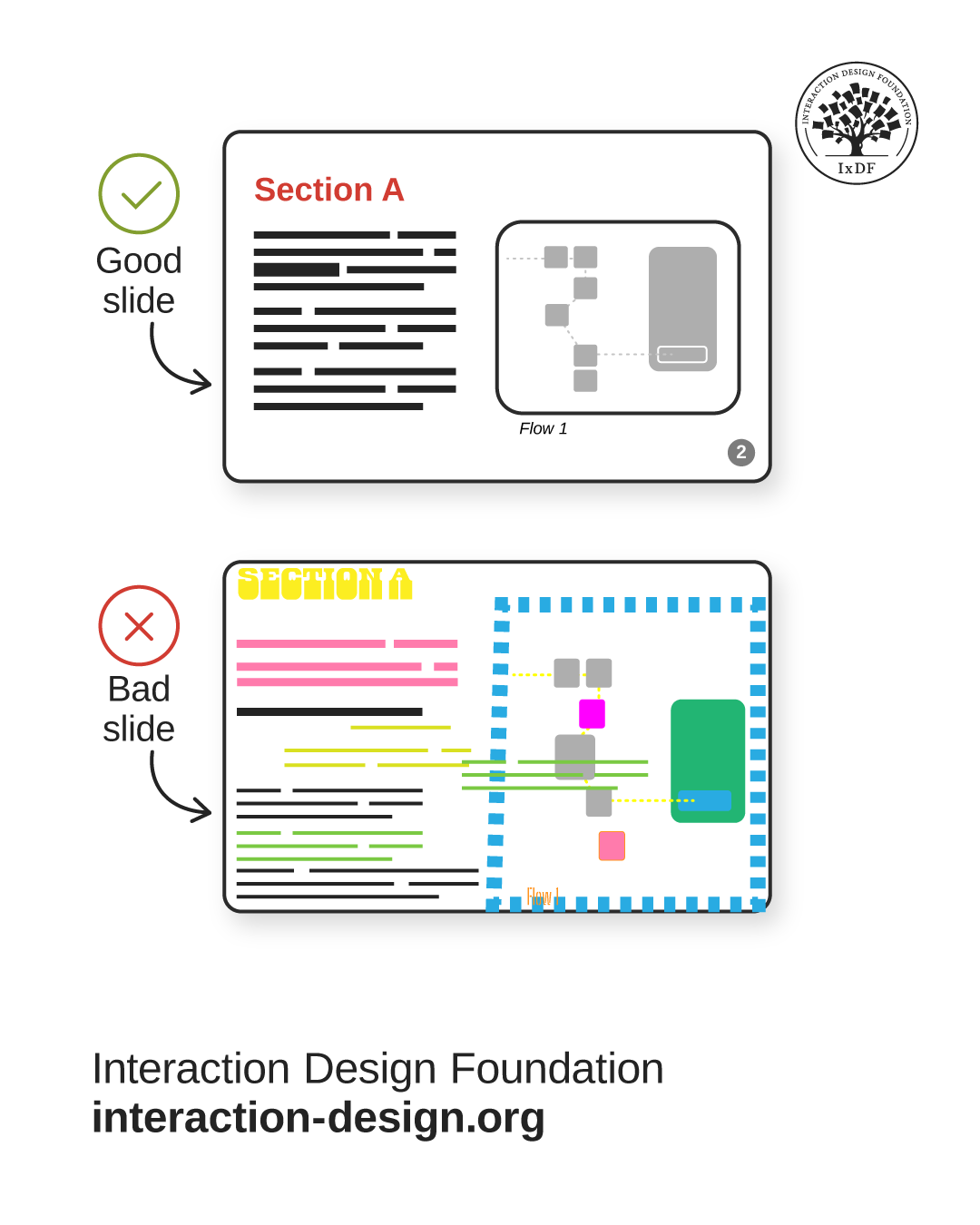
Your slides are there for one reason: To help your audience understand your message.
Great slides amplify your message and put you in the spotlight. When your slides are clean and focused, your audience stays connected to you. They listen to your words instead of reading screens. They follow your thinking instead of decoding complexity. You create slides that let you shine, and that confidence transforms how you present.
For live presentations, follow these tips:
Use minimal, clear text.
Only show one key point at a time to keep the focus on what you’re saying now.
Ensure consistency with the same fonts, colors, and spacing throughout.
If you’re creating a deck that people will read on their own, try these tips.
Use complete sentences so people can understand what you’re saying without hearing you speak.
Add clear headings that guide the viewer through your thinking.
Make sure each slide can stand alone and still make sense.
Whether live or written, your slides should always support your message, not replace it.
When you get slides right, everything becomes easier for you. You feel more confident because you’re the focus, not your slides. Your audience connects with you, not with a screen. When you remove the barriers between you and the people you are speaking to, your message becomes even more powerful.
6. Command the Room with Your Body Language and Voice
Your delivery isn’t just what you say, it’s how you say it. Your words are important, but your body and voice also carry meaning. Sometimes, even more!
Think about when someone tells you something they're excited about with energy in their voice and light in their eyes. You can't help but feel that excitement too. When you align your body language and voice with your message, you create that same magnetic effect. Your enthusiasm becomes contagious.
It works the same when you’re presenting. When we have casual conversations, our body language naturally reflects what our we’re trying to say. But the nerves that many of us experience when giving a presentation can override our natural body language, so we need to actively be aware and adapt when we’re presenting.
Here’s where the SOLER framework for body language helps:
Sit or stand squarely facing your audience.
Keep an open posture without crossed arms.
Lean forward slightly to show engagement.
Make eye contact with different people in the room.
Relax your body so you don’t look tense.
Your voice matters too:
Vary your pitch so you sound interested in your own topic.
Change your pace, slowing down to emphasize key points and speeding up when you are building energy.
Use silence strategically. When you pause after an important statement, it adds weight to what you’re saying.
articulate clearly so everyone can understand, including people who speak English as a second or third language.
When you improve your physical delivery, your body supports your message instead of undermining it. You project confidence that makes people believe you. And even when you feel nervous, your audience sees someone who appears calm and in control, and they respond to that energy. They listen more closely and take you more seriously. They remember you.
Over time, this becomes natural. You stop thinking about your posture or your voice. It just happens. And that freedom lets you focus on connecting with your audience instead of monitoring yourself.
7. Avoid the Classic Presentation Pitfalls
When you've mastered the core techniques, a few smart habits keep your presentations smooth and powerful. These practices ensure your message lands every time.
Frame the value first. Your audience needs to know why they should care. Start by framing the problem or opportunity before you dive into details.
Match your depth to your audience. This is where knowing your audience pays off. Match your depth and vocabulary to what they need. Too simple and they get bored. Too complex and they get lost.
Own your timing. When you rehearse with intention, you develop an intuitive sense of pacing. Going over your allotted time frustrates people. Ending too early makes you seem unprepared. Rehearse until you have a good feel for your pacing.
Use stories strategically. Stories become powerful when they clearly connect to the points you're making. Use stories strategically to support specific points you’re trying to make.
When you build these habits into your presentations, something remarkable happens. Your delivery becomes effortless. Your audience stays with you from start to finish, fully engaged. They walk away energized by what you shared, already thinking about how to apply your ideas.
In this video, Morgane Peng shares common presentation mistakes and how to avoid them.
The Take Away
Mastering presentation skills does more than make you better at presentations. It changes how you feel when you walk into any room where you need to speak.
You stop avoiding opportunities to present. When your manager asks who wants to pitch the new client, your hand goes up. When you see a chance to speak at a conference, you apply. You build a reputation as someone who communicates clearly. People start coming to you for advice. Leaders notice you. Opportunities you never expected start appearing.
But beyond your career, you gain something even more valuable: Confidence in your own voice. You know that when you speak, people listen. You trust that you can take a complex idea and make it clear. You stop second-guessing yourself. That confidence spills into everything else. Difficult conversations at work become easier. Presenting your ideas in meetings feels natural. Even small moments, like explaining something to a colleague, become smoother.
You’re not less smart or less talented than the people who present well. You just haven’t learned these skills yet. Now, you understand what actually matters and know where to focus.
So, the next time you have a presentation coming up, use these tips. Know your audience. Structure your message. Build trust. Listen actively. Design slides that support you. Command the room with your presence. And avoid the common mistakes.
Your ideas matter and they deserve to be heard. These skills will make sure they are.
References and Where to Learn More
Ready to master presentation skills? Take our course Present Like a Pro: Fast-Track Your Career.
Find out How to Find Your Voice: Speak with Confidence and Clarity.
Discover why You’re Not Bad at Presenting; You Just Haven’t Mastered the Right Way (Yet)