Active Listening

Your constantly-updated definition of Active Listening and collection of videos and articles.
Be a conversation starter: Share this page and inspire others!

98 Shares

What is Active Listening?

Active listening is more than just hearing words; it’s the skill of fully focusing on, understanding, and responding to someone so that both of you walk away with clarity and trust. Unlike passive hearing, which only processes sound, active listening demands your full attention, emotional presence, and thoughtful responses.

In this video, Morgane Peng, Head of Product Design & AI Transformation at Societe Generale, shows you what active listening is, how it works, and how you can start practicing it:

Transcript

Think about the last time you told someone an important story and realized halfway through that they weren’t really paying attention. Maybe they were checking their phone or already planning their response. How did that make you feel? Probably frustrated, maybe even dismissed.

Now flip it: when someone listens to you with their full attention, you feel valued and understood. That’s the power of active listening.

And here’s why it matters so much for your career: active listening directly shapes how people see you. Colleagues, stakeholders, and users are far more likely to trust you, respect you, and remember you when you truly listen. When you master active listening, you position yourself as the kind of professional people want on their team, want to follow, and want to promote.

How Active Listening Multiplies Your Career Success

The way you listen changes everything. It determines whether users open up to you, whether stakeholders trust you, and whether teammates feel understood—or dismissed. People decide, often in seconds, if you’re someone they can rely on, and that judgment is shaped far less by what you say than by how you listen.

In your role as a designer, researcher, or leader, active listening is one of the rare skills that multiplies the impact of everything else you do. When you practice it, you don’t just capture surface-level answers—you uncover the frustrations, motivations, and hidden needs that drive real insights. You prevent costly misunderstandings that waste time and damage trust.

Active listening is one of the most underrated career skills—and that’s exactly what makes it such a powerful advantage. When you practice it, you gain an ally that strengthens every interaction, and accelerates your growth. It’s a simple shift in how you engage with others, yet it delivers some of the deepest and most lasting results for your career. It’s a simple shift with a massive return on trust, influence, and opportunities.

Your Guide to Active Listening

Photo of Morgane Peng with the text

© Interaction Design Foundation, CC BY-SA 4.0

Active listening is a practice you can apply in every conversation. Here’s a step-by-step guide you can use to easily master it:

Step 1. Set the Stage for Real Connection

Put your phone away, face the person, and keep your posture open. A slight lean forward and a relaxed presence say: “I’m here for you.” In a user interview, this simple preparation helps participants feel safe enough to share the details that matter most.

Step 2. Show You’re Engaged

Use natural eye contact, small nods, or short cues like “I see” to signal attention. These subtle actions reassure the speaker that you value their perspective. In a design critique, this visible engagement encourages teammates to give honest feedback instead of holding back.

Step 3. Listen With Your Full Attention

Don’t plan your response while they’re talking. Watch for tone, body language, and pauses—these often reveal more than the words themselves. In a stakeholder meeting, for example, you might notice the hesitation in their voice when they say “next month”—a clue that the deadline could be more flexible than it sounds.

Step 4. Reflect and Confirm

Paraphrase to check understanding: “So what you’re saying is the checkout button feels hidden because it blends into the header, right?” This ensures accuracy and prevents assumptions. In usability testing, this kind of reflection can reveal whether the issue is really about labeling, placement, or navigation.

Step 5. Acknowledge Emotions, Not Just Facts

Show that you’ve heard both the content and the feeling behind it: “I can see how that would be frustrating.” Empathy like this goes beyond facts—it builds trust faster than any design deliverable. In project discussions, acknowledging emotion can transform a tense debate into collaborative problem-solving.

Use the template below to guide you in the practice of active listening and embed these powerful habits into everyday life.

Advance Your Career With This Free Template for “Active Listening: The Complete Toolkit”
Active Listening: The Complete Toolkit
We respect your privacy
Get 1 powerful email each week: Design a life you love!

Active Listening Is Your Secret Presentation Skill

Most people think presentations are about delivering a message. The real magic happens when you listen to your audience. In fact, training in active listening can boost presentation effectiveness by 65%, according to research.

A standout presenter doesn’t just speak, they read the room. Spotting raised eyebrows or puzzled expressions, then pausing to ask, “Does this make sense?” shifts the dynamic from a monologue to a two-way conversation.

In the video below, you’ll see what active listening looks like, and why it’s your secret presentation skill.

Transcript

As you can see, when you “actively listen”, it shows.

Simple moves like eye contact and reflection send the signal “I hear you—and you matter.” These habits make you a better communicator, collaborator and presenter, and are essential for your career growth.

Active Listening Is a Leadership Multiplier

Active listening isn't a soft skill; it's a leadership amplifier. HR professionals agree: 64% identify it as the single most important leadership skill.

When your team feels genuinely heard, engagement and creativity soar. One study showed that managers who improved their listening saw a 30% increase in employee satisfaction.

Each step you take to listen deeply today builds your leadership potential for tomorrow.

Try this: start meetings with one question that isn’t on the agenda—like “What’s something you’re excited or stuck on this week?” Then, really listen. No fixes. No fast-forwarding. Just make space.

Leaders who listen get more than updates, they get truth. And when people feel safe to speak honestly, everything improves: morale, retention, and results.

What Happens When You Don’t Listen

Miscommunication has a steep cost; over 60% of workplace errors stem from communication breakdowns.

Imagine a design sprint based on assumptions: you rush to meet what you think is a deadline, only to learn it wasn’t even real. That misalignment damages trust and forks resources into a road to nowhere. One clarifying question can change the outcome entirely.

Before jumping into execution mode, ask: “Can I repeat this back to make sure I’ve got it right?” Or: “What’s the most important outcome here?” These simple check-ins can save days—or weeks—of wasted effort.

The fastest way to fix a broken project? Listen better at the start.

The Career Advantage Few People Talk About

Active listening isn’t a niche skill; it’s your quietly powerful career engine. Among professionals, 78% believe improving their listening skills accelerates success.

Think of the people you've trusted most in your career—colleagues, mentors, even friends. Did they make you feel heard, valued and seen?

That’s the subtle influence you develop through active listening. You become the person others want on their team, lean on for insight, and elevate in their plans.

When you're the one who truly understands what matters because you actively listen and hear what others miss, you become invaluable.

Try This: A 5-Minute Listening Challenge

Here’s a simple and quick activity to start shaping your listening presence the next time you engage in any conversation:

  • Fully focus—no multitasking.

  • Reflect one idea back in your own words.

  • Name an emotion they express: “That sounds exciting!” or “That must’ve been tough.”

You’ll notice people open up more and feel seen. In just five minutes, you’ll shift how others perceive you—and how you perceive yourself as a communicator.

Every time you practice these steps, you strengthen your reputation as someone who understands, not just someone who talks. That’s what multiplies your value: people will trust your insights, respect your judgment, and want to work with you.

Think back to the people you’ve met—colleagues, mentors, even friends—who made you feel truly heard. Chances are, they’re the ones you wanted to collaborate with again.

Active listening gives you that same presence, and you’d be surprised how many doors it opens simply because people enjoy working with someone who genuinely listens.

Questions About Active Listening?
We've Got Answers!

What are some highly cited papers about active listening?

Here are some highly cited research papers about active listening:

  • Active listening (Friston, 2021) introduces a unified framework for speech synthesis and recognition related to active listening concepts.

What is active listening, and how is it different from passive listening?

Active listening means you're fully present and engaged in a conversation—not just hearing words, but understanding the intent, emotions, and meaning behind them. It involves making eye contact, nodding, asking clarifying questions, and reflecting back what the speaker says to show you’re really tuned in. Basically, you’re giving the speaker your mental and emotional attention.

Passive listening, on the other hand, is when you hear someone but you’re not really processing what they’re saying. You might nod out of habit or say “uh-huh” while your mind is somewhere else (like lunch or your inbox). It's the difference between truly connecting and just hearing noise.

How can I tell if I’m truly practicing active listening?

You’re truly practicing active listening if the speaker feels heard, understood, and respected—not just if you think you're doing a good job. Signs include: you’re not interrupting, your responses are thoughtful, and you’re asking follow-up questions that show you’re paying attention. You can also paraphrase what they said to confirm understanding (“So what I’m hearing is…”).

If you catch yourself formulating your reply while they’re still talking, zoning out, or checking your phone, that’s a red flag. Active listening requires staying present and curious, not jumping ahead to your own point.

Why is active listening considered a key leadership skill in design teams?

Active listening is essential in design teams because it builds trust, fuels collaboration, and surfaces better ideas. When leaders listen actively, team members feel valued and safe sharing their thoughts—whether it’s wild ideas during brainstorming or concerns about a project. That openness is the birthplace of innovation.

Plus, design thrives on feedback loops. If a leader isn’t truly hearing clients, users, or their own team, the final product can totally miss the mark. Active listening helps leaders catch what’s really needed—not just what’s being said—and that leads to smarter design decisions and happier users.

How can I practice active listening in everyday conversations?

To practice active listening daily, start by giving your full attention (that means phones down and eyes up). Make eye contact, nod occasionally, and give small verbal cues like “I see” or “Go on” to show you’re present. Then, reflect or paraphrase what the other person says: “So you’re saying…” or “It sounds like…” This confirms you understood and keeps the conversation flowing.

Also, pause before you respond. It’s tempting to jump in with your own opinion or solution, but sometimes people just want to be heard. Stay curious, ask follow-up questions, and resist the urge to one-up or shift the spotlight. Your goal isn’t to reply fast—it’s to understand better.

How do I stay present and avoid preparing my response while listening?

Staying present while listening takes practice. The trick is to actively focus on the speaker’s words, tone, and body language—treat it like a mini puzzle you’re trying to solve in real time. You’re not just hearing, you’re decoding emotion and intent.

When your mind starts crafting a response mid-sentence (it will), gently redirect your attention back. Try repeating the speaker’s words silently in your head—it keeps you anchored. And remind yourself: the better you listen now, the more relevant and powerful your response will be later.

Is active listening considered a soft skill or a core design skill?

It’s both—and that’s why it’s so powerful. Active listening is technically a soft skill because it deals with communication and empathy. But in the design world, it doubles as a core skill. Why? Because good design starts with understanding people—and you can’t understand people if you’re not truly listening to them.

Whether it’s a user interview, a client briefing, or a team brainstorm, active listening helps you spot hidden needs, clarify goals, and build better experiences. It’s how you turn vague feedback into valuable insights.

How can active listening make me a more effective presenter?

Active listening makes you a sharper presenter because it shifts your mindset from “Let me talk at you” to “Let me connect with you.” When you tune into your audience’s reactions—facial expressions, body language, questions—you can adapt in real time. That means less rambling, more relevance, and way more engagement.

It also helps with Q&A sessions. Instead of defensively reacting or missing the point of a question, active listening lets you pause, absorb, and respond thoughtfully. That makes you come across as confident, respectful, and actually helpful—not just someone stuck in broadcast mode.

Why do great communicators listen more than they speak?

Because they know the gold is in what others say—not in showing off how clever they are. Great communicators listen more because it helps them understand their audience’s needs, emotions, and perspectives. That way, when they do speak, their words hit harder and actually matter.

Also, people naturally trust and connect with someone who makes them feel heard. If you’re doing all the talking, you’re probably missing key context—and opportunities to build rapport. Listening isn’t being passive. It’s strategic. It’s how you gather intel, build trust, and then say exactly what needs to be said.

Earn a Gift Earn a Gift, Answer a Short Quiz!

1
2
3
4
1
2
3
4
Question 1
Question 2
Question 3
Get Your Gift
Interaction Design Foundation logo

Question 1

Why do people trust you more when you practice active listening?

1 point towards your gift

  • Because you respond quickly without needing clarification.
  • Because you stay fully focused and make them feel understood.
  • Because you ask fewer questions and end the conversation faster.
Interaction Design Foundation logo

Question 2

How can you show someone that you’re actively listening?

1 point towards your gift

  • You nod, use short responses, and maintain eye contact.
  • You stay silent and avoid eye contact to avoid distraction.
  • You take notes without looking up from your notebook.
Interaction Design Foundation logo

Question 3

How does active listening help you grow your career?

1 point towards your gift

  • It helps you avoid technical mistakes in your design software.
  • It makes you sound more intelligent in conversations.
  • It helps you build stronger relationships and find real insights.

Learn More About Active Listening

Make learning as easy as watching Netflix: Learn more about Active Listening by taking the online IxDF Course Present Like a Pro: Communication Skills to Fast-Track Your Career.

Why? Because design skills make you valuable. In any job. Any industry.

In This Course, You'll

  • Get excited to finally see your work get the recognition and results it deserves. Strong communication is the #1 skill employers seek, and research shows it's directly linked to faster promotions and higher salaries. Successful presentations aren't an innate talent, they're a skill you can master. With proven frameworks and practical techniques, you'll gain lifelong skills that turn every presentation into a career opportunity.

  • Make yourself invaluable when you master the art of delivery and craft messages that resonate. You'll inspire action and guide the conversation. You become the person people listen to, trust, and follow. Research shows that people trained in presentation skills are 12% more likely to move into leadership roles. This is the skill that gets your name on the next big project, a salary increase, and the shortlist for promotion. Deliver presentations where each word works for you and gets you the results you want. As AI speeds up how products, services, and experiences are created, clear communication becomes the skill that keeps you in demand. Strong presentation skills help you turn AI output into clear direction, aligned decisions, and real results.

  • Gain confidence and credibility as you learn how to overcome nervousness and impostor syndrome, use your voice and body language to engage any audience, and own every room you enter. Never again leave a meeting thinking, "I should have said that better." Master the overlooked skill of turning feedback into fuel: handle criticism with confidence, navigate difficult conversations, and make Q&A sessions your strongest moments. If you can't communicate your ideas, someone else will, and they'll get the credit.

  • Craft your personal portfolio with step-by-step guidance. Through hands-on activities, you'll create a professional presentation video, an impactful asset that showcases your skills and helps you stand out to employers, clients, and collaborators. It'll speak for you long after the course ends.

It's Easy to Fast-Track Your Career with the World's Best Experts

Master complex skills effortlessly with proven best practices and toolkits directly from the world's top design experts. Meet your expert for this course:

Morgane Peng: Head of Product Design & AI Transformation at Societe Generale CIB. Morgane is a design leader who climbed from trainee to Managing Director, and knows exactly how to use strategic communication and presentation skills to fast-track career growth and open doors to leadership.

Get an Industry-Recognized IxDF Course Certificate

Increase your credibility, salary potential and job opportunities by showing credible evidence of your skills.

IxDF Course Certificates set the industry gold standard. Add them to your LinkedIn profile, resumé, and job applications.

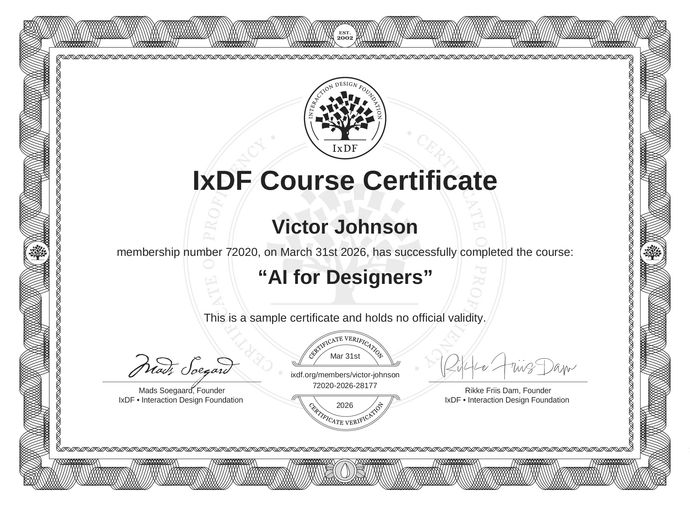
Course Certificate Example

Be in distinguished company, alongside industry leaders who train their teams with the IxDF and trust IxDF Course Certificates.

Our clients: IBM, HP, Adobe, GE, Accenture, Allianz, Phillips, Deezer, Capgemin, Mcafee, SAP, Telenor, Cigna, British Parliament, State of New York

All Free IxDF Articles on Active Listening

Read full article
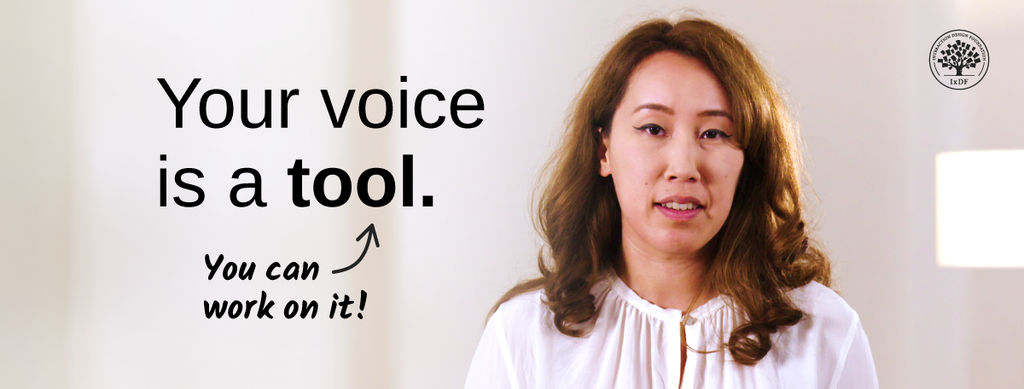
How to Find Your Voice: Speak with Confidence and Clarity - Article hero image
Interaction Design Foundation logo

How to Find Your Voice: Speak with Confidence and Clarity

You’ve heard it before “It’s not what you said—it’s how you said it.” Your voice can change how people feel—even if your message doesn’t. If you vary your tone and pacing, you can make your ideas sound more trustworthy, exciting, or urgent. Harness this neuroscience-backed communication power and yo

Social shares
382
Published
Read Article

How to Find Your Voice: Speak with Confidence and Clarity

How to Find Your Voice: Speak with Confidence and Clarity

You’ve heard it before “It’s not what you said—it’s how you said it.” Your voice can change how people feel—even if your message doesn’t. If you vary your tone and pacing, you can make your ideas sound more trustworthy, exciting, or urgent. Harness this neuroscience-backed communication power and you’ll take your career to the next level.

Your voice is a fantastic tool. It acoustically translates your inner self and conveys enthusiasm, defeat, or openness. In the following video, Morgane Peng, Head of Product Design & AI Transformation at Societe Generale, offers practical techniques to use your voice's full potential for effective presentations.

Transcript

Calm the Nerves, Control the Pitch

Feeling nervous, or speaking in a second language? That tension often sneaks into your voice by raising your pitch. And when your pitch spikes, your message can sound less confident—even when you know exactly what you’re talking about.

Here’s how to bring your voice (and your nerves) back under control:

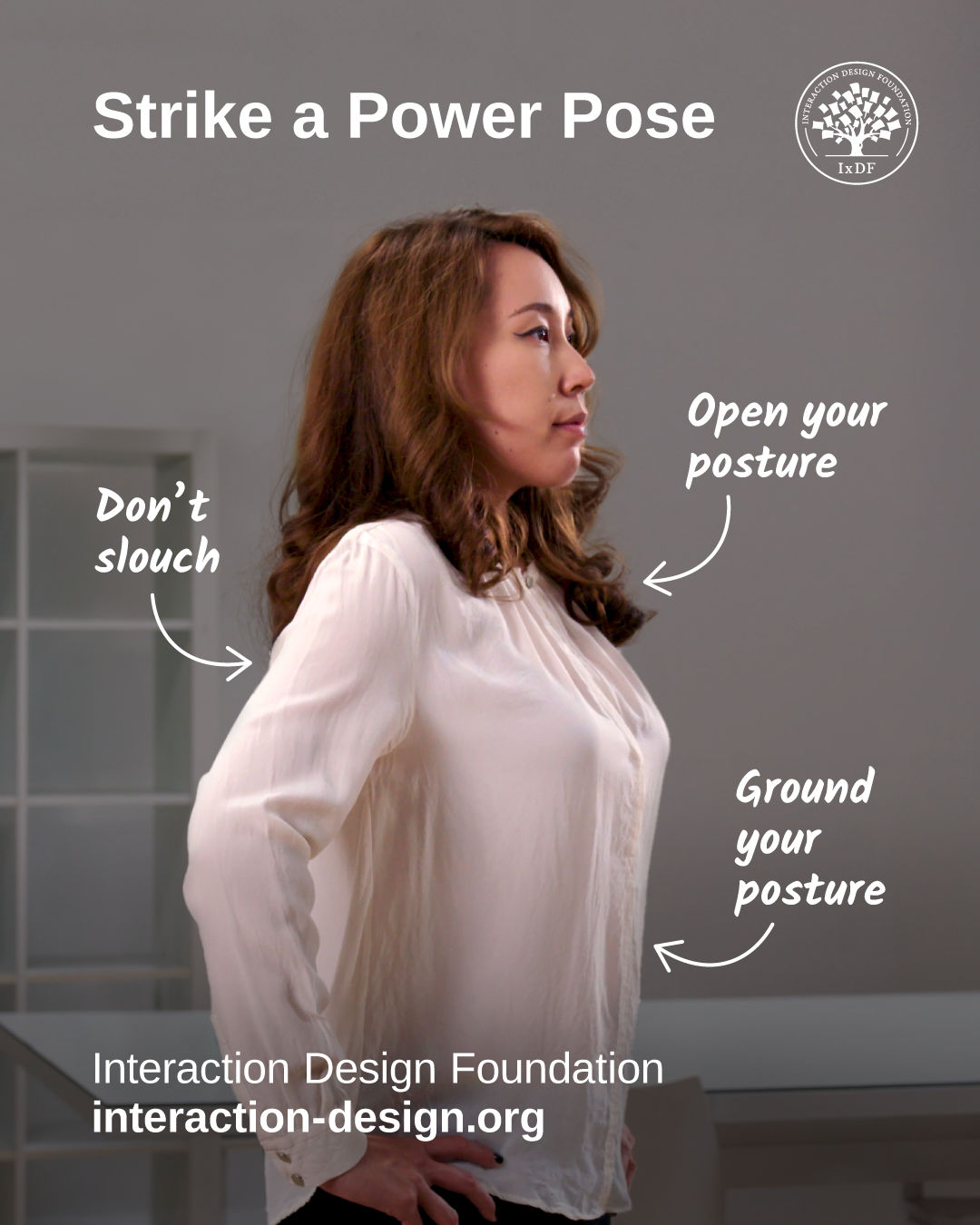
  • Power pose: A couple of minutes in a power pose reduces cortisol and boosts confidence. Ground your posture, avoid slouching.

© Interaction Design Foundation, CC BY-SA 4.0

  • Yogic breathing: A few yoga breaths calm you and improve breathing. Practice 4-7-8 cycles: inhale 4, hold 7, exhale 8. This slows your heart rate and steadies your breath—your voice will follow.

Use Voice Variations to Keep People Engaged

Want to keep your audience’s attention? Don’t just rely on your slides—your voice is your built-in engagement tool. Use it like this:

  • Volume: Adjust loudness, increase for major discoveries, e.g., "80% of dropouts happened at THIS specific step!".

  • Pitch: Vary high or low, use higher for excitement, e.g., "redesign addresses pain points and received praise!".

  • Pace: Adjust speed, slow for complex flows so your audience processes information better.

  • Tone: Use tone to convey feelings; be empathetic, e.g., "We heard users’ frustrations; we must do something".

  • Articulation: Speak clearly, especially for new terms, e.g., "pro-gressive-dis-clos-sure".

Use Silence Like a Design Element

Silence isn’t awkward. It’s powerful. Like white space in design, a well-timed pause gives your content breathing room and makes your key points stand out. It creates anticipation and regains your audience’s attention.

However, be aware of cultural differences in voice variations and silences, especially across languages. For instance, French often has a higher pitch and more monotony than English—bilingual speakers commonly reflect this.

The Take Away

Your voice is powerful—it reveals your inner self and greatly influences message reception. How you use your voice shapes how people perceive you. When your pitch rises or your words rush out, people sense uncertainty—even if you know your stuff. When you pause, slow down, and let your tone match your message, people lean in. They listen. They trust what you're saying.

If you manage stress and pitch through techniques like breathwork and poses/body positions, you can maintain confidence and vocal control. Strategically employ voice variations—volume, pitch, pace, tone, and articulation—to engage your audience, emphasize key points, and convey emotion. Use silence to offer breathing room in presentations, much like white space in your designs. Remember to consider cultural interpretations of voice and silence.

When you master these vocal techniques, you’ll project a strong presence, speak clearly, and capture your audience.

References and Where to Learn More

Check out Harvard Business Review’s article, 5 Techniques to Build a More Powerful Speaking Voice.

Take a look at Toastmasters International’s resources, specifically:

Hero Image: © Interaction Design Foundation, CC BY-SA 4.0

Feel Stuck?
Want Better Job Options?

AI is replacing jobs everywhere, yet design jobs are booming with a projected 45% job growth. With design skills, you can create products and services people love. More love means more impact and greater salary potential.

At IxDF, we help you from your first course to your next job, all in one place.

See How Design Skills Turn Into Job Options
Privacy Settings
By using this site, you accept our Cookie Policy and Terms of Use.
Customize
Accept all

Be the One Who Inspires

People remember who shares great ideas.

Share on:

Academic Credibility — On Autopilot

Don't waste time googling citation formats. Just copy, paste and look legit in seconds.