User experience (UX) design proposals are documents that outline a potential design project for prospective clients. They serve as a comprehensive plan and typically include a project’s approach, process, deliverables, timeline and commercial terms. They are platforms for designers to demonstrate their expertise, vision and proposed solutions to clients’ problems.
Much like any other design deliverable, the design proposal also begins with a careful understanding of the user—in this case, the potential client. Designers must understand what the client expects from a proposal and create one that matches their expectations.
Author, speaker and executive leadership coach Todd Zaki Warfel explains how to approach clients with design work.
Why Are Design Proposals Indispensable?
Design proposals are the lifeblood of any UX design project. These proposals help provide a roadmap for the entire design process. They act as a reference for everyone involved and set clear expectations for the design solution.
A well-constructed UX design proposal can help designers:
Gain clarity and understanding about the project’s purpose and what they need to achieve.
Establish legal and contractual clarity, protecting the interests of both parties involved via clear terms and conditions, deliverables, timelines and budgets.
Accurately estimate costs, letting clients understand the financial aspect of the project.
Showcase creative vision and approaches to brand-relevant fineries. These include an appreciation for real-world user behaviors and compelling visual elements.
Streamline project management via well-defined project timelines and milestones.
Establish credibility and start to build solid and lasting trust with their client.
When Do Designers Create Proposals?
Designers create design proposals both when they are seeking new clients prospectively and when they are working on existing project discussions. In both scenarios, the key is for the designer to communicate clearly, present a compelling case for their design vision, and show an understanding of the client's needs and goals. A well-crafted design proposal can go a long way to winning business and ensuring project success for both clients and designers.
Since understanding the client means understanding users of the client’s brand too, designers should declare the full range of their skill sets in their proposals—and much more. A vital ingredient is to show how they’ll go about understanding users in a new contract. This includes leveraging UX research methods and approaches, such as quantitative research and qualitative research. For example, for prospective contracts, a designer might show how they made the best of card sorting, focus groups, user interviews and user journeys for previous clients in their UX portfolio. A vital point, of course, is to safely do so—that is, without violating non-disclosure agreements (NDAs).
The key point is for a designer to be ready to prove that they can well exceed a client’s expectations with solid experience and a keen, fresh eye for innovative solutions in the marketplace. This is essential in a fickle market, where mobile device users are used to discarding apps after just one use and many clients can’t afford to place their trust unless a convincing, compelling proposal helps them start to believe in the solution provider they have been hoping for. Designers have only seconds—and just one chance—to make a first impression and leap out from a thick pile of proposals. Consequently, they need to ensure they come across as the best UX brand to handle the problem at hand.
Here, Principal and owner of Lebsontech LLC, Cory Lebson explains what goes into branding as a UX professional:
What Does a Design Proposal Look Like?
Proposals are essential for all kinds of designers. They could be product designers like app or web designers, service designers or other professionals in UX or user interface (UI) design. Proposals can vary in form, with different nomenclature for the introductory part (termed “executive summary”). However, these key parts provide essential information about the project's scope, objectives, requirements and more:
1. Title Page
The title page includes the project's title, the designer's name or company name, the date of submission and possibly a logo or visual representation of the design proposal.
2. Introduction
The introduction provides an overview of the design project, introduces the client's needs and sets the stage for the proposal. This can act as a cover letter.
3. Table of Contents
This is to facilitate fast finding. The proposal is a design and should offer maximum convenience.
4. Client's Needs and Objectives
This section outlines the client’s specific requirements, goals and objectives. It contains a problem statement and helps show an understanding of the client's needs and how the proposed design will fulfill them.
5. Scope of Work
The scope of work defines the specific tasks, deliverables and services that the designer will provide. It outlines what the design project will include and—particularly importantly—any limitations or exclusions.
6. Proposed Design Solution
This section details the designer's approach to addressing the client's needs and objectives. It may include design concepts, sketches or other visual representations to illustrate the proposed design solution.
7. Timeline
The timeline section outlines the proposed schedule for the design project. It includes key milestones and deadlines.
8. Deliverables
Within the timeline, this is the expected delivery of design elements. Designers name UX deliverables associated with the project and where they feature (e.g., user research insights followed by proposed user flows and usability testing of low-fidelity prototypes). Both deliverables and timeline need to reflect how the design process will work for the project.
Watch Human-Computer Interaction (HCI) expert Professor Alan Dix explain the steps involved in a design process.
9. Qualifications and Experience
Here, the designer (or design team) highlights their relevant qualifications, experience and past projects that demonstrate their capability to successfully execute the proposed design project. When they include their UX portfolios, designers can showcase their skills in interaction design and other relevant areas.
10. Cost Estimate and Payment Terms
This part includes the proposed cost of the design project, broken down into specific elements. It also outlines the payment terms, such as deposit requirements and invoicing details.
11. Terms and Conditions
The terms and conditions section specifies the legal and operational aspects of the design project. This includes ownership of work, revisions, cancellation policy and any other relevant contractual details.
12. Conclusion
The conclusion summarizes the key points of the proposal and reiterates the benefits of the proposed design solution. Most importantly, it should encourage the client to take the next steps and present the designer’s contact information as clearly as a call to action.
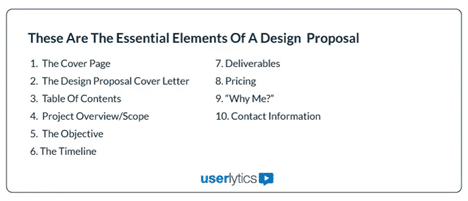
Userlytics include 10 essential elements of a design proposal.
© Userlytics, Fair Use
How to Craft an Effective UX Design Proposal
Designers can use a recommended step-by-step guide to frame a persuasive proposal:
Step 1: Understand the Client's Brand
Before a designer starts drafting a proposal, they need to understand the client's brand thoroughly. They also must comprehend the needs, expectations, behavior, pain points, and more about the users the brand serves. For example, is it a niche startup, or a long-established client that has just had a brand makeover to appeal to a wider market? In an external context, it could be a B2B (brand-to-brand) or a B2C (brand-to-consumer) scenario. Or it could be a case where a company is working on an internal project for its employees, such as an intranet. In any case, this understanding ensures that their design proposal aligns with the existing brand identity, values and messaging. If a designer understands the brand well, they can tailor their design proposal to meet these objectives effectively and show great value in design decisions.
Step 2: Write a Stellar Problem Statement
The problem statement is crucial. It should be specific, concise and directly related to the client’s needs and the client's business objectives. The most difficult part is to define the problem accurately and clearly—which many designers often overlook. A well-defined problem statement will guide the designer’s efforts properly. It will also help set the right expectations with the client and stakeholders.
The primary problem is that of the client. Then the designer can move on to examine the specific problems that the client’s users face, the causes of these and perhaps potential consequences of not resolving them. When they clearly articulate the problem, a UX designer demonstrates their understanding of the client's pain points. This sets the stage for proposing effective solutions. It also raises the chances of a successful pitch if the client sees their problem clearly articulated in the proposal. A Point of View (POV) is a meaningful and actionable problem statement that designers can leverage to access many such insights. They can use a Point of View Madlib to pinpoint their focus with the most clarity.
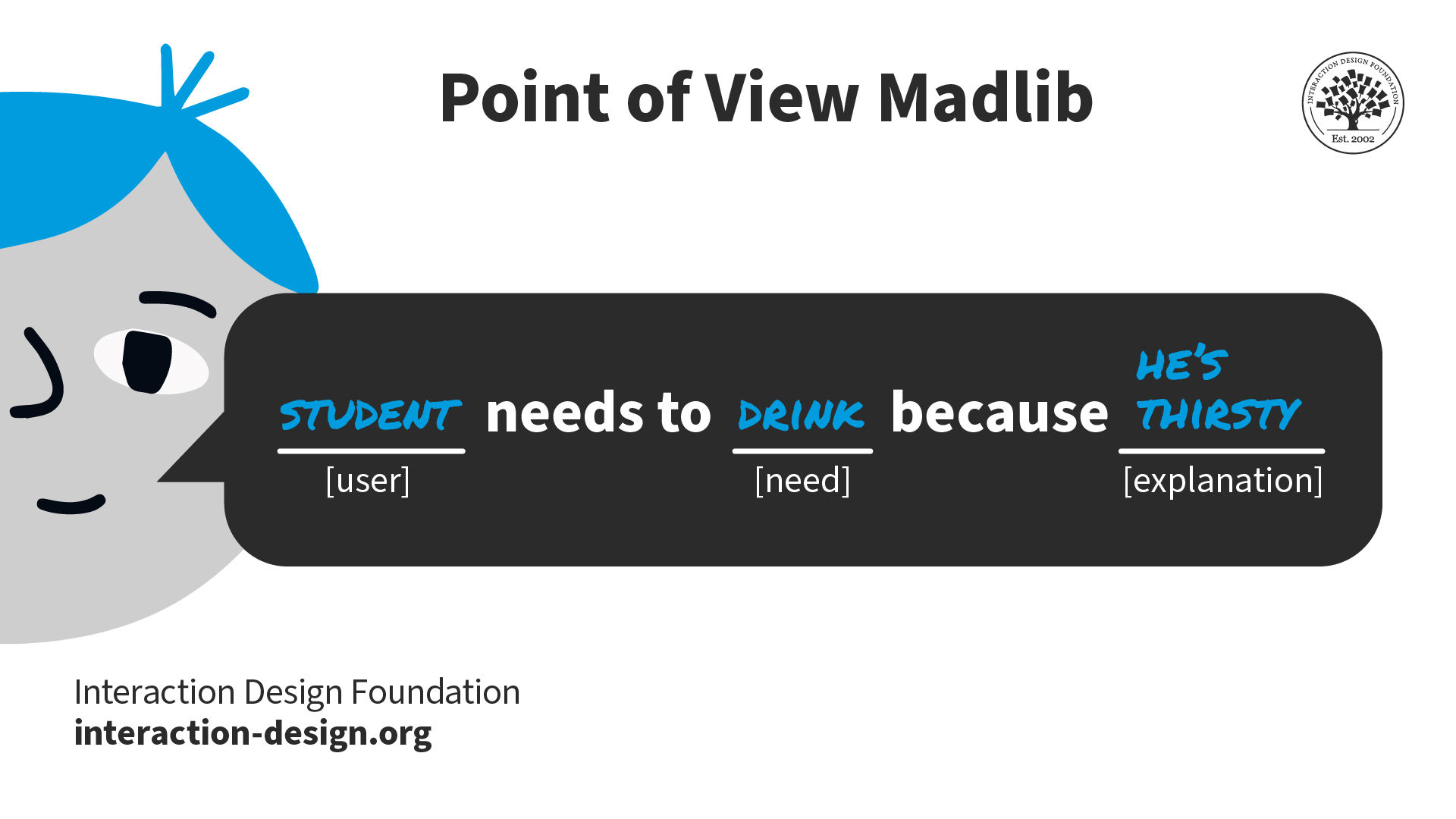
A Point of View Madlib helps designers clearly articulate a problem statement: “(The user) needs to (word or words reflecting the user’s need) because (the insight explaining the need).”
© Interaction Design Foundation, CC BY-SA 4.0
Step 3: Define the Scope in Detail
A designer now outlines the work they will do. This could include website design, user interface and experience design, or other forms of content creation. It’s important to set out the tasks, deliverables, services and anything else that relates to the limitations of the design work.
Designers must understand the full nature of the proposed work ahead of time—what they must do (e.g., usability testing) and what their services do not include. This helps prevent scope creep and surprises from miscommunication.
Step 4: Comprehensively Outline the Solution
Once a designer has clearly stated the problem, it's time to tie in the solution and explain why it solves the client’s or customer's pain points. A well-articulated solution gives the client a clear, detailed plan for how the design work will address their specific problem. It also ensures they understand the proposed approach and what they can expect from the project.
Designers should outline the specific goals they aim to achieve through their proposed solution. These objectives should be measurable, realistic and directly linked to addressing identified problems. If the designer clearly defines the objectives, the client gains a clear understanding of what the project aims to achieve and how to measure success.
It’s crucial to allow for some fluidity. Design solutions typically evolve as more user insights arise and as the project progresses. Therefore, while the solution should be detailed and well-thought-out, it should also be flexible enough to accommodate changes and improvements. Meanwhile, the client should feel it starting to address their unique situation from the outset. They should sense the designer has empathy both for the users and themselves as the client.
Details are important here because they provide a clear roadmap of how designers plan to achieve the project goals. This includes the tools and techniques they will use, the stages of the design process, and how they will incorporate user feedback. This section should also explain how the design strategy aligns with the business objectives and user needs.
This video explains the need for empathy in design and how it guides decision-making:
Step 5: Establish a Realistic Timeline and Firm Deliverables
Timeline
The timeline section of the UX design proposal is essential for managing expectations and ensuring a smooth project flow. It outlines the projected timeline for each phase of the project, including key milestones and deliverable dates.
A designer’s timeline should consider the complexity of the project, the availability of resources, and potential dependencies. It’s crucial to be realistic and allow for flexibility in case of unforeseen circumstances. A well-planned and communicated timeline helps the client understand the project's progress and ensures that everyone is on the same page regarding deadlines and expectations. As delays can have a ripple effect on the entire project, it's essential to factor in some buffer time for unforeseen circumstances or changes in the project scope.
Deliverables
The deliverables section of the UX design proposal specifies the tangible outputs the designer will provide to the client throughout the project. It should include a comprehensive list of deliverables such as user research reports, wireframes, prototypes, usability test results and any other relevant documentation.
The designer should clearly outline the format, frequency and expected quality of these deliverables. For example, mockups may look like the finished project but can appear far sooner in the project. This section ensures that the client understands what they will receive at each stage of the project and helps manage their expectations.
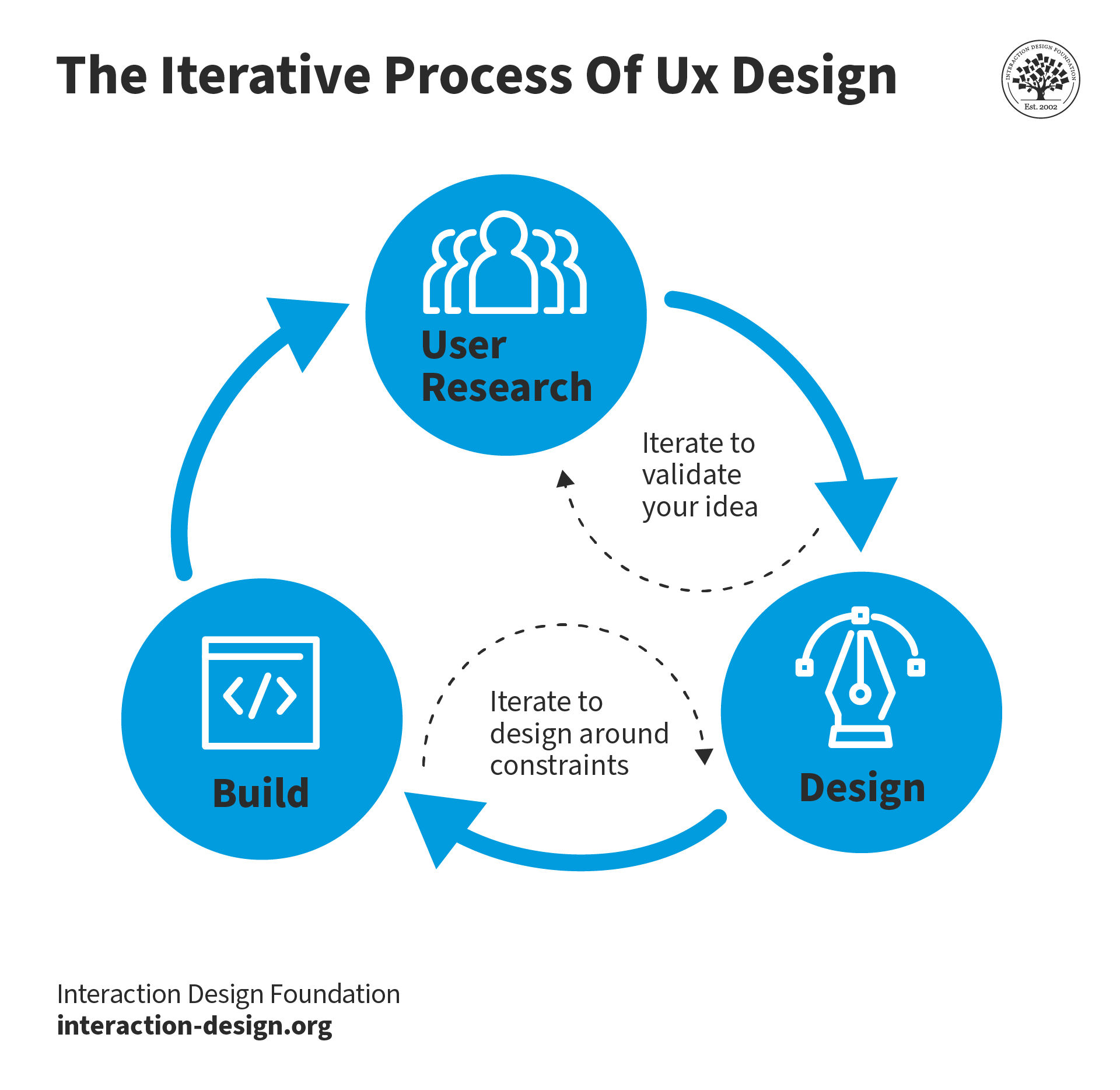
A proposal should reflect a solid understanding that UX design involves important elements: to iterate to validate ideas and to iterate to design around constraints.
© Interaction Design Foundation, CC BY-SA 4.0
Step 6: Include a Strong Portfolio
In this section the designer showcases relevant work to account for the “why me?” dimension. They highlight projects that are like the one they’re proposing for the client. This will give a sense of the individual’s design style and capabilities.
To highlight their experience, designers should showcase their past work, case studies and client testimonials that demonstrate their capabilities. Their UX portfolio should corroborate their claims and act as a design with its own superior UX as well. Designers should explain why they are the best choice for the project and how they can add value to the client's business. UX design is a burgeoning industry, and competition can be fierce. So, standing out from the crowd is crucial with a proposal that not only is professional and comprehensive but also uniquely fits the client's specific needs and goals.
Design lead for the AdWords Display & Apps Team at Google, Stephen Gay gives advice on how to craft a UX portfolio.
Step 7: Estimate Costs and Decide on Payment Terms
A designer needs to show a client how much they will charge for the work, how they will calculate fees and what expenses or contingencies are included. It’s important to be transparent and fair about costs, and justify value and quality. It’s also vital to break estimated costs down into specific deliverables or phases. When it’s itemized this way and transparent, clients can understand what they are paying for, foster trust in the designer and make informed decisions.
It's better to overestimate (by a little) than underestimate. Include costs for research, design, testing and implementation, as well as any additional costs that may arise. A designer should be clear about pricing structure, whether it's hourly or project-based, and explain all costs. Designers include their fees, any additional expenses for resources or tools, and potential costs for changes or additions to the project scope. They should also describe acceptable payment options for the client.
Step 8: Set out the Terms and Conditions
It's crucial to specify clear terms and conditions for several reasons:
Clarity: They provide clear guidelines about the rules and requirements for both parties involved in a transaction or agreement.
Legal Protection: Terms and conditions can serve as a legal contract that may protect the rights of all parties.
Dispute Resolution: In case of disagreements, they are references to help resolve disputes.
Limitation of Liability: They can limit the liability of a service provider (the designer), clearly outlining what they are and aren’t responsible for.
Enforceability: Clearly stated terms and conditions are more likely to be enforceable in a court of law.

Disagreements can arise over any number of factors in a contract. A good terms and conditions section can account for contingencies.
© SHVETS production, Pexels License
Step 9: Summarize The Proposal
The final step is to summarize the proposal and restate the value proposition. A designer needs to show the client why they should choose them for their UX project, what benefits and results that designer will deliver, and how they will exceed the client’s expectations.
It’s important to make a compelling last section here. A client needs to feel that urge to engage from a well-written conclusion that encapsulates why a particular designer is the way forward with the right solution and more.
Tips and Best Practice for Creating a Design Proposal
It’s important to consider various factors that will influence both the creation and reception of a proposal. Key considerations are for designers to:
Understand the Client’s Needs, and Prove It
Research Thoroughly: Before drafting a proposal, a designer needs to deeply research the client’s business, industry and competitors—and, of course, the users who make up their market. It’s imperative to prove an understanding of the client's challenges and clearly articulate how the solution will address them.
Be Accessible and Approachable: Designers should show they are eager to start a dialogue and be open to discussions for gathering requirements and insights as they begin the design project.
Appreciate the Technical Aspects
Feasibility: Consider the practicality of the design in terms of budget, resources and time constraints.
Functionality: Ensure the design works well and serves its intended purpose.
Present the Proposal Well
Clearly and concisely articulate ideas and how they align with the client's goals. Avoid jargon and complex language. Ensure the client can easily understand the proposed solution, deliverables and costs. Remember that design is a conversation in itself; the proposal must reflect appreciation for a great user experience. Aim to answer potential questions within the proposal.
Deliver a professional format and tone throughout the proposal. Ensure perfect grammar and spelling, and a clean and clear layout.
Include detailed sketches, mockups or prototypes when possible.
Maximize the Visual Appeal Wisely
Ensure a visually attractive design that aligns with the brand’s image. Use visuals such as images, diagrams and infographics to illustrate points and make the proposal more engaging. A strong proposal also needs to reflect a designer's grasp of great visual design. Balance the text with relevant visuals that effectively communicate ideas.
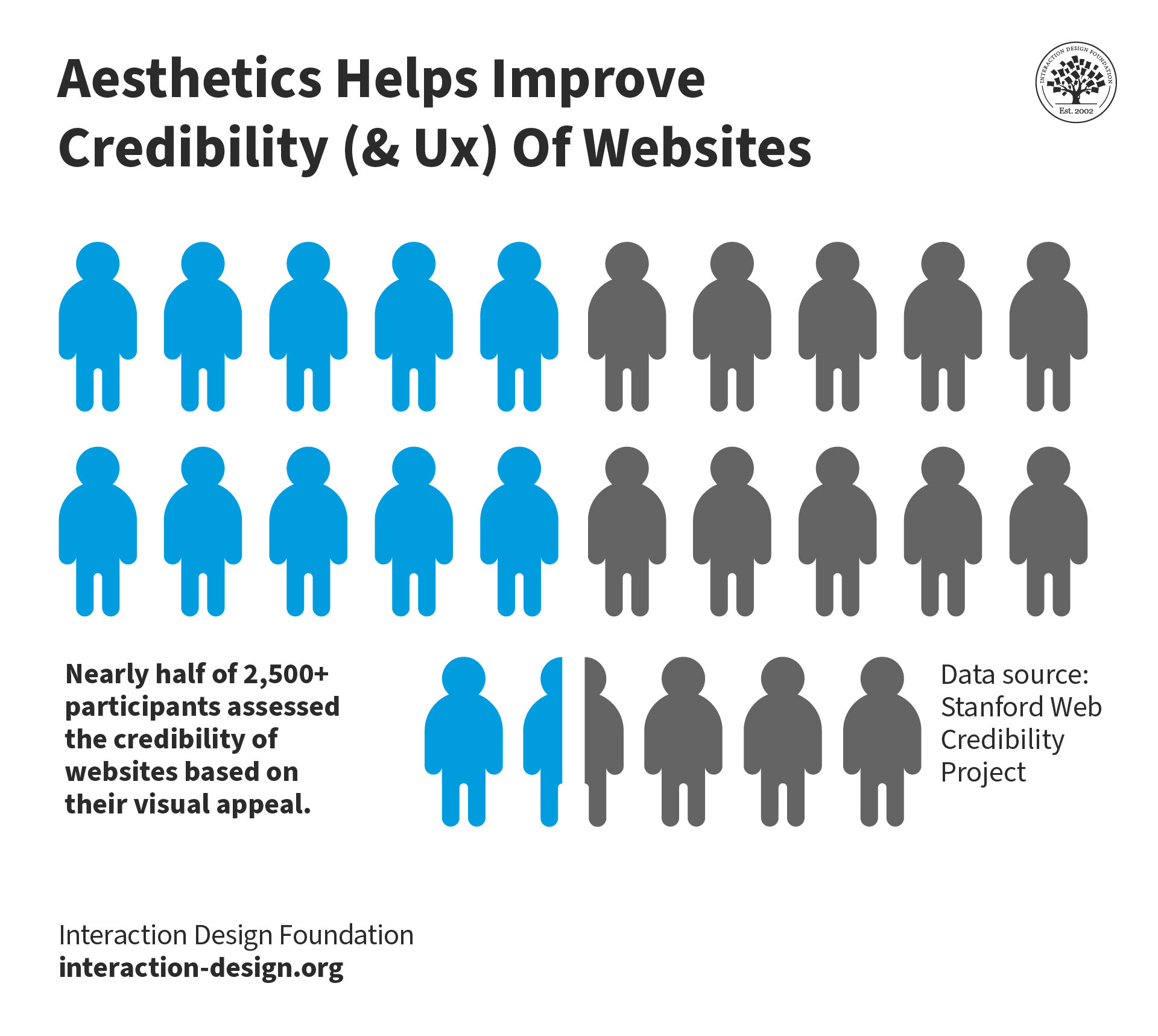
According to the Stanford University’s research, (published in the Stanford Credibility Project), nearly half of 2500+ participants assessed the credibility of websites based on their visual appeal. Remember the importance of visual appeal, both in design solutions and the proposal itself.
© Interaction Design Foundation, CC BY-SA 4.0
Understand the Client's Budget
Discuss the budget openly with the client. This understanding guides the scope and scale of the project, and gives insights into the company culture behind the product or service.
Anticipate The Economic Factors As Far as Possible
Costing: Provide a clear breakdown of costs including design, production and any other associated fees.
Return on Investment (ROI): Explain how the design solution will benefit the client financially or in terms of brand value.
Assumptions: Identify and communicate any assumptions, like the availability of resources, access to user groups or the client’s active participation. This will help align expectations with the client and address potential risks or challenges upfront.
Clearly Define The Offer
Scope of Work: Clearly define what is included to avoid scope creep.
Deliverables: List all deliverables, including file formats and any other specifics.
Sell the Expertise
Portfolio: Include relevant examples of past work that demonstrate competence and style to answer the client’s “Why hire this designer?” in seconds.
Testimonials: Share testimonials from past clients to build trust.
Develop a Compelling Narrative
Storytelling: Use a narrative to connect the client’s problem to the proposed solution.
Benefits: Focus on the benefits of the design, not just the features.
Include User Research
Show commitment to UX Research: Impress the client with an obvious commitment to conduct user research to understand the target audience's needs, behaviors, pain points, expectations, motivations, and more about their world.
Show commitment to User Testing: Plan for user testing as a necessity. This will validate the proposed solution and provide valuable feedback for refinement. When designers test with real users, they can reveal unforeseen issues and gain insights to significantly improve the design.
Consider Proposal-Generating Software
Effective UX design proposal tools and templates are widely available. Use them to help streamline the proposal creation process and enhance the quality and professionalism of proposals. They can also provide a platform for collaborative work. Good programs can save time, provide more insights, and help the client choose a designer or company faster. Designers should find ones that help them customize the look, feel and professionalism they want to cast to clients—for example, as freelance UX or UI designers.
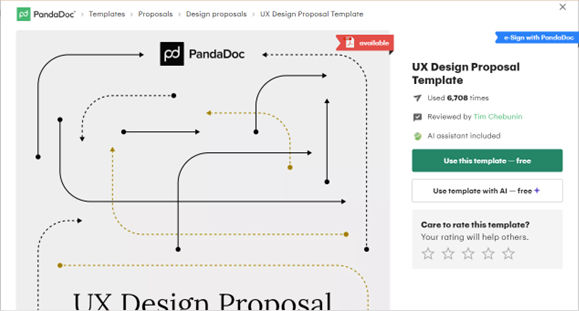
PandaDoc is one of many solutions to generate a design proposal.
© PandaDoc, Fair Use
Follow Up
Follow-Up Plan: Have a plan for following up after sending the proposal.
Be Flexible and Open to Revisions
Design is a collaborative process, and a proposal should reflect this. Be open to feedback from the client and be willing to revise the proposal based on their inputs. Designers who are feedback-oriented and -driven can show this commitment to evidence, flexibility and listening.
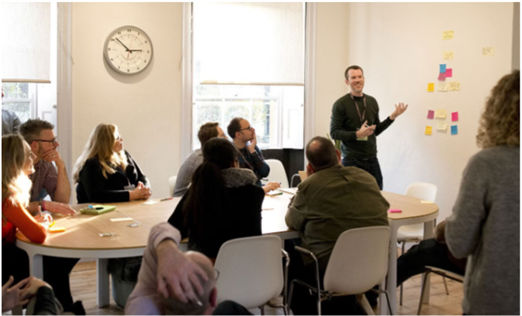
UX design agency Zengenti has used usability testing data in their design proposals to win projects. They find that including user testing data in their proposals provides a strong foundation for their design process and helps to reassure clients that their designs are evidence-backed.
© Simon Dumont, Fair Use
Potential Pitfalls around a Design Proposal
Some potential issues that can arise in a project relating to the proposal include:
Lack of Research
Inadequate Market Analysis: This can result in a design that does not resonate with the target audience.
Misunderstanding the Brief: Not asking questions for clarity can cause a proposal to miss the mark.
Communication Issues
Overpromising: Designers who make promises on deliverables or timelines that are unrealistic can damage trust. Also be clear about the job description. Many potential clients might have a vague idea of what’s involved in product design, and expect UI-UX designers to deliver in unrealistic timelines.
Vague Descriptions: Lack of specificity in the scope of work can lead to misunderstandings. For example, a proposal aimed at service design needs to consider every angle of the service design process.
Watch CEO of Experience Dynamics, Frank Spillers explain the service design process.
Financial Missteps
Underquoting: Underestimating the costs can lead to financial loss or a decrease in quality to meet budgets.
Overquoting: Overestimating costs can make a proposal less competitive.
Including Design Ideas without Considering Consequences
Designers do not typically include design ideas in a proposal, unless the client has agreed to sign an NDA, and offers compensation for drafting the proposal. These are usually called RFPs (request for proposal). Also, if the client and designer already know what's to be designed, then a solution overview will make sense. That is, it merely documents what the client has shared or what the client and the designer have mutually discussed before.
Legal and Ethical Concerns
Copyright Infringement: Always ensure that the design does not infringe on any copyrights.
Ethical Design: Be mindful of ethical considerations in a design. Avoid anything that could appear offensive or inappropriate.
Remember, a great design proposal is not just about the aesthetics. It's also about how well it communicates the value of a design solution to the client. It should be clear, concise and compelling. It should also show extensive attention to detail in research, planning, foresight, empathy and vision. Overall, it travels ahead of the designer who relies on it. It’s often the first point of contact with a client, and so needs to portray the ultimate in professionalism, credibility, and much more.
“People hire who they know, who they like, and who they trust."
— Chris Do, CEO and Founder of The Futur