Design critiques are collaborative sessions where team members evaluate digital designs to give constructive feedback, improve their effectiveness and make sure they meet user needs and business objectives. Critique sessions nurture a culture of continuous improvement and encourage innovative thinking. They bring about more refined and creative solutions also.
© Interaction Design Foundation, CC BY-SA 4.0
Why are Design Critiques Important?
Design critiques are vital in user experience (UX) design. They're chances for collaboration where designs come under scrutiny and get constructive feedback. The aim is to enhance how effective a digital product or prototype is—and ensure it meets its objectives. These critiques involve roles where the most dynamic ones are designers—who present—and critics. Critics analyze and give feedback. Well-done UX design critique sessions are helpful as they really foster cross-disciplinary improvement at any stage of a UX design process. Another point is that they support iterative development towards truly user-centric solutions’ coming about.
When brands embed design critiques into their UX design workflow, it brings usability flaws into the spotlight. Plus, it cultivates an environment for rapid iteration and enhanced collaboration among designers, stakeholders and developers. One of the most important points is that design critiques should be about constructive feedback on design solutions and not the designers themselves.
These critiques are crucial for designers to gather insights and identify potential issues with their work—as early as possible. Critiques can therefore improve the overall user experience of their digital solutions. It’s impossible to understate that it’s better to catch potential missteps earlier than later. Another beneficial effect is that this will help designers to view critiques as helpful instead of trials to dread. Designers can refine their work, ensure higher degrees of usability and get the design more closely in line with user needs and business goals when they discuss and evaluate design choices.

This example showcases a critique that has a basis in user research. It reflects a proactive mindset of advice.
© Create Ape, Inc., Fair Use
What are the Benefits of Design Critiques?
Some of the main benefits are that critiques can:
1. Enhance Collaborative Efforts
Design critiques nurture open communication, shared understanding and—perhaps best of all—collective problem-solving within teams. This structured forum lets designers receive feedback, spot areas for improvement and get aligned on the project's direction. Critiques enhance collaborative efforts. Regular engagement in these sessions builds trust among team members as they challenge assumptions and explore alternative solutions—together.
UX Designer and Author of Build Better Products and UX for Lean Startups, Laura Klein explains the importance of collaboration in agile work processes:
2. Improve Product Quality
Design critiques’ iterative nature is helpful. It ensures that the final products meet users’ needs and are in line with project goals. When designers address issues early in the UX design process and refine work that has solid feedback as a basis, they can make informed decisions that will greatly enhance the user experience. For instance, flagged issues about a product’s visual design and information architecture can prompt a designer to tweak their work. From there, they can make it respond better to the users’ needs in their user flow. This process improves product quality. It reduces development time as well. That's because teams can identify problems and correct them swiftly.
3. Facilitate Continuous Learning
Design critiques are an invaluable way to promote a culture of continuous learning and improvement. Critiques encourage designers to take risks and experiment in the work they do on the products or services that their brands offer. This factor is essential to help them grow as well as sharpen their skills.
When designers share their work and receive constructive feedback, they can challenge their own assumptions. They can get new perspectives and learn from their peers as well. For example, the apps that product teams release can reflect better-designed elements and more refinement overall. That’s because the designers responsible may have been able to go back and make better use of problem statements, prototyping tools, user personas and other elements of UX research earlier—all thanks to the critiques they received. The net result is that they can go on to create user experience delights in the form of well-solved problems.
Author and Human-Computer Interaction Expert, Professor Alan Dix explains the importance of user personas in this video:
Who Conducts Design Critiques in UX Design and How?
A variety of stakeholders play crucial roles in UX design critiques. These individuals or groups can include clients, project managers, developers, marketers and users. Each role brings a unique set of perspectives and expectations to the table.
The active involvement of these stakeholders throughout the design process is important—from user research to usability testing and design reviews. In fact, it's vital for the success of the project. Their engagement ensures that teams make decisions collectively. That's a factor that fosters a sense of ownership and investment in the project.
Design Director at Société Générale CIB, Morgane Peng explains important aspects of how some stakeholders may view design-related topics:
What are the Roles and Responsibilities in Critiquing?
Presenter: Typically, this is a designer. The presenter shares the design they’re working on; they provide the context, too. They explain the rationale behind design decisions. This role is crucial. It sets the stage for the critique as it outlines the current state of the design process.
Critics: This group can have 5–7 team members. They may include designers, developers, copywriters, product managers and relevant business stakeholders. They give feedback that aims to refine and improve the design solution, and stick to the critique's guidelines.
Facilitator: The facilitator is responsible for the smooth conduct of the critique. They manage the discussion. They ensure it stays on topic and within time limits. This role is vital to maintain the focus of the critique and handle any emerging tensions.
Note-taker: The person in this role documents key insights, questions and feedback during the critique. The note-taker makes sure they record all valuable information and share it with the team. This activity is crucial for future reference as well as implementation.
When brands understand these roles and make sure active, mindful participation from all stakeholders happens, they can conduct design critiques in the most effective way. This can lead to more successful and user-centric design outcomes.
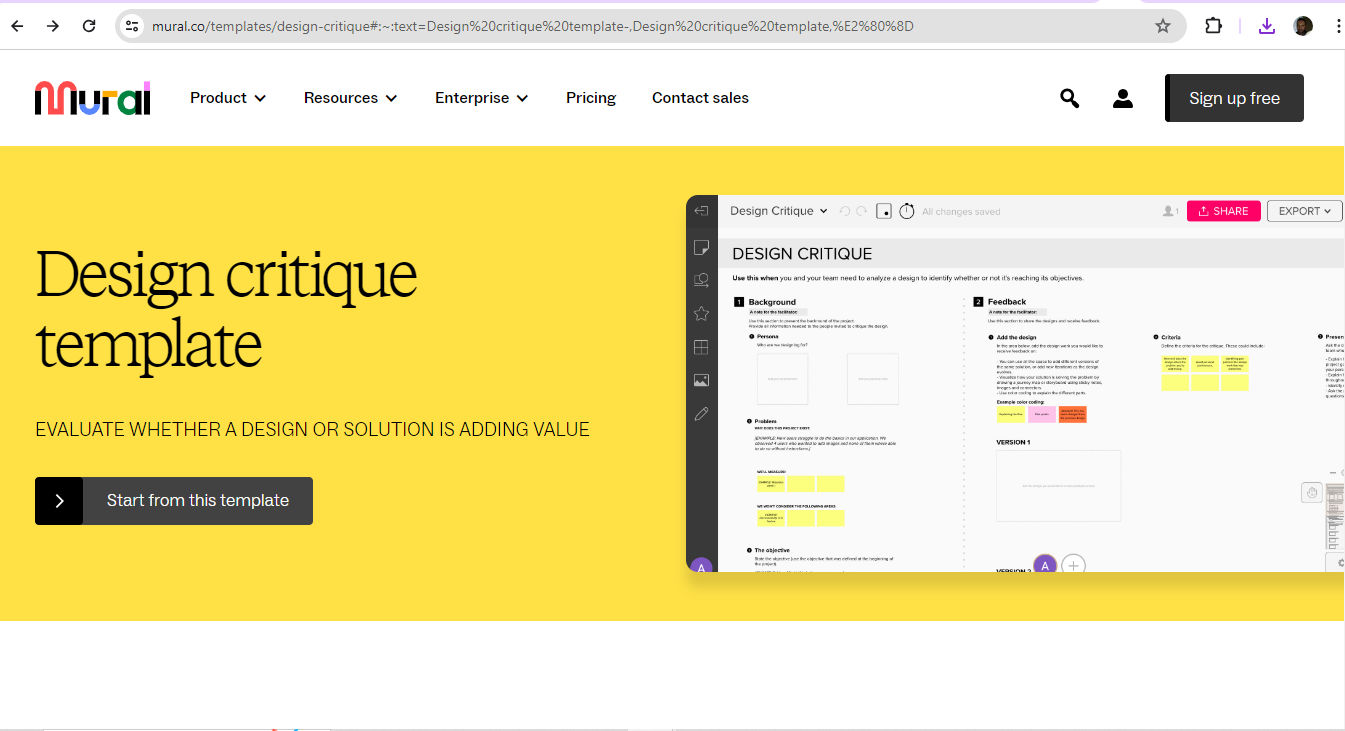
To help with the critique process, brands can make use of tools and software as well. For example, designers or facilitators might use a template:
Mural’s template features areas to present solutions and add instructions, including suggested presentation formats, suggestions for how to frame feedback requests and an area for analysis with designers’ teams.
© Mural, Fair Use
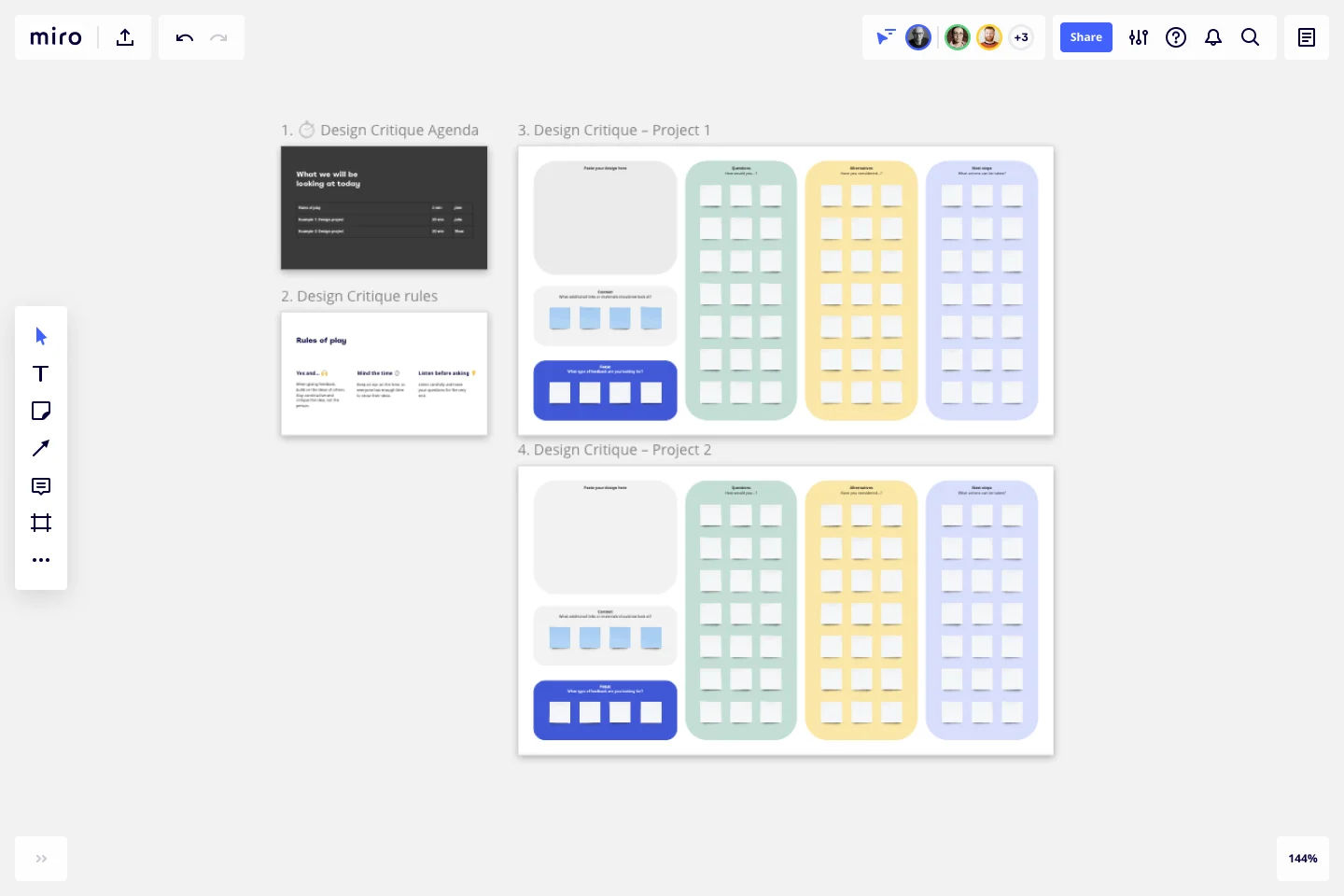
Miro’s Design Critique Template is another helpful tool for designers to present and teams to analyze designs and provide feedback.
© Miro, Fair Use
What are Best Practices to Conduct Design Critiques?
1. Prepare for a Critique
Effective design critiques begin with thorough preparation. Facilitators play a crucial role here. They set the scope and agenda of the session. They must communicate the critique's goals clearly to all the participants. Plus, they need to ensure a shared understanding of the session's focus. Also, to rotate the facilitator role among team members prevents any single individual from dominating. What's more, it encourages a diverse input spectrum. This quality is something that enhances the session's democratic nature.
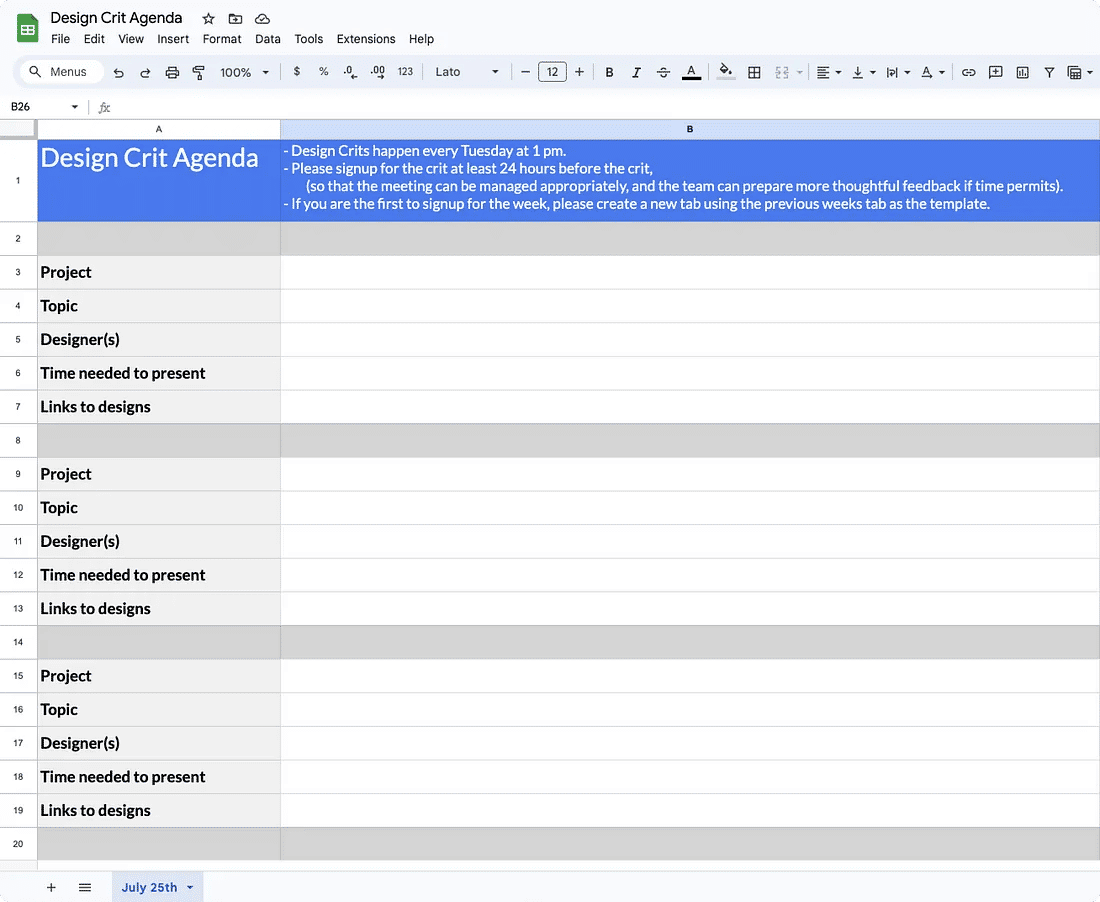
A weekly design critique sign-up sheet.
© Greg Arroyo, Fair Use
2. Create a Constructive Environment
It’s vital to create a constructive environment. Productive design critiques depend on this factor. The key is to establish a setting that encourages open communication. It should be one where every participant feels valued. The facilitator should manage the session effectively, and balance positive and negative feedback. They should also set ground rules to ensure that each comment is specific and actionable. Another point is that when designers present work, it can make them feel vulnerable. So, it's crucial to foster a respectful atmosphere where they don’t take feedback personally—but see it as a chance for growth.
3. Handle Feedback Effectively
When designers handle feedback, they should focus on clarity and openness. To reiterate the project's objectives at the beginning of the session helps align the team’s focus. During the critique, designers should present their work succinctly, share the rationale behind design decisions and be specific about the areas where they need feedback the most.
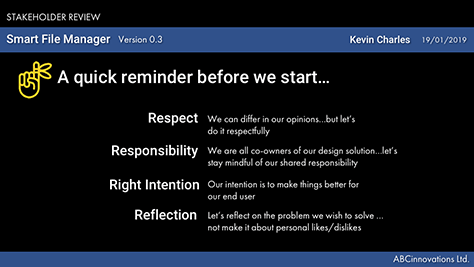
It’s good to set some ground rules to keep everyone on the right track.
© Atul Handa, Fair Use
After the session, it’s a good idea to make designs available for further review and schedule follow-up meetings to discuss detailed feedback. This helps ensure that designers can thoroughly explore all insights and integrate them into future iterations.
What are Potential Risks and Considerations of Design Critiques?
Design critiques do come with risks. For instance, there are the points that everyone involved must:
1. Navigate Subjectivity and Bias
Subjectivity and bias in design critiques can influence the outcome in a huge way, and often overshadow objective analysis. Personal biases can come from someone's cultural background, personal experiences or aesthetic preferences. They can skew perceptions and decisions during the critique process. To lessen these risks, it's crucial to foster a diverse and inclusive environment where everyone considers multiple perspectives. It’s helpful to encourage team members to challenge their assumptions and biases. If they can do that, it will actively contribute to more balanced and equitable design decisions.
CEO of Experience Dynamics, Frank Spillers explains another form of bias, which designers should bear in mind for the sake of their users and before a critique might expose it:
2. Avoid Overcritical Feedback
Constructive criticism is indeed essential for growth. However, there's a difference between constructive and overly critical feedback. The second type can be demoralizing and counterproductive—and work against the idea of objective critiquing. It’s vital to be clear about the distinction between negative and bad feedback. The former should offer clear, actionable suggestions for improvement. The latter, though, often lacks specificity and—worse—can be discouraging. So, it's vital to promote a supportive critique environment. Feedback should be specific, objective and focused on the design rather than the designer. This approach helps keep a positive atmosphere and encourages creative risk-taking.
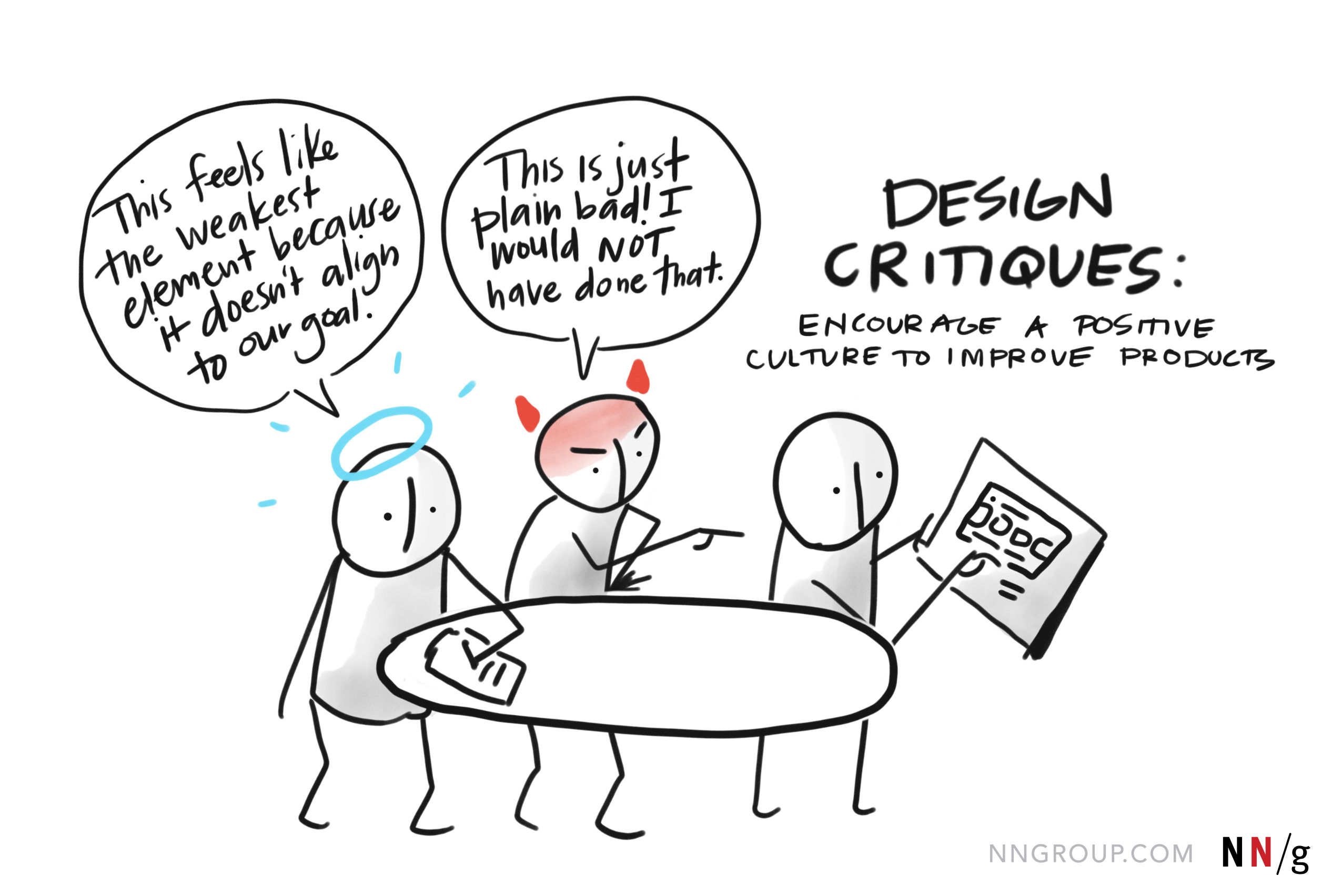
It’s vital to critique for the right reasons and with the right mindset.
© NN/g, Fair Use
3. Balance Critique with Creativity
Design critiques shouldn’t just focus on how to identify flaws. They should also be about how to nurture creativity. It’s essential to balance critical thinking with creative exploration for innovative outcomes. To encourage designers to experiment and explore various solutions during the critique process can lead to unexpected and superior design solutions—a major benefit.
When teams structure critiques to include phases of divergent thinking with convergent feedback following, something powerful can happen. They can ensure that they address creativity and functionality. This can lead to designs that are not only effective but also ones that inspire and engage.
Professor Alan Dix explains the differences between divergent and convergent thinking:
What is an Example of a Design Critique in Action?
Here’s a notable case study to illustrate a productive design critique style:
XING's Design Critique Sessions
At XING, a fixed group of diverse UX professionals meets weekly for half an hour to critique a specific topic. In this group are a presenter, a facilitator and three to four critics. The consistent group composition over multiple sessions lets members understand each other's critique styles. Plus, it provides a safe environment for feedback. This method has proven efficient, with the group going through stages of team development such as forming, storming, norming and performing.
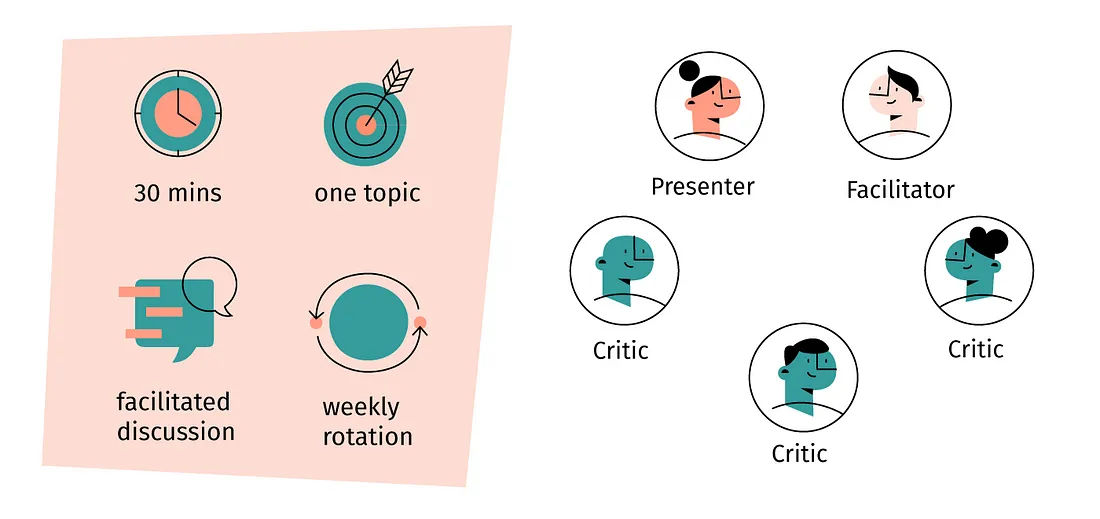
The setup for XING design critique sessions.
© Thuy Vo, Fair Use
To maintain a consistent group of participants in design critique sessions—as in XING’s case—helps to create a safe space. In it, members are comfortable to share and receive feedback. This consistency also helps in the understanding of the unique perspectives of each member—something that enhances the quality of critiques.
Overall, design critiques can be a vital way to improve design quality through constructive feedback and collaboration. These sessions don't merely act as forums to pinpoint flaws. They're precious junctures where creativity meets critique as well. As long as they’re done well, they can encourage a culture of continuous improvement and innovation.
How important a facilitator in design critiques is is impossible to overstate. A skilled facilitator ensures that the session remains focused, manages the flow of feedback and intervenes when discussions go off-track. This role is crucial for maintaining the efficiency and effectiveness of the critique process.
Brands that engage in design critiques tend to find that these sessions aren’t just beneficial. They're actually essential to help achieve user-centric design outcomes that resonate well with the intended audiences. Designers have a golden chance to view their work through a multifaceted lens. They can get the perspectives they need from others as starting points toward making good designs better. This could mean simple fixes regarding visual or graphic design aspects. An example of such a fix is to add more white space. Alternatively, it could involve more intricate ways to alleviate the pain points of users. Critiques encourage robust dialogue that bridges the gap between subjective perception and objective design necessities.
Remember, to maintain a healthy and fruitful critiquing ethos, it takes active participation, open-mindedness and a commitment to continuous learning. However, these qualities are indispensable staples in the UX design field, anyway. They can help designers fast-track their development in a much safer environment than they might experience in the wilds of the market after a product’s official launch.