Agency in Extended Reality (XR)

Your constantly-updated definition of Agency in Extended Reality (XR) and collection of videos and articles.
Be a conversation starter: Share this page and inspire others!

98 Shares

What is Agency in Extended Reality (XR)?

Agency refers to a user's perceived ability to influence and control elements within a virtual or digital experience. It’s the sense of having an impact on the digital space through one's actions, decisions, and interactions. In essence, agency is about the user's perception of being an active participant rather than a passive observer.

In virtual reality (VR), agency is crucial for more immersive and engaging experiences. Users feel agency when they can interact with virtual objects, navigate through the environment, and influence the progression of the experience. 

In broader digital contexts and other immersive media, agency extends to the user's control over the interface, functionalities, and outcomes of the software or application.

In this video, UX Design Consultant Frank Spillers, explains what agency means in VR.

Why Is Agency Important?

Agency is directly related to a user’s engagement of a virtual experience. When designers give users a certain degree of control over their experiences, they enhance user engagement with the product. Users gain a sense of ownership so their interactions feel more significant.

Agency also brings greater user satisfaction. Users are not just passive observers but have an active role in shaping their experiences. They can customize their interactions based on personal preferences, which makes the whole experience more individualized and enjoyable. Personalized experiences increase satisfaction and users are more likely to recommend products to others when they are highly satisfied—personalization will increase a product's reach and bolsters its credibility

In addition, agency fosters a deeper relationship between users and the digital product. When users can influence outcomes and the digital environment reacts to their choices, they’re more likely to feel valued. This draws them back to the product, which then promotes loyalty and retention.

Agency in VR is an ongoing process—it requires careful design, user feedback, and technical implementation. If user interaction is prioritized, interactivity, and user empowerment, you can create VR experiences that make your users feel like active participants in a virtual world.

How to Design for Agency

Designers can use several methods to increase agency in their products.

User Interaction

Ensure that users can interact with the VR environment with natural and intuitive input devices, such as motion controllers, hand gestures, or even voice commands. Responsive input is crucial for users to feel agency. For example, the hand-tracking in Oculus Quest 2 allows users to interact with the VR environment with their hands, which makes the experience more intuitive and natural.
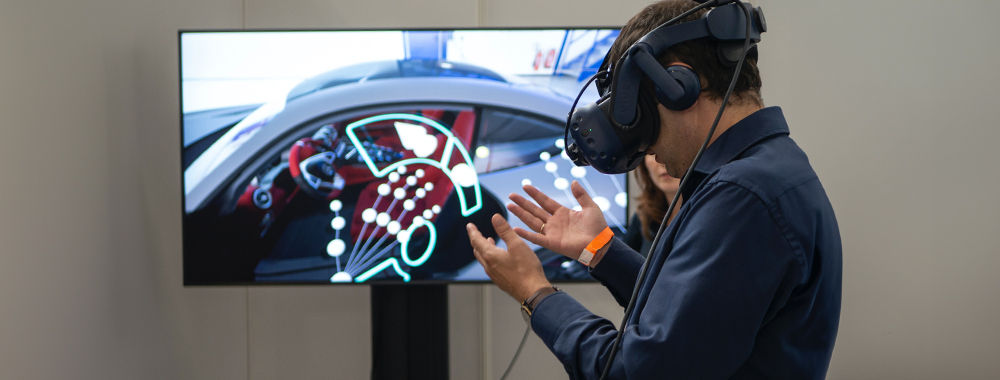
A man wearing a VR headset is looking at his hands. In front of him is a screen which shows what he's seeing inside the headset.

Hand tracking enhances agency by providing users with a more intuitive and direct way of interacting with the digital environment.

Realistic Physics and Feedback

Physics-based interactions can also make the virtual world feel more natural. Objects should behave as expected when touched, pushed, or manipulated—that will provide a sense of agency.

Incorporate haptic feedback devices into the VR hardware to simulate the sensation of touch and contact to enhance the user's sense of agency. For instance, in the VR game Half-Life: Alyx uses physics-based interactions, where objects behave realistically when manipulated. This, coupled with the haptic feedback from the VR controllers, creates a more immersive experience.

Freedom of Movement

Designers can provide various locomotion methods to suit users' preferences and comfort levels, such as teleportation, smooth walking, or room-scale movement. Some users may prefer to move freely, while others may experience discomfort with certain locomotion methods. For example, the Elder Scrolls V: Skyrim VR offers various locomotion options, including teleportation and smooth walking, catering to different comfort levels of players.

Interactivity

Designers should create VR scenes with objects that users can interact with. Allow users to pick up, manipulate, and interact with virtual objects in meaningful ways to give them a sense of control. For example designers can introduce dynamic elements and systems in the VR environment, like switches, levers, buttons, and puzzles. In Beat Saber, players interact with the environment by slicing through blocks with lightsabers—a perfect example of how interactive elements can enhance agency.
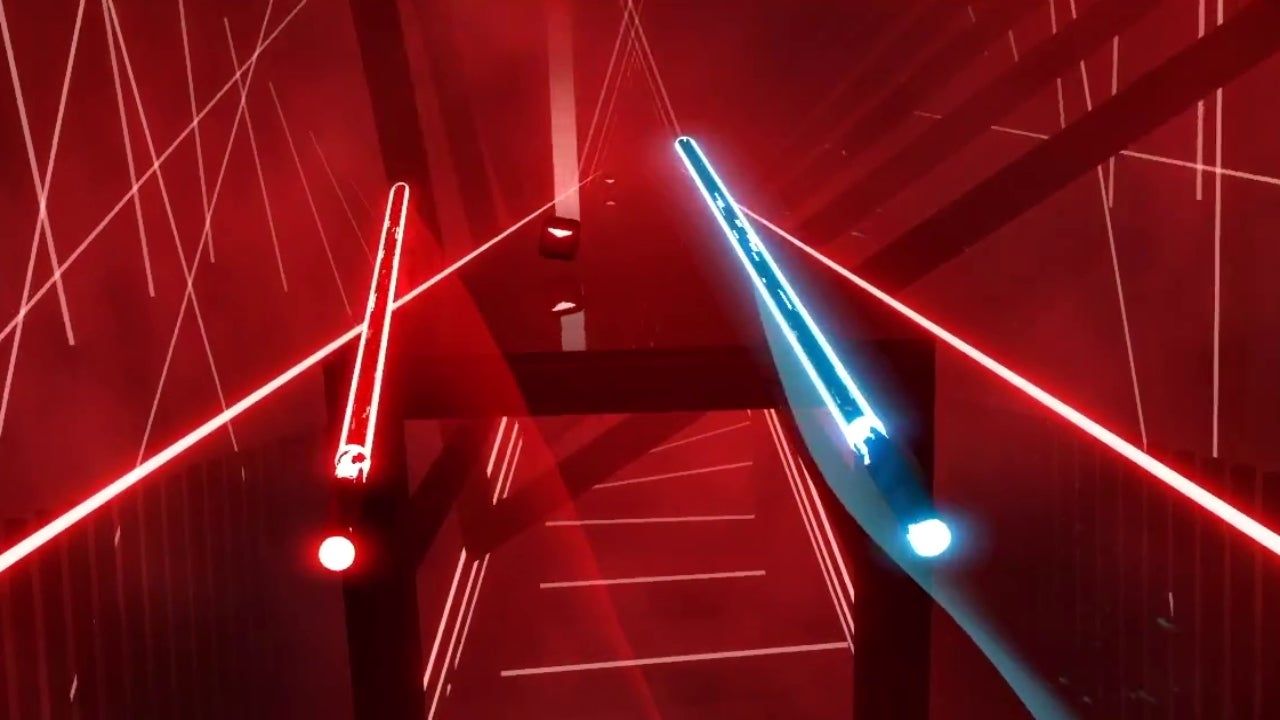
A screenshot from the VR game, Beat Saber. It's from a first person point of view and shows two light sabers, one red one blue and then many other lights in the surrounding environment.

Beat Saber is a highly interactive VR game. This level of interactivity enhances agency.

© Beat Saber, Fair Use

Storytelling and Narration

Designers can create narratives that adapt to your user's choices and actions, and allow them to influence the storyline. This gives users a sense of agency as their choices shape the plot of the experience. This way, they can also ensure that users' decisions have meaningful consequences within the VR experience. This will reinforce the feeling of agency. For example, The Walking Dead: Saints & Sinners is a first-person VR game that allows players to make choices that affect the storyline—watch some of the gameplay in this video.

User Empowerment

Designers can allow users to acquire and improve skills or abilities within the VR environment to make them feel more empowered and in control. They can also include challenges or objectives that users can complete to earn rewards or progress in the experience, giving them a sense of achievement and agency. For example, Superhot VR empowers players by allowing them to control time with their movements, which provides a unique sense of control and skill development.

User Feedback

Designers must make sure that users receive clear feedback about their actions and the consequences of those actions. Visual, auditory, and haptic feedback can help users understand their agency within the virtual world. For instance, in Job Simulator, players receive immediate visual and auditory feedback on their actions, which helps them understand their impact on the virtual world.

User Comfort

Discomfort can diminish a user's sense of agency. Designers should prioritize comfort and address motion sickness (also known as cybersickness) and discomfort issues.  They can implement comfort options and educate users on best practices for avoiding discomfort.  For example, Sony's PSVR incorporates a comfortable VR headset design and provides options to minimize motion sickness.

Playtesting and Iteration

Iterative design is essential to refine the sense of agency and improve the overall user experience. For example, the development of Bonework involved extensive playtesting, which lead to iterative improvements that enhanced the sense of agency in its physics-based VR world.

Immersive Audio and Visuals

Immersive or spatial audio and realistic visuals can enhance the feeling of presence and agency in VR. Designers should pay attention to audio cues and visual details to make the virtual world feel more convincing. For example, Moss' combines immersive audio with detailed visuals that creates a convincing and engaging VR environment.

How Agency Improves User Experience

Empowerment Through Informed Choices

When users feel empowered and are allowed to make their own decisions, they are more likely to have a satisfying experience. Through their decision-making, users learn the impact and consequences of their actions. So users are not just in control, but also feel competent in their decisions.

Interactive Elements Enhance User Engagement

Beyond the impact of actions, interactive elements that respond to user input fuel engagement. This could include dynamic content that changes based on user choices or adaptive challenges that evolve with user interaction.

Proactive Problem-Solving and Reduced Frustration

Agency in design doesn't just reduce frustration; it actively encourages users to engage in problem-solving. When users understand how their actions affect the interface, they're more likely to experiment and find solutions, which leads to a sense of accomplishment.

Customization and Personalization as a Learning Tool

Customization goes beyond personal preferences—it's also a learning tool. As users adjust settings and customize their experience, they gain a deeper understanding of the system's capabilities, which can lead to more sophisticated use and higher satisfaction.

Empirical Learning and Mastery

The journey from exploration to mastery is an empirical process. As users experiment with different features and see the results of their actions, they learn through trial and error, which can be a highly effective learning method.

Co-creation and Ownership

Agency can transform users from passive recipients to co-creators of the digital experience. This sense of co-creation fosters a stronger emotional bond with the product, as users see their input and preferences reflected in the experience.

Feedback Loops and Predictive Responsiveness

Feedback loops where user actions inform future interactions can greatly enhance agency. Predictive responsiveness, where the system anticipates user needs based on previous interactions, can make the experience feel more intuitive and tailored.

Motivation through Challenge and Reward

Enhancing agency in digital environments can also involve introducing challenges that are closely aligned with users' goals. As users overcome these challenges, they experience a sense of achievement, which is a powerful motivator and enhances overall satisfaction.

Questions About Agency in Extended Reality (XR)?
We've Got Answers!

What are the best practices for designing for agency in VR?

Prioritize user autonomy and create environments where users' decisions meaningfully impact their experience. This can be achieved through interactive objects, branching narratives, and customizable avatars. Designers should create environments with multiple interaction points where each choice has a clear and immediate effect. An example is Half-Life: Alyx, where players' choices in object handling and navigation significantly affect outcomes.


Learn more about agency and other key elements of VR experiences in our course, UX Design for Virtual Reality.

How can designers balance user control and narrative in VR experiences?

Achieving a balance between user control and narrative in VR requires a compelling story that guides users while allowing freedom to explore. Designers should subtly direct users and use narrative cues and environmental storytelling to employ environmental clues and non-intrusive narrative elements to suggest paths or actions.

Learn more about agency and storytelling in our course UX Design for Virtual Reality and our article, How to Use Narrative as a Design Tool.

Which are some of the most influential, books in the field of agency or VR or XR in general?
  1. The VR Book: Human-Centered Design for Virtual Reality by Jason Jerald

    Jerald, J. (2015). The VR Book: Human-Centered Design for Virtual Reality. Morgan Claypool Publishers.

    This book offers a comprehensive exploration of human-centered design in virtual reality. It addresses the complexities of VR design, emphasizing the importance of understanding human perception, interaction, design principles, and real user needs. It is written for a diverse audience, including VR designers, managers, programmers, artists, psychologists, engineers, students, educators, and user experience professionals, highlighting the multifaceted approach to creating effective VR experiences. The book has been widely recognized for its thorough coverage of user interface dynamics in VR.

  2. UX for XR: User Experience Design and Strategies for Immersive Technologies by Cornel Hillmann

    Hillmann, C. (2021). UX for XR: User Experience Design and Strategies for Immersive Technologies. Apress.

    This book explores the challenges and opportunities of designing for extended reality (XR), including virtual reality (VR) and augmented reality (AR). The book reviews established UX practices, case studies from industry leaders, and examines how spatial interaction is revolutionizing human-computer interaction. It offers insights into designing for experiential state and spatial cognition, emphasizing the importance of spaces, senses, and storyboarding in creating emotion-rich user experiences. This resource is valuable for understanding the intersection of UX design and the growth of immersive technologies.

What role does interactivity play in creating agency in VR?

Interactivity is crucial for agency in VR as it enables users to actively engage with the environment, make choices, and influence outcomes. Designers should create interactive elements that are intuitive and rewarding to enhance this sense of agency.


Learn more about agency and interaction design in our course, UX Design for Virtual Reality.

How does agency in VR differ from traditional gaming or web experiences?

VR offers a more immersive and embodied form of agency compared to traditional gaming or web experiences, allowing for physical interaction and enhancing the sense of presence. VR's ability to simulate real-world physics contributes significantly to this enhanced experience.


Learn more about embodiment in VR in this Master Class, How To Influence Behavior Through Virtual Reality Narratives.

What are common challenges in designing for agency in VR?

Challenges include the balance of narrative control, the management of user expectations, and how to ensure intuitive interactions. Designers must ensure that user choices are meaningful and that the VR environment responds logically to these choices.


Learn more about agency and how to design for it in our course, UX Design for Virtual Reality.

How can VR designers measure the effectiveness of agency?

To measure the effectiveness of agency in VR, designers should use user feedback, behavioral analysis, and engagement metrics that focus on how users interact with the environment and the decisions they make.


This academic paper, Virtual skills training: the role of presence and agency, discusses how to measure agency.

What are the psychological effects of agency in VR on users?

Enhanced agency in VR can lead to increased immersion, satisfaction, and emotional impact, as users feel more control and impact on their environment, making the experience more engaging and memorable.

Learn more about agency and other key elements of VR experiences in our course, UX Design for Virtual Reality

How can VR agency be used for educational purposes?

Agency in VR can significantly enhance learning by providing interactive, experiential learning environments, allowing students to learn by doing, making decisions, and observing the outcomes in a controlled, safe environment.

Learn more about experiential learning in this article, The Future of Education is in Experiential Learning and VR

What impact does agency have on immersion in VR?

Agency significantly enhances immersion in VR, making experiences more engaging and realistic, as users feel in control and their actions have tangible consequences in the VR world.


Learn more about immersion in Extended Reality (XR) in this piece, What is Immersion.

How can designers ensure agency without overwhelming users in VR?

To ensure agency in VR without overwhelming users, designers need to provide clear guidance and intuitive design that ensures the environment offers choices without being overly complex or confusing.


Learn more about agency and other key elements of VR experiences in our course, UX Design for Virtual Reality

What are innovative examples of agency in VR applications?

Innovative examples of agency in VR include games like Boneworks and educational tools like The Body VR, which provide users with meaningful choices and realistic interactions, showcasing the potential of agency in VR applications.

Learn more about agency and other key elements of VR experiences in our course, UX Design for Virtual Reality.

How does user feedback influence agency in VR design?

User feedback refines and enhances the sense of agency in VR design. It helps to identify areas where user expectations are not met and guide improvements in the VR experience.


Learn more about user feedback in VR in this article, How do you incorporate user feedback and co-design in VR development?

Earn a Gift Earn a Gift, Answer a Short Quiz!

1
2
3
4
1
2
3
4
Question 1
Question 2
Question 3
Get Your Gift
Interaction Design Foundation logo

Question 1

What does agency in virtual reality refer to?

1 point towards your gift

  • The limitation of user interactions in a virtual setting.
  • The passive observation of virtual environments.
  • The user's ability to influence and control elements within a virtual experience.
Interaction Design Foundation logo

Question 2

How can designers improve a sense of agency in virtual reality?

1 point towards your gift

  • They create interactive elements that respond to user input.
  • They focus on the haptic feedback and visual appeal only.
  • They provide limited interaction options.
Interaction Design Foundation logo

Question 3

How does user feedback contribute to agency in VR design?

1 point towards your gift

  • It helps to identify areas where user expectations are not met.
  • It limits the range of interactions available.
  • It only focuses on gamification improvements.

Learn More About Agency in Extended Reality (XR)

Make learning as easy as watching Netflix: Learn more about Agency in Extended Reality (XR) by taking the online IxDF Course UX Design for Virtual Reality.

Why? Because design skills make you valuable. In any job. Any industry.

In This Course, You'll

  • Get excited when you learn how to create Virtual Reality (VR) experiences people love. The global VR market will grow to $227 billion by 2029! Whether you want to create VR games or interactive business solutions, this course will help you bring your big ideas to life. VR opens up a new dimension for your creativity, literally! Virtual reality lets people step into digital worlds for a deeper emotional connection. It leads to higher retention, engagement, and loyalty in gaming, education, and corporate training.

  • Make yourself invaluable with specialized knowledge and in-demand skills that open doors to exciting career paths! You'll master timeless human-centered design skills that ensure VR experiences are meaningful, ethical, and genuinely resonant: Skills that keep you in demand as technology evolves. Does UX design for virtual reality sound complicated? It can be, but we've made it easy for you! With step-by-step guidance, you'll master it faster than you think, no matter your background. The UX Design for VR course shows you how to create VR products that make a real impact in any industry. You'll explore social VR and the Metaverse and master the secret to achieving comfort, safety, and inclusivity in VR. You'll be able to design for presence and immersion with VR elements like storytelling, sound design, spatial audio, and emotion design.

  • Gain confidence and credibility as you conceptualize, create, and refine VR prototypes for your portfolio. You can choose to create a complete VR portfolio project, from storyboarding to 3D prototyping, and walk away with a polished portfolio that puts you in demand. Download ready-to-use templates, like the 3D wireframe checklist and USE scorecard for VR, to fast-track your success in one of the most sought-after areas of UX design.

It's Easy to Fast-Track Your Career with the World's Best Experts

Master complex skills effortlessly with proven best practices and toolkits directly from the world's top design experts. Meet your experts for this course:

  • Frank Spillers: Service Designer and Founder and CEO of Experience Dynamics.

  • Mel Slater: Distinguished Investigator at the University of Barcelona in the Department of Clinical Psychology, active member of the Institute of Neurosciences, and Co-Director of Event Lab (Experimental Virtual Environments for Neuroscience and Technology).

Get an Industry-Recognized IxDF Course Certificate

Increase your credibility, salary potential and job opportunities by showing credible evidence of your skills.

IxDF Course Certificates set the industry gold standard. Add them to your LinkedIn profile, resumé, and job applications.

Course Certificate Example

Be in distinguished company, alongside industry leaders who train their teams with the IxDF and trust IxDF Course Certificates.

Our clients: IBM, HP, Adobe, GE, Accenture, Allianz, Phillips, Deezer, Capgemin, Mcafee, SAP, Telenor, Cigna, British Parliament, State of New York

All Free IxDF Articles on Agency in Extended Reality (XR)

Read full article
How to Use Narrative as a Design Tool - Article hero image
Interaction Design Foundation logo

How to Use Narrative as a Design Tool

Storytelling is ubiquitous; it transcends time, place, and culture. It also transcends technology, but takes a central position in virtual reality (VR). Humans are born storytellers, story-listeners, and story-lovers, so it’s no surprise that narrative—a feature from humans’ earliest times of tales

Social shares
524
Published
Read Article

How to Use Narrative as a Design Tool

How to Use Narrative as a Design Tool

Storytelling is ubiquitous; it transcends time, place, and culture. It also transcends technology, but takes a central position in virtual reality (VR). Humans are born storytellers, story-listeners, and story-lovers, so it’s no surprise that narrative—a feature from humans’ earliest times of tales around campfires—turns up in VR design, and it’s essential for immersive experiences that have got depth and emotion—experiences that will leave a lasting impression on your users, and you can do so much when you know how to use narrative as a design tool.

VR allows people to explore their imaginations and traverse far beyond reality; the potential destinations are amazing whenever they don a VR headset or goggles and set off into somewhere new. However, whether someone’s in the real world or a virtual one, the practice and importance of storytelling is universal—and you’ll need, and enjoy weaving, a narrative of some kind if you’re going to create a successful VR experience; it’s vital.

Watch CEO of Experience Dynamics and UX Consultant Frank Spillers explain why storytelling is so important in VR and how it can transform behavior and create a sense of presence and immersion.

Transcript

View narrative as a design tool. That’s because storytelling breathes something vital into the virtual worlds that you get to create as a VR designer, and it doesn’t just inject depth, emotion, and purpose but moves things forward in ways that users can relish, too. But perhaps above even this is the point that storytelling elevates VR from just being a technological novelty to something profound and relatable, something accessible and “human.”

Think about designing in VR and you’ll already know that content and all the rich little details are crucial to get right, sure. But there’s something else. If content is “king,” then context needs to be an “emperor” of sorts. A well-crafted narrative bestows your users with that all-important context, and it’s the tale to lead and guide them through the VR environment with a sense of purpose and direction—much like you’d find in a well-made, gripping movie or a book you just can’t put down. The difference in VR is that the user is right in there as an “actor”—and that storytelling element is what creates a connection between the user and the virtual world, and as such should foster presence and immersion for them. In fact, storytelling is the key to the enterprise as far as the VR user becoming an active participant goes, and it’s through storytelling that you design something that allows them to shape the course of the experience and hopefully form a personal bond with the content.

The second couple of decades of the twenty-first century have seen a rise in interactive storytelling through more traditional mediums—TV and video games—where players and viewers can have an influence on the outcome of a story based on the decisions that they make, decisions of their very own. Still, that’s the point that interactive storytelling has built up momentum there, but how about virtual reality? Well, the spatial aspect of VR has thrown the doors open even wider, what with virtual reality environments being the places where users get to move and interact from wherever they might be in reality (or, at least, places that are safe for users to “exit” from their real realities, so no cliff edges, driver’s seats—you know, that sort of thing!). The bond between user and VR grows whenever we look at how that spatial aspect and being transported into a world you make for them can give them a unique sense of agency. That “thereness” and “Wow, I can do things in here!” are what make every journey inside of this immersive world something that they can feel is theirs, for real.

How to Bring Storytelling into Your VR Experience

  1. Understand your audience and goals: This rings true for any UX design project—and the user research factor is the only way to start and shape what will be what users need, want, and go for in the marketplace. You can think of it like building a runway for an aircraft (which you’ll need to build, too). To “take off,” you’ll need to lay a solid foundation, one on which you discover and understand exactly who and what you seek to deal with. You research to find who wants to go where (as in, what your target users need help with in the form of a design solution) and all the things that can get in the way, and why, and how you can take your “passengers” (VR users) to their desired destination.
    That’s why you should always start by identifying your target audience and the goals of your VR experience. Who are the users? What emotions—or reactions—do you want to bring out from them? And when you’ve got a firm grasp of your audience and objectives, that understanding will shape the direction of your story.

  2. Conceptualize the story: Great—you’ve got a sense of direction going already from knowing so much about your users! Now, it’s time to get creative and get the conceptualization going—as in, of the core elements of your story. How you do that is through techniques like brainstorming, mind maps, storyboards, mood boards, and user journeys. So, what is the central theme or message you want to get across? What is the setting? Who are the characters? What’s the narrative arc? From there, think about how VR’s immersive nature can take these elements and propel them into overdrive so that users get the best experiences possible.

  3. Embrace immersion: You’ve got a wealth of tech and know-how to tap here as you leverage VR’s immersive capabilities and build a palpable sense of presence for users within the story. Craft environments and characters that users can feel a true part of and take to with natural zest, and it’s a major plus to bring spatial audio, realistic visuals, and interactive elements to bear on things so you deepen immersion for users to the maximum.

  4. Create a compelling hook: Hooks are what draw every kind of story-follower (be it listener, reader, or viewer) into a story so they become a story-lover, and that’s why you use this chance to capture users’ attention from the outset. Think of a movie, a novel, or anything else that had an opening to it that you just couldn’t leave and had to stay and find out more. A strong opening is one that piques curiosity and establishes the story’s tone, so use visual and auditory cues and you can guide users’ focus and draw them into the experience so it’s like they’re “really” there.

  5. Establish narrative flow: The plot thickens now as you put in place a well-paced narrative that keeps users interested throughout the experience. It’s here where a story arc and/or story beat is particularly useful. So, think about the sequence of events and how they lend themselves to a good story, and build tension, introduce conflicts, and create moments of resolution or revelation—all the juicy things you’d find in a powerful story in a novel, on film, you name it.

  6. Point of view, field of view, multiple perspectives and experiences: Take advantage of VR's ability to shift the lens and provide multiple perspectives—and think about the user’s point of view: it could be first person or third person (as in, do they see things as from their own eyes or do they see themselves as a separate body?). Can users experience the story from different angles or switch between characters’ viewpoints? If so, it’s something that—done well—can enhance both depth and engagement and catapult the user so much more into the exciting reality you’re drawn them into.

  7. Offer agency and choice: Now we’re into another massive factor, and something that makes us true humans: free will and freedom of choice, and hence why you’ll find those decision points so precious, ones that allow users to make choices that influence the story’s direction. The options they go for should have meaningful consequences, and so give users a sense of agency and ownership over the narrative—as in, you amplify the “take you there” factor with the factors of “You get to do things!” and “Guess what, those things count towards how much of a happy ending there is!”. It’s like an insurance against their becoming viewers or passive observers, so be sure to milk it and apply good judgment to shape the stories that excite and give maximum benefit to the individuals who’ve decided to suspend their disbelief and take you up on your offer to entertain them.

  8. Put sound and music to work: Think of a scene from your favorite movie—a moment when the feelings of the characters and the mood of the situation they were in came through in a profound way that the visuals couldn’t have cast on their own. That’s the power of sound and music, which play a crucial role in creating atmosphere and emotional impact—and you’ll know this from any movie you’ve enjoyed that’s been a hit. And if you’ve seen any “making of” snippets of a classic blockbuster where the cast are on the set with the director and crew, on videotape and without the soundtrack or mood-building incidental music or other signatures of slick production (like 35mm film), you’ll know how integral the sonic element is to the magic of the movie. Use spatial audio to bolster and boost the user’s sense of presence and work into the magic a fitting musical score so it complements the story’s mood. If there’s suspense, for instance, have that mounting tension come through in—perhaps—the discordant tinkling of piano keys or cello strings or synth, whatever works and whatever you can create and apply.

  9. Immerse users in environments: Now you’ve got everything else worked out, the distinction between good and great can be down to the details, and getting them spot on. The world-building part is huge, of course, so be sure to craft detailed and immersive environments that support—and boost—the storytelling and what it does for users. Your users should feel like they’re part of the world you’ve created, with attention to details that support the narrative beautifully. For instance, can they reach out a finger so a message-carrying butterfly lands on it? Maybe it’s escaping cold weather ahead? Is that cold weather occurring because of something that your user is in there to confront, perhaps a supernatural force? Say as much as you can in the narrative that’s relevant by showing as much as you can in the world you build for your VR users.

  10. Test and iterate: Last—but not least—let’s get back to the “real world” after all the fun we’ve had—and it’s here where you prototype your VR story and then test it with real users. Be sure to gather feedback in on their emotional responses, interactions, and—another massive factor—overall experience, and then use this feedback to refine and improve the narrative elements so everything works as best it can.

VR is a rapidly evolving field—as it’s been for quite a while and will keep on being—and it presents infinite opportunities for storytelling. It’s important to approach it with imagination and excitement, to be sure, but also to view it as a UX design project that’s grounded in objectivity and the science of testing. That’s why you’ll do well to continuously iterate and refine your narrative based on the user feedback you get in, and also keep in step with technological advancements and emerging trends in VR design, too.

The Take Away

Storytelling is one of traits of human nature that’s closest to home for people, and has been for thousands of years. VR opens up a whole new world of storytelling—and it’s one that goes far, far beyond pixels and code to put target audiences in the picture and guide users through immersive experiences that resonate deeply with them. You’re the designer, so you get to infuse virtual realms with purpose and emotion that make—and keep—things compelling at every part—including every twist, turn, and decision point your users get to make. More than a guide, a well-crafted narrative immerses users deeper and deeper into the VR landscape you’ve given them. The ingredients of presence, immersion, and active participation evoke and help bind personal connections with the content—and, if you do it well, they’ll be strong connections.

The unique spatial aspect of VR empowers users with agency, that all-important aspect that means they’re well and truly part of what’s going on and which allows them to interact and shape the unfolding narrative. Techniques like brainstorming, mind maps, and mood boards help you to develop your stories and your vision, and if you embrace VR landscapes, you can use the immersive capabilities of VR—like spatial audio and interactive elements—to forge a strong sense of presence. Do it right and users will flock to experience a winner of a VR design piece.

References and Where to Learn More

John Bucher’s book, Storytelling for Virtual Reality: Methods and Principles for Crafting Immersive Narratives, explores storytelling in VR in-depth.

This Medium article provides a comprehensive look of narrative as a design tool. 

This episode of Make It by Adobe Creative Cloud explores immersive storytelling. 

VRScout has written an extensive guide on VR storytelling.

Hero Image: © Interaction Design Foundation, CC BY-SA 4.0

Feel Stuck?
Want Better Job Options?

AI is replacing jobs everywhere, yet design jobs are booming with a projected 45% job growth. With design skills, you can create products and services people love. More love means more impact and greater salary potential.

At IxDF, we help you from your first course to your next job, all in one place.

See How Design Skills Turn Into Job Options
Privacy Settings
By using this site, you accept our Cookie Policy and Terms of Use.
Customize
Accept all

Be the One Who Inspires

People remember who shares great ideas.

Share on:

Academic Credibility — On Autopilot

Don't waste time googling citation formats. Just copy, paste and look legit in seconds.