Social VR

Your constantly-updated definition of Social VR and collection of videos and articles.
Be a conversation starter: Share this page and inspire others!

197 Shares

What is Social VR?

Social VR refers to social experiences in a digital environment created by virtual reality technology. Social VR experiences enable people to interact with each other in a virtual world, with VR headsets or other VR equipment. 

In this video, UX Design Consultant Frank Spillers discusses the characteristics of social VR. 

Transcript

Key Elements of Social VR

Social VR is seen as a significant step towards more immersive and interactive forms of digital socialization, blurring the lines between the physical and virtual worlds (much like the metaverse). Here are some of the key elements of social VR experiences.

Immersive Interaction: Social VR places users in a fully immersive 3D environment where they have a high level of agency and can interact with others. This interaction can be more engaging than traditional screen-based social platforms due to the sense of immersion and presence it offers.

Avatars: Users typically represent themselves through avatars, which are customizable digital characters. These avatars can often mimic real-life movements and expressions, enhancing the sense of realism in interactions.
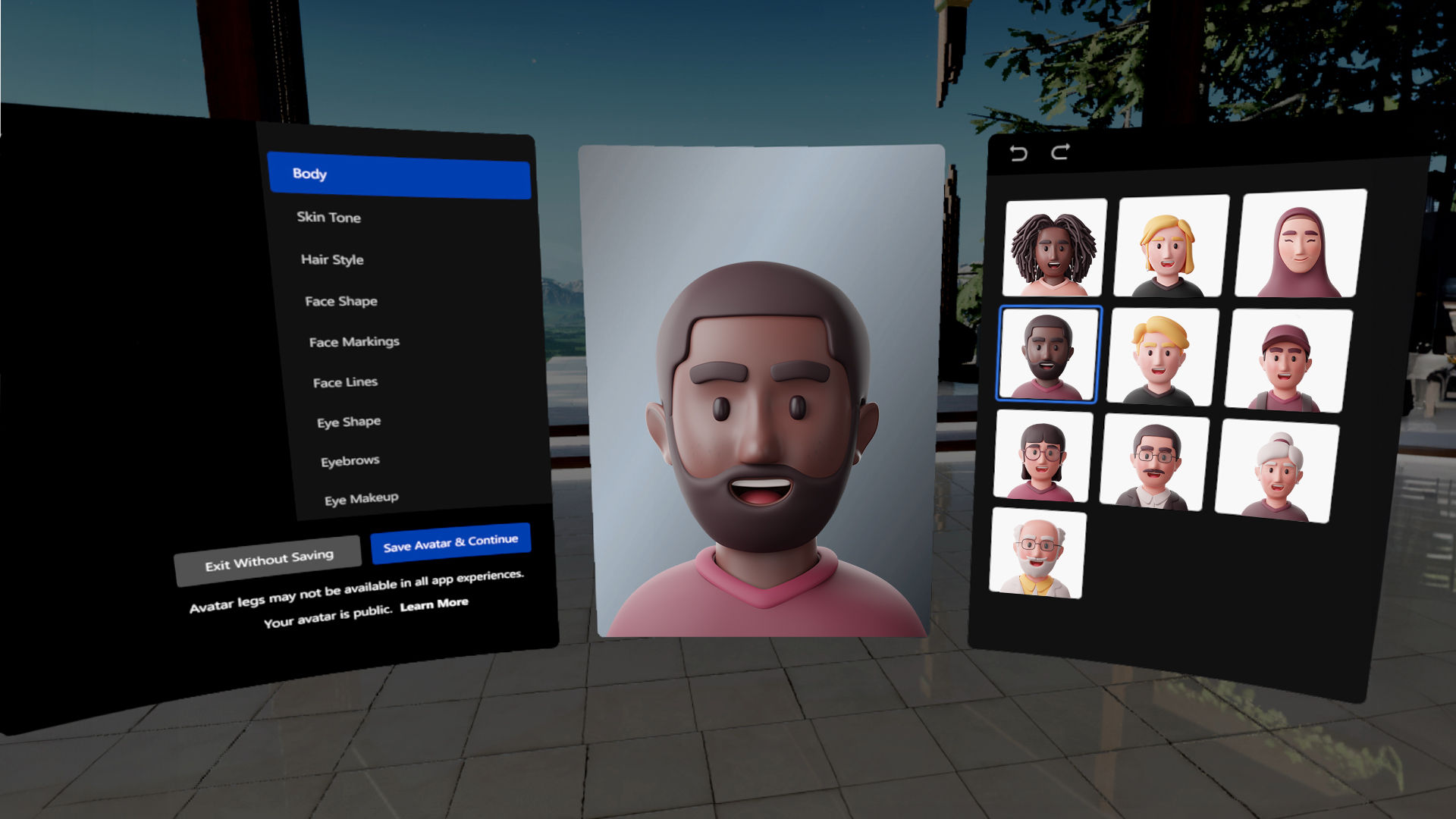
A screenshot from a VR application. It shows avatar customization.

Avatars serve as users’ virtual personas. These avatars can range from realistic depictions of themselves to imaginative characters like animals, objects, or cartoons.

Communication: Social VR enables various forms of communication, including voice, text, and even body language through avatar movements. This makes communication more nuanced compared to non-VR digital interactions.

Activities and Experiences: Social VR platforms often offer a range of activities, from games and entertainment to educational experiences and collaborative workspaces. Users can participate in these activities together, creating a sense of community.

Accessibility and Inclusivity: While social VR can be more accessible for people who are geographically distant, it also faces challenges in terms of requiring specialized hardware and dealing with issues like cybersickness.

Virtual Communities: Social VR platforms can foster virtual communities with shared interests, providing a new dimension of social interaction that transcends physical boundaries.

Privacy and Safety: Like any social platform, social VR poses challenges in terms of privacy, security, and ensuring a safe environment for users, especially considering the immersive nature of the interactions.

What’s the Difference Between Social VR and Other Forms of Social Media

Social VR and traditional social media are both platforms for digital interaction, but they differ significantly in their approach, experience, and technology. Here are some key differences:

Level of Immersion 

Social VR is highly immersive—platforms like Facebook's Horizon Workrooms and VRChat offer 3D environments where users can explore, move and interact in a way that mimics real-life experiences. In contrast, traditional social media like Instagram or X (formerly known as Twitter) is accessed through 2D interfaces on smartphones or computers. They are mainly focused on sharing images, text, or videos.

This video shows how users can interact, explore and create in VRchat. 

Mode of Interaction 

In social VR, interaction is often more holistic and involves body movements. In the social VR platform, AltspaceVR, users interact through avatars with gestures and spatial navigation.  Traditional social media platforms like Facebook primarily involve interaction through text, likes, comments, and sharing of media, which lacks the dimension of physical presence.

Presence and Realism 

Social VR offers a sense of presence that traditional social media cannot. Users in VR can feel like they are in the same room as others, which enhances the realism of social interactions. Platforms like Oculus Rooms make users feel as if they are in the same space as others, with realistic avatars and environments. This level of presence and realism is absent in traditional social media, where interactions are limited to digital exchanges without a sense of shared physical space.

Hardware Requirements 

Social VR requires specific hardware such as VR headsets, controllers, and sometimes powerful computers, whereas traditional social media can be accessed on widely available devices like smartphones and laptops. 

Content Creation and Consumption

Users can create and interact with 3D content in social VR. In applications like Sansar, High Fidelity and VR Chat, users can make their own virtual environments, objects, and avatars. Traditional social media, such as YouTube or Facebook, emphasizes creating and sharing 2D content like videos, photos, and text.

This video goes over the basics of how to build in Sansar:

Personalization and Avatars

Social VR often allows for more personalized representations through avatars, which can closely mimic a user's appearance and movements. Traditional social media, while offering profile customization and avatars, does not usually offer the same level of personal embodiment. 

Scale of Engagement 

Traditional social media platforms like X can host conversations with thousands of users simultaneously, albeit in a more stilted way. Social VR, on the other hand, often has limitations on the number of participants due to technical constraints, focusing on smaller, more intimate and fluid group interactions.

Privacy and Safety Concerns 

The immersive nature of social VR can lead to more intense forms of harassment or discomfort, as users feel more present in the environment. Traditional social media platforms also face privacy and safety concerns, but the lack of physical presence offers a more detached experience and a different level of safety.

Accessibility

Platforms like Facebook or LinkedIn are more accessible due to minimal hardware requirements and options for users with disabilities. Social VR is improving in terms of accessibility but still faces challenges due to the need for specialized hardware and the physical nature of the interaction. 

Applications and Use Cases 

While traditional social media is often used for casual communication, sharing updates, or marketing, social VR extends to immersive applications like virtual classrooms. Engage VR offers collaborative workspaces, or virtual events and conferences, which allows users to work together more effectively and connect more closely than on platforms like Twitter and Instagram. 

How to Bring UX Design into Social VR

As with any successful user experience, social VR products should be user-friendly, intuitive, and engaging. Designers should create functional, accessible, and immersive environments that cater to a diverse range of users. Here are practical points on how to achieve this:

Immersive Environment Design: Design environments that are not only visually stunning but also immersive and realistic. This means paying attention to spatial layout, scale, and environmental dynamics. The goal is to make users feel truly 'present' in the VR space.

A screenshot from the VR game, Half-Life: Alyx. It depicts an ultra realistic virtual environment, showing buildings and other structures.

Impressive and realistic virtual environments from Half-Life: Alyx

© Half-Life: Alyx, Fair Use.

The VR game Half-Life: Alyx has realistic environments with meticulous attention to spatial layout and scale, which offers players an immersive experience that makes them feel truly present in the game world.

Intuitive Interaction: Ensure that users can navigate and interact within the VR space effortlessly. This includes natural-feeling gesture controls, voice commands, and easy-to-navigate menus, all crucial to maintain immersion and user engagement. Natural social interactions should have features that support both verbal and non-verbal communication, like gestures and facial expressions, to enrich social dynamics.

Customizable Avatars and Characters: Provide users with extensive options to customize their avatars. This is essential for identity expression and helps in creating a more personal and relatable social experience.

Onboarding and Education: Offer effective onboarding experiences to familiarize users with the VR environment and its mechanics, making the platform accessible to newcomers. 

Accessibility and Comfort: Make the VR experience accessible to everyone, including people with various abilities and preferences. Adjustable settings, alternative control schemes, and designs that prevent motion sickness are key. Microsoft’s SeeingVR tools enhance VR for visually impaired users and offer accessibility options like text-to-speech and magnification, demonstrating how VR experiences can be made more inclusive.

Dynamic and Interactive Environments: Create environments that react to user actions, whether objects that can be interacted with or environments that change based on user input. This responsiveness makes the VR world feel more alive and engaging.

Encourage User-Generated Content: Empower users to shape their environment. This could involve allowing them to design spaces, create art, or host events, which fosters a sense of ownership and community.

Safe and Moderated Environments: Implement robust safety features to protect users from harassment. Privacy settings, reporting tools, and moderation are crucial to ensure a safe and comfortable experience.

Diverse Social Settings: Strive to give users control over their social experience—offer a range of social settings to cater to different interaction styles and social needs, from quiet, intimate spaces to larger, more active communal areas. Public spaces are great for meeting new people, and private spaces are ideal for more intimate gatherings. 

Enable users to organize and participate in events within the VR space, from casual meetups to structured activities like concerts or educational sessions. 

Regular Feedback and Iteration: Continuously gather user feedback and iterate on the design to address issues and improve the overall experience.

Cultural Sensitivity and Ethics: Be aware of cultural and ethical implications and ensure that the VR environment is inclusive and respectful of all users.

When these factors are taken into consideration, designers can create social VR experiences that are not only engaging and enjoyable but also intuitive and comfortable for a wide range of users. 

Questions About Social VR?
We've Got Answers!

What are the challenges of designing for social interaction in VR?

There are several challenges designers face to ensure natural and intuitive user interactions. They have to manage latency for real-time communication, and create environments that foster meaningful social connections. They must also accommodate the diversity of user backgrounds and preferences to create inclusive social spaces.


Learn more about VR and design challenges for the medium in our course, UX Design for Virtual Reality.

How does social VR impact user experience and behavior?

Social VR profoundly influences user experience and behavior as it offers immersive environments for interaction similar to real-life social settings. This immersion leads to engaging and emotionally resonant experiences. However, anonymity in VR can sometimes lead to negative interactions, which poses a concern for user behavior.

Learn more about the user experience of VR in our course, UX Design for Virtual Reality.


This chapter, Social virtual reality (VR) applications and user experiences, explores the user experience of social VR.

What are the best practices to ensure user safety and privacy in social VR?

Designers need to implement robust privacy controls, clear community guidelines, and reporting mechanisms to ensure user safety and privacy in social VR. Features that allow users to control their personal space and interactions, such as mute or block options, are essential. Maintaining data privacy is also crucial.

Read up on social VR safety tips in The Metaculture’s blog post, How to Stay Safe in Social VR

How can social VR be used for collaborative work or education?

Social VR enhances collaborative work and education by creating immersive and interactive learning environments. These environments range from virtual classrooms to simulation-based training and collaborative workspaces, enabling interactions and learning experiences beyond physical settings' capabilities.


Learn more about VR’s social and collaborative capabilities in this LinkedIn article, How can you stay ahead of VR social and collaboration trends?.

What role does avatar design play in social VR?

Avatar design is an essential part of social VR, it represents the user's identity and enables non-verbal communication. Effective avatars should allow customization to express individual identity and incorporate features for realistic body language and facial expressions.


This Meta article, Avatars: The art and science of social presence, discusses the crucial role of avatars in Social VR.

How can designers foster a sense of community in social VR environments?

Designers foster a sense of community in social VR by creating shared spaces and activities that encourage interaction, collaboration, and social bonding. Establishing social norms and guidelines, facilitating easy communication, and designing spaces that promote group activities enhance the community feel.


Learn more in this Medium article, How We Build Communities in Social VR.

What are the technological requirements for an effective social VR experience?

An effective social VR experience requires high-quality graphics, low latency, good audio quality, and reliable motion tracking to ensure a seamless and immersive experience, essential for meaningful social interaction in VR.


Learn more about VR in our course, UX Design for Virtual Reality.

How can social VR cater to diverse user groups and needs?

To cater to diverse user groups, social VR environments should be inclusive and accessible. Designers should offer customization options, language support, and consider different cultural norms to accommodate various cultural backgrounds, ages, and abilities.


Learn more about accessibility in VR in this article, Accessibility Guidelines for VR Games - A Comparison and Synthesis of a Comprehensive Set.

What are the ethical considerations in designing social VR experiences?

Ethical considerations involve: user consent for shared experiences, respect of privacy, harassment prevention, and the avoidance of addictive experiences. Designers need to prioritize user well-being and create environments that promote positive and respectful interactions.


Learn more about the ethical considerations of VR in this LinkedIn article, Ethical Considerations for Virtual Reality and Immersive Experiences.

How can social VR be made accessible to users with disabilities?

Designers can make social VR accessible by incorporating features like customizable user interfaces, support for assistive technologies, and alternative input methods. They can apply universal design principles to ensure that people with a wide range of abilities can use and enjoy the VR environment.


Learn more about accessibility in VR in this article, Accessibility Guidelines for VR Games - A Comparison and Synthesis of a Comprehensive Set.Learn more about accessibility in VR in this article, Accessibility Guidelines for VR Games - A Comparison and Synthesis of a Comprehensive Set.

Earn a Gift Earn a Gift, Answer a Short Quiz!

1
2
3
4
1
2
3
4
Question 1
Question 2
Question 3
Get Your Gift
Interaction Design Foundation logo

Question 1

What is the primary purpose of Social VR?

1 point towards your gift

  • To enhance gaming experiences only
  • To allow users to interact in immersive virtual environments in real-time
  • To create virtual landscapes for personal exploration
Interaction Design Foundation logo

Question 2

Which feature is common in Social VR environments?

1 point towards your gift

  • Text-based communication
  • Avatar customization and body language
  • Limited user interaction
Interaction Design Foundation logo

Question 3

Which of the following is a common application of Social VR?

1 point towards your gift

  • Personal fitness tracking
  • Virtual workspaces and collaborative activities
  • Passive video watching

Learn More About Social VR

Make learning as easy as watching Netflix: Learn more about Social VR by taking the online IxDF Course UX Design for Virtual Reality.

Why? Because design skills make you valuable. In any job. Any industry.

In This Course, You'll

  • Get excited when you learn how to create Virtual Reality (VR) experiences people love. The global VR market will grow to $227 billion by 2029! Whether you want to create VR games or interactive business solutions, this course will help you bring your big ideas to life. VR opens up a new dimension for your creativity, literally! Virtual reality lets people step into digital worlds for a deeper emotional connection. It leads to higher retention, engagement, and loyalty in gaming, education, and corporate training.

  • Make yourself invaluable with specialized knowledge and in-demand skills that open doors to exciting career paths! You'll master timeless human-centered design skills that ensure VR experiences are meaningful, ethical, and genuinely resonant: Skills that keep you in demand as technology evolves. Does UX design for virtual reality sound complicated? It can be, but we've made it easy for you! With step-by-step guidance, you'll master it faster than you think, no matter your background. The UX Design for VR course shows you how to create VR products that make a real impact in any industry. You'll explore social VR and the Metaverse and master the secret to achieving comfort, safety, and inclusivity in VR. You'll be able to design for presence and immersion with VR elements like storytelling, sound design, spatial audio, and emotion design.

  • Gain confidence and credibility as you conceptualize, create, and refine VR prototypes for your portfolio. You can choose to create a complete VR portfolio project, from storyboarding to 3D prototyping, and walk away with a polished portfolio that puts you in demand. Download ready-to-use templates, like the 3D wireframe checklist and USE scorecard for VR, to fast-track your success in one of the most sought-after areas of UX design.

It's Easy to Fast-Track Your Career with the World's Best Experts

Master complex skills effortlessly with proven best practices and toolkits directly from the world's top design experts. Meet your experts for this course:

  • Frank Spillers: Service Designer and Founder and CEO of Experience Dynamics.

  • Mel Slater: Distinguished Investigator at the University of Barcelona in the Department of Clinical Psychology, active member of the Institute of Neurosciences, and Co-Director of Event Lab (Experimental Virtual Environments for Neuroscience and Technology).

Get an Industry-Recognized IxDF Course Certificate

Increase your credibility, salary potential and job opportunities by showing credible evidence of your skills.

IxDF Course Certificates set the industry gold standard. Add them to your LinkedIn profile, resumé, and job applications.

Course Certificate Example

Be in distinguished company, alongside industry leaders who train their teams with the IxDF and trust IxDF Course Certificates.

Our clients: IBM, HP, Adobe, GE, Accenture, Allianz, Phillips, Deezer, Capgemin, Mcafee, SAP, Telenor, Cigna, British Parliament, State of New York

All Free IxDF Articles on Social VR

Read full article
The Past, Present, and Future of Virtual Reality - Article hero image
Interaction Design Foundation logo

The Past, Present, and Future of Virtual Reality

Virtual Reality (VR) has come a long way since its humble beginnings—with stereoscopic images back in the 1800s—“astronomically” far, in fact! Twenty-first century VR catapults users into immersive and interactive 3D environments, ones that let them experience something far beyond what they find in

Social shares
621
Published
Read Article
Read full article
Enter the World of Social VR - Article hero image
Interaction Design Foundation logo

Enter the World of Social VR

Our metaverse is big—as in massive and expanding, to be more exact—and there’s plenty of room to trailblaze inside of all of that digital space, so if virtual reality (VR) can teleport, catapult, and integrate human users into brand-new worlds of excitement, discovery, and learning (which it can, by

Social shares
550
Published
Read Article

Enter the World of Social VR

Enter the World of Social VR

Our metaverse is big—as in massive and expanding, to be more exact—and there’s plenty of room to trailblaze inside of all of that digital space, so if virtual reality (VR) can teleport, catapult, and integrate human users into brand-new worlds of excitement, discovery, and learning (which it can, by the way!), then you’ve got social VR as an awesome vehicle to take things even further. What that means is, dear designer as you keep reading this piece, you don’t just get to immerse users in interactive virtual environments but seize on a golden—if not, platinum!—chance to redefine what communication, connectedness, sociability, and collaboration mean, plus you get to bring people together from all over the world through the art of social VR done well: pretty nifty and noble.

What is Social VR?

You can consider social virtual reality (aka social VR) a subset of VR, to be sure, but it takes on a new vitality when you think of it as a springboard, too—from which VR designers get to launch virtual environments to reach high and wide into new areas that don’t just excite people but help build bridges between people as well. These places—or virtual places, if you like (and our calling them “places” kind of proves how dynamic the metaverse is)—are immersive digital environments, but users aren’t going in “solo” in social VR; after they slip on their glasses, goggles, or what have you, they’re meeting up with other users in there, which is the main point. You’re sending—or rather, welcoming—users into a “reality” that’s separate from the living room, office, or what have you where they put on the tech that immerses them, though we might point out here how it mightn’t be best to step into a VR world from, say, a kitchen—in case users bump into things like stove controls, kitchen knives, and other assorted culinary accoutrements and paraphernalia!

Anyway, that’s the “place” aspect—but what about the other main aspect to social VR: time? After all, for example, for a virtual party to happen, it’s no use if people turn up too late or too early—and, yes, the whole point of social VR is that users can interact, communicate, and engage with each other in real-time; and it’s all thanks to virtual reality technology and the shared virtual space you create for them to do that in—as in, connect, socialize, and more. The science—and art—to it means that you as a designer get to bring two worlds together—and concepts—in that you merge VR with social interaction in ways that are relevant, fresh, and exciting and the gap or great divide between real-life gatherings and online chat rooms closes up and what folks find is something that’s thrilling and “out of this world.” Happily, we’ve got specific social VR apps out there, and many of these are free and accessible on various devices—and those include VR headsets or PCs—and amongst the number of popular social VR apps you’ll find VRChat, Mozilla Hubs, AltspaceVR, and Rec Room.

In most social VR apps, users get to create avatars—those computerized representations of themselves that they can customize a lot into cartoonish versions of themselves or adopt characteristics like animal features or even objects. Most social VR users can create personal rooms for themselves and friends, too, or join public rooms that they can meet new people in and do a wide range of activities, such as games or dance parties. The possibilities you’ve got to explore as a designer for virtual social experiences are so humongous—if not, virtually (no pun intended) limitless—that it means a wide, wide, wide range of opportunities to design something that will fit some target audience users’ tastes nice and to perfection.

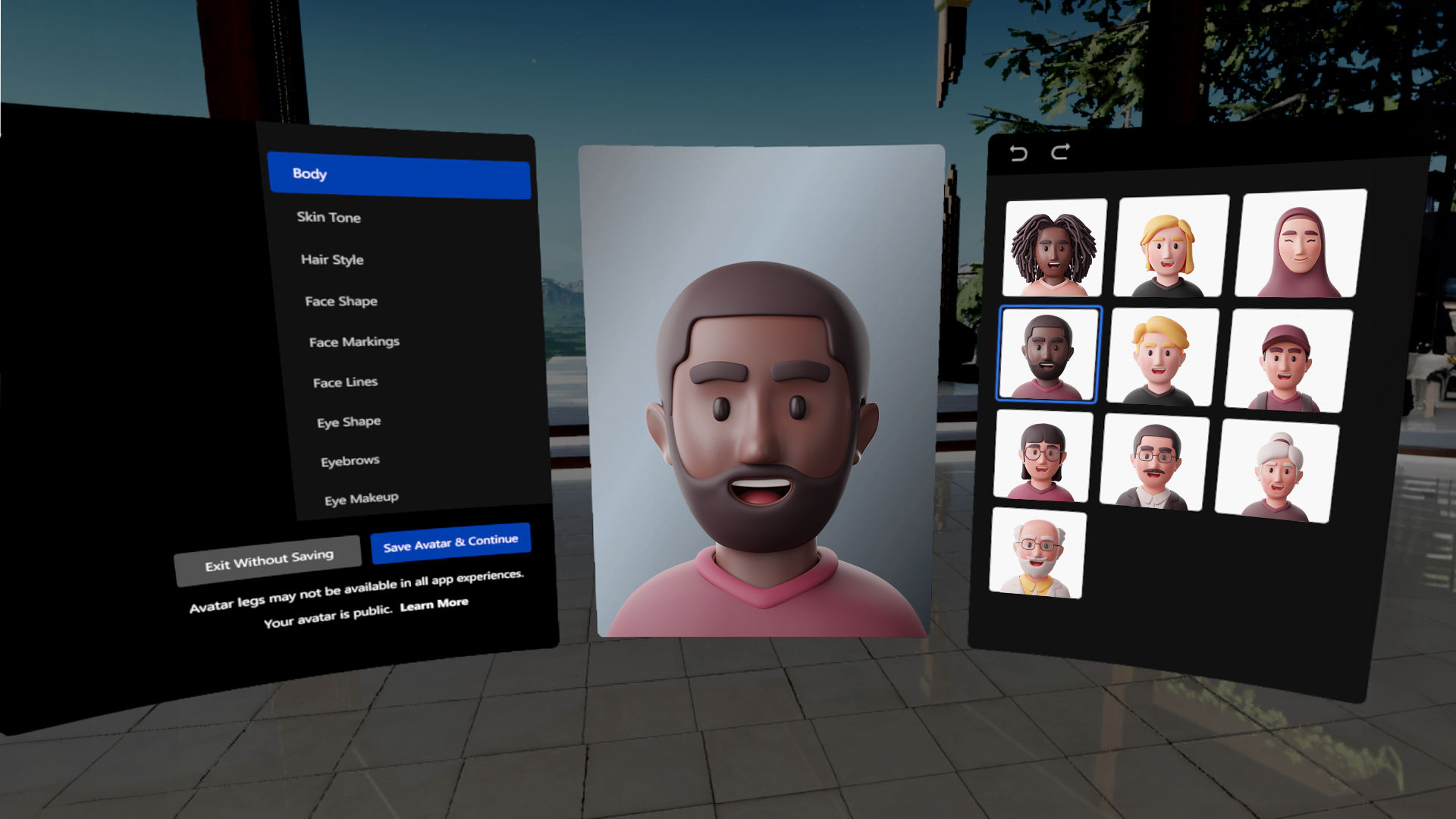
A screenshot of avatar customization from an application.

Avatars serve as users’ virtual personas, and these avatars can range from realistic depictions of themselves to imaginative characters like animals, objects, or cartoons.

What social interactions in VR can look like is something that can take different forms, and users—whenever they decide to come into the experience—will engage with what they find in there at their own comfort levels, and they’ll each have their own expectations of what the virtual space should be like. As to the purpose of why they’re in there, it could be to make new friends, participate in activities, or just explore the virtual environment you’ve got for them, and what’s key there is—drumroll...—that users have fun and treat others with respect. To be sure, social VR is a unique way to push out at the borders of traditional social interactions, but the rules of life still apply—and have still got to apply—and so what users bring with them into the virtual sphere must include respect for each other and a kind of code of conduct—and that’s vital to avoid the risk of “antisocial VR” and all sorts of unpleasant carrying on.

How to Bring Social VR into Your Experience: 5 Ways

In this video, you get to see CEO of Experience Dynamics, Frank Spillers talk about social VR, its characteristics, and how you can weave social elements into the VR experiences you build for users.

Transcript

  1. Let users do their own avatar design and customization: For one thing, it’ll give them a strong sense of identity and self-expression and “ownership,” and a powerful part of how to build social interactions and emotional connections inside of the virtual environment, even if—on the surface of it—it might seem frivolous, like someone tweaking their human look with bunny-rabbit ears and teeth, but it can go a long way to helping make the magic happen.

  1. Set up collaborative activities: Here’s a great way to up the social factor and to get “together” to mean more, and if you include interactive and cooperative experiences that call for users to work together on tasks—or challenges—it’s going to encourage teamwork and communication. And when users gel together like that, virtually, it goes a long way to laying a strong foundation for the social engagement factor—a biggie—so be sure to consider how you can tap this superb dynamic.

  1. Give users social focal points: As in, make designated areas or activities that draw users together in a natural way—shared gaming zones or event spaces, for example—and you’ll find they’re a great way for spontaneous social interactions and gatherings to happen, a nifty little factor that users can appreciate in a big way.

  1. Allow for realistic social behaviors: Yes, it’s a virtual space, but things have got to be relatable if anyone’s going to have a sense of presence and authenticity in your VR experience, plus if the social interactions that go on in there are to be more meaningful and relatable. For instance, there’d be little sense in having something “alien” with no carryover into human behaviors, or if people just turned up as turnips or beetroots, say. And that’s why realistic behaviors like eye contact, gestures, and body language, when they turn up in avatars and interactions, are very powerful things that can bring the experience home so much more to the users.

  1. Include good communication tools: Oh yes, the part where the spark of social connections gets to ignite: communicating, and user-friendly communication tools like voice chat, text messaging, and expressive gestures make it easy for natural communication to happen and bring folks together that much more.

The Metaverse and Other Social VR Platforms

What is the Metaverse? 

As a major talking point in design and tech circles—as well as beyond!—the metaverse might have a bit of a vague scope and be open to interpretation, but—with that said—it can refer to a whole variety of different ideas, to be sure, and in its broadest sense, the metaverse comes down to a complex and evolving concept within the tech industry. Note the operative terms there, of “complex” and “evolving,” and, well, that’s because it is both of those adjectives, and it’s a concept that envisions a futuristic digital realm—so, what a good thing, then, that it’s got so much in common with design—and in that digital space, we’ve got VR, augmented reality (AR), user-generated content, and digital economies all converging—coming together to create immersive and interconnected experiences.

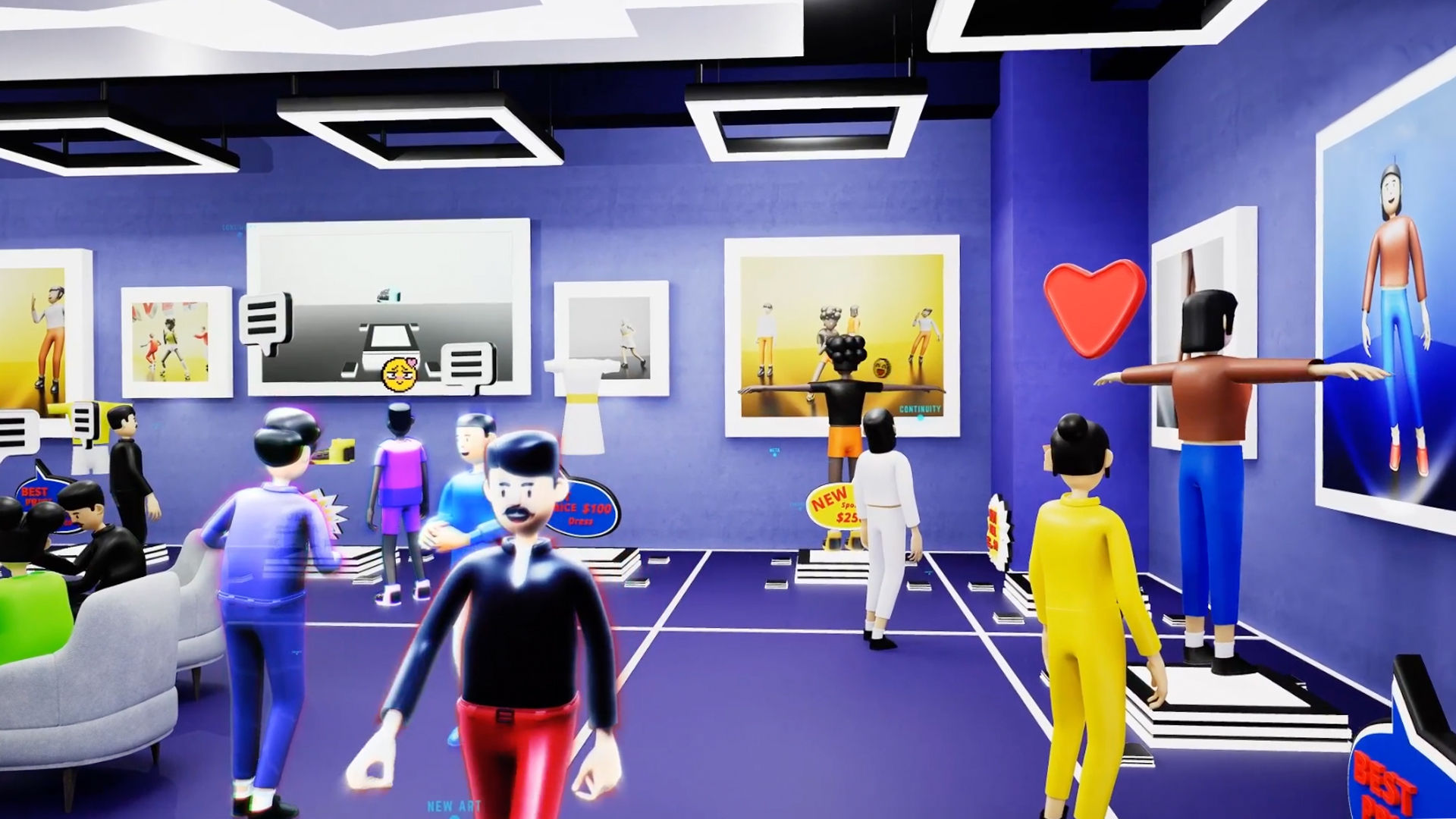
Screenshot from a metaverse application. It depicts many different avatars interacting in a virtual club house.

The metaverse is—like a universe of sorts—expanding, replete with endless opportunities for individuals to get “out there” (in VR terms) and revolutionize how people the world over get to communicate, conduct business, and experience entertainment.

The Take Away

Social virtual reality—social VR for short—is an exciting part of the expanding, evolving digital space called the metaverse, and it’s a leg of design where you get to build virtual spaces and welcome users to connect with, communicate with, and engage with other users inside of those. To make it so enjoyable for them that they keep wanting to come back, you’re going to have to endow users with details and features that put them in the picture—and where they can personalize their own experiences and interact with a level of realism that suspends their disbelief as to where they are—so you’ve got to include social elements like avatar customization, collaborative activities, social focal points, realistic social behaviors, and communication tools to make the digital environment all the more real for your users.

References and Where to Learn More

Read up on social VR safety tips in The Metaculture’s blog post, “How to Stay Safe in Social VR”. 

Check out this design guide for the Metaverse.

Learn more about the Metaverse in Wired’s article, “What Is the Metaverse, Exactly?”.

Feel Stuck?
Want Better Job Options?

AI is replacing jobs everywhere, yet design jobs are booming with a projected 45% job growth. With design skills, you can create products and services people love. More love means more impact and greater salary potential.

At IxDF, we help you from your first course to your next job, all in one place.

See How Design Skills Turn Into Job Options
Privacy Settings
By using this site, you accept our Cookie Policy and Terms of Use.
Customize
Accept all

Be the One Who Inspires

People remember who shares great ideas.

Share on:

Academic Credibility — On Autopilot

Don't waste time googling citation formats. Just copy, paste and look legit in seconds.