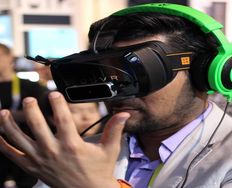
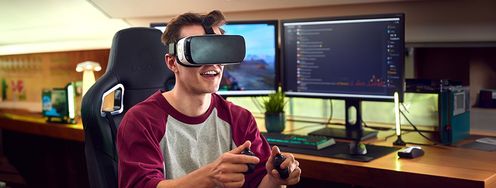
A man wearing a virtual reality headset gazes has an image of the moon in his mind and that image is reflected back at him in front of the VR heade the moon in his mind and sees it reflected e at the moon.

The Past, Present, and Future of Virtual Reality

by Molly Fitz-Patrick • 17 min read

621 Shares

Virtual Reality (VR) has come a long way since its humble beginnings—with stereoscopic images back in the 1800s—“astronomically” far, in fact! Twenty-first century VR catapults users into immersive and interactive 3D environments, ones that let them experience something far beyond what they find in the real world—but what’s behind the magic of it all? As in, what makes a successful VR experience—and how did it evolve to become what it is today? From the first head-mounted display that emerged in the 1960s to the latest high-resolution displays and motion controllers, read on to see how the history of VR and its expanding ecosystem of hardware, software, and content creators paved the way to such a bright universe of futures.

What is Virtual Reality? 

Virtual Reality (VR) is just what it sounds like: “almost reality,” or so close to being real that you might well be fooled into believing you are there, but, for a more dictionary-style definition, it's a simulated and immersive experience that can be similar to or completely different from what you’d find in the real world. And the possibilities are virtually endless, no pun intended with “virtually” there.

See what UX Pioneer, Don Norman has to say about VR and AR (Augmented Reality) to appreciate the potential of where these two powerhouses are heading:

Transcript

Designers with computer technology, vivid imaginations, and firm grasps of best design practices are the driving force behind VR experiences. And they present VR worlds to the user through a headset or display—so making an immersive and interactive three-dimensional environment. In an ideal VR experience, users should be able to interact with the environment they find in there—as if it were tangible—and they should be able to walk around in there and touch objects like they would in the real world, in real life.

When VR is done well, it’s dazzling and delightful—and we’re all but teleported fully into a whole new world and can experience things far beyond our real “everyday” would permit. However, when VR is done poorly, things can turn sour or even nasty—users can become frustrated and get sick—or even hazardous (i.e. “things,” not the users becoming hazardous!). Sometimes, the technology itself is to blame for hardware limitations, but for the most part, the failings of a VR experience come when we designers overlook UX design principles. And that’s why a user-centered design approach is an essential ingredient for you to work into a successful VR experience—and the users’ safety and comfort comes first.

Get it right and you can safeguard your users from the types of things that could annoy or even harm them—from getting motion sickness to getting so carried away that they forget what the real environment is like in their living room, for example. If they go “Ouch!” when their shin contacts the coffee table, there’s a chance the magic of the seamless experience will be broken—and hopefully that’s the only thing that gets broken—so be careful to make users mindful of where they are, too.

VR Through the Ages

VR has been in our imagination for pretty much as long as humans have been able to express themselves, and you can discover the evolution of VR in this video—and learn where it came from and where it’s going. 

Transcript

Virtual Reality: A Field in Transition
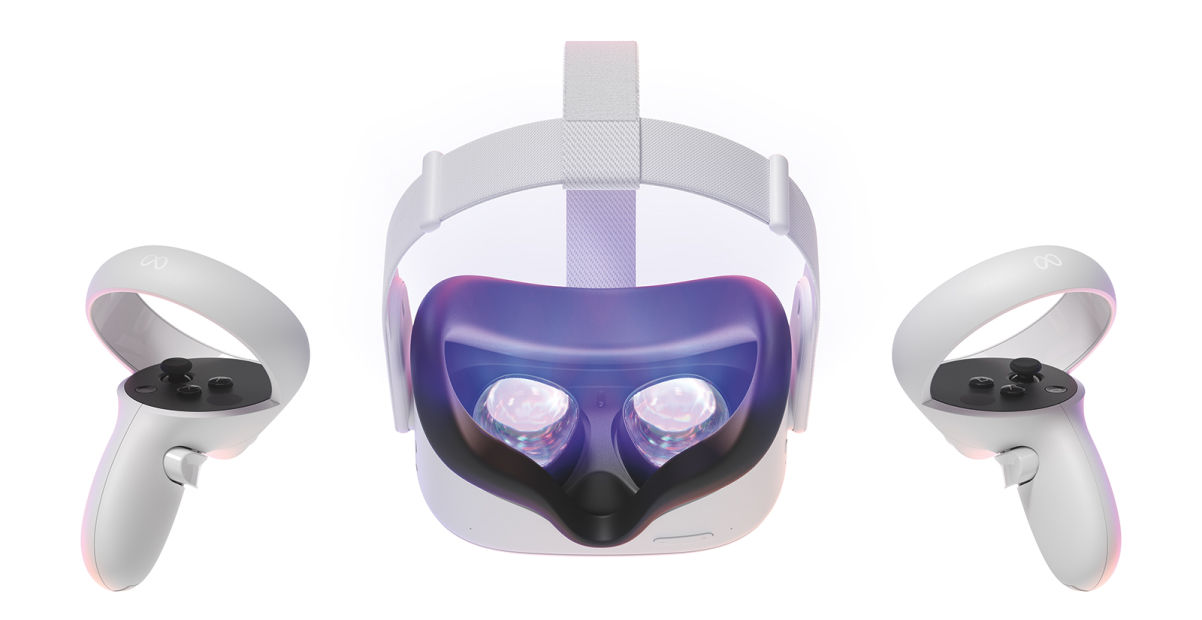
The VR industry expanded rapidly. In the early 2000s, VR was out of reach for the regular user. In the 2020s, there are a wide range of hardware options. From standalone headsets to tethered setups and smartphone-based systems, major players like Oculus, HTC Vive, Sony PlayStation VR, Apple Vision Pro and Valve Index have made their mark in the market. These advancements in hardware provide users with various choices to experience virtual reality. VR technology has made significant strides to deliver enhanced immersive experiences. Virtual environments now offer heightened realism and precision with high-resolution displays, improved tracking systems, and advanced motion controllers. The integration of haptic feedback and eye-tracking technologies further enhances immersion and interaction possibilities, which make VR experiences more engaging and captivating than ever before. Beyond gaming and entertainment, VR has found diverse applications in industries such as healthcare, education, architecture, engineering, training simulations, marketing, and social experiences. From medical training simulations to virtual tours of architectural designs, VR is revolutionizing how these industries operate and deliver experiences. These developments in VR allow us to create experiences that can delight, inform and engage our user in more meaningful ways than other mediums.

The Meta Quest 2: A VR headset that was released in 2020.

© Meta, Fair Use.

The VR industry was quick to expand—thanks to some pretty impressive technological developments. In the early 2000s, VR was more or less out of bounds for the “regular” user—and was still little more than a novelty in the public consciousness as the tech was rather pricy to reach for most people. In the 2020s, though, there are a wide range of affordable hardware options—from standalone headsets to tethered setups and smartphone-based systems—and major players like Oculus, HTC Vive, Sony PlayStation VR, Apple Vision Pro and Valve Index have made their mark in the market. They’re the brands that have brought advancements in hardware to the happy level where so very many users have so very many various choices to experience virtual reality in awesome ways.

It’s fair to say that VR technology has made huge strides for designers to enter the VR design scene and deliver enhanced immersive experiences for all types of users. Contemporary virtual environments offer super-heightened realism and precision with high-resolution displays, improved tracking systems, and advanced motion controllers—bringing fantastic worlds closer to users while inserting them more realistically in those virtual places. The integration of haptic feedback and eye-tracking technologies raises the potential for fresh and exhilarating experiences higher and higher, and they deliver a power that further enhances immersion and interaction possibilities to awe-striking levels. VR experiences have never been more engaging and captivating—and they may well become even more so before you know it!

And VR isn’t all fun and games, even if it can be hard for users to wrench themselves away from the thrilling “worlds” they visit. Beyond gaming and entertainment, VR has found diverse applications in industries such as healthcare, education, architecture, engineering, training simulations, marketing, and social experiences—and education is a biggie in particular. From medical training simulations to virtual tours of architectural designs, VR keeps on revolutionizing how these industries operate and deliver experiences to improve things for human users. Developments in VR keep pushing at the frontiers of what’s possible, and they allow us to create experiences that can delight, inform, and engage our users in more meaningful—and, yes, exciting—ways than other mediums.

VR experiences can be realistic and fantastical—and they’re open to virtually limitless possibilities. It’s a medium that immerses users in interactive three-dimensional environments the moment they put on or activate a device to catapult them there. However, for all the technological advancements, design is still a key to the enterprise, and as a designer, you’ve got to employ a user-centered design approach to create successful VR experiences.

The Take Away

VR traces its real roots back to the 1800s—with the advent of stereoscopic images—but it would be many years before things went much further. Advancements in computer technology and human-computer interaction in the 1980s and 1990s would lead to the evolution of modern VR. With developments in improved display technology—and the affordability of the tech—VR crossed over from being a phenomenon or arcade curiosity and could “come home” to the users themselves. Major players like Oculus, HTC Vive, Sony PlayStation VR, and Valve Index offer a range of hardware options—great selections that cater to different user needs and make the wonderful world of VR accessible to so many more users. VR has also found applications beyond gaming and entertainment—helping industries such as healthcare, education, architecture, engineering, and more.

A firm understanding of VR design principles and an awareness of the state of the art are a “passport” for you to access a massive dimension of design and dazzle excited users with fun, challenging, and educational worlds that can have lasting effects on them. With VR, designers can create experiences that captivate and engage users in ways that traditional mediums can’t even hope to touch—but there’s a great deal to consider if you’re going to achieve a successful VR experience. You’ll want to consider factors like safety, intuitive interactions, user comfort, and emotional connections—the only way to transport users to worlds they can come back from feeling amazed and eager to revisit.

References and Where to Learn More

The first section of Jason Jerald’s The VR Book: Human-Centered Design for Virtual Reality provides a comprehensive history of VR. 

AI Magazine discusses the evolution of VR headsets in this article.

Check out Virtual Speech’s VR timeline.

Get a broader view of the history of spatial computing and XR in Cornel Hillmann’s book UX for XR: User Experience Design and Strategies for Immersive Technologies.

Hero image: © Interaction Design Foundation, CC BY-SA 4.0

Learn More in This Course:

Visual Design: The Ultimate Guide

1
20
57
42
91 % booked
View Course

What You Should Read Next

  • Read full article
    Beyond AR vs. VR: What is the Difference between AR vs. MR vs. VR vs. XR? - Article hero image
    Interaction Design Foundation logo

    Beyond AR vs. VR: What is the Difference between AR vs. MR vs. VR vs. XR?

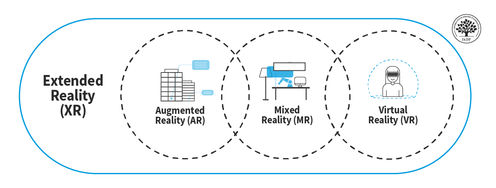
    There is a fair amount of confusion about the differences between the terms virtual reality (VR), augmented reality (AR), mixed reality (MR), and extended reality (XR). While most people have stuck with AR and VR to describe the different technologies, these terms are not enough to fully comprehend

    Social shares
    1.2k
    Published
    Read Article
  • Read full article
    Augmented Reality – The Past, The Present and The Future - Article hero image
    Interaction Design Foundation logo

    Augmented Reality – The Past, The Present and The Future

    Augmented reality has come a long way from a science-fiction concept to a science-based reality. Until recently the costs of augmented reality were so substantial that designers could only dream of working on design projects that involved it – today things have changed and augmented reality is even

    Social shares
    1.1k
    Published
    Read Article
  • Read full article
    Healthcare UX: Design that Saves Lives - Article hero image
    Interaction Design Foundation logo

    Healthcare UX: Design that Saves Lives

    UX (user experience) design has the potential to improve people’s everyday lives. The stakes are even higher if you work as a UX designer in the healthcare industry. The health-tech sector is among the fastest-growing in the world, with expected revenue of USD 1,305.1 billion in 2030, according to G

    Social shares
    824
    Published
    Read Article
  • Read full article
    Learn the Role of Perception and Memory in HCI and UX - Article hero image
    Interaction Design Foundation logo

    Learn the Role of Perception and Memory in HCI and UX

    Have you ever wondered how your brain makes sense of the world? It's a fascinating process! If you want to design helpful products and services that people love, you must first understand how they think. A large part of human interaction relies on perception, our ability to see, hear and feel our su

    Social shares
    650
    Published
    Read Article
  • Read full article
    Revolutionize UX Design with VR Experiences - Article hero image
    Interaction Design Foundation logo

    Revolutionize UX Design with VR Experiences

    Is the future of user experience design (UX design) going to exist on screens or will it find immersive, three-dimensional spaces as its main home? You can design for both views—and interactions—within a digital environment that’s boundless in virtual reality (VR), so read on to find five fundamenta

    Social shares
    620
    Published
    Read Article
  • Read full article
    How to Create Design Plans for Virtual and Augmented Reality Experiences - Article hero image
    Interaction Design Foundation logo

    How to Create Design Plans for Virtual and Augmented Reality Experiences

    Whenever you design something new – be it an interface, service or a product– you should start with a plan for what you want the user’s experience to be like. Having a clear goal for what you want the user to feel and achieve during the interaction will help guide you through the myriad of different

    Social shares
    595
    Published
    Read Article
  • Read full article
    The Journey of the UX Design Process in VR - Article hero image
    Interaction Design Foundation logo

    The Journey of the UX Design Process in VR

    VR’s design process isn’t that far off from a typical user-centered design approach. It’s all about continuous discovery and iterative improvements. Here you’ll discover the key stages of the design process, how to define, make and learn, so that you can create successful experiences from the get-go

    Social shares
    582
    Published
    Read Article
  • Read full article
    How to Understand User Needs in Virtual Reality - Article hero image
    Interaction Design Foundation logo

    How to Understand User Needs in Virtual Reality

    The principles you use in a user experience (UX) design process carry over into the sphere of virtual reality (VR) and all the richness 3D experiences can afford, and what unlocks the true potential your VR experience has is that “magic” element of user research. That’s why, dear designer of great V

    Social shares
    553
    Published
    Read Article
  • Read full article
    Enter the World of Social VR - Article hero image
    Interaction Design Foundation logo

    Enter the World of Social VR

    Our metaverse is big—as in massive and expanding, to be more exact—and there’s plenty of room to trailblaze inside of all of that digital space, so if virtual reality (VR) can teleport, catapult, and integrate human users into brand-new worlds of excitement, discovery, and learning (which it can, by

    Social shares
    550
    Published
    Read Article
  • Read full article
    Less is (Also) More in Virtual and Augmented Reality Design - Article hero image
    Interaction Design Foundation logo

    Less is (Also) More in Virtual and Augmented Reality Design

    One of the most exciting things about designing virtual and augmented reality experiences is all the things you’re able to do as a designer. You can take advantage of all of the user’s senses in design, you can create first-person stories, and you can overlay reality with any virtual object you can

    Social shares
    525
    Published
    Read Article

Top Articles

Top Topic Definitions

Feel Stuck?
Want Better Job Options?

AI is replacing jobs everywhere, yet design jobs are booming with a projected 45% job growth. With design skills, you can create products and services people love. More love means more impact and greater salary potential.

At IxDF, we help you from your first course to your next job, all in one place.

See How Design Skills Turn Into Job Options
Privacy Settings
By using this site, you accept our Cookie Policy and Terms of Use.
Customize
Accept all

Be the One Who Inspires

People remember who shares great ideas.

Share on:

Academic Credibility — On Autopilot

Don't waste time googling citation formats. Just copy, paste and look legit in seconds.

Feel Stuck? Want Freedom?

Join 326,035+ designers who get one powerful email each week. Learn to design a life you love.

Next email in
1
day
8
hrs
57
mins
43
secs

Free forever. No spam. Unsubscribe anytime.