Creating Lust, Desirability and the Mobile User Experience

• 8 min read

564 Shares

User experience can often be reduced by those outside the discipline to “usability” and to be fair to them – UX did arise from usability but the user experience depends on more than just a product being usable. One key component of UX is desirability – the ability to make a product fun and engaging to use. Mobile internet platforms add several new ideas to our understanding of desirability and user experience designers need to be familiar with these to get the best from mobile development budgets.

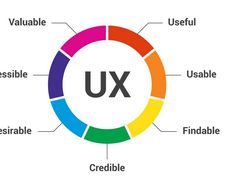
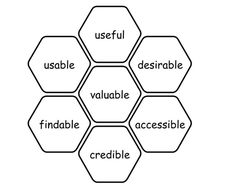
Frank Guo, the founder of UX Strategized and regular publisher of papers on Human-Computer Interaction, offers a four part model for the user experience

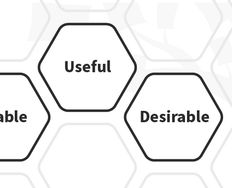
He says that user experiences consist of Value, Usability, Adoptability and Desirability. Each of these has a part to play in the overall experience.

Value asks the simple question; “Is the product actually useful to the user?” Products without value are doomed from their inception.

Usability examines whether the product is easy to use and intuitive to use. Powerful solutions have fallen by the wayside when people have found them too complex to get to grips with.

Adoptability, seeks to determine whether it is easy to start using a product. This is a key question for mobile designers in particular – mobile apps may be the dominant platform on the mobile web but around 95% of apps are installed and then instantly abandoned.

Finally, desirability which is what we are concerned with here asks; “Is the product fun and engaging?”

About Desirability

Desirability can be an incredibly important market differentiator between nearly identical products. There’s a reason that the iPod became the dominant MP3 player; despite the fact that it was not the first MP3 player on the market. People desired the iPod and while there are good arguments for usability being a reason for the device’s popularity – these arguments are often over-estimating the differences between the iPod and other similar devices.
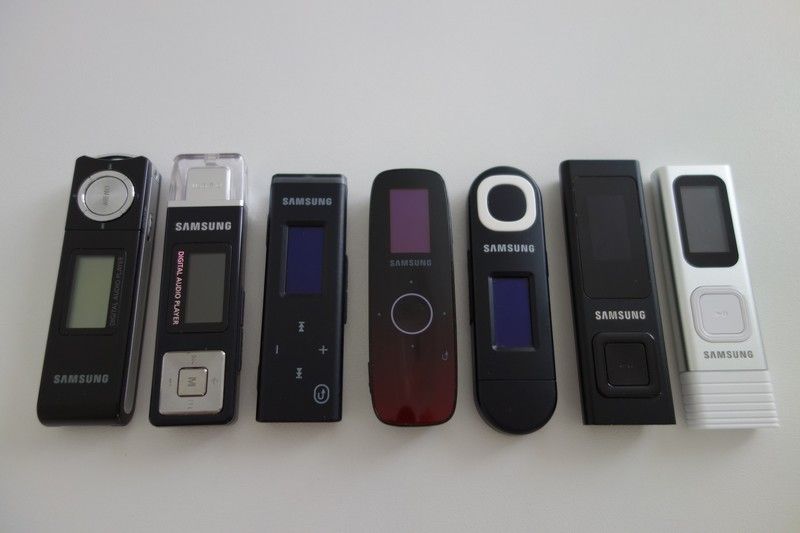
Author/Copyright holder: Lebellium. Copyright terms and licence: CC BY-SA 3.0

Frank offers the example of video games which, often, aren’t that usable. PC gamers have yet to move en masse to console gaming even though console gaming is cheaper and games are easier to play (a console’s control device is much less complex than a keyboard and mouse). This is because some people desire more complex, more engaging game play even at the expense of usability. Desirability is the key factor driving this decision making process.

It is vital to remember that desirability is not just about making things pretty. In fact, as Frank notes, it’s about helping engage the user in their use of the product. There are plenty of very plain products (such as Excel or Word) that remain highly desirable because of their ability to get the job done.

Desirability and Mobile Devices

Before we look at mobile app development and desirability – it’s worth taking a moment to look at the desirability of the mobile device on which the app will run. Surely, this will affect user behaviour and indeed inform our decision as to which platform to develop our app for?

Unfortunately, things aren’t so simple. In a recent Nielsen group survey reported on in PC World magazine – it is confidently reported that Android devices have become more desirable than Apple devices. Yet, over in BusinessInsider a recent report suggests that Apple is becoming more desirable than Android. What is for certain is that Microsoft’s mobile platform efforts are the least desirable in the modern smartphone world and Microsoft’s mobile devices are normally the last point of focus for app developers.

Author/Copyright holder: Microsoft Sweden. Copyright terms and licence: CC BY 2.0

Desirability on the Mobile Device

John Wiley, lead designer for Google, told the FastCompany;

It’s [mobile] not only a new form factor in terms of how things are displayed, but it also adds a new level of engagement. It’s something you can touch, and you can move things around and they respond in kind. That creates a whole new level of this need for desirability. . . . It has to have both momentum and physics that we particularly associate with physical objects. This puts us down an entirely new path in terms of the kind of design thinking we have in terms of what does it look like, how does it feel, does it work right. We start talking about very visual design, like the shadows and the gradients and the light sources and how all of these things create an aesthetic for the product.

There has been a lot of talk about desirability and emotional design. E.g. a focus on making users “feel something” but as Zurb.com note – it is difficult, perhaps impossible, to predict how a user will feel.

It may be better to focus on desirability in terms of helping a user take action through design. That means focusing on visuals, content and form elements when designing a mobile app and in particular remembering:

  • The graphic or visual design is used to deliver context to the user

  • Well-written and well-executed content can help guide a user through their decision making process

  • Actions are finalized by the use of the right form elements (such as buttons or sign up boxes)

Focusing on action enables the user to make easier decisions and higher levels of engagement with the product.

Zurb.com also notes that you cannot create desirability if you don’t deliver value and usability first.

Author/Copyright holder: Dan Catchpole. Copyright terms and licence: CC BY 2.0

The Take Away

Desirability is a key part of the user experience. It can enable products to succeed in crowded or saturated markets and drive acceptance of new products. It is important to note that it is not a replacement for value, usability or adoptability but rather a fourth critical ingredient in the mobile recipe. It’s important to focus on desirability within your mobile app as well as examining the desirability of the device you intend to develop for.

References & Where to Learn More:

Frank Guo’s article on the 4 parts of the user experience is over at UX Matters.

PC World’s report on the Nielsen Research that “proves” Android is more desirable than Apple: “Android Outranks Apple in Desirability–and That’s Huge.”

Business Insider’s report “proves” exactly the opposite - in Apple’s favour!

Find out more from Zurb.com about “The 3 Elements of Good Design

Hero Image: Author/Copyright holder: Jeffrey. Copyright terms and licence: CC BY-SA 2.0

Learn More in This Course:

AI for Designers

12 days
13 % booked
View Course

What You Should Read Next

  • Read full article
    Bad Design vs. Good Design: 5 Examples We Can Learn From - Article hero image
    Interaction Design Foundation logo

    Bad Design vs. Good Design: 5 Examples We Can Learn From

    Looking at examples of bad design alongside counter-examples of good design is not only fun but also draws important lessons for designers. They highlight pitfalls for designers to avoid and let us understand how to translate design theories into solutions that work in the real world. Jared Spool, t

    Social shares
    1.5k
    Published
    Read Article
  • Read full article
    User Interface Design Guidelines: 10 Rules of Thumb - Article hero image
    Interaction Design Foundation logo

    User Interface Design Guidelines: 10 Rules of Thumb

    Learn to design with your user’s needs and expectations in mind by applying Jakob Nielsen and Rolf Molich’s Ten User Interface Guidelines. These heuristics have been reflected in many of the products designed by some of the most successful companies in the world such as Apple, Google, and Adobe. Fur

    Social shares
    1.4k
    Published
    Read Article
  • Read full article
    The 7 Factors that Influence User Experience - Article hero image
    Interaction Design Foundation logo

    The 7 Factors that Influence User Experience

    User Experience (UX) is critical to the success or failure of a product in the market but what do we mean by UX? All too often UX is confused with usability which describes to some extent how easy a product is to use and it is true that UX as a discipline began with usability – however, UX has grown

    Social shares
    1.3k
    Published
    Read Article
  • Read full article
    KISS (Keep it Simple, Stupid) - A Design Principle - Article hero image
    Interaction Design Foundation logo

    KISS (Keep it Simple, Stupid) - A Design Principle

    It was Albert Einstein who said; “If you can’t explain it, you don’t understand it well enough.” Though it is often mis-reported as being; “If you can’t explain it to a six year old, you don’t understand it well enough.” What Einstein was driving at was a particular application of “keep it simple, s

    Social shares
    1.3k
    Published
    Read Article
  • Read full article
    Adaptive vs. Responsive Design - Article hero image
    Interaction Design Foundation logo

    Adaptive vs. Responsive Design

    The differences between responsive and adaptive design approaches spotlight important options for us as web and app designers. Choosing with insight can empower you to plan and execute your designs with better aim, purpose and results.With the pervasiveness and diversity of mobile devices, as design

    Social shares
    1.3k
    Published
    Read Article
  • Read full article
    Usability: A part of the User Experience - Article hero image
    Interaction Design Foundation logo

    Usability: A part of the User Experience

    This subject may seem incredibly “big” for a single article, but it’s about the specific nature of usability that we often overlook or confuse. With this appreciation, you’ll be able to design more effectively, and your website’s users will be able to grow, too.Usability replaced the outmoded label

    Social shares
    1.2k
    Published
    Read Article
  • Read full article
    Don’t Make Me Think – Key Learning Points for UX Design for the Web - Article hero image
    Interaction Design Foundation logo

    Don’t Make Me Think – Key Learning Points for UX Design for the Web

    Don’t Make Me Think is the title of a book by the HCI and Usability engineer Steve Krug. It teaches UX designers how to deliver great user experiences in a very simple and accessible way. Since its release in the year 2000 it has become one of the defining texts in the industry and an invaluable gui

    Social shares
    1.1k
    Published
    Read Article
  • Read full article
    Don’t Build It, Fake It First – Prototyping for Mobile Apps - Article hero image
    Interaction Design Foundation logo

    Don’t Build It, Fake It First – Prototyping for Mobile Apps

    The design phase for mobile applications should include a prototyping stage. It is at this point that users can “play” with your ideas and concepts and give you valuable feedback that shapes the final designs before you begin development. This can save time and money in development and create produc

    Social shares
    1.1k
    Published
    Read Article
  • Read full article
    An Introduction to Usability - Article hero image
    Interaction Design Foundation logo

    An Introduction to Usability

    Usability and user experience (UX) are not the same thing: the usability of a product is a crucial part that shapes its UX, and hence falls under the umbrella of UX. While many might think that usability is solely about the “ease of use” of a product, it actually involves a great deal more than that

    Social shares
    1.1k
    Published
    Read Article
  • Read full article
    Usability vs Desirability in Mobile UX - Article hero image
    Interaction Design Foundation logo

    Usability vs Desirability in Mobile UX

    The question of usability compared to desirability comes up a lot in UX design, and it’s important to distinguish the two. Why? Because usability is the base level of the user experience, it is difficult to create a worthwhile user experience without it. However, without desirability, it’s unlikely

    Social shares
    1k
    Published
    Read Article

Top Articles

Top Topic Definitions

Feel Stuck?
Want Better Job Options?

AI is replacing jobs everywhere, yet design jobs are booming with a projected 45% job growth. With design skills, you can create products and services people love. More love means more impact and greater salary potential.

At IxDF, we help you from your first course to your next job, all in one place.

See How Design Skills Turn Into Job Options
Privacy Settings
By using this site, you accept our Cookie Policy and Terms of Use.
Customize
Accept all

Be the One Who Inspires

People remember who shares great ideas.

Share on:

Academic Credibility — On Autopilot

Don't waste time googling citation formats. Just copy, paste and look legit in seconds.

Feel Stuck? Want Freedom?

Join 326,020+ designers who get one powerful email each week. Learn to design a life you love.

Next email in
1
day
15
hrs
59
mins
0
secs

Free forever. No spam. Unsubscribe anytime.