The question of usability compared to desirability comes up a lot in UX design, and it’s important to distinguish the two. Why? Because usability is the base level of the user experience, it is difficult to create a worthwhile user experience without it. However, without desirability, it’s unlikely that the user experience will be memorable or recommendable to others. Here we’ll look into the differences between usability and desirability and how to consider them in a successful mobile user experience (UX) design strategy.
Four simple levels of UX were defined by the Nielsen Norman Group Conference in Amsterdam in 2008. They are:
Utility
Usability
Desirability
The UX designer has the most control over the levels of usability and desirability. But first, let’s examine each level before considering why the difference between usability and desirability matters.
1. Utility
The very first step of the user experience is utility. The questions that must be answered for a product to have utility are:
Is the product useful to the user? Does it have a purpose that the user accepts? (In short, the product must not be a solution in search of a problem but rather one that solves an established problem the user is looking to solve.)
Does the product meet the needs of the user? (A product can solve a problem but still not be of any value unless it meets the user’s requirements in other areas—such as cost or size.)
Without utility, it’s clear that there is no user experience. A potential user who does not see a product as having any value to them or does not feel that product meets their needs will not become a user in the first place.
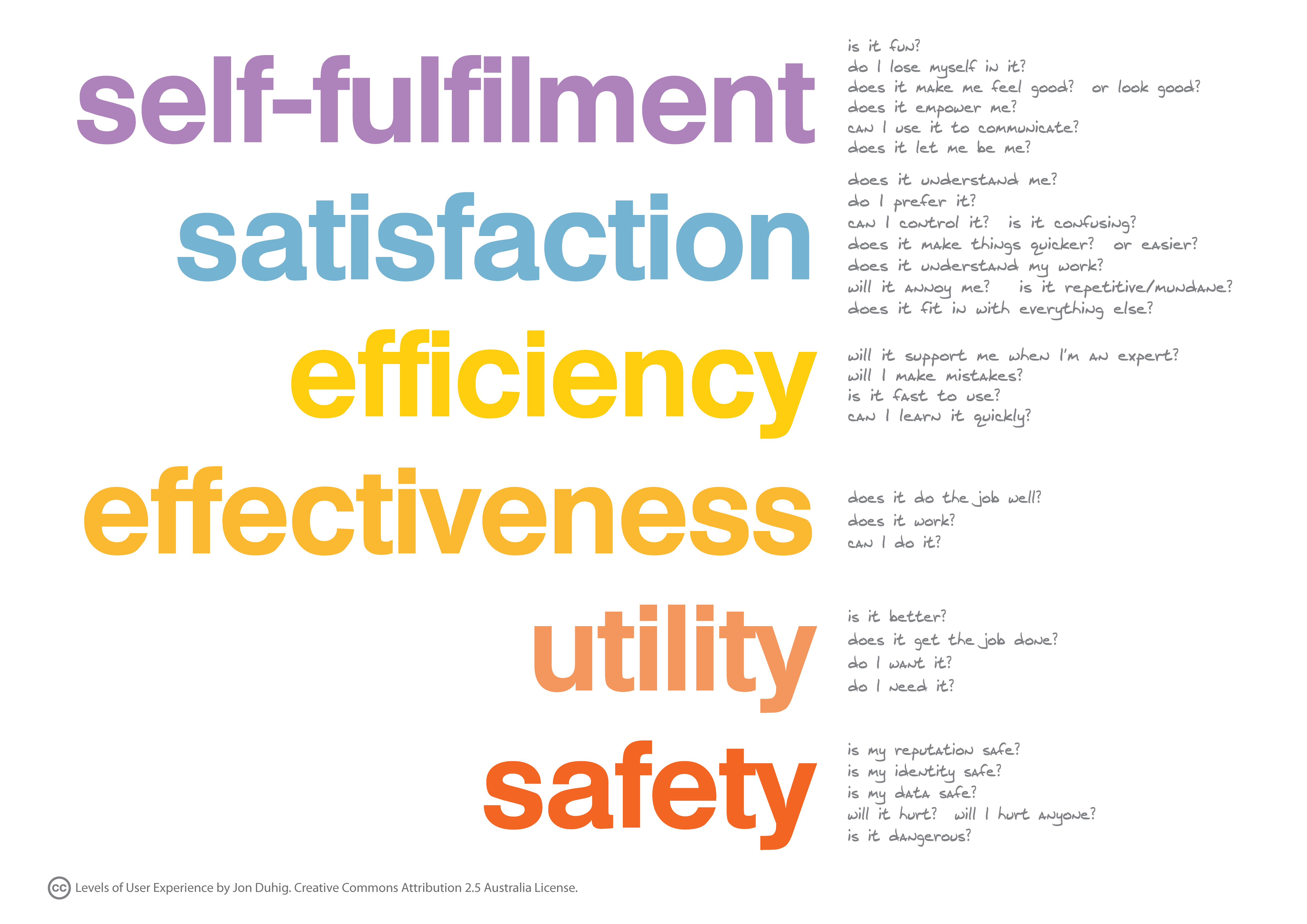
© Jon Duhig, CC BY 2.0
2. Usability
Usability is the next step up the user experience ladder. It answers the question (positively):
Is the product easy and intuitive to use? (Many great ideas have failed when translated into a product by falling at this hurdle—a user only has so much time; if they can’t quickly get to grips with using a product, they will abandon it and move on.)
Does the user like the way that this product looks and feels?
Does the user want this product more than similar products?
Until recently, people mistook usability for the user experience. The assumption that a product that solved a problem (utility) and was easy to use (usability) was enough for users was a sensible idea—but it turns out that this is not enough. The user expects more from a user experience, and products beyond the usability phase compete best in their marketplace. Apple’s iPod, for example, was not the first MP3 player. It may have had slight usability advantages over existing products, but these advantages were insufficient to propel the iPod to a world-changing market-leading product; it was moving up the value chain of user experience that enabled that.
3. Desirability
This brings us to desirability. Note some use this term (including NNgroup) to mean aesthetics. Microsoft even has a tool to measure aesthetic desirability.
For now, we refer to desirability as: Did it solve the right problem? Larry Marine, a UX consultant and top student of Don Norman, said that, in his 25 years of consulting, rarely did he find teams that solved the right problem for their users. Desirability is this problem.
In any category of product, there are many competitors. If we assume a market for the product exists, it’s likely that most other products pass utility and usability tests.
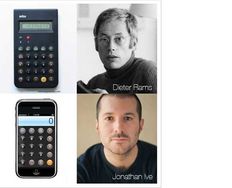
Therefore, the product's desirability separates market leaders from the pack. Think of Apple Watch vs. Google’s original watch. Google took a strictly task-oriented approach but forgot emotional differentiation and desirability. Apple’s Jonathan Ive turned the Apple Watch into a biofeedback device with emotional appeal. For example, you could draw a heart and send a vibration to a friend.

© Wareable.com, Fair Use
Desirability commands a premium in marketplaces. Think about cars, for example; a Dacia and a BMW may both have utility and be usable, but there’s a significant difference in their desirability by users.
Desirability enables the user experience designer to add “cachet” to a product that would otherwise be lost amongst other similar products in terms of utility and usability.
Desirability gives users what they really want as well as need. Don Norman famously once said, “usability is the easy part, it’s desirability that really matters.”
4. Brand Experience
Brand experience is mostly outside the user experience designer’s control. However, brand experience is intimately connected to the desirability of products. You could argue it is perhaps not separate from desirability at all. Brand experience answers the question:
Does the user feel good about the product and the company/brand that makes it?
This may explain why Microsoft has had such a hard time breaking into the hardware market, an area in which Apple, for example, excels. Windows may be the dominant operating system on desktop, but it would be hard to argue that Windows users feel good about that. Whereas Apple users do, and are highly vocal about the operating systems of their devices.
Apple’s brand increases the desirability of their physical products—the company has an excellent reputation for flawless design (there are plenty of arguments to suggest that this reputation is not always deserved but the reputation remains nonetheless).
Consider Context of Use with Usability and Desirability
As UX designers, we have a major influence over these two areas of the user experience. The key difference between the two is that usability is a minimum requirement—there is no user experience without usability. Desirability changes a product from usable into something that a user needs and desires and thus adopts.
It is important in today’s always-connected world to consider mobile, or even adopt a mobile-first approach when you measure usability and desirability. While many of the ways we examine mobile products are the same as the way we examine desktop products, mobile products should be examined for usability and desirability in the user’s context of use (e.g., where and when and how will a mobile product be used?). This is more important on mobile because desktop products tend to be used in fixed places, whereas mobile can be used anywhere.
The Take Away
Usability is the minimum requirement for a decent user experience. Desirability is what separates a great product from an average one.
The utility of a mobile product—the intrinsic value of the product for a particular user need— is essential and to be considered before design commences.
Desirability is why a user prefers one product over another. Lastly, brand experience is probably outside the user experience team’s control and might lie more within marketing’s purview.
References and Where to Learn More
Check out this good examination of desirability within the UX context.
Discover the key differences between usability and UX.
Look at this presentation which investigates how you bridge the gap between usability and desirability.
Find out more from Zurb.com about action by design in terms of desirability.
Hero image: © Interaction Design Foundation, CC BY-SA 4.0