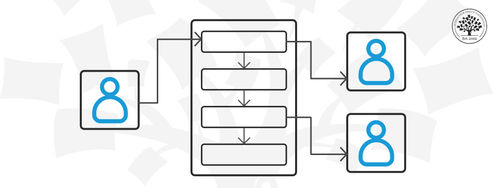
Vacation time! You book your flight. You have a reservation. It's real. You paid for it. And yet, when you open the airline's app to look at it, it's surprisingly elusive. You don't want to check in, you don't want to change it, you just want to find it and check the details. It's not on the home screen. The home screen wants to sell you another flight. You try your profile. Only personal details. You try "My Trips." There it is! Except "My Trips" only shows the flight. Your seat is somewhere else. Your meal preference is somewhere else. Your upgrade option is somewhere else. The one thing that should hold all of this together, your reservation, has been chopped into pieces and scattered across the app, leaving you to play detective. You have a reservation. The app has features. And those aren’t the same thing.
That app was built by a team of designers. Probably talented ones. But they designed in features, and users' experience in objects: a gap nobody bridged.
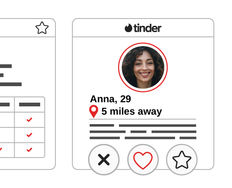
While your peers design their products feature by feature, screen by screen, you could be building interfaces around the concepts users naturally hold in their minds: things like a Reservation, a Task, or a Dating Profile. These are objects, and they’re the foundation of interfaces that feel effortless, scale without falling apart, and earn the trust of the people who use them. And designers who consistently deliver that are the ones who get noticed, get trusted, and get the projects that matter.
In this video, William Hudson, User Experience Strategist and Founder of Syntagm Ltd, explains the heart of an object-oriented approach: the conceptual model. When you understand the key concepts users care about, you can structure an interface that makes sense on first click.
Here are seven reasons mastering object-oriented design will help you develop the kind of strategic approach hiring managers love to see.
1. Users Get Interfaces That Match How They Think
© Imagine Entertainment / 20th Century Fox Television, Fair use
The simple key insight behind object-oriented UI design gets you 50% of the way there: Users don't think in terms of features and screens. They think in things.
When someone opens a travel app, they're not thinking about "the seat selection feature" or "the meal preferences screen." They're thinking about their Reservation. That's the concept(or object) they hold in their minds, return to, manage, and share. It's their mental anchor.
Object-oriented UI design starts here, with the familiar objects users care about, and builds outward. Seat selection and meal preferences become properties of the Reservation, not disconnected features. The result is an interface that maps directly onto how users already understand the world. That means lower cognitive load, higher adoption rates, and deeper trust in your product. When you can consistently deliver those outcomes, you become the designer teams turn to when the stakes are highest.
2. You Create Experiences That Stay Consistent Over Time
© Broadway Video / Little Stranger / NBC Universal, Fair use
When your design is grounded in stable objects rather than in a collection of features, the overall experience holds together even as the visual design evolves.
Amazon's UK website is a perfect example. Its visual presentation has changed a lot throughout the decades, including new layouts, updated components, and refreshed patterns. However, its underlying conceptual model has hardly changed at all. The core objects (the Basket, the Account, the Search, and the Departments) remain constant, even as the way users interact with them evolves. They always know where they are and what they can do, regardless of what the latest redesign looks like.
That kind of consistency doesn't happen by accident. It's the result you get when you design around the core concepts that users recognize and rely on. Look at any of the longstanding apps or platforms you're loyal to: You'll likely spot the same pattern. When you can consistently maintain that stability across a product's entire lifespan, you save teams significant time, money, and painful rework.
3. Friction Disappears When Features Have a Natural Home
© Unknown / via Giphy, Fair use
With a feature-first approach, new capabilities tend to accumulate. Each feature gets a screen, a flow, and an entry point. Over time, the product starts to feel like a collection of separate tools rather than a single coherent experience. Users notice this friction, even if they can't articulate why.
For example, Evernote launched with a beautifully simple object at its center: the Note. You captured something, and you could find it again later, on any device. But over time, Evernote added satellite apps for meals and people, a chat tool to "kill email," dashboards, tasks, and calendar integrations. By 2017, WIRED described the core service as "bloated, complicated, and just broken," and Evernote was forced into a very public reboot. The Note was the one object users actually cared about, and it had been buried under years of additions that were never mapped back to it.
An object-oriented approach wouldn't have prevented Evernote from growing, but it could have solved the bloat issue by giving every feature a natural place to live. When you start with a central object, like a Note, its attributes and operations reveal themselves. You don't just invent a feature and stick it on; they grow out of the objects that are already there. And when you need to introduce a new object to your product, you can use your conceptual map to find its logical place and visualize how it connects with your existing objects.
The result for users is an experience with far less friction. They don't have to search for functionality or remember where things live. The interface behaves the way they expect because it was built around how they think and the model they're already accustomed to.
This approach pays off for your career: Designers who consistently reduce friction are the ones stakeholders trust with more complex, higher-stakes projects.
4. You'll Become the Designer Developers Love Working With
© Columbia Pictures / Sony Pictures Entertainment, Fair use
Object orientation has been central to software development since the 1990s. Developers think in objects, attributes, and operations every day. It's the conceptual framework behind the code they write.
When you adopt the same framework in your design work, you become a developer's best friend. You used to hand over screens and hope they get interpreted correctly. Now you speakthe same conceptual language. You can discuss what an object does, what it contains, and how it relates to other objects, all in terms that map directly to what developers are building.
The benefits are exponential: Smoother handoffs, fewer misunderstandings, and fewer rounds of rework. You become the designer who bridges the gap between UX and engineering, and that's a reputation that opens doors.
5. Stop Losing Arguments You Know You're Right About
© Bravo / NBCUniversal (woman) / Miranda Stillabower (cat), Fair use
Every design team has been in this meeting: A stakeholder wants a new feature. It's not grounded in research. It's not what users have asked for. You know it's the wrong call, but sometimes even your research isn't enough against authority.
Object orientation gives you a system-level argument that is very hard to dismiss because you have a structural blueprint of the product as users experience it. When a new feature is proposed, you can place it in that blueprint and show exactly how it affects the user experience. You can show which features it complicates, which user expectations it disrupts, and whether it fits the product people already understand or quietly fractures it.
6. Complexity Becomes Something You Can Manage, Not Just Survive
© RCG Productions / 20th Century Fox Television / FX Productions, Fair use
Many products seem ingenious when they first launch. They solve a problem no other solution could before, and in some cases, birth a whole new category of products. But that's just step one. Step two is the hard part: Long-term consistency. How many groundbreaking apps can you think of that fell apart? Or got overtaken by a copycat, simply because they couldn't manage growth?
Digg pioneered social news with a simple, democratic promise: The best content, as voted by the crowd, rises to the top. At its peak, it drew over a million daily visitors. But as it scaled, its core object, which we could consider to be the Story, became poorly defined. Without a clear model of what a Story was, who could act on it, and which operations were non-negotiable, Digg's 2010 v4 redesign stripped out the "bury" button and handed publishing power to media companies. Users felt they were no longer interacting with the same product. They migrated to Reddit, which offered the same object with its essential operations intact. An object-oriented approach would have forced the question early: What must remain structurally consistent for this to remain the Digg people love?
Every product gets more complex over time. New requirements and edge cases surface, and the feature list grows. If you rely on a feature-first approach, you may find that complexity accumulates faster than you can handle it. The result is bloated interfaces, inconsistent patterns, and a codebase that's difficult to extend.
Object-oriented design gives you a structured way to manage complexity. When you work from a map of your product's objects, their relationships, and their behaviors, you can see where new additions fit and where they don't. You can help preserve your team's sanity and simultaneously grow in a way that benefits user satisfaction and your company's profits.
When you can manage high levels of complexity, reason about it systematically, and communicate it clearly to your team, you’re exactly the type of person who gets trusted with the most important, most visible, and most challenging work.
7. You Stop Improvising and Start Designing with Confidence
© Warner Bros. Pictures / Village Roadshow Pictures, Fair use
When you start with the objects users care about and build your design outward from there, every decision has a rationale. You can explain not just what you designed, but why: in terms that are concrete, logical, and grounded in user needs. The downstream effects are significant: fewer costly redesigns and fewer bugs introduced by changes that weren't fully thought through.
Meanwhile, you become a more confident designer with a solid process that feels deliberate rather than reactive. That kind of structured judgment is also what separates you from the tools increasingly available to everyone on your team. AI can generate screens, suggest flows, and pattern-match against what's worked before. What it can't do is understand the specific mental model your users bring to your specific product, or reason about what happens to that model when the product changes. That's a human skill, and it's one you can build deliberately.
When you can walk into a stakeholder meeting and make your case with clarity and confidence, your career moves in the direction you've been dreaming of.
The Take Away
Most designers are taught to think in features and screens. It feels logical, until you're the user playing detective in an airline app, hunting for a reservation that should be right in front of you. That gap between what designers build and what users experience is exactly what an object-oriented approach closes.
It's simple to start. Instead of asking what features your product needs, ask what objects your users care about. From there, a different kind of design process unfolds:
Your interfaces align with how people think because you build them around the concepts users already hold in their minds.
Your experiences stay consistent as products grow, because the stable objects you define outlast any visual refresh.
You find natural homes for your features, instead of forcing them into positions.
You build developer relationships based on a shared language, resulting in fewer bugs, miscommunications, and frustration.
You win arguments for the user with structure and evidence when stakeholders push in the wrong direction.
You manage complexity and communicate it clearly, rather than "getting through it."
You make design decisions you can stand behind every time, because every one of them has a rationale.
Design this way, and you'll find it hard to go back. You'll approach briefs differently, ask different questions during project initiation, and see the product's structure before a single screen is drawn.
Your users get experiences that feel effortless and earned. Your clients and employers get a designer who brings clarity, confidence, and sound judgment to every project. And you get a rewarding career built on work that genuinely matters, and the deep satisfaction that comes with it.
References and Where to Learn More
Ready to get a career advantage? Take our course, Object-Oriented UI Design: Build Interfaces Users Love, and master how to identify the objects and relationships that matter to your users, build conceptual models that guide every design decision, and create interfaces that feel intuitive from the first click. You'll walk away with practical skills, a hands-on project for your portfolio, and a certificate that demonstrates your ability to design products that users love and teams love to build.
Discover more about conceptual models and how they help you build products that feel natural to users in our article, Conceptual Models: The Hidden Structure Behind Your Next Great Interface.
Find out how to present your object-oriented arguments with the clarity and confidence they deserve in our article, Overcome the Self-Doubt That Stops You from Being an Excellent Presenter.
Master how to make your structural arguments unforgettable in our article, The 5 Pixar Storytelling Principles That Will Redefine How You Present and Fast-Track Your Career.
Hero image: © Interaction Design Foundation, CC BY-SA 4.0