Handwritten research notes feature session logs, checklists, a hand sketch, and small screen images

3 Niche Research Techniques You Might Want to Use on Your UX Project

• 8 min read

545 Shares
Save

Looking for some new techniques to introduce into your UX research? We’ve been thinking about methods that are slowly developing into more popular tools and have compiled a list of three techniques that might give your UX research a bit of added bite.

The three techniques are the diary study, unassisted (or unmoderated) remote usability testing, and tree tests. Let’s take a closer look at each technique and why it might be the right tool for your UX team:

Diary Studies

One of the drawbacks of many research techniques is that they only provide a single snapshot of user behaviour. This doesn’t necessarily produce flawed results, mind you, but it does mean that you can’t see how a user’s behaviour evolves (or indeed devolves) over time with a product.

The user experience isn’t a one-off event, in most cases, it’s a long-term relationship with a product. The way users approach products can change dramatically over time. For example, a new user or intermediate user of an application may only really want the basic features that are easiest to access and understand but an advanced user may want to delve much deeper into all the little goodies you have stashed a bit deeper in the application.

A diary study is a long-term examination of someone’s behaviour. It is self-reported, which introduces the capacity for capturing what people say they do rather than what they actually do, but with careful design you can reduce the likelihood of this. Getting users to capture video and photographic evidence as well as written evidence can help with this.

When the diary study comes to an end, it’s down to the UX research team to wade through the data and find the raw nuggets of interest to the product development and design.
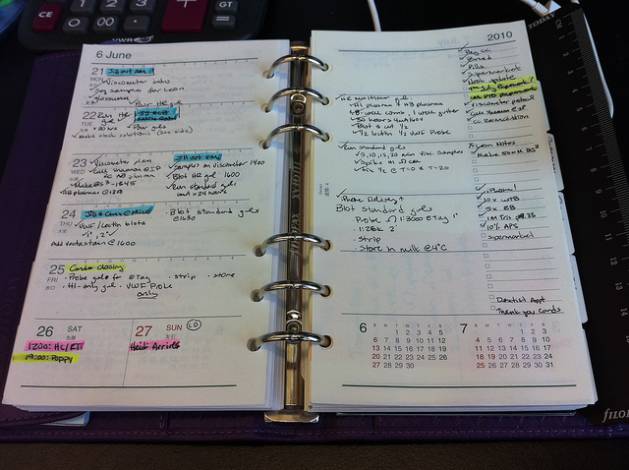


Author/Copyright holder: Kerry Lannert. Copyright terms and licence: CC BY-NC-ND 2.0

Why is a Diary Study a Good Research Technique?

It is, perhaps, the only viable method for examining long-term relationships with a product and measuring how the experience changes over time.

It also offers an “in the wild” element to observation rather than the user being constrained by a formal lab setting (which can influence the results of research).

Remote Unassisted Usability Testing

Remote usability testing is a great option for broadening your reach with your research. In many cases, the process is assisted by a moderator who acts as a “live” observer for the test. However, there are plenty of tools out there now which allow for testing without such an observer. Instead the software, to some extent, plays the part of the observer and the tests can then be reviewed by a researcher at a later date.

The big advantage to this kind of research is that again it dramatically increases the potential scale of your testing program. Remote testing provides you the facility to test anywhere but removing the moderation aspect – enables higher volumes of testing and round the clock testing without additional resources (or paying a ton of overtime to your team). This makes global testing in different time zones easier too.

Why is Remote Unassisted Usability Testing a Good Research Technique?

The biggest advantages are the global reach of the testing program, the ability to conduct more tests in the same time period (when compared to lab or assisted remote testing), and the ability to test round the clock with fewer human resources required.

Current tools have evolved dramatically from the early days of remote testing when they were very limited in their approach and they have also become much more accessible for researchers and participants alike. The costs of these tools has also plummeted in recent years and there’s a lot more flexibility in licensing models than there once was.
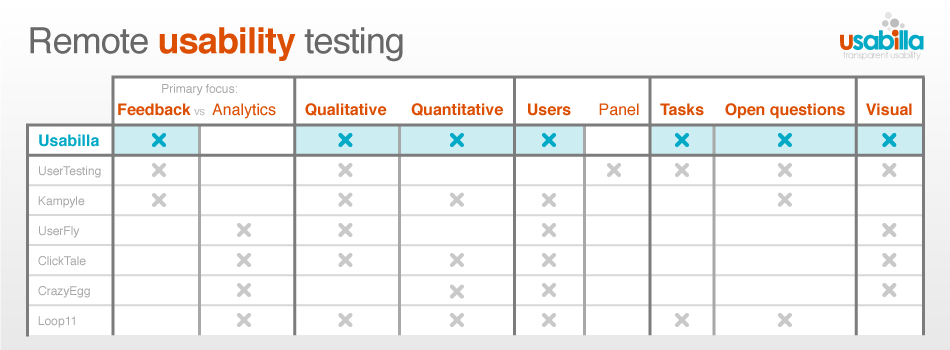

Author/Copyright holder: Paul Veugen. Copyright terms and licence: CC BY-SA 2.0

Tree Testing

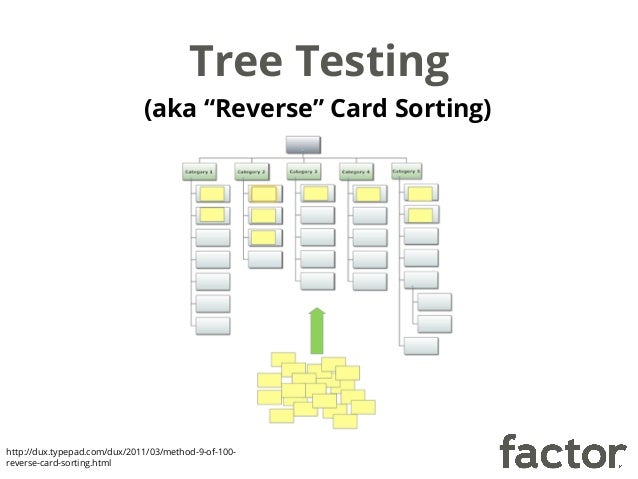
Tree testing focuses on information architecture and specifically navigation/site hierarchy. It is an automated alternative to some forms of card sorting. Obviously, there’s a cost advantage of card sorting – there’s no software required, it takes minutes to set up and can be conducted by pretty much anyone with 10 minutes training.

However, the costs of tree testing software are not astronomical either. You’re not looking at spending hundreds or thousands of dollars on a single test. There are also significant advantages to having automated reporting and analysis tools. Once a tree test is set up – it requires no effort to put into practice.

How would a typical tree test work? You’d offer the hierarchy of your site with clickable navigation links and get users to navigate to sections where they’d expect to find certain types of information. This lets you quickly examine whether your proposed IA and content structuring meets user expectations.


Author/Copyright holder: Bram Wessel. Copyright terms and licence: All rights reserved Img source

Why is Tree Testing a Good Research Technique?

Really, it’s just a form of reverse card testing without any cards being present. We know that card sorting is a good UX research method and it follows that tree testing is a good method from this.

It lets you quickly explore whether your initial IA and navigation structures are fit for purpose without spending a lot of money. It is particularly useful during the early phases of a project to inform the design before you need to spend a lot of cash to make changes.

You can use remote tree testing online, for a fee in most cases, to increase the reach of your tree testing and to ensure that multi-cultural audiences are better served by your products.

Tree testing produces actionable and specific results, just like card sorting, and that makes it a fairly easy sell to stakeholders and clients alike.

Summary

It’s always a good idea to be aware of other UX research methodologies even if you don’t intend to employ them on your current project. The more options that are available to you and your team – the easier it is to select the right tool for the right job.

Header Image: Author/Copyright holder: User Experience NZ. Copyright terms and licence: All rights reserved. Img Source

Learn More in This Course:

Learn Design and AI From the Best

Get one powerful email each week, like 311,481 others.

Next email in:

What You Should Read Next

  • Read full article
    Sustainability Is Not Enough - Article hero image

    Sustainability Is Not Enough

    Sustainable design. Sustainable fashion. Sustainable living. We often hear these terms in marketing campaigns and popular media. But what does sustainability mean and why does pioneer of User Experience Design Don Norman think that sustainability shouldn’t be our goal when we design?In this video, D

    Social shares
    483
    Published
    Read Article
  • Read full article
    Black Friday 2024: Invest in UX Design Education - Article hero image

    Black Friday 2024: Invest in UX Design Education

    “The best investment you can make, is an investment in yourself... The more you learn, the more you'll earn.”—Warren Buffett, Chairman and CEO of Berkshire HathawayHow many items have you added to your Black Friday shopping wishlist? This year, instead of short-term deals on products, why not take a

    Social shares
    562
    Published
    Read Article
  • Read full article
    Why Is AI so Important and How Is It Changing the World? - Article hero image

    Why Is AI so Important and How Is It Changing the World?

    You've heard about AI and all the wonderful (and sometimes scary) possibilities. But unlike sci-fi apocalyptic movies, AI isn't out to destroy humanity. Let's take a look at the challenges and opportunities we face as AI meets design.In this video, Ioana Teleanu, Founder of UX Goodies and former Lea

    Social shares
    484
    Published
    Read Article
  • Read full article
    Who, What, and How: Design Maps Show You the Way for Implementation - Article hero image

    Who, What, and How: Design Maps Show You the Way for Implementation

    For something called a “team project,” it’s amazing how often everyone’s on a different page. Design maps connect the dots. They organize your research, stories of use, and design artifacts into clear, user-centered interfaces that your team can actually build fast. No more “Wait, what did you mean

    Social shares
    398
    Published
    Read Article
  • Read full article
    How Can Designers Adapt to New Technologies? The Future of Technology in Design - Article hero image

    How Can Designers Adapt to New Technologies? The Future of Technology in Design

    The design industry is rapidly evolving with the integration of technologies such as artificial intelligence (AI) and 3D printing. While there may be concerns about job displacement, history has demonstrated that new technologies typically create more job opportunities. Don Norman, author of The Des

    Social shares
    690
    Published
    Read Article
  • Read full article
    Conceptual Models: The Hidden Structure Behind Your Next Great Interface - Article hero image

    Conceptual Models: The Hidden Structure Behind Your Next Great Interface

    Ever wondered why some interfaces feel effortless: like they already know what you’re trying to do, while others leave you guessing? The difference often lies in how well a product’s design matches the way users think. When your interface reflects their mental model, every action feels intuitive, an

    Social shares
    477
    Published
    Read Article
  • Read full article
    Get to Grips with Constraints - Article hero image

    Get to Grips with Constraints

    Got constraints? Perfect. That’s where great design begins. Just as electrical standards define how a toaster safely works without shaping what it does, your software also lives within boundaries that quietly guide its behavior. Functional requirements describe what your system does: the stories of

    Social shares
    474
    Published
    Read Article
  • Read full article
    How Persona Stories Help You Design for Real People - Article hero image

    How Persona Stories Help You Design for Real People

    User stories caught on because they were quick and simple, but speed often came at the cost of real understanding. A “user” in a story is rarely more than a guess, shaped by the assumptions of whoever wrote it. When you shift to persona stories, you ground your work in real research and real people.

    Social shares
    398
    Published
    Read Article
  • Read full article
    Use Cases: The Ideal Bridge Between Requirements and Design? - Article hero image

    Use Cases: The Ideal Bridge Between Requirements and Design?

    Imagine trying to describe everything your product needs to do, without getting lost in technical detail or endless feature lists. That’s the problem Ivar Jacobson set out to solve in the 1980s when he introduced use cases. Instead of worrying about how a system worked internally, he described it fr

    Social shares
    416
    Published
    Read Article
  • Read full article
    What is Good Design? - Article hero image

    What is Good Design?

    Design matters. It enables us to understand, communicate and improve the world around us. When done right, design has the power to improve the everyday lives of users. When done wrong, design can disrupt and frustrate users. As a designer, you have the power to improve the everyday lives of your use

    Social shares
    670
    Published
    Read Article

Top Articles

Top Topic Definitions

39% of Today's Skills Will Change by 2030

The World Economic Forum expects 39% of today's skills to be transformed or become outdated by 2030.

The good news is that jobs in UX / UI design and AI are among the fastest-growing professions globally.

Build Skills That Keep You Relevant

Privacy Settings

By using this site, you accept our Cookie Policy and Terms of Use.
Customize
Accept all

Be the One Who Inspires

People remember who shares great ideas.

Share on:

Academic Credibility — On Autopilot

Don't waste time googling citation formats. Just copy, paste and look legit in seconds.

Learn Design and AI From the Best

Get one powerful email each week, like 311,481 others.

Next email in: