When design teams do holistic design in user experience (UX) design, they take a bird’s-eye view of users’ interactions in their world and the many interconnected factors in their contact with brands. Teams picture how a product/service fits—or might fit—into the wider consumer or user world
“Holistic design takes into account the person, the device, the moment, the ethnographic environment, the physical space as well as human behavior and psychology, i.e. thinking, attitudes, emotions, motivations, abilities, triggers etc., and aims to deliver an optimal experience. At times the entire experience (with a product or brand) is not limited to digital devices but is a mix of digital, real-world brick-and-mortar, and human-to-human interactions.”
— Miklos Philips, Principal UX Designer at Toptal
Holistic Design means You Fly High above the Users’ World
Structural architects developed holistic design as a way to do better than build for just one purpose (e.g., to house people). The idea was to examine views of human occupancy from all angles (e.g., energy consumption, mental health). Therefore, they could design buildings tailored to everything the people who used them needed.
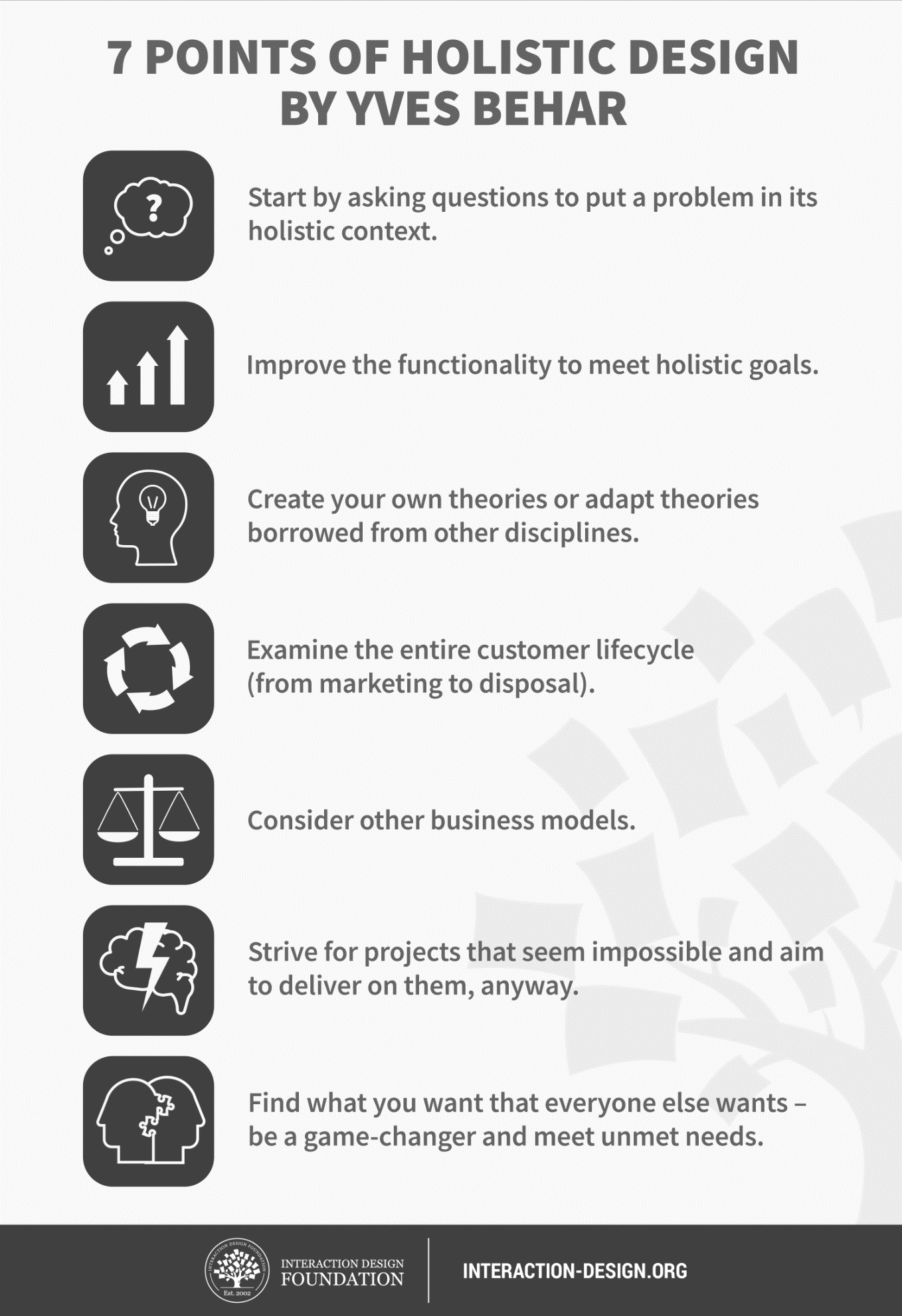
In user experience, designers try to work with a better grasp of all the human dimensions that are involved between users and a particular design. They can explore the various angles more realistically than they would if they focused only on catering to a few aspects of what the users experience (e.g., designers creating an impressive user interface (UI) design but not considering other aspects, such as search engine optimization (SEO)). From there, designers can examine the intricate dynamics in users’ different environments to get a better idea of the balance they need to achieve in their design. Then, they can customize feature sets from the insights they discover. With a holistic mindset, your team doesn’t examine isolated aspects of how users use products/services and experience brands. Instead, you consider how these aspects work together. Therefore, you can predict the series of micro-moments users have across all touchpoints during their experience. Industrial designer Yves Behar captured holistic design in seven points, condensed as follows:
Succeed with Holistic Design
To adopt a holistic design approach, organizations may need to change their cultural mindset. Here are the main holistic considerations:
Because one interaction is typically only part of a series auser takes towards a goal, examine where one task fits in overall and make the best entry and exit points (e.g., checkout).
Investigate cause-and-effect chains and get behind users’ eyes with, for example, design thinking. Issues aren’t typically isolated. They can be wicked problems (i.e., extremely intricate). If decision-makers “solve” one problem but fail to consider associated issues, they can cause repercussions.
Design for the transitions between interactions – users access products/services in various circumstances and ways. Twenty-first-century user experiences consist of many user moments where users pursue goals in many ways. Previously, there was one way (e.g., to buy vacations from a bricks-and-mortar travel agent).
Use customer journey maps, user stories, personas and touchpoints matrices to help illustrate the entire user context and the associated systems and tangent issues.
Produce sufficient resources for all touchpoints. For example, the designers of a municipal bicycle system in a city that requires helmets must examine how to supply helmets. Similarly, UX designers must predict both digital and physical aspects of users’ needs.
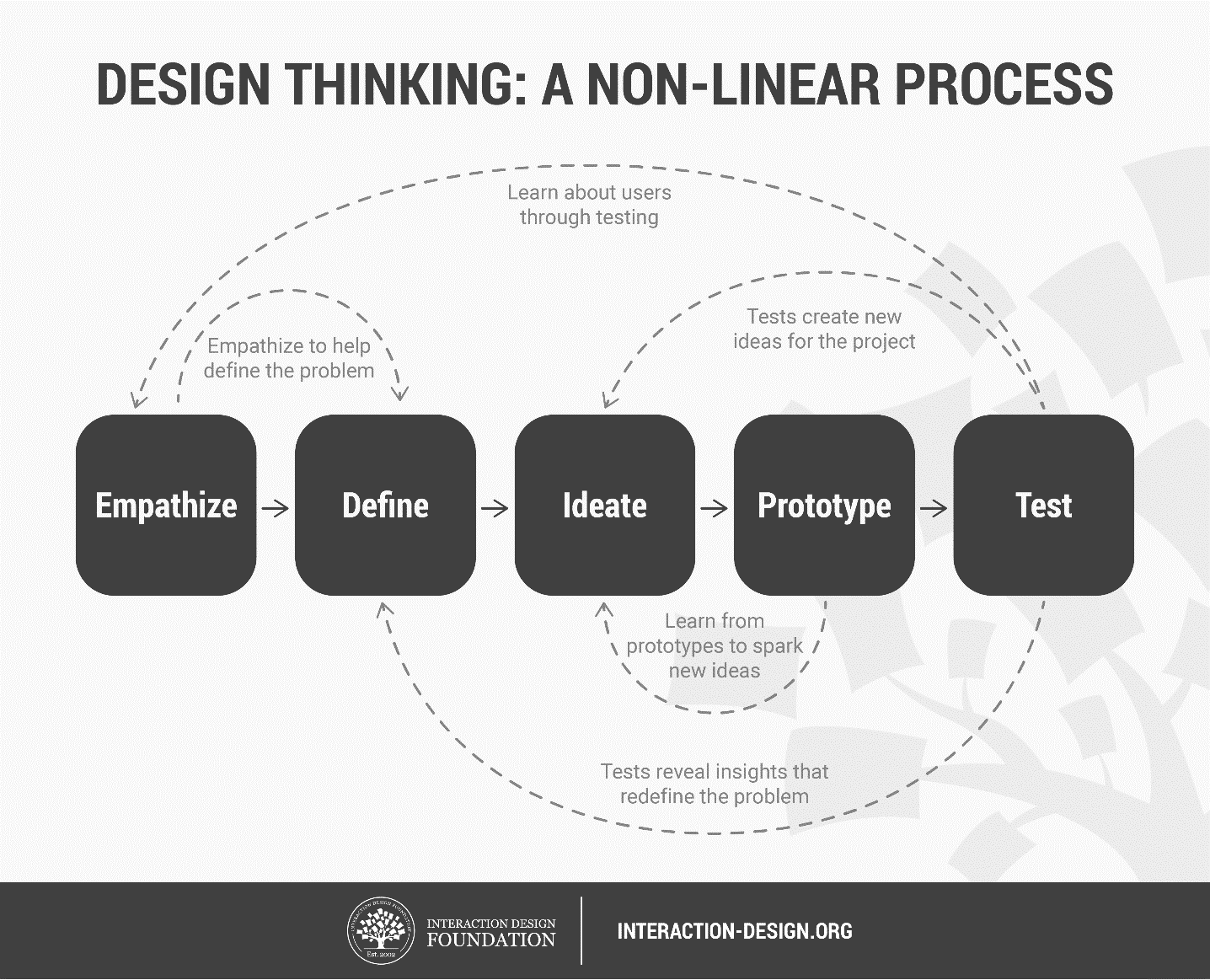
Design thinking can be a good method to use for holistic design because it helps make sense of the many complex and intertwined human-world realities in which users will access, use and judge designs/products. It can therefore help you address all angles of the user experience—*holistically*.
With holistic design, your aim is to design for a successful UX ecosystem. You should therefore create a branded experience which covers many dimensions of use. You must make designs that offer seamless interactive experiences to facilitate that. A holistic user experience reflects empathy for users. Moreover, it’s proof that a design team has built in the comfort (or delight) users expect in the flow of actions they take after they discover a brand. To achieve this, your team has to tailor every dimension to match the many independent relationships (i.e., users, their behavior and aims, the other technology they use, etc.) that happen across specific touchpoints.