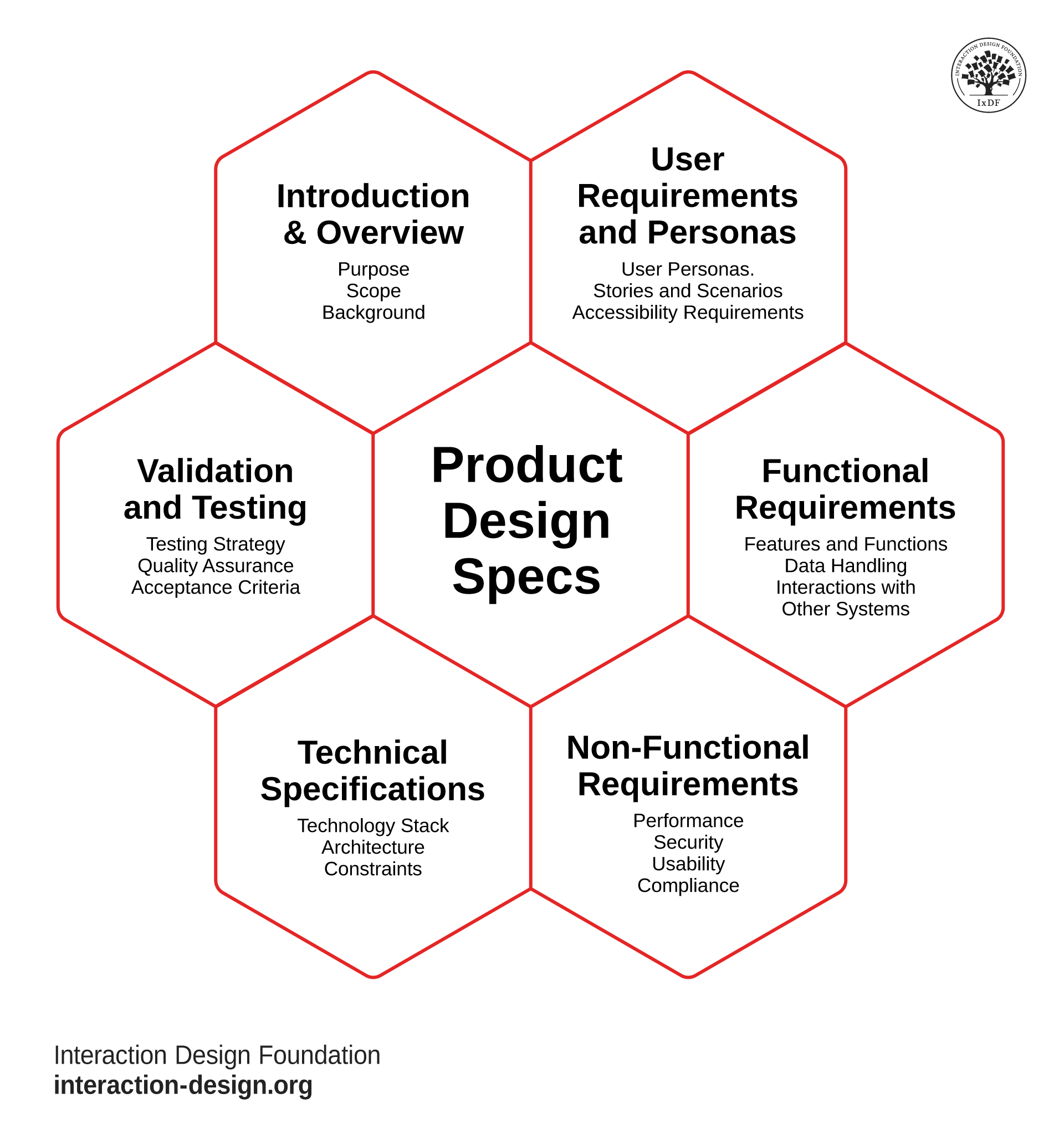
Design specifications are detailed documents that outline essential requirements, constraints and specifications for products to adhere to. They act as fundamental blueprints in product development, to guide teams from concept to completion. Specifications ensure that all stakeholders—including designers, developers and clients—have a clear understanding of the product goals, to align efforts and facilitate a smoother development process.
© Interaction Design Foundation, CC BY-SA 4.0
Why are Design Specifications Important in UX Design?
In user experience (UX) design, design specifications serve as the blueprint for product development. Product design specifications guide every step from the conception of a product idea through to the finished product’s final design. These specifications—or design specs in more common industry use—encompass a comprehensive set of documents that detail the requirements and guidelines for a brand’s design and development team to create a product. They cover aspects from the technicalities in software engineering to the subtleties of user experience and user interface (UI) design.
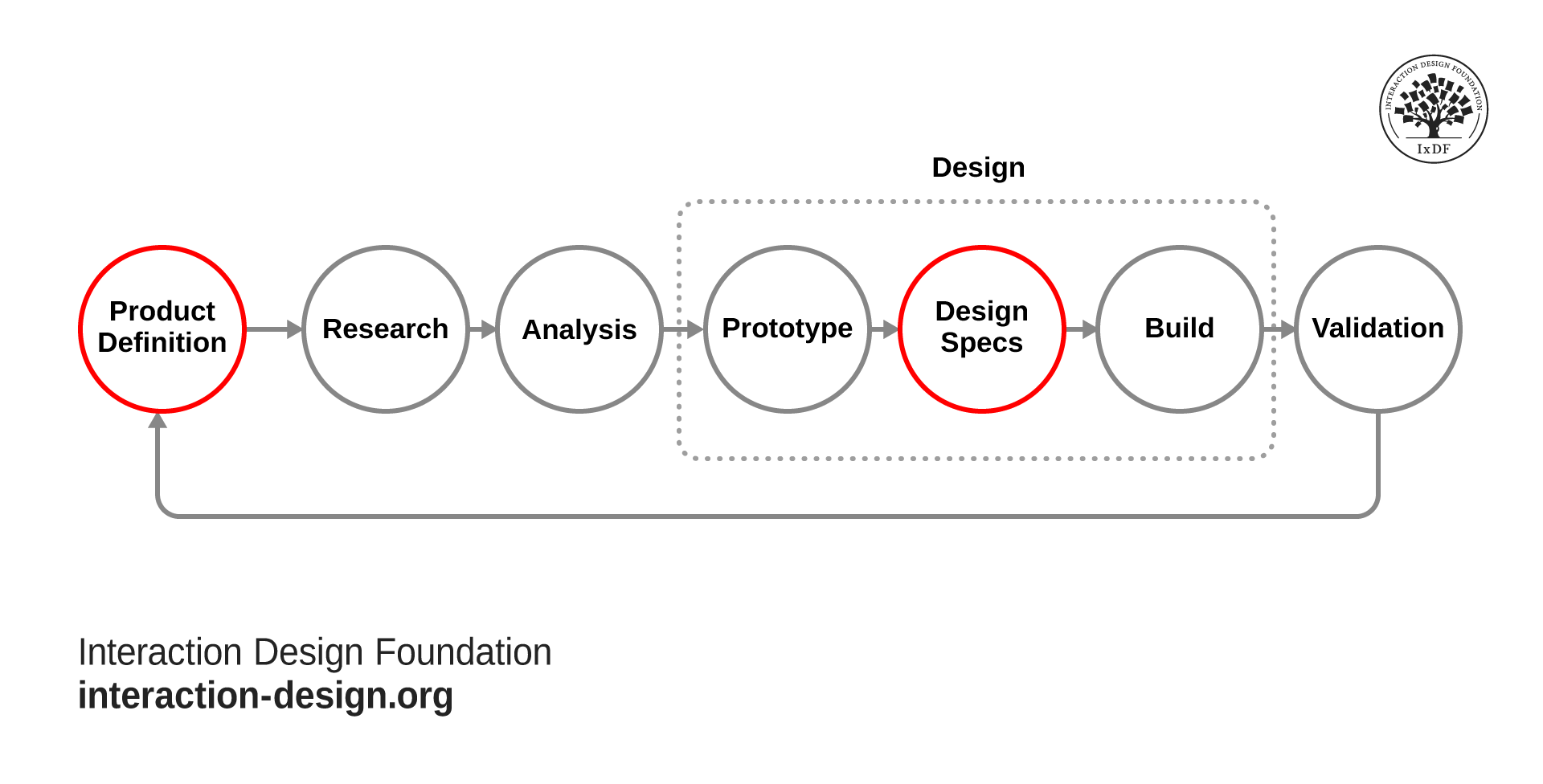
Design specifications can emerge after prototyping in the design process.
© Interaction Design Foundation, CC BY-SA 4.0
Design or UX specifications are a crucial way to help ensure that the final product meets both functional and aesthetic requirements for that digital product’s target audience. Since these specifications define what a product should do, how it should look and how it should perform, they bridge the gap between an initial concept and its realized form. More specifically, they are an indispensable tool in the world of product design and development because of the role they play in:
1. Clarity and Consistency
Design specifications in UX design ensure that development team members clearly understand every project detail. From roadmaps to user flows, it’s vital for developers to be fully on board with all the proposed functional specifications and more for design solutions. This clarity leads to consistency across what the design team envisions and what the developers implement.
2. Communication and Collaboration
Effective communication is crucial in UX projects to avoid costly misunderstandings. A design specs document ensures all stakeholders, including the design and development teams, are aligned. Throughout the design process, for example, a good UX design specification document can help enhance collaboration. If everyone’s on the same page, this will reduce the risk of project failures due to poor communication. This quality is particularly beneficial when cross-functional teams work in an agile design process.
Watch as UX Designer and Author of Build Better Products and UX for Lean Startups, Laura Klein explains the value of cross-functional team collaboration:
3. Smooth Handoff to Development
A well-documented design specification facilitates a smooth transition from design to development. This allows designers to focus on refining the UX while developers clearly understand the project requirements. This reduces the need for constant back-and-forth.
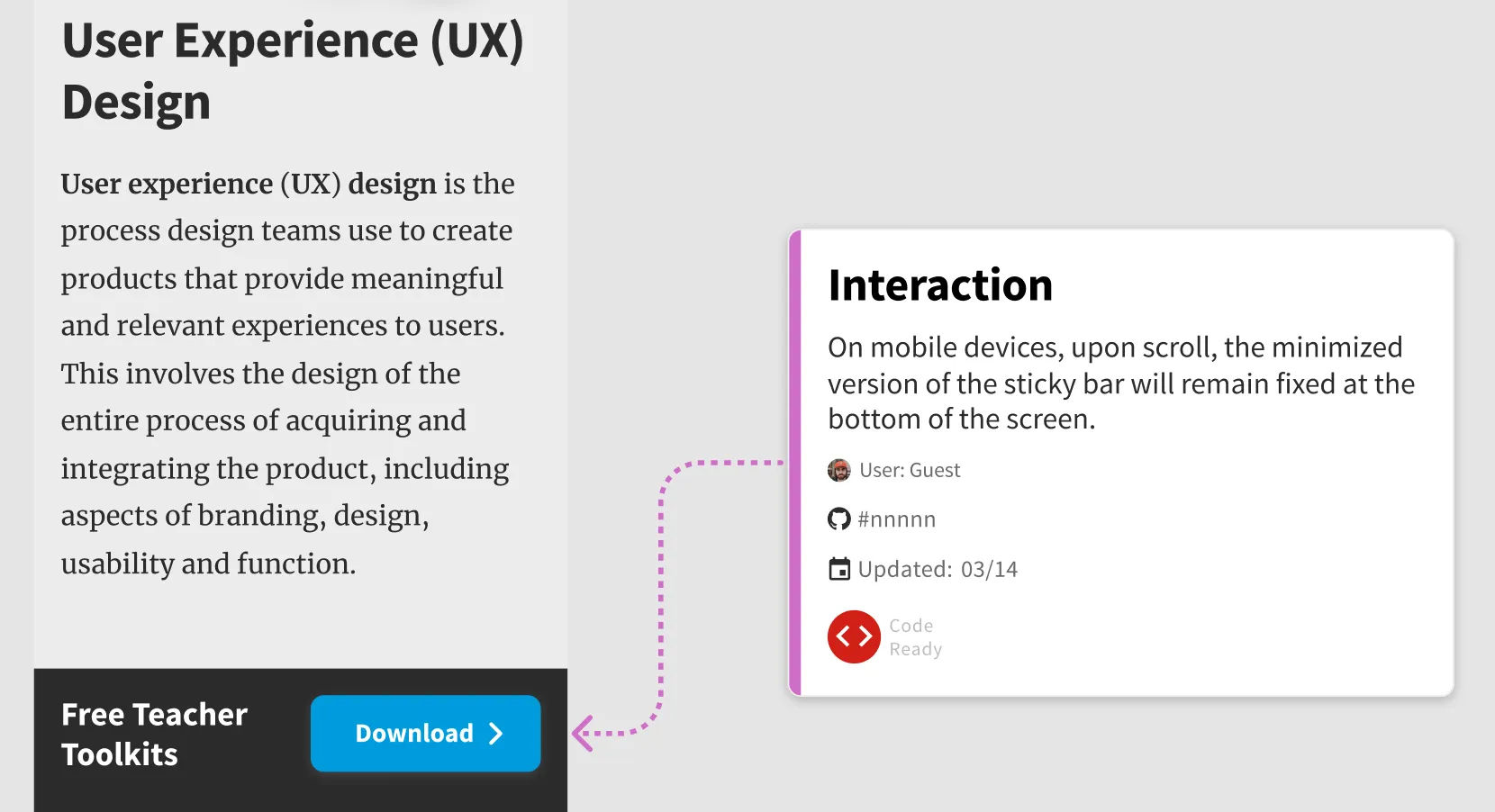
Handoffs to development teams need to foresee as many aspects of what to include as possible.
© Interaction Design Foundation, CC BY-SA 4.0
4. Effective Design Implementation
Design specifications are a pivotal means to translate design thinking into tangible products. They guide developers as they turn UX designs into functional applications. Such specifications ensure the final product aligns with the initial vision without unnecessary revisions.
Watch our video on Design Thinking to understand more about this valuable UX design process:
5. Scalability and Iteration
Design specifications provide a foundation that supports future scalability and iterations. This is essential for a brand’s teams to adapt and enhance the product over time. They can return to an existing product and tweak its UI design specifications, for example. This way, a brand can help ensure it continues to optimize a product for user interactions, keep its brand presence up to date, and more. Therefore, their design can evolve in response to user feedback and changing market demands.
6. Avoid Scope Creep
When design specifications are detailed, they define strict parameters. This helps maintain the project scope and prevent expansions or changes that could lead to project delays and increased costs.
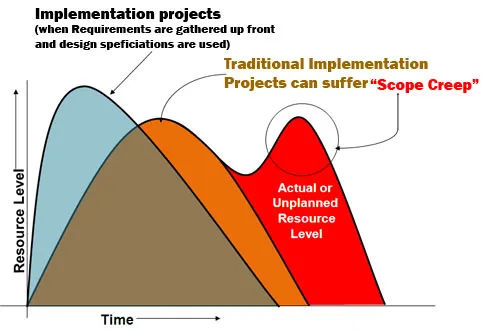
Scope creep can bog teams down in wasteful endeavors. Good design specifications can prevent this.
© ETQ Blog, Fair Use
7. Enhance Product Quality
Clear, detailed specifications help teams to refine the product design and functionality. This leads to higher-quality outcomes that meet and exceed user expectations.
Who Writes Design Specifications and What Do They Contain?
In many organizations, the responsibility for writing UX design specifications falls on the UX designers, product managers or a collaborative effort between team members. It can vary depending on the company's structure and processes.
In UX design, design specifications tend to consist of a minimum of annotated page or UI or component wireframes, user interaction flows and a sitemap.
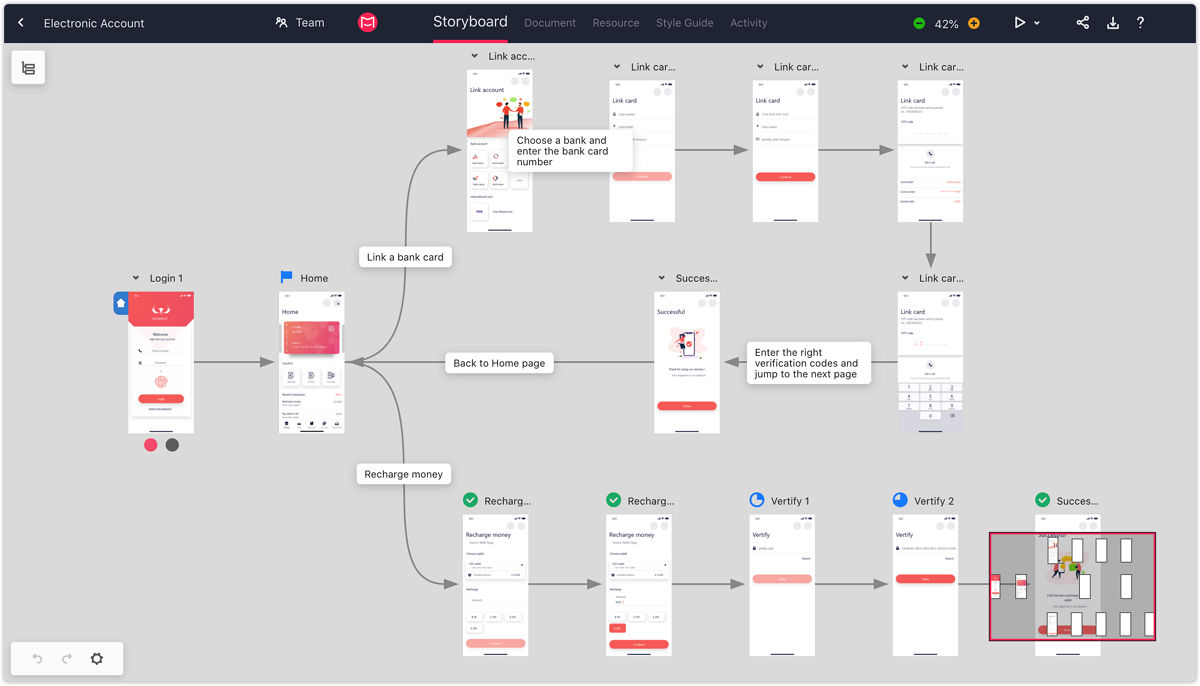
A user flowchart with annotations.
© Summer Ye, Fair Use
However, design specifications can also include the following:
1. Visual Design
Color palette: The specific colors for use in the design.
Typography: The chosen fonts, font sizes and styles for different elements.
Iconography: The icons that will feature and their visual specifications.
In this video, Joann and Arielle Eckstut, leading color consultants and authors, give you their top six tips for making color palette decisions.
2. Layout
Grid systems: The framework to arrange elements on the interface.
Spacing: The exact measurements for padding, margins and spacing between elements.
Responsive design: How the design should adapt to different screen sizes.
Watch as CEO of Experience Dynamics, Franks Spillers explains responsive design:
3. Interaction Design
User interface elements: Specifications for buttons, input fields, navigation menus, etc.
Microinteractions: Details about the behavior of interactive elements such as animations or transitions.
Feedback and system responses: How the system should respond to user actions.
4. Content
Text content: The specific wording, tone and style of text used throughout the interface.
Multimedia content: Specifications for images, videos or audio elements.
5. Accessibility
Guidelines to ensure the design is accessible to users with disabilities.
Compliance with accessibility standards such as WCAG (Web Content Accessibility Guidelines).
Understand more about why accessibility is a crucial part of design:
6. Technical Specifications
File formats and sizes for images and other media.
Supported browsers and devices.
Any specific technical considerations for developers to implement the design and bring it to life as designers and brands intend.
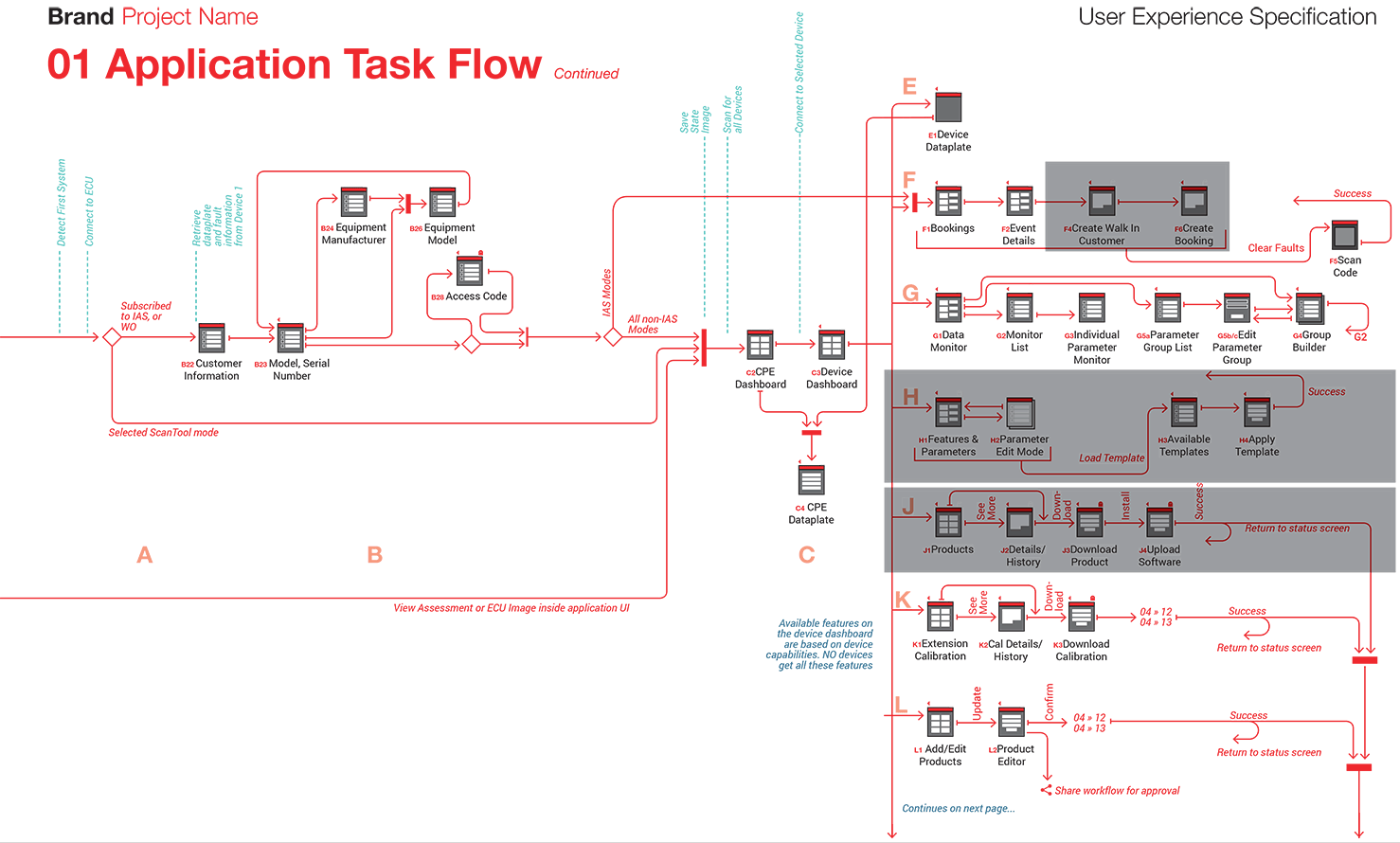
Clear UX specifications in the form of a task flow.
© Steven Hoober, Fair Use
What are Helpful Tools and Software to Create and Work with Design Specs?
A couple of software options are popular among designers and developers:
Figma: Figma is a collaborative interface design tool that also supports the creation of design specs. It enables real-time collaboration and the generation of design assets and specs for development.
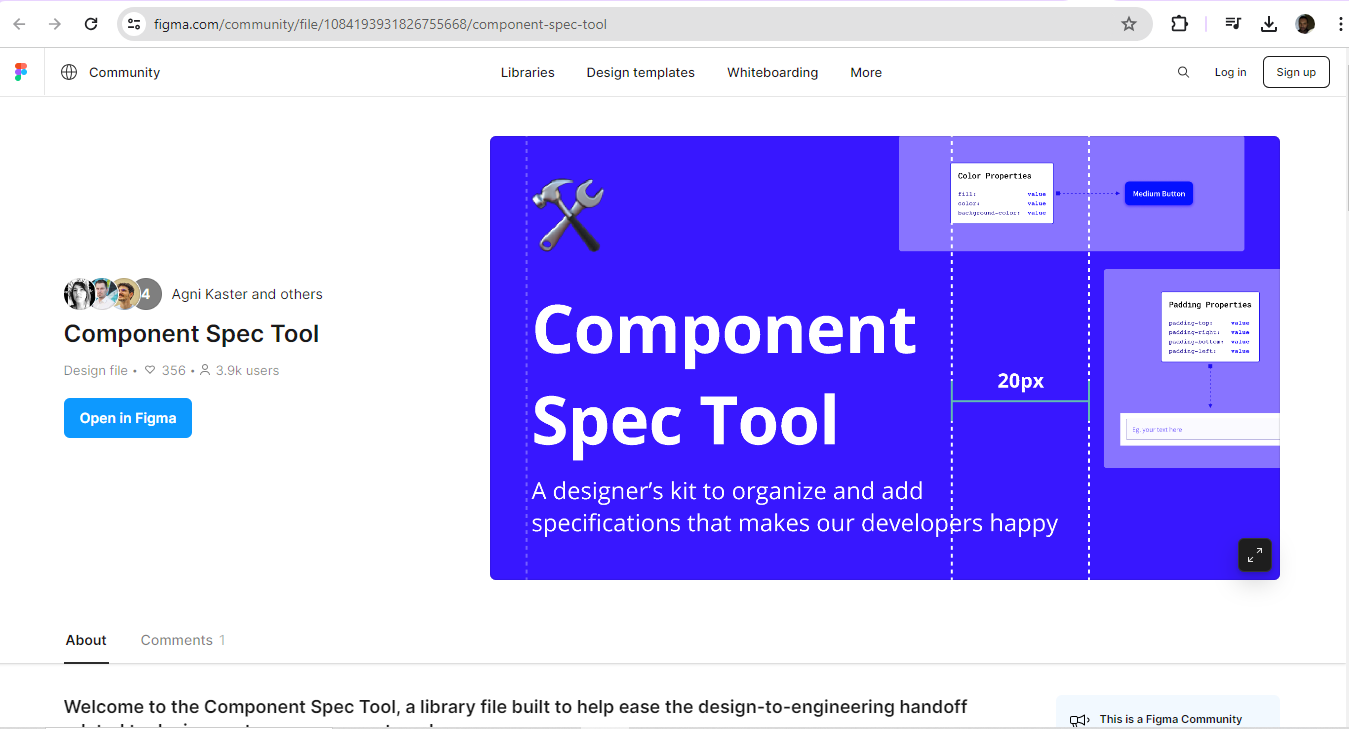
This tool exemplifies good design specification management.
© Team Handoff, Fair Use
Zeplin: Zeplin is a specialized tool for design handoff that streamlines the process of exporting design specs and assets for development. It integrates with various design tools to facilitate the handoff process.
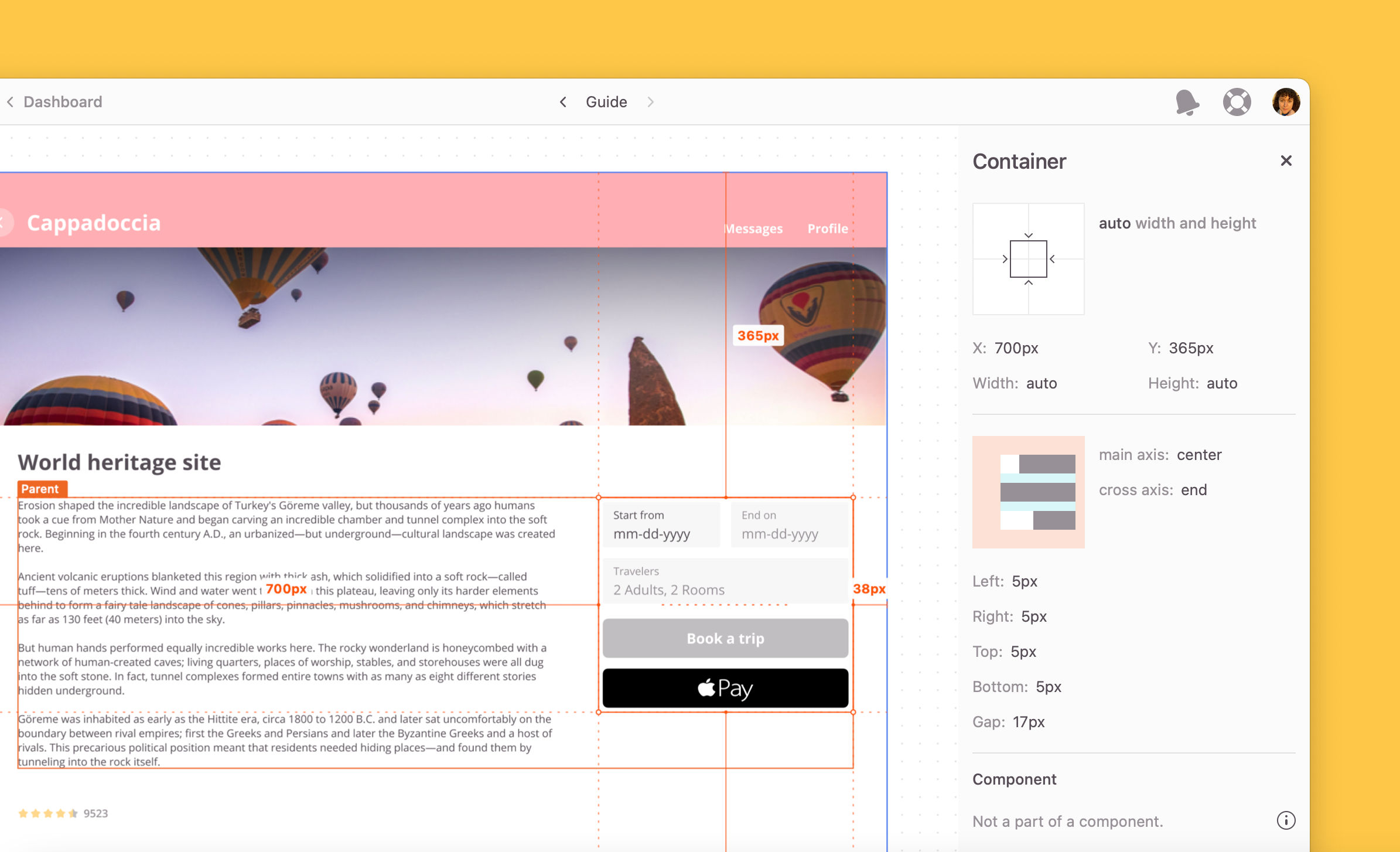
Layout Specs in Zeplin is a helpful tool.
© Fatih, Fair Use
Each of these software tools has its own strengths and features, so the choice ultimately depends on the specific requirements and preferences of the design and development team.
What does a Design Specifications Document Look like?
Below is a detailed breakdown of what a design specs document can feature:
1. Title Page
Name of the project
Date
Version number
Author(s)
2. Table of Contents
List of sections and subsections with corresponding page numbers
3. Introduction
Purpose of the document
Overview of the project
4. Scope
Description of the project's boundaries and limitations
5. Functional Requirements
Detailed description of the system's functions and capabilities
Use cases and user stories
Watch as Laura Klein explains user stories and their significance in UX design:
6. Non-Functional Requirements
Performance requirements
Security requirements
Scalability requirements
Usability requirements
Compliance requirements
7. User Interface Design
Wireframes or mockups of the user interface
Description of user interactions and flow
UX Strategist and Consultant, William Hudson explains wireframing:
8. Data Design
Database schema
Data flow diagrams
9. System Architecture
High-level system architecture diagram
Description of components and their interactions
10. Dependencies
Third-party integrations
External systems the project relies on
11. Assumptions and Constraints
Factors that may impact the design and development
12. Risks and Mitigation
Identification of potential risks and proposed mitigation strategies
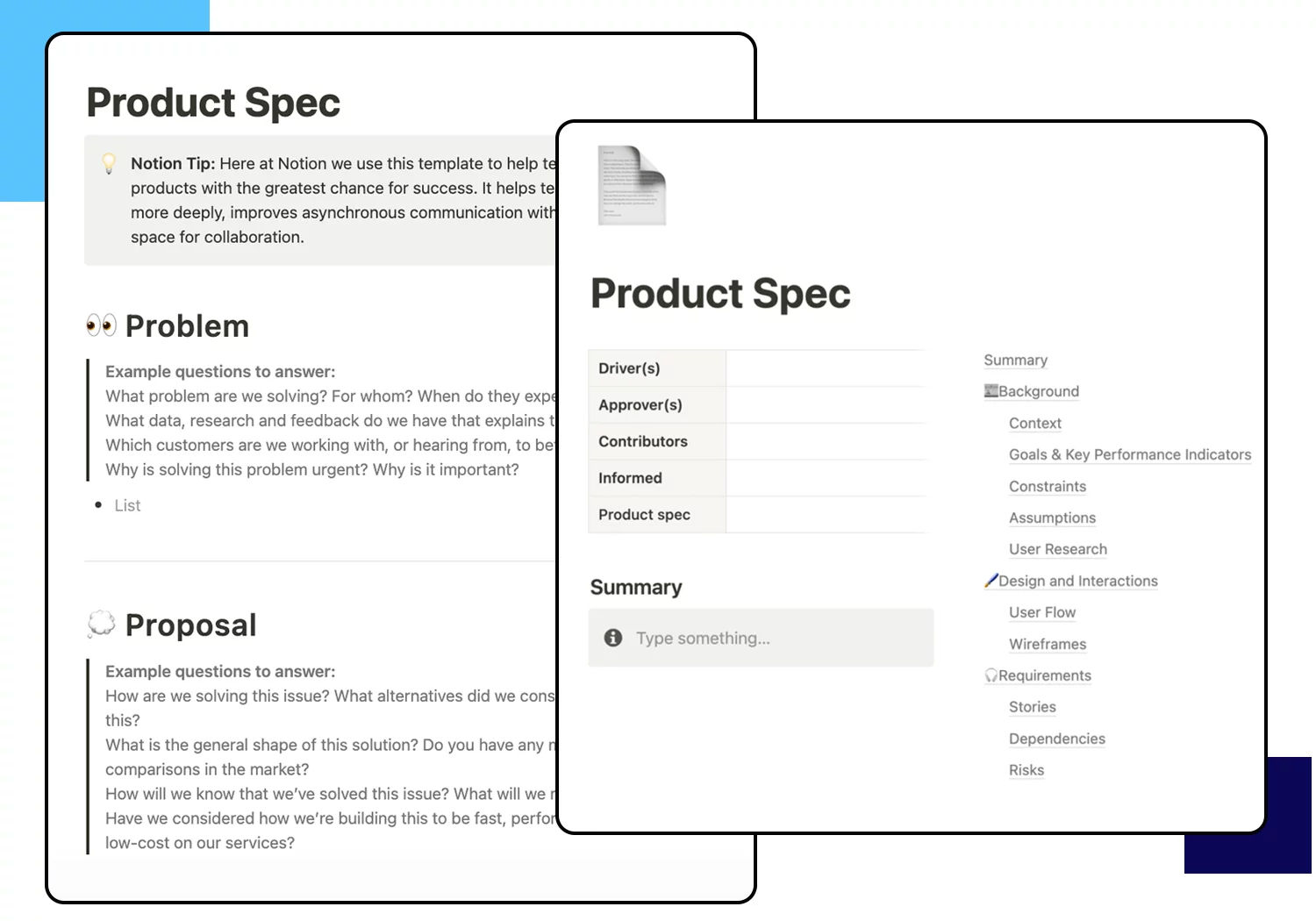
Good design specs can include many descriptive details, including about risks.
© Joseph Downs, Fair Use
13. Glossary
Definitions of technical terms and acronyms used in the document
14. References
Citations and resources used to create the document
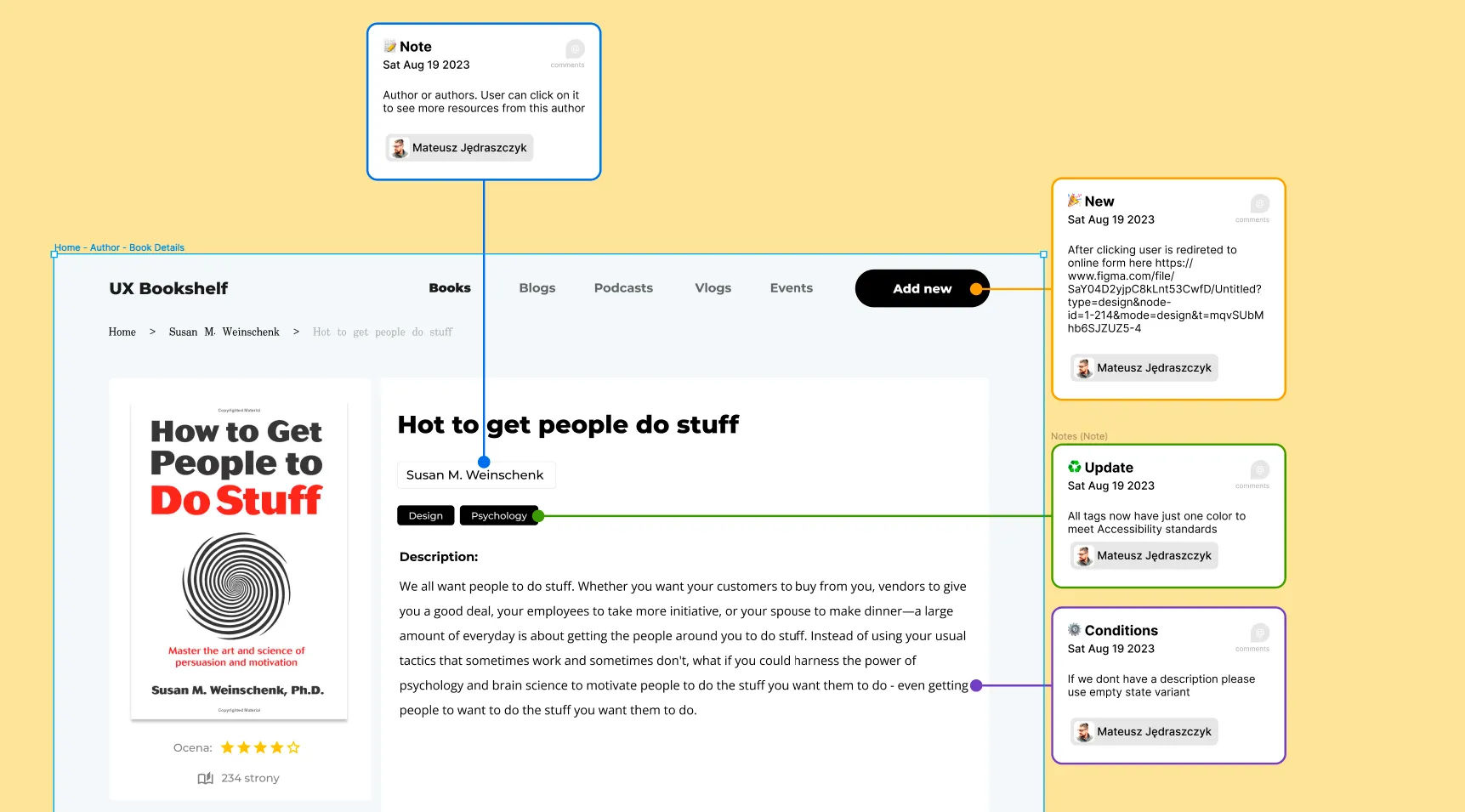
© Matt Jedraszczyk, CC BY-SA 4.0
What are Best Practices to Follow with Design Specifications?
1. Have a Clear and Detailed UX Design Process
To ensure success in UX design, it’s crucial to establish and follow a clear and detailed design process. This process should include preliminary planning, such as defining the project scope and goals, and detailing the user interface design requirements like typography, colors and user experience elements such as user flows and functionalities.
2. Prioritize User-Centric Design
It’s vital to understand and prioritize the needs of users. Design specifications should focus on creating a seamless and pleasant user experience by incorporating user feedback and usability testing regularly throughout the design process.
Watch as William Hudson explains important points about user testing:
3. Maintain Consistency and Clarity
Consistency in design helps in building user trust and enhances brand recognition. Ensure that all design elements are consistent across different platforms and that the navigation is intuitive. The design specifications should be clear and written in a language that is understandable for both technical and non-technical team members.
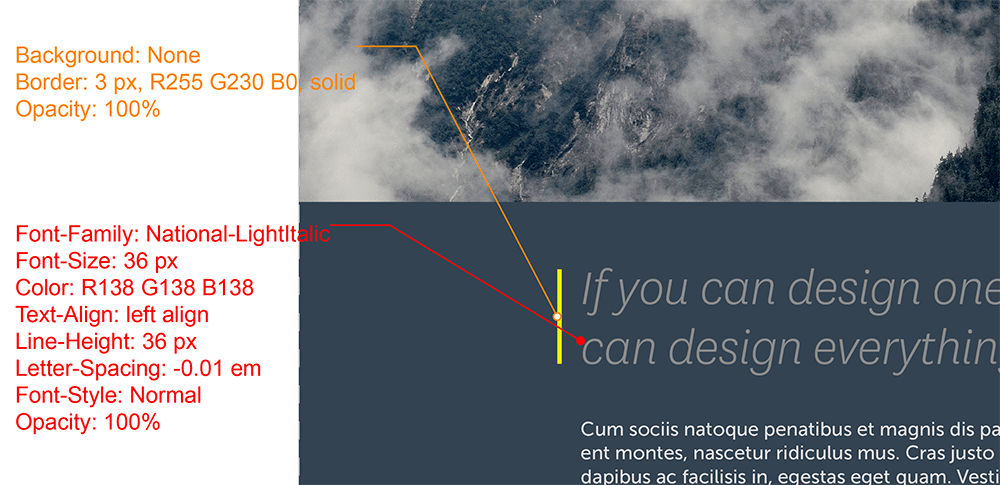
In this example, designers can manually create design specs and include them and other information in a document to present design details.
© Summer Ye, Fair Use
4. Incorporate Accessibility and Inclusivity
Brands who design for inclusivity ensure that their products will be usable for people with a wide range of abilities. This also means to consider users with disabilities of varying types, including sight, hearing and cognitive. Specifications should detail these considerations to ensure the product is accessible to as broad an audience as possible so that all users can access, use and enjoy the product, including its information architecture.
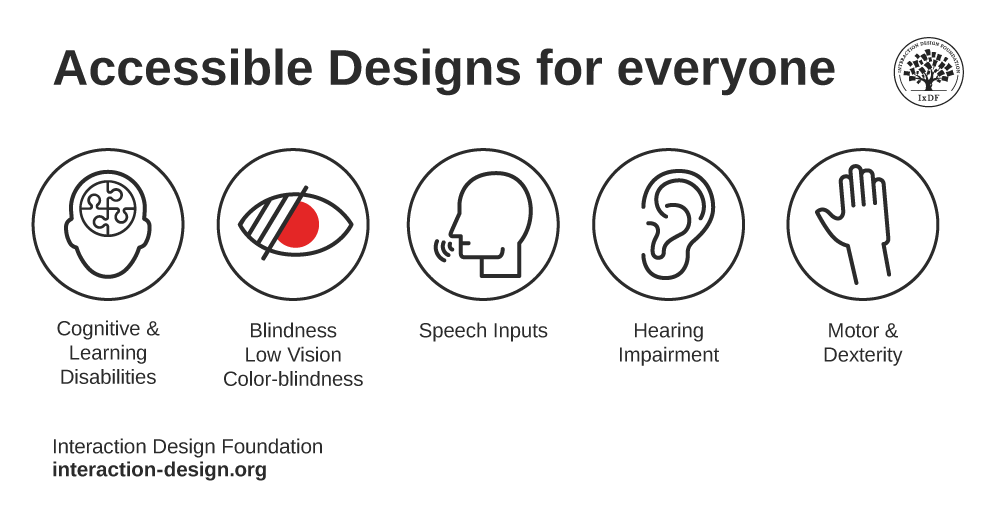
Accessible design includes users with many disabilities, and abilities.
© Interaction Design Foundation, CC BY-SA 4.0
5. Utilize Visual Aids and Documentation
Effective design specifications include the use of visual aids like diagrams, tables and prototypes. These tools help to illustrate and clarify the design requirements and make the specifications easier to understand for all stakeholders involved in the project.
Watch as Author and Human-Computer Interaction Expert, Alan Dix explains the importance of prototyping in a design process:
6. Regularly Update and Refine Specifications
As the project progresses, it's important to revisit and refine the design specifications to accommodate changes and new insights. To keep the document up-to-date ensures that all team members are aligned and that the project adapts to any new requirements or market changes.

It’s also possible to make prototype specifications, as shown above (with part of a prototype). It includes functionality and a few content specifications next to each screen.
© Leeloo Tang and Feifei Liu, Fair Use
Special Considerations for Design Specifications in UX Design
Brands and design teams especially should keep the following factors in mind regarding design specifications:
1. Cost and Resource Allocation
It can be costly to establish and maintain a robust design specification protocol in UX design. This means that brands need to hire skilled professionals, invest in the right tools and dedicate time for extensive user research and continuous training. The allocation of these resources often diverts attention and funds from other critical areas. There’s therefore a potential for conflicts within an organization over resource distribution.
2. Recruitment and Retention Challenges
It poses a significant challenge to find and retain top UX talent. That’s particularly the case in competitive markets and environments where project management must oversee a product development process. UX professionals must not only fit into the organization's culture. They also need to possess a complex set of skills ranging from user research to technical design execution. These skills are crucial for the implementation of effective UX design specifications in the real world.
3. Resistance to Organizational Change
To introduce comprehensive design specifications can meet with resistance in organizations accustomed to different workflows. This resistance can stem from a lack of understanding of UX design's value or fear of the new processes disrupting established practices. To overcome this requires effective change management strategies to ensure alignment and buy-in from all stakeholders.
4. Integration with Existing Processes
It can be a challenge to merge UX design specifications with existing development processes and workflows. It necessitates significant effort to align UX goals with those of other departments, which may have different priorities or methodologies. This integration is crucial for creating seamless user experiences and requires careful planning and collaboration.
5. Measure of Return on Investment
It can be complex to demonstrate the tangible benefits of investing in UX design specifications. While improvements in user satisfaction and engagement are expectable, it takes time to quantify these benefits in terms of revenue increase or cost reduction, and so it may not be immediately apparent.
CEO of Experience Dynamics, Frank Spillers explains important points about ROI in this video:
6. Scalability Concerns
As organizations grow, it can become a challenge to scale the UX team to meet increasing demands. To ensure that the team has adequate resources and capabilities to manage larger or more complex projects is essential to maintain the quality and effectiveness of the UX design.
Every aspect of the product, from functionality to aesthetics, is detailed. This ensures that the product meets both practical and user-centric needs.
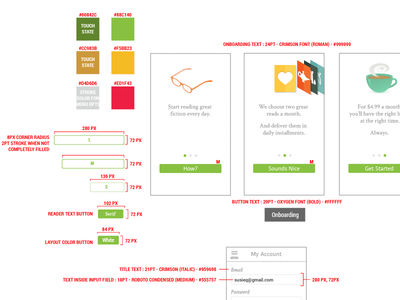
In this section of a sample specifications sheet, UI specs are a way to set the visual standard of a project.
© Tiya Tiyasirichokchai, Fair Use
Overall, perhaps the most important point to understand about design specifications is that they’re not just about laying down the technical requirements for the functionality required of a digital product. These specifications also call for brands to thoroughly understand the user needs and market demands. Moreover, it takes a careful eye to ensure that the product is developable within the given constraints of time and budget.
Brands must juggle design decisions with many aspects of realities that are particularly peculiar to the design of websites, apps and software. This can call for more intense monitoring and response than some products or services outside the sphere of UX and UI design would necessitate.
Nevertheless, any brand needs to keep a finger on the market pulse, and good UX and UI design specifications can help brands align business goals with user needs via attentive teams, good design systems and a commitment to deliver products that are not only feasible but also successful in meeting the intended market needs. Ultimately, good user experience and product design is more than the sum of its parts. This is why the best UX design specification examples show well-considered details that cover as many design angles as possible.