The Lattice of Value and Product Adoption

• 8 min read

426 Shares

Products must have value. It’s a key rule of design. If they don’t have value, people won’t buy them. It’s that simple. Designers have to eat and thus they must create products people will buy. There are many ways to create value; value can be both quantitative (e.g. a product provides $100 of benefits) or qualitative (e.g. a product makes me feel good). Value can be provided in numerous combinations which allows competing products to differentiate themselves from each other.

However, there’s an important component to value that is often missed. That is the value created when there are other users of a product.

An Example of Shared Value

Author/Copyright holder: Eden, Janine and Jim. Copyright terms and licence: CC BY 2.0

Imagine that a hungry software developer turns up on your doorstep one morning. She is a brilliant programmer and just that morning you have bought a new computer but haven’t yet purchased any software to go on it.

The software developer offers to create a brand new operating system for you after laying eyes on your sparkly new machine. It will be the finest and most efficient operating system in history and maximize all that wonderful new computing power that you’ve bought.

In exchange for this all she asks is that you give her a meal and half the cost of a license for the leading operating system on the market today.

Does her offer represent value for money?

If we take a surface look at this; it is pretty good value. You’re being offered the best operating system in the universe for half the price of a poorer product.

Yet, when we go beneath the surface this probably isn’t as cut and dried. While the poor programmer may create you an amazing operating system; it’s not an operating system anyone else uses. You won’t be able to buy any of those shiny off-the-shelf office suites, creativity suites and the games you play when you think no-one is looking. That’s because those things require that existing poorer operating system to run on. They won’t work on your software programmer’s operating system.

In fact, if you want to get some use out of your amazing operating system – you will need to sell it to other people and wait while they develop software to run on it. You’ll have to convince many of those people to abandon the large investments they have already made in the existing operating systems; operating systems which have millions of users already.

You’re also going to have to persuade a good chunk of those users to switch to your new operating system and buy all that lovely new software to go with it.

When we get right down to it; your software developer’s deal isn’t great value. It’s not because the product she is offering isn’t better than the one you have but that it cannot compete with the shared value provided by all the other users of that inferior product.

We hope that you’d feed that poor developer before sending her on her way but we doubt that you’d end up buying the operating system too.

The Lattice of Value

Author/Copyright holder: ARMdevices.net. Copyright terms and licence: Fair Use.

The lattice of value was proposed by Alan Dix, the HCI expert and university professor, in a talk to the University of Technology, Berlin in 2008.

It simply represents the idea that we can create unique value for each of a set of user groups and in turn create additional shared value.

In our operating system example; software developers need an operating system for their software to run on. They get value from being provided with an operating system.

In turn, users also need to be able to use their computers and that requires an operating system.

The shared value comes when both developers and users own the operating system. At this point the developer can sell software to the user and the user can extend the use of their computer with the software they buy.

The value created for each set of users is unique. The shared value for each set of users is also unique.

This additional value will encourage more users and more developers to buy the operating system. It extends the value in the operating system beyond the first use of that system and into a continuous system of value delivery.

This is one of the reasons that Microsoft’s Windows, an operating system which receives much criticism (and not all of it deserved) is so amazingly resilient in a market place where a competitor, Linux, is available for no cost and with software that comes at no cost. The cost of Microsoft’s operating system is outweighed for many users by the lattice of value that the operating system has created over time.

It’s not just Windows that you would have to replace but all the software that goes with it too. Which means a learning curve and more costs for training. Worse, much of the new software is not going to be perfectly compatible with the software that other Windows users are working with. Some of those users, particularly for businesses, are going to be clients or suppliers. It’s a pretty risky decision to jeopardize the way you work to save a few dollars on an operating system isn’t it?

Author/Copyright holder: Pixabay. Copyright terms and licence: Free to Use.

Note: The Interaction Design Foundation has no preferences for any operating system; this isn’t an advert for Windows or Linux but a real life example of how value is created for different user groups by the adoption of the same product by different groups.

The Take Away

A lattice of value is created when different user groups derive benefits from other user groups using a product. Designers that can create a lattice of value within their product can encourage adoption by different groups of users. The lattice of value can also act as defense of a product when a new product comes to market – it not only needs to offer more value than the existing product but also more value than the existing lattice of value.

John Maxwell said; “To add value to others, one must first value others.” A lattice of value is a great way to begin doing just that.

References

Notes from Alan Dix’s February 2008 talk to the University of Technology in Berlin

Learn More in This Course:

AI for Designers

11 days
13 % booked
View Course

What You Should Read Next

  • Read full article
    The Diffusion of Innovation – Strategies for Adoption of Products - Article hero image
    Interaction Design Foundation logo

    The Diffusion of Innovation – Strategies for Adoption of Products

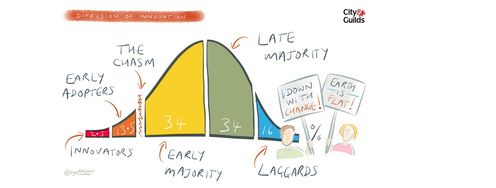
    The diffusion of innovation is the process by which new products are adopted (or not) by their intended audiences. It allows designers and marketers to examine why it is that some inferior products are successful when some superior products are not.The idea of diffusion is not new; in fact it was or

    Social shares
    1.1k
    Published
    Read Article
  • Read full article
    How to Use the Product Life Cycle - Article hero image
    Interaction Design Foundation logo

    How to Use the Product Life Cycle

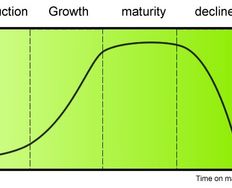
    The product life cycle is an important tool for marketers, management and designers alike. It specifies four individual stages of a product’s life and offers guidance for developing strategies to make the best use of those stages and promote the overall success of the product in the marketplace.Abou

    Social shares
    873
    Published
    Read Article
  • Read full article
    Useful, Usable, and Used: Why They Matter to Designers - Article hero image
    Interaction Design Foundation logo

    Useful, Usable, and Used: Why They Matter to Designers

    Today, we’re going to take a look at three contexts of the concept of use: useful, usable and used. The first two terms, useful and usable, are bandied around a lot in terms of user experience and design while the third term, used, barely gets a mention. Yet, as we’ll come to see it may be the most

    Social shares
    868
    Published
    Read Article
  • Read full article
    How to Achieve Critical Mass for a Product Launch - Article hero image
    Interaction Design Foundation logo

    How to Achieve Critical Mass for a Product Launch

    The concept of critical mass originates in physics; it refers to the volume of a nuclear product required to sustain a chain reaction in a nuclear explosion. However, critical mass in marketing requires a very different product – users – to ensure a “chain reaction” of sales. The idea of critical m

    Social shares
    754
    Published
    Read Article
  • Read full article
    Appropriation and Design: A Tale of Two Concepts - Article hero image
    Interaction Design Foundation logo

    Appropriation and Design: A Tale of Two Concepts

    ‘Appropriation is an unusual word for designers in that it has two very distinct meanings. Both are relevant to designers and both need careful consideration but for very different reasons.Appropriation is either:The use of pre-existing objects/images within a design or art with marginal amounts of

    Social shares
    704
    Published
    Read Article
  • Read full article
    Emotional Drivers for User and Consumer Behavior - Article hero image
    Interaction Design Foundation logo

    Emotional Drivers for User and Consumer Behavior

    In his paper; “Conditional Reflexes” the scientist Ivan Pavlov proved that a dog could be conditioned to respond to a stimulus. He presented a dog with food and the dog began to salivate. He also rang a bell every time he presented the food. Eventually he could ring the bell and cause the dog to sal

    Social shares
    688
    Published
    Read Article
  • Read full article
    Value Networks and Why They Matter - Article hero image
    Interaction Design Foundation logo

    Value Networks and Why They Matter

    We know, almost instinctively, that networks hold value. Human beings are by nature social creatures and our own social networks (not just those online) provide a framework for our behaviors and structure to our lives. Yet, the value of networks in business is often overlooked. Designers looking to

    Social shares
    685
    Published
    Read Article
  • Read full article
    Social Systems and Their Role in Product Adoption - Article hero image
    Interaction Design Foundation logo

    Social Systems and Their Role in Product Adoption

    People don’t often make their decisions by themselves with no input from others. We turn to family, friends, media, opinion makers, colleagues, etc. to get their input. This is particularly true of decisions which may impact on our happiness to a great extent.Why does this matter in a design context

    Social shares
    630
    Published
    Read Article
  • Read full article
    Adoption and Design: How to Turn Prospects into Users - Article hero image
    Interaction Design Foundation logo

    Adoption and Design: How to Turn Prospects into Users

    It doesn’t matter how amazing a product is; if no-one is using it, then it hasn’t succeeded. Adoption is the process of prospective users becoming actual users of a product. It is adoption that is the objective of design; more so than user experience, usability, utility, etc. History is full of prod

    Social shares
    590
    Published
    Read Article
  • Read full article
    Prospect Theory - The Economics of Design - Article hero image
    Interaction Design Foundation logo

    Prospect Theory - The Economics of Design

    Economists once assumed that every actor in an economic system would be rational. That people would calculate the value of what they had and what they could have in the future accurately and that they would make their decisions based on that calculation. Unfortunately, in practice this was rarely th

    Social shares
    581
    Published
    Read Article

Top Articles

Top Topic Definitions

Feel Stuck?
Want Better Job Options?

AI is replacing jobs everywhere, yet design jobs are booming with a projected 45% job growth. With design skills, you can create products and services people love. More love means more impact and greater salary potential.

At IxDF, we help you from your first course to your next job, all in one place.

See How Design Skills Turn Into Job Options
Privacy Settings
By using this site, you accept our Cookie Policy and Terms of Use.
Customize
Accept all

Be the One Who Inspires

People remember who shares great ideas.

Share on:

Academic Credibility — On Autopilot

Don't waste time googling citation formats. Just copy, paste and look legit in seconds.

Feel Stuck? Want Freedom?

Join 326,033+ designers who get one powerful email each week. Learn to design a life you love.

Next email in
1
day
11
hrs
5
mins
39
secs

Free forever. No spam. Unsubscribe anytime.