Making Use of the Crowd – Social Proof and the User Experience

• 8 min read

620 Shares

Social proof (sometimes referred to as informational social influence) is a psychological concept. It refers to the tendency of human beings to follow the actions of others when making decisions and placing weight on those actions to assume “the correct decision”. It’s a concept that can be used in product design for the Internet and mobile web to help drive user decisions in the direction that a business wants them to go.

Human beings are social creatures. We live in communities, towns and cities. We raise families and have friends. It’s what defines us. It also makes us vulnerable to the influence of other people. Social influence, which is what we refer to when we talk about the impact of other people’s actions on our own, can be very positive (it’s what, for example, makes us less likely to get drunk and start fights in public) but it can also be negative (when it leads to “herd behaviour” or “following the crowd”).

The History of Social Proof

Social proof is not a recent phenomenon. It was identified in 1935 by Muzafer Sherif, a social psychologist credited with developing social judgement theory, in an experiment.

Subjects were seated in a dark room and asked to stare at a pinprick of light a few feet away from them. They were asked to estimate how much the dot was moving. In reality, the light was stationary but the autokinetic effect (an observation that stationary objects appear to move when there is no second point of reference to compare them to) led people to believe it was moving.

A week or so later, the experiment was repeated but this time in groups. People were asked to shout out their estimates of the movement and Muzafer Sherif observed that the group would tend to converge on an estimate – even if these estimates were vastly different to those that they had given in the first part of the experiment. The experiment was then repeated again with the individuals on their own and their estimates tended to remain with the group output rather than with their own original estimate.

In short, social proof demonstrated that we are likely to converge on a course of action when others provide that action for us.

The Introduction of Social Proof in the User Experience

The understanding that people are influenced by other people’s actions has led to the incorporation of social proof in the user experience of many websites and applications and in the real world too.

Author/Copyright holder: Mattes. Copyright terms and licence: Public Domain

Perhaps, the most famous examples are the star ratings on Amazon and eBay and the reviews of products and sellers on these sites. Highly rated and highly recommended products (and sellers) are more likely to be successful than those with poor or no-ratings.

Social proof is used for two reasons in user experience design:

  • To deliver credibility. If other people find a source useful or credible – we are more likely to believe that source may be useful or credible for ourselves. An indication of this belief in other people that is displayed within the site or product – boosts credibility for other users.

  • To promote adoption and/or acceptance. Volumes of people subscribing to a Facebook page or Twitter feed can encourage others to do the same. Large amounts of people doing something is a psychological indicator to people that they should do the same thing.

Implementing Social Proof in Your User Experience

If you intend to implement social-proof in your user experience you can test the efficiency of it using the following:

A/B Testing
Author/Copyright holder: RaHul Rodriguez. Copyright terms and licence: CC BY-SA 2.0

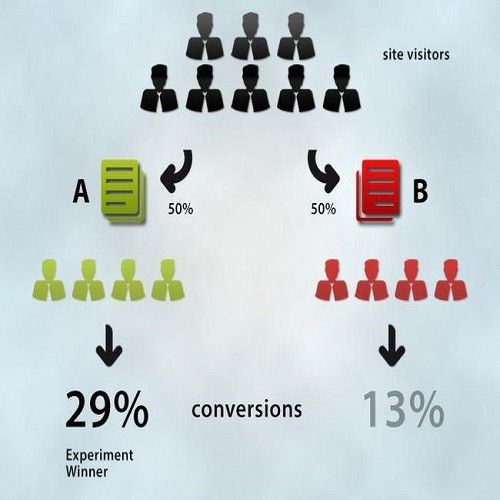
A/B testing can help you determine whether social proof is aiding conversions. You can test user comments, reviews, social sharing, etc. and see which, if any, are the most beneficial.

Usability Testing

If you’re using social proof to try and increase your credibility – you want to conduct some survey questions that enable you to gauge user confidence.

You can also use usability testing to ensure that the volumes of social proof that you’re providing aren’t overwhelming users. Too much information can be worse than none at all. Users are happy to be convinced by social proof but there’s only so much data that they can process easily.

Eyetracking and Usability Testing
Author/Copyright holder: Z22. Copyright terms and licence: CC BY 3.0

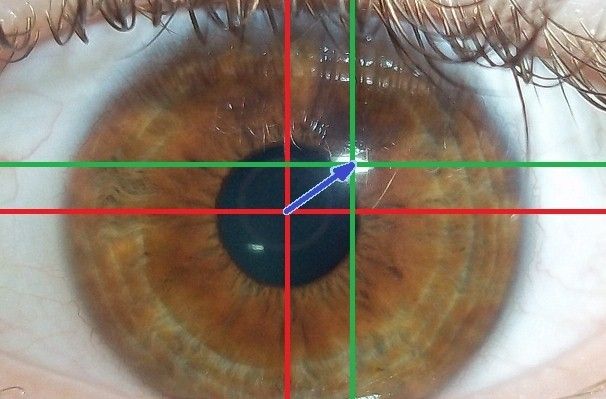
You might also want to determine whether users even notice your social proof. After all, position is important and it’s quite possible that your users won’t benefit from social proof if they don’t even notice it’s taking place. Eyetracking software as part of usability testing can help you decide whether users are noticing social proof and whether they’re paying any real amount of attention to it if they do notice it.

Load Time Testing

Social proof, particularly when it comes from social media or other plugins, can slow down the performance of your website or application. You want to keep measuring load times because poor load times can cause abandonment even before the user has had a chance to interact with your content.

Social Proof and the Mobile Web

Social proof is harder to integrate into the mobile user experience. Average user ratings are popular in app stores, for example, to indicate the value of a particular app and some brief summary reviews are also displayed. However, it’s vital to keep an eye on the available screen real estate and be certain that you’re not overwhelming users when it comes to delivering social proof on mobile. Usability testing is a must.

The Takeaway

Social proof can be a powerful tool to help you guide users to make specific decisions online and in mobile apps. However, you have to take care with how it is implemented and test the way it is implemented to get the greatest benefit. The tips above should help you examine the way you integrate social proof in your products.

References

The original study by Sherif: "A study of some social factors in perception". Archives of Psychology 27: 187

See awesome examples of social proof at work in design.

Hero Image: Author/Copyright holder: Jurgen Appelo. Copyright terms and licence: CC BY 2.0

Learn More in This Course:

AI for Designers

12 days
13 % booked
View Course

What You Should Read Next

  • Read full article
    What is Interaction Design? - Article hero image
    Interaction Design Foundation logo

    What is Interaction Design?

    Interaction design is an important component within the giant umbrella of user experience (UX) design. In this article, we’ll explain what interaction design is, some useful models of interaction design, as well as briefly describe what an interaction designer usually does.A simple and useful unders

    Social shares
    1.5k
    Published
    Read Article
  • Read full article
    Apple’s Product Development Process – Inside the World’s Greatest Design Organization - Article hero image
    Interaction Design Foundation logo

    Apple’s Product Development Process – Inside the World’s Greatest Design Organization

    Apple’s Product Development Process may be one of the most successful design processes ever implemented. With a valuation that exceeds $2 trillion, there’s a lot that designers can learn from Apple and introduce into their own design environments.Apple is a notoriously secretive business. In Steve J

    Social shares
    1.4k
    Published
    Read Article
  • Read full article
    Shneiderman’s Eight Golden Rules Will Help You Design Better Interfaces - Article hero image
    Interaction Design Foundation logo

    Shneiderman’s Eight Golden Rules Will Help You Design Better Interfaces

    Follow Ben Shneiderman’s 'Eight Golden Rules of Interface Design' if you want to design great, productive and frustration-free user interfaces. Apple, Google and Microsoft are among some of the highly successful companies whose well-designed products reflect Shneiderman’s rules. The characteristics

    Social shares
    1.4k
    Published
    Read Article
  • Read full article
    How to Change Your Career from Graphic Design to UX Design - Article hero image
    Interaction Design Foundation logo

    How to Change Your Career from Graphic Design to UX Design

    If there’s an occupation that is 100% linked with the public’s idea of what design is all about, it’s graphic design. From the familiar golden arches of the McDonald’s brand to the typography and colors of movie posters, graphic designers create some of the most iconic and ubiquitous designs around

    Social shares
    1.4k
    Published
    Read Article
  • Read full article
    The Grid System: Building a Solid Design Layout - Article hero image
    Interaction Design Foundation logo

    The Grid System: Building a Solid Design Layout

    Now that we’ve seen some grids at work in the Rule of Thirds article, let’s examine them a little more deeply. As a concept that deals so fundamentally with the fabric and background of our work as designers, it’s easy to overlook the power of grids and think more about the elements we want to creat

    Social shares
    1.4k
    Published
    Read Article
  • Read full article
    The Principles of Service Design Thinking - Building Better Services - Article hero image
    Interaction Design Foundation logo

    The Principles of Service Design Thinking - Building Better Services

    Service design is all about taking a service and making it meet the user’s and customer’s needs for that service. It can be used to improve an existing service or to create a new service from scratch. In order to adapt to service design, a UX designer will need to understand the basic principles of

    Social shares
    1.4k
    Published
    Read Article
  • Read full article
    A Simple Introduction to Lean UX - Article hero image
    Interaction Design Foundation logo

    A Simple Introduction to Lean UX

    Lean UX is an incredibly useful technique when working on projects where the Agile development method is used. Traditional UX techniques often don’t work when development is conducted in rapid bursts – there’s not enough time to deliver UX in the same way. Fundamentally Lean UX and other forms of UX

    Social shares
    1.3k
    Published
    Read Article
  • Read full article
    Dieter Rams: 10 Timeless Commandments for Good Design - Article hero image
    Interaction Design Foundation logo

    Dieter Rams: 10 Timeless Commandments for Good Design

    Let’s pay a virtual visit to a famous industrial designer’s workshop. By examining the principles of his winning approach, we can incorporate vital elements into our designs in the “less is more” age.As user experience practitioners, most of us have worked with Nielsen and Molich’s 10 heuristics or

    Social shares
    1.3k
    Published
    Read Article
  • Read full article
    The 7 Factors that Influence User Experience - Article hero image
    Interaction Design Foundation logo

    The 7 Factors that Influence User Experience

    User Experience (UX) is critical to the success or failure of a product in the market but what do we mean by UX? All too often UX is confused with usability which describes to some extent how easy a product is to use and it is true that UX as a discipline began with usability – however, UX has grown

    Social shares
    1.3k
    Published
    Read Article
  • Read full article
    10 Free-to-Use Wireframing Tools for UX Designers in 2026 - Article hero image
    Interaction Design Foundation logo

    10 Free-to-Use Wireframing Tools for UX Designers in 2026

    Wireframes help you quickly ideate and test your ideas. While paper wireframes are the fastest to create, digital wireframes look more polished and presentable. If you are looking for a pocket-friendly wireframing tool, look no further.Whether you prefer browser-based apps or offline desktop tools,

    Social shares
    1.3k
    Published
    Read Article

Top Articles

Top Topic Definitions

Feel Stuck?
Want Better Job Options?

AI is replacing jobs everywhere, yet design jobs are booming with a projected 45% job growth. With design skills, you can create products and services people love. More love means more impact and greater salary potential.

At IxDF, we help you from your first course to your next job, all in one place.

See How Design Skills Turn Into Job Options
Privacy Settings
By using this site, you accept our Cookie Policy and Terms of Use.
Customize
Accept all

Be the One Who Inspires

People remember who shares great ideas.

Share on:

Academic Credibility — On Autopilot

Don't waste time googling citation formats. Just copy, paste and look legit in seconds.

Feel Stuck? Want Freedom?

Join 326,029+ designers who get one powerful email each week. Learn to design a life you love.

Next email in
1
day
13
hrs
51
mins
49
secs

Free forever. No spam. Unsubscribe anytime.