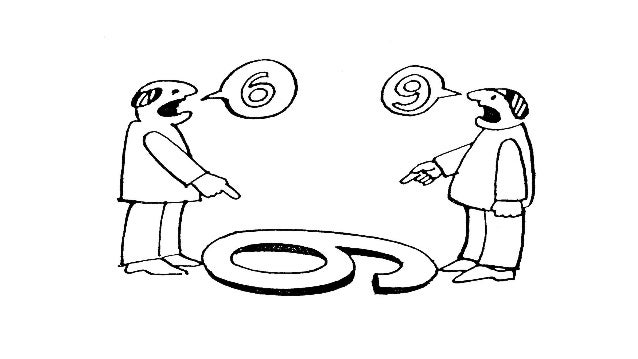
The detachment between designers and users during the majority of projects is potentially damaging to user experience. The ability to empathise with users is an essential part of a UX designers make-up. Unfortunately, it would appear that detachment isn't the only reason much of designers' work fails to take the intended users, their needs, and feelings, into account, as research suggests that those working in a technological field, specifically males, have low empathy.
William Hudson (2009), in Reduced Empathizing Skills Increase Challenges for User-Centred Design, states,
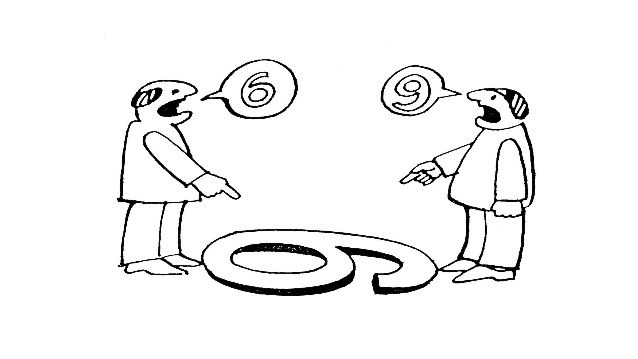
"User-Centred Design is surprisingly difficult. One of the biggest issues, certainly for those with no HCI or usability experience, is a lack of appreciation of how users think and work.Their assumption is that users will approach and solve problems in the same way as the designers and developers of an interactive solution".
Hudson referred to this designer bias as the self-as-user outlook.
Whitney Quesenbery defines empathy as,
...the ability to understand and identify with another person's context, emotions, goals, and motivations".
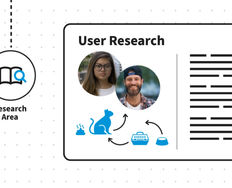
In the context of design, empathy isn't necessarily feeling how people feel or stepping into their shoes to adopt their lifestyle and everything that comes with it. Empathy in design is simply taking the time to carry out user research, absorbing it into your thinking to guide your decision-making processes
Author/Copyright holder: Unknown. Copyright terms and licence: Unknown Img source
In an interview with UX Matters, Bas Raijmakers, Daniel Szuc, Geke van DIjk, and Jo Wong state that designers can use a number of exercises to increase their empathic understanding of users and the conditions in which they operate. The aim of these exercises should be to
- increase open-mindedness,
- reduce bias,
- collaborate with research participants, and
- accept what you see and hear
Empathic design is the process of developing an understanding of users, not just their overt needs, but of their constraints, practices, problem-solving approaches, contexts, and the interrelations between people as a whole. The aim of researching users in such a way is to help designers identify their users' underlying needs (i.e. those that are not instantly apparent or accessible through questioning alone). Once we have established these needs we can develop new problem-solving approaches that accommodate the users' constraints and exploit (in a nice way) their capabilities. The ultimate aim is to improve the user's or consumer's experience by tailoring the product to their explicit, implicit, and latent needs.
The Empathic Design Process
Author/Copyright holder: User Testing. Copyright terms and licence: All rights reserved Img source
In Spark Innovation Through Empathic Design, Dorothy Leonard and Jeffrey F. Rayport outlined the empathic design process as follows:
Step One: Observation - Within this step we must decide who should be observed, who should do the observing, and what behaviour should be observed.
Step Two: Capturing Data - Observers typically use audio and video recording equipment during the observation process to capture data, which can be assessed at a later date to identify any previously unidentified actions, behaviours, methods, approaches, problems, and alternative solutions. During this phase, observers will still try to interpret users' and consumers' actions using questions, such as "Why did you do that?", and "What problem did the user just come up against?". These questions would be broad and directed at gaining insights into how the user interacts with a product and how the product then influences the user in turn. The observers will take notes and keep reports of what happened and when, the problems users encountered, and a host other pieces of information and insights. (Take a look at the link to Leonard and Rayport's article provided above - page 111 - for the distinction between inquiry and observation)
Step Three: Reflection and Analysis - Data collected from step two will be brought together from all observers and analysed. New insights should be gained during this phase, as the team members discuss the things they had observed and recorded. It is at this point that the team will attempt to identify and understand all their users'/consumers'/customers' problems and needs.
Step Four: Brainstorming for Solutions - Brainstorming is an exercise in developing strategies and problem solutions to implement in a design. It is typically an open forum discussion lead by one particular member of the team who will write up the thoughts and ideas of others, whilst trying to keep the process flowing. Brainstorming may be a free and open experience, but the conditions must support the process, which takes some preparation. The brainstorming room must have sufficient space for people to feel comfortable, but the atmosphere shouldn't be sterile and members shouldn't have to shout to be heard. As mentioned, you should designate someone to take down contributors' ideas and draw/write them onto the whiteboard/wall/poster. They should also stimulate the idea generation process; for example, by establishing the motivating phrases or 'How might we...?' questions central to the brainstorming chart. If the process begins to slow down and people seem to be running into a dead-end, impose constraints, such as "what if there was no top-level navigation bar?" or "How might you go about the task if you were 8 years old?". Alternatively, you might want to set up targets, such as filling the brainstorming sheet within ten minutes.
Step Five: Developing Prototypes of Possible Solutions - The prototyping process involves bringing ideas from the brainstorming sessions to life. Problem solutions are put to the test. According to Leonard and Rayport, there are three distinctive reasons for conducting prototype testing in an empathic design approach: clarification of the core concept of the product for the development team, enabling the team to share the current design with those who do not work in the functions covered by that particular team, and the potential for further improvements once tested with real consumers and following discussions with the target users.
In Summary
The need for empathy in design is becoming an increasingly important factor. With most technologies now used by a whole range of people, from different cultures, with a variety of physical, mental, and situational constraints, we must develop an understanding of how we can design products that appeal to, support and enable people. We cannot appreciate what it means to be each and every person that uses a product, but through the use of an empathic design approach we can come to understand how people behave, feel, and tackle the problems in their lives with the use of our products.
For a number of examples of Empathic Design check out the Wiki entry on Empathic Design
Header Image: Author/Copyright holder: Unknown. Copyright terms and licence: Unknown. Img