Tips for Improving Your Own User Experience as a UX Manager

• 9 min read

405 Shares

One of the most challenging things for a User Experience Manager is getting the rest of the organization to buy into your ideas. Many a UX project has run ashore on the rocks of organizational indifference. You can do all the research and all the design work you like; if the people you work with don’t want to hear what you have to say – the end result is that your work won’t gain the traction that you need it to.

The trouble is that until your work is made use of, the vast majority of organizations tend to make decisions on a semi-democratic basis. That means if you can’t convince the development team they’re going to keep heading in the direction that they want to regardless of your input. So how do you convince the people around you to use the work that you create?

The simple answer is to bring some of your UX skills to bear on creating a better user experience for those who should be using your work.

Examine Your Internal Users in the Same Way as Your External Users

You wouldn’t dream of conducting your work without the users of your product being thoroughly involved. Yet, when it comes to the people that will use our work… many of us forget to involve them in a similar way.

You need to conduct some research and study the people around you. Who are they? What are their areas of responsibility? What do they need to achieve to meet their own objectives? What do they represent? What are their communication styles?

If you can appreciate the motivations of different decision makers and influencers; you can start to develop your work so that it involves them in a way that they can relate to. They aren’t going to support someone who arrives with a cheery grin on the day of the decision making process and then tells them what’s needed. That’s a recipe for disaster. Your work with your colleagues and stakeholders must begin much earlier than that.



Then Learn to Empathize With those Internal Users

You will already have empathy in spades for the users of the product. It’s what makes you a great UX professional. You spend a lot of time learning to walk a mile in their shoes so that you can accurately reflect their needs and their concerns. The same pattern of behaviour is required within the organization.

If you don’t care about what the developers think; why would they care about what you think? If you can get to grips with their day-to-day grind and learn to harness their needs, wants, concerns, etc. to work together then you’re heading in the right direction.

You don’t need to spend as much time evangelising the benefits of user experience design if people feel that you’re part of their team. If you work alongside them and try to incorporate their needs in the work you do – they’ll be only too happy to support you. It’s a natural human reaction to dismiss those who try to tell us what to do and to promote those who work in partnership with us.

Sit down with the people who matter to your ability to achieve your objectives and learn from them. Listen to them, empathize and move forward with them.


Think Long-Term Partnerships

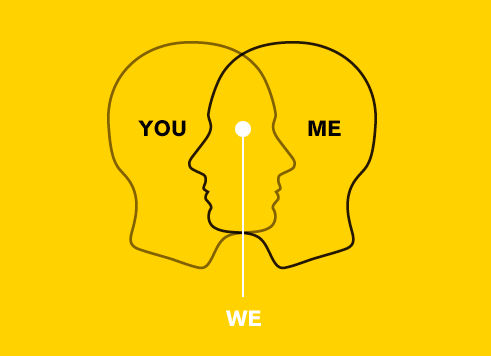
It’s unlikely that you will win the battle in the first engagement. It takes time for people to trust and to value each other. You’re not on a tight schedule; you may not win every argument in your first project but you will certainly, over time, develop the kind of relationships where you can begin to rely on the people around you for support.

Again, this is the same kind of relationship that you will be looking to develop with your users. UX professionals don’t expect an instant understanding and mutual compatibility with users – they work very hard to establish that kind of understanding. You have to do the same within the team.

You need to regularly re-engage with the people around you, you need to understand when their goals or objectives move (as they are prone to do in corporate life). You need to be sensitive to when new people join the team or older established folks leave. These minor changes, from an external perspective, can wreak havoc on your plans if you’re not prepared for them.

You should also consider when to give ground. UX work can often feel like a daily struggle against everyone else in the building. If you fight every corner and never concede an inch of territory – in the long run nobody will want to deal with you. The art of compromise is very much a necessary part of building long-term partnerships.



Don’t Waste an Opportunity to Educate People About UX

One of the other reasons that your work meets resistance is that your colleagues may not really understand what it is that you do. While you’re out studying your team and empathizing with them – you can also spend a little time explaining what it is that you do.

Don’t talk down to people – you’re trying to educate not indoctrinate. You might want to consider walking people through the language of what you do; unfamiliar terms make us all feel a little foolish and they can turn people off without you realizing it.

Then you might want to explain the research that you do, how it’s conducted, why it’s conducted, etc. and the key objectives that you focus on.

Finally, you might also want to help people assess the quality of your work. How will they know if you’ve done a good job? It can be scary to hand over judgment of your work to others but ultimately, unless they judge your work fit-for-purpose, it’s always going to be ignored.



Summary

The key to getting buy in for user research is simply to treat your internal team as users and bring all the skills you use with external users to develop long lasting mutually beneficial relationships.

Image Source:

The National Skills Academy (link to image), Govloop (link to image), Peak Focus (link to image), CorpCo (link to image), John Ezra Dew (link to image)



Topics in This Article

Learn More in This Course:

AI for Designers

11 days
13 % booked
View Course

What You Should Read Next

  • Read full article
    Apple’s Product Development Process – Inside the World’s Greatest Design Organization - Article hero image
    Interaction Design Foundation logo

    Apple’s Product Development Process – Inside the World’s Greatest Design Organization

    Apple’s Product Development Process may be one of the most successful design processes ever implemented. With a valuation that exceeds $2 trillion, there’s a lot that designers can learn from Apple and introduce into their own design environments.Apple is a notoriously secretive business. In Steve J

    Social shares
    1.4k
    Published
    Read Article
  • Read full article
    The Factors of Success for New Product Development: An Overview - Article hero image
    Interaction Design Foundation logo

    The Factors of Success for New Product Development: An Overview

    Bringing a successful product to market is a team effort. While designers are responsible for usability, utility and the rest of the user experience there are many factors which contribute to the success or failure of new product development and many of these are outside of the designer’s direct con

    Social shares
    1.1k
    Published
    Read Article
  • Read full article
    7 Key UX Topics that Every Manager Should Understand - Article hero image
    Interaction Design Foundation logo

    7 Key UX Topics that Every Manager Should Understand

    The new entrant into UX in an established business often has a tough time of things. People understand what UX stands for (some of the time at least), they may even have an idea of why it is important but they often have no real understanding of what is required to achieve a good UX.This lack of und

    Social shares
    792
    Published
    Read Article
  • Read full article
    How to Handle Non-Disclosure Agreements (NDAs) When You Write Your UX Case Study - Article hero image
    Interaction Design Foundation logo

    How to Handle Non-Disclosure Agreements (NDAs) When You Write Your UX Case Study

    Most designers are familiar with non-disclosure agreements. Usually, your employer asks you to sign such an agreement to prevent you from revealing confidential information. But when you write your UX case studies, your NDAs suddenly seem like an obstacle. How should you write about your design proj

    Social shares
    786
    Published
    Read Article
  • Read full article
    What Does a UX Strategist Do? - Article hero image
    Interaction Design Foundation logo

    What Does a UX Strategist Do?

    Question time: Have you gained substantial experience in UX (user experience) design—as in, to the point where you’re considering a career change?If your answer is YES and conducting in-depth research makes you feel more content—along with helping brands “nail” it in the marketplace with their produ

    Social shares
    704
    Published
    Read Article
  • Read full article
    Common UX Research Interview Questions - Article hero image
    Interaction Design Foundation logo

    Common UX Research Interview Questions

    If you’ve got an interview invitation for the role of UX (user experience) researcher at the organization you want to get into, well done! Your UX portfolio—one major part of why they’re interested in you—may have done the trick, but what about the UX research interview questions the hirers are goin

    Social shares
    699
    Published
    Read Article
  • Read full article
    Level Up Your LinkedIn: Craft a UX Design Profile That Attracts Clients and Top Recruiters - Article hero image
    Interaction Design Foundation logo

    Level Up Your LinkedIn: Craft a UX Design Profile That Attracts Clients and Top Recruiters

    In a competitive job market, if you’re a UX (user experience) designer who’s seeking career advancement, you need to build a strong online presence. LinkedIn—the world’s largest professional networking platform—stands out as one of the most powerful tools you can use to attract new clients or top re

    Social shares
    627
    Published
    Read Article
  • Read full article
    5 Proven Tactics for Evangelizing UX - Article hero image
    Interaction Design Foundation logo

    5 Proven Tactics for Evangelizing UX

    If you work in an area related to UX, you’ll probably agree that good UX has a huge business value. Good UX helps you create the most relevant products and services for your customers and ensure that they are a joy to use. But if you have any practical experience of working with UX in organizations

    Social shares
    612
    Published
    Read Article
  • Read full article
    What’s the point of doing UX? - Article hero image
    Interaction Design Foundation logo

    What’s the point of doing UX?

    From a business perspective, differentiation is one of the primary reasons for investing in UX. If your products and services stand out from those of your competitors, they’re much more likely to be a market success – and having the most compelling and relevant user experiences is a great way to sta

    Social shares
    551
    Published
    Read Article
  • Read full article
    How to Empower UX teams to Boost Innovation and ROI - Article hero image
    Interaction Design Foundation logo

    How to Empower UX teams to Boost Innovation and ROI

    As a UX designer, you want to make sure that your team is doing everything possible to boost your organization’s innovation and the return on investment (ROI) of your work. After all, the better the ROI on your work, the more resources you will have to create awesome user experiences, which – again

    Social shares
    519
    Published
    Read Article

Top Articles

Top Topic Definitions

Feel Stuck?
Want Better Job Options?

AI is replacing jobs everywhere, yet design jobs are booming with a projected 45% job growth. With design skills, you can create products and services people love. More love means more impact and greater salary potential.

At IxDF, we help you from your first course to your next job, all in one place.

See How Design Skills Turn Into Job Options
Privacy Settings
By using this site, you accept our Cookie Policy and Terms of Use.
Customize
Accept all

Be the One Who Inspires

People remember who shares great ideas.

Share on:

Academic Credibility — On Autopilot

Don't waste time googling citation formats. Just copy, paste and look legit in seconds.

Feel Stuck? Want Freedom?

Join 326,035+ designers who get one powerful email each week. Learn to design a life you love.

Next email in
1
day
10
hrs
12
mins
9
secs

Free forever. No spam. Unsubscribe anytime.