5 Proven Tactics for Evangelizing UX

by Frank Spillers and Ditte Mortensen • 20 min read

612 Shares

If you work in an area related to UX, you’ll probably agree that good UX has a huge business value. Good UX helps you create the most relevant products and services for your customers and ensure that they are a joy to use. But if you have any practical experience of working with UX in organizations or as a consultant, you might also have found that getting resources to do UX right and incorporating UX into your company culture can be an uphill battle. Let’s take a look at some practical tactics that you can use right away to evangelize UX inside an organization.

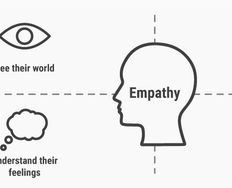
Great UX is about more than designing beautiful and usable products, services and interfaces. If you want your UX work to have a real impact, it’s crucial that you ensure that you and the organizations you work with have a proper understanding of your users – their needs, motivations and everyday lives. If you can create empathy with your users, you’ll find getting the entire organization engaged in solving the users’ pain points far easier. In that sense, communication is as much a part of being a UX designer as designing interfaces. In this video, we will share 5 tried-and-tested tactics for making your UX work visible and engaging to the rest of your organization.

Transcript

This video provides concrete advice for actions you can take right away to evangelize your UX work. If you want to do more, you can choose from many frameworks and work processes to help ensure you’re your entire organization works in a user-centered process. Design thinking and value proposition design are examples of user-centered processes that have good and detailed advice for how to create user-centric organizations that consider user needs at every turn.

The Takeaway

Communication and making your UX work visible are a vital part of succeeding with UX. Here, we offer 5 tactics for evangelizing your UX work:

  • Fast and Rapid Deliverables

  • Listening Posts

  • Tangible Data

  • Cross-company Communication

  • Scorecards.

References and Where to Learn More

You can learn more about design thinking in IxDF’s “Design Thinking: The Ultimate Guide” course.

Alexander Osterwalder, Yves Pigneur, Greg Bernada, Alan Smith: Value Proposition Design. John Wiley & Sons, 2014

Learn More in This Course:

AI for Designers

10 days
12 % booked
View Course

What You Should Read Next

  • Read full article
    What is Design Thinking and Why Is It So Popular? - Article hero image
    Interaction Design Foundation logo

    What is Design Thinking and Why Is It So Popular?

    Design Thinking is not an exclusive property of designers—all great innovators in literature, art, music, science, engineering, and business have practiced it. So, why call it Design Thinking? What’s special about Design Thinking is that designers’ work processes can help us systematically extract,

    Social shares
    1.6k
    Published
    Read Article
  • Read full article
    Personas – A Simple Introduction - Article hero image
    Interaction Design Foundation logo

    Personas – A Simple Introduction

    Personas are fictional characters, which you create based upon your research to represent the different user types that might use your service, product, site, or brand in a similar way. Creating personas will help you understand your users’ needs, experiences, behaviors and goals. Creating personas

    Social shares
    1.6k
    Published
    Read Article
  • Read full article
    Apple’s Product Development Process – Inside the World’s Greatest Design Organization - Article hero image
    Interaction Design Foundation logo

    Apple’s Product Development Process – Inside the World’s Greatest Design Organization

    Apple’s Product Development Process may be one of the most successful design processes ever implemented. With a valuation that exceeds $2 trillion, there’s a lot that designers can learn from Apple and introduce into their own design environments.Apple is a notoriously secretive business. In Steve J

    Social shares
    1.4k
    Published
    Read Article
  • Read full article
    Stage 2 in the Design Thinking Process: Define the Problem and Interpret the Results - Article hero image
    Interaction Design Foundation logo

    Stage 2 in the Design Thinking Process: Define the Problem and Interpret the Results

    An integral part of the Design Thinking process is the definition of a meaningful and actionable problem statement, which the design thinker will focus on solving. This is perhaps the most challenging part of the Design Thinking process, as the definition of a problem (also called a design challenge

    Social shares
    1.4k
    Published
    Read Article
  • Read full article
    What is Ideation – and How to Prepare for Ideation Sessions - Article hero image
    Interaction Design Foundation logo

    What is Ideation – and How to Prepare for Ideation Sessions

    Ideation is the process where you generate ideas and solutions through sessions such as Sketching, Prototyping, Brainstorming, Cheatstorming, Brainwriting, Worst Possible Idea, and a wealth of other ideation techniques. Ideation is also the third stage in the Design Thinking process. Although many p

    Social shares
    1.4k
    Published
    Read Article
  • Read full article
    Empathy Map – Why and How to Use It - Article hero image
    Interaction Design Foundation logo

    Empathy Map – Why and How to Use It

    Here’s an interesting fact you may—or may not—know: users are more likely to choose, buy, and use products that meet their needs than products that just meet their wants. And an Empathy map will help you understand your user’s needs while you develop a deeper understanding of the persons you’re desi

    Social shares
    1.4k
    Published
    Read Article
  • Read full article
    Affinity Diagrams: How to Cluster Your Ideas and Reveal Insights - Article hero image
    Interaction Design Foundation logo

    Affinity Diagrams: How to Cluster Your Ideas and Reveal Insights

    Affinity diagrams are a great method to use when you want to make sense of a large volume of mixed information and data—facts, ethnographic research, ideas from brainstorms, user opinions, user needs, insights and design issues, just to name a few! Affinity diagrams require you to cluster informatio

    Social shares
    1.3k
    Published
    Read Article
  • Read full article
    Stage 4 in the Design Thinking Process: Prototype - Article hero image
    Interaction Design Foundation logo

    Stage 4 in the Design Thinking Process: Prototype

    One of the best ways to gain insights in a Design Thinking process is to carry out some form of prototyping. This method involves producing an early, inexpensive, and scaled down version of the product in order to reveal any problems with the current design. Prototyping offers designers the opportun

    Social shares
    1.3k
    Published
    Read Article
  • Read full article
    The History of Design Thinking - Article hero image
    Interaction Design Foundation logo

    The History of Design Thinking

    We need to appreciate the roots and origins of a concept to truly understand it—we need to know how it came to be. Let’s take a look at how design thinking emerged from an exploration of theory and practice to become one of the most effective ways to address the human, technological and strategic in

    Social shares
    1.3k
    Published
    Read Article
  • Read full article
    Stage 1 in the Design Thinking Process: Empathise with Your Users - Article hero image
    Interaction Design Foundation logo

    Stage 1 in the Design Thinking Process: Empathise with Your Users

    Design Thinking cannot begin without a deeper understanding of the people you are designing for. In order to gain those insights, it is important for you as a design thinker to empathize with the people you’re designing for so that you can understand their needs, thoughts, emotions and motivations.

    Social shares
    1.3k
    Published
    Read Article

Top Articles

Top Topic Definitions

Feel Stuck?
Want Better Job Options?

AI is replacing jobs everywhere, yet design jobs are booming with a projected 45% job growth. With design skills, you can create products and services people love. More love means more impact and greater salary potential.

At IxDF, we help you from your first course to your next job, all in one place.

See How Design Skills Turn Into Job Options
Privacy Settings
By using this site, you accept our Cookie Policy and Terms of Use.
Customize
Accept all

Be the One Who Inspires

People remember who shares great ideas.

Share on:

Academic Credibility — On Autopilot

Don't waste time googling citation formats. Just copy, paste and look legit in seconds.

Feel Stuck? Want Freedom?

Join 326,491+ designers who get one powerful email each week. Learn to design a life you love.

Next email in
7
days
11
hrs
5
mins
11
secs

Free forever. No spam. Unsubscribe anytime.