Loss Aversion Theory - The Economics of Design

• 7 min read

739 Shares

If people were rational then the feelings invoked by losing something or gaining something (of equal value) ought to be the same. We should feel as pleased that our friend has just given us $100 for our birthdays as we feel bad that we have lost $100 when we forgot to take it from an ATM machine.

In reality this isn’t the case. Psychologists and behavioral economists have found that we tend to feel a loss about twice as severely as we experience a gain. Because we find loss twice as painful as we experience gain; people tend to exhibit a behavior known as loss-aversion. That is we will try to avoid a loss more than we will try to pursue a similar gain.

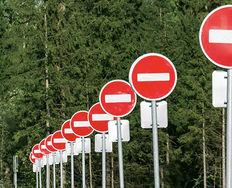
Observation of Loss Aversion

Author/Copyright holder: Nicu Buculei. Copyright terms and licence: CC BY-SA 2.0

Daniel Kahneman, the Nobel Prize winning economist speaking to Erica Goode of the New York Times, explains that he encounters loss aversion on a regular basis and that it is easy to observe.

Kahneman, offers the example of a coin-flip scenario. He asks his students; ''I'm going to toss a coin, and if it's tails, you lose $10. How much would you have to gain on winning in order for this gamble to be acceptable to you?''

He says that most people expect at least $20 for the winning outcome. That is twice as much upside as there is downside. (After all, there is a 50% chance of winning and a 50% chance of losing). He also says that if you raise the amount to $10,000 in the question; people will respond with $20,000. Loss aversion is very much a consistent phenomenon regardless of the amounts involved.

If you feel that this isn’t right; this is a pretty easy experiment to carry out in your office or with your users. It’s a theoretical discussion so you aren’t risking any money when you use it.

Loss Aversion – The Other Side of the Argument

Studies (cited at the end of this article) have been conducted in recent years which contradict the idea of loss aversion. However, in order to test loss aversion experimenters need to provide real losses and gains to test. The recent studies of loss aversion have not had the budget (unsurprisingly) to test losses and gains that are highly impacting (e.g. large losses) and have instead been constrained to relatively small losses (of $10 or less in the main). It is currently agreed that what these studies illustrate is that loss aversion is a minor effect when small losses are involved.

Author/Copyright holder: Roman Oleinik. Copyright terms and licence: CC BY-SA 3.0

Why Does Loss Aversion Matter to Designers?

Assuming that loss aversion studies are correct and for the time being this seems likely; it means that people are more likely to avoid losses rather than seek gains when the stakes are similar.

This means that you can use phrasing to stimulate the likelihood of someone taking a risk or avoiding it. We are more likely to take a risk when something is phrased as a gain rather than when it is phrased as a loss.

For example; consider this. You are about to buy a new phone in a store. The assistant explains that you can have a $10 discount on the purchase price of a phone. How do you feel about that?

In alternative example you enter the same store to buy the same phone and the assistant explains that you can avoid a $10 surcharge. How do you feel about that?

They are, in fact, the same thing but one is phrased differently to the other. You are $10 better off in either scenario.

Learning whether to offer a discount or to waive a surcharge will affect adoption of new products (in case you hadn’t guessed – discounts work better than waiving surcharges which is why marketing material usually promotes discounts). It will also affect renewal rates for subscription products and so on.

Author/Copyright holder: Cheon Fong Liew. Copyright terms and licence: CC BY-SA 2.0

The Take Away

Loss aversion is the idea that we feel more pain at losing something than we feel pleased or excited when we gain something of an equal value. It is a concept which is not without controversy but the theory is widely-accepted and you can test it for yourself. If we understand loss aversion we can phrase content within designs and indeed marketing material for our designs to focus on gains or loss avoidance. This, in turn, increases the chance that someone will take a risk on our product when making a purchasing decision.

Daniel Kahneman sums the whole principle up as; “Losses loom larger than corresponding gains.”

References

A conversation with Daniel Kahneman – Erica Goode, New York Times, 05/11/2002

Kahneman’s study of loss aversion can be found here - Tversky, A.; Kahneman, D. (1991). "Loss Aversion in Riskless Choice: A Reference Dependent Model". Quarterly Journal of Economics 106 (4): 1039–1061

Contradictory studies of loss aversion - Ert, E.; Erev, I. (2008). "The rejection of attractive gambles, loss aversion, and the lemon avoidance heuristic". Journal of Economic Psychology 29 (5): 715–723

Erev, I.; Ert, E.; Yechiam, E. (2008). "Loss aversion, diminishing sensitivity, and the effect of experience on repeated decisions". Journal of Behavioral Decision Making 21 (5): 575–597

Harinck, F.; Van Dijk, E.; Van Beest, I.; Mersmann, P. (2007). "When gains loom larger than losses: Reversed loss aversion for small amounts of money". Psychological Science 18 (12): 1099–110

Hero Image: Author/Copyright holder: Tax Credits. Copyright terms and licence: CC BY 2.0

Learn More in This Course:

AI for Designers

10 days
12 % booked
View Course

What You Should Read Next

  • Read full article
    6 Common Pitfalls in Prototyping and How to Avoid Them - Article hero image
    Interaction Design Foundation logo

    6 Common Pitfalls in Prototyping and How to Avoid Them

    Prototyping is an indispensable part of the design thinking process. However, it’s crucial to know how to prototype the right way and avoid some common pitfalls. If not, your prototyping efforts might be for nothing as your biases and inefficiencies will lead to a suboptimal design solution. Let’s l

    Social shares
    986
    Published
    Read Article
  • Read full article
    Be Afraid! The Silent Role of Fear in Decision Making - Article hero image
    Interaction Design Foundation logo

    Be Afraid! The Silent Role of Fear in Decision Making

    Fear plays such a dominant role in our lives that several businesses and products have succeeded on the back of this single emotion. Here’s a look at some of the fears that affect our decision making, how businesses and products exploit these tendencies to their advantage, and how, as a designer, yo

    Social shares
    710
    Published
    Read Article
  • Read full article
    Positive Friction: How You Can Use It to Create Better Experiences - Article hero image
    Interaction Design Foundation logo

    Positive Friction: How You Can Use It to Create Better Experiences

    While friction in UX is typically something you want to minimize, adding friction can improve the user experience and contribute to good design in many situations. Researchers at UCL define positive friction as friction that “can disrupt mindless automatic interactions, prompting moments of reflecti

    Social shares
    683
    Published
    Read Article
  • Read full article
    5 Ways to Use Behavioral Science to Create Better Products - Article hero image
    Interaction Design Foundation logo

    5 Ways to Use Behavioral Science to Create Better Products

    A myriad of fields, skills and insights come together to create the overarching discipline of user experience design. Psychology and behavioral science play a big part in UX design because understanding people, the way their minds work, what they want and don’t want, will help us create better produ

    Social shares
    634
    Published
    Read Article
  • Read full article
    Introducing Game Mechanics for Gamification - Article hero image
    Interaction Design Foundation logo

    Introducing Game Mechanics for Gamification

    Every form of design features special techniques which can take a design from “OK” to “amazing”. Gamification is no exception. Game mechanics are the vital components of gamification which transform this form of design from “adding features” to “adding fun”. Janaki Kumar and Mario Herger, in their b

    Social shares
    626
    Published
    Read Article
  • Read full article
    Endowment Effect - The Economics of Design - Article hero image
    Interaction Design Foundation logo

    Endowment Effect - The Economics of Design

    The Endowment Effect is a contradiction of the classical economic idea that people always behave rationally within an economic system. It is the surprising idea that we are prepared to pay more money to retain something that we already own than we would pay for the item if we did not own it. It is o

    Social shares
    585
    Published
    Read Article
  • Read full article
    Prospect Theory - The Economics of Design - Article hero image
    Interaction Design Foundation logo

    Prospect Theory - The Economics of Design

    Economists once assumed that every actor in an economic system would be rational. That people would calculate the value of what they had and what they could have in the future accurately and that they would make their decisions based on that calculation. Unfortunately, in practice this was rarely th

    Social shares
    581
    Published
    Read Article
  • Read full article
    Loss Aversion – Really, What’s the Worst that Can Happen? - Article hero image
    Interaction Design Foundation logo

    Loss Aversion – Really, What’s the Worst that Can Happen?

    There’s a cognitive bias that makes us sadder to lose something than it makes us happy to gain it. This causes us to be afraid of loss – even when that fear is illogical. It prevents us from taking small risks to make big gains, for example. Overcoming loss aversion can help you build better product

    Social shares
    564
    Published
    Read Article
  • Read full article
    Fear of Loss Provides Motivation to Buy - Article hero image
    Interaction Design Foundation logo

    Fear of Loss Provides Motivation to Buy

    We often talk about creating positive emotions through design; we look to make clients happy and users comfortable, etc. but rarely do we talk about making them afraid. Of course, unless you’re selling horror movies, you probably won’t want to terrify your clients; however, there is a good argument

    Social shares
    471
    Published
    Read Article

Top Articles

Top Topic Definitions

Feel Stuck?
Want Better Job Options?

AI is replacing jobs everywhere, yet design jobs are booming with a projected 45% job growth. With design skills, you can create products and services people love. More love means more impact and greater salary potential.

At IxDF, we help you from your first course to your next job, all in one place.

See How Design Skills Turn Into Job Options
Privacy Settings
By using this site, you accept our Cookie Policy and Terms of Use.
Customize
Accept all

Be the One Who Inspires

People remember who shares great ideas.

Share on:

Academic Credibility — On Autopilot

Don't waste time googling citation formats. Just copy, paste and look legit in seconds.

Feel Stuck? Want Freedom?

Join 326,432+ designers who get one powerful email each week. Learn to design a life you love.

Next email in
7
days
8
hrs
50
mins
33
secs

Free forever. No spam. Unsubscribe anytime.