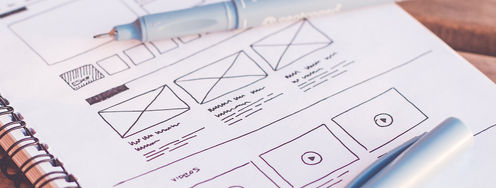
Hands interact with a smartphone displaying a bike rental app map, surrounded by printed interface screens

5 Skills Necessary to Get the Most Out of Your User Testing Sessions

by IxDF Instructor • • 5 min read

516 Shares
Save

User testing requires a number of different skills. Before the testing even begins you need to identify and recruit an appropriate sample of test users that accurately represent your eventual audience or market. You will need to establish a set of tasks that get to the heart of the issues you want to investigate. And you will need to prepare the documentation and recording equipment, so the whole process runs smoothly and the results are as accurate as possible.

Once user testing has started, you will need a number of other skills to help you answer the important questions specific to your current design. Five of the most important skills are organisation, observation, empathy, impartiality, and report-taking.

Organisation – First and foremost you need to be organised. Unless the session is carefully considered and prepared, the test users actions and behaviour might be more indicative of the nature of the session. If a test user is given confusing instructions or their tasks are arranged in a random fashion, they are inclined to act in ways that do not represent how they would in the real-world.


Observation – The people invited in to watch the test users must observe them closely. Without the ability to observe and assess what takes place in these sessions, you will miss some of the more subtle and sometimes most important information. Users might not be comfortable stating exactly how they feel about a particular task or feature of the design (especially if they hate it), so the designers or those hired to conduct the test must watch their facial expressions and other less obvious behaviours.

Empathy – The test users may be right in front of you and you might see their behaviour first-hand, but unless you try to understand why they behave in the ways they do, the results will have little meaning. It is your job to translate the user’s actions, attitudes, and thoughts into usable information. So you need to empathise and try to understand the user’s motivations and what it is about the prototype that induces certain behaviours and opinions.


Impartiality – It is the user testing team’s responsibility to identify how users perform on a number of tasks, observe and record how they behave, and determine how they feel about individual aspects and the design as a whole, but it is not their job to find specific answers. They must ask questions and try to get as much information from the test users as possible, but they must never influence how the users answer these questions. It is important to avoid leading questions and limit the number of times the team have to direct or instruct the users. Trying to stick to a concrete schedule and follow a script are two ways of limiting the effect of variation on testing results.

Report-taking – Your notes will be used after the testing sessions have finished by you, and possibly other people in the team. It is important that these notes make sense and tell a story of what happened in each of the sessions. If you just scribble a few notes and fail to link them together, the insights you gained at the time will probably get lost in translation.


Christine Perfetti (2004) Honing Your Usability Testing Skills: An Interview with Ginny Redish

Rolf Molich (CHI Tutorial, 2002) Improving Your Skills in Usability Testing

Header Image: Author/Copyright holder: Mofluid. Copyright terms and licence: All rights reserved. Img

Image Source:

Board of Innovation (link to image)

No Handcuffs (link to image)

Omnes Antithesis (link to image)

Eugenio Berti (link to image)


Learn More in This Course:

Learn Design and AI From the Best

Get one powerful email each week, like 312,428 others.

Next email in:

What You Should Read Next

  • Read full article
    The Relationship Between Visual Design and User Experience Design - Article hero image

    The Relationship Between Visual Design and User Experience Design

    A common perception about UX designers is that we are artists who can create beautiful interfaces from a blank canvas. While the aesthetics of products are important, visual design is only one aspect of the design process – in which team members with different skillsets and expertise collaborate

    Social shares
    802
    Published
    Read Article
  • Read full article
    You’re Not Bad at Presenting; You Just Haven’t Mastered the Right Way (Yet) - Article hero image

    You’re Not Bad at Presenting; You Just Haven’t Mastered the Right Way (Yet)

    Ever walked out of a presentation thinking, “That could’ve gone so much better, maybe I’m just not a presenter”? You’re not alone. And you’re not the problem. You simply haven’t been shown an easy, clear, repeatable way to prepare, deliver and follow up.Presenting is not an innate talent; it’s a ski

    Social shares
    359
    Published
    Read Article
  • Read full article
    The Power of Mapping - Article hero image

    The Power of Mapping

    The map is one of the earliest and most important human inventions. It helps us to navigate our complex world. Maps simplify complex spaces, create shared understanding, reveal hidden insights and help us coordinate action. Around 25,000 B.C. a person carved the earliest known map into a mammoth tus

    Social shares
    588
    Published
    Read Article
  • Read full article
    The Past, Present, and Future of Virtual Reality - Article hero image

    The Past, Present, and Future of Virtual Reality

    Virtual Reality (VR) has come a long way since its humble beginnings—with stereoscopic images back in the 1800s—“astronomically” far, in fact! Twenty-first century VR catapults users into immersive and interactive 3D environments, ones that let them experience something far beyond what they find in

    Social shares
    647
    Published
    Read Article
  • Read full article
    Turn Your Non-Design Experience into Design Portfolio Gold - Article hero image

    Turn Your Non-Design Experience into Design Portfolio Gold

    Have you ever wondered how to transition into UX and product design from a different career background without feeling insecure? Let's uncover strategies to confidently bridge the gap and showcase your skills to prospective employers with confidence and clarity.In this video, Morgane Peng, Desi

    Social shares
    508
    Published
    Read Article
  • Read full article
    Structure First: The Inverted Pyramid and Visual Organization - Article hero image

    Structure First: The Inverted Pyramid and Visual Organization

    This clip examines two principles that work hand in hand to make web content readable: the inverted pyramid approach to information order and the use of visual structure to help users scan efficiently. William Hudson, UX Strategist and Founder of Syntagm Ltd, describes the theoretical basis and prac

    Social shares
    206
    Published
    Read Article
  • Read full article
    What Is Card Sorting? - Article hero image

    What Is Card Sorting?

    In this video, William Hudson, UX Strategist and Founder of Syntagm Ltd, introduces card sorting: what it is, where it comes from, and the broad range of problems it can help solve.Card sorting is a research technique in which participants organize a set of items into groups that make sense to them,

    Social shares
    173
    Published
    Read Article
  • Read full article
    Design Accessible Navigation for Keyboards and Screen Readers - Article hero image

    Design Accessible Navigation for Keyboards and Screen Readers

    Accessibility is often treated as a finishing touch, but for navigation, it belongs at the foundation. Menus are how users reach everything else on a site, so a menu that works only with a mouse quietly shuts out anyone who depends on a keyboard, a screen reader, or another form of assistive technol

    Social shares
    173
    Published
    Read Article
  • Read full article
    The Scent of Information: Give Users the Confidence to Click - Article hero image

    The Scent of Information: Give Users the Confidence to Click

    William Hudson, UX Strategist and Founder of Syntagm Ltd, introduces the scent of information as a model for understanding how users navigate toward their goals, and sets out the principles for writing navigation links that strengthen that scent.Information Foraging and the Scent of InformationThe s

    Social shares
    173
    Published
    Read Article
  • Read full article
    4 UI Design Tips Every Designer Needs to Know - Article hero image

    4 UI Design Tips Every Designer Needs to Know

    User interface (UI) design can make or break any digital product. A user often won’t even notice when they interact with a great UI. They feel the visual appeal and simply trust it. On the contrary, a bad UI design can prevent the user from interacting with a product intuitively or at all and lead t

    Social shares
    646
    Published
    Read Article

Top Articles

Top Topic Definitions

39% of Today's Skills Will Change by 2030

The World Economic Forum expects 39% of today's skills to be transformed or become outdated by 2030.

The good news is that jobs in UX / UI design and AI are among the fastest-growing professions globally.

Build Skills That Keep You Relevant

Privacy Settings

By using this site, you accept our Cookie Policy and Terms of Use.
Customize
Accept all

Be the One Who Inspires

People remember who shares great ideas.

Share on:

Academic Credibility — On Autopilot

Don't waste time googling citation formats. Just copy, paste and look legit in seconds.

Learn Design and AI From the Best

Get one powerful email each week, like 312,428 others.

Next email in: