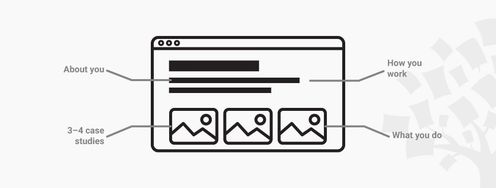
Your portfolio is in many ways your most important asset as a UX designer. That’s because it helps you in 3 powerful ways: it helps you get an interview for a job; it helps you attract clients for freelance projects; finally, and perhaps surprisingly, it helps you stay focused on your UX career.
It’s a significant task to create and maintain your UX design portfolio. After all, you have to make it so enticing that a recruiter will be interested in scheduling an interview with you. This means you have to carefully craft your case studies in order to highlight your skills, thought processes and results. Because of this, you might feel tempted to put off the hours and even days you need to create or update your portfolio. However, doing that would be a mistake! It’s my goal to help you understand just how important your UX design portfolio is, so you’ll feel the urge to start crafting or updating your portfolio right after you’ve finished reading.
Let’s take a good look at the 3 solid reasons why you should have an updated UX design portfolio which reflects where you are in your career path.
Your Portfolio Gets You the (First) Interview
You should definitely create a UX design portfolio if you’re looking to get your first UX job. This is because most recruiters evaluate you based on your portfolio. They’ll skim through your portfolio to get a rough idea of you as a UX designer and whether you fit the position they’re looking to fill.
To put it bluntly, if you apply for a UX position without a portfolio, your chances of getting the job is close to zero. It’s like if you arrive at the airport without your passport: you can bet that you’ll not get on your flight.
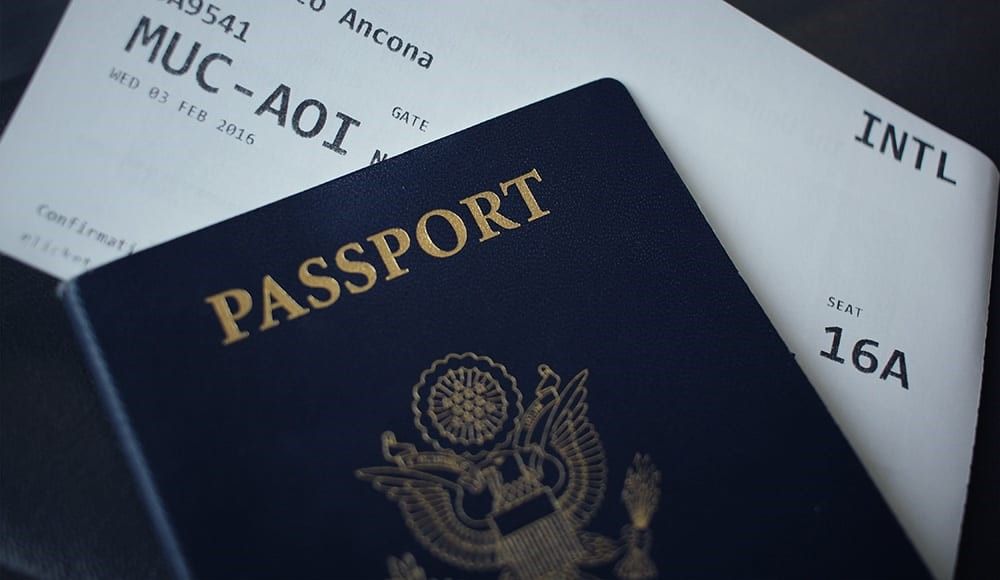
Applying for a UX job without a portfolio is like trying to board a plane without bringing your passport. Author/Copyright holder: Nicole Harrington. Copyright terms and license: Unsplash License.
When you’re an experienced designer, your portfolio will also get you the second, third… and tenth interview. If you already have a job in UX, you’ve most likely improved your skills in your current position. If you want to advance your career and show the new skills you possess, then it’s essential that you include some of your new case studies in your portfolio. If you have a lot of case studies to choose from, please make sure to include the ones which reflect the skills needed in the position you apply for. If you spend those extra hours updating your portfolio, then you’ll be first in line to get invited to the job interview and a potential career advancement compared with the passive UX designers who rely on their outdated portfolio.
Your Portfolio Gets You Freelance Projects
Your portfolio is not only instrumental in your job application process; it also opens you up to take on freelance side projects. If you have a great online UX design portfolio, then it serves as an advertisement for your skills and processes, and potential clients may find you through your portfolio.
Your online portfolio serves as an advertisement to potential clients. Author/copyright holder: Kate Trysh. Edited by Teo Yu Siang. Copyright terms and license: Unsplash License.
Freelance projects are relevant to you whether you’re new to UX or already a practicing UX designer. You see, if you’re new to UX and want to get into the field, you can take on freelance projects to practice and build up your skills. The freelance projects may also help you create strong material from which you can create more or higher-quality case studies for your portfolio.
On the other hand, if you’re already a UX designer, freelance projects don’t only give you other sources of income—they provide learning experiences outside your current job, too. Many times, you’ll find that external projects will give you a fresh perspective on design that you can bring back to your main job. Of course, you need to make sure that you’re allowed to do freelance work according to your current contract!
Your Portfolio Forces You to Stay Relevant in Your Career
You might not be expecting this, but your portfolio will play an important role in making sure you stay relevant in your UX career, months and even years after you’ve gotten your job.
How could that be?
Well, it’s good practice to maintain your UX design portfolio every year to keep it up-to-date. Whenever you do so, you’re forced to evaluate your recent achievements. That’s because you’ll have to think about your past work and select the best and most interesting examples of it. This provides a great opportunity for you to reflect on your career achievements thus far.
When you maintain your UX design portfolio, you’ll ask yourself:
“What work processes and results am I most proud of?”
“What kinds of projects would I like to take on in the future? Following up on that, have I been doing the right kinds of work that will lead me towards where I want to be in the future?”
“Have I done anything in the past year that’s worthy of being featured in my portfolio? Following up on that, what could I start doing right now that will lead me towards where I want to be in the future?”
These questions can actually lead you to sharpen your focus on your career path and help you stay on track.
If you find your answers to the questions unsatisfactory, you might be stagnating or going down a different path than the one you want. Take it as a prompt. Ask yourself if it’s possible to shift the kinds of work and tasks you do in your job—or if you should seek another role or company altogether.
If you’re satisfied in your job but want to grow your skills further and deeper, one easy way to solve this issue is to start taking solid courses in the areas of work where you want to advance your skills and knowledge. If you spend just 15 minutes taking a course each day, you’ll slowly and steadily evolve as a UX designer. Furthermore, you’ll have the foundation to create new case studies to reflect your new skills if you choose one of our courses which also helps you build a case study for your portfolio step by step as you learn.

Your portfolio can act like a compass, to point you in the right direction in your UX career. Author/copyright holder: Aron Visuals. Copyright terms and license: Unsplash License.
As you can see, when you maintain your UX design portfolio even after becoming a UX designer, you can gain a staggering degree of clarity regarding your career aspirations and path.
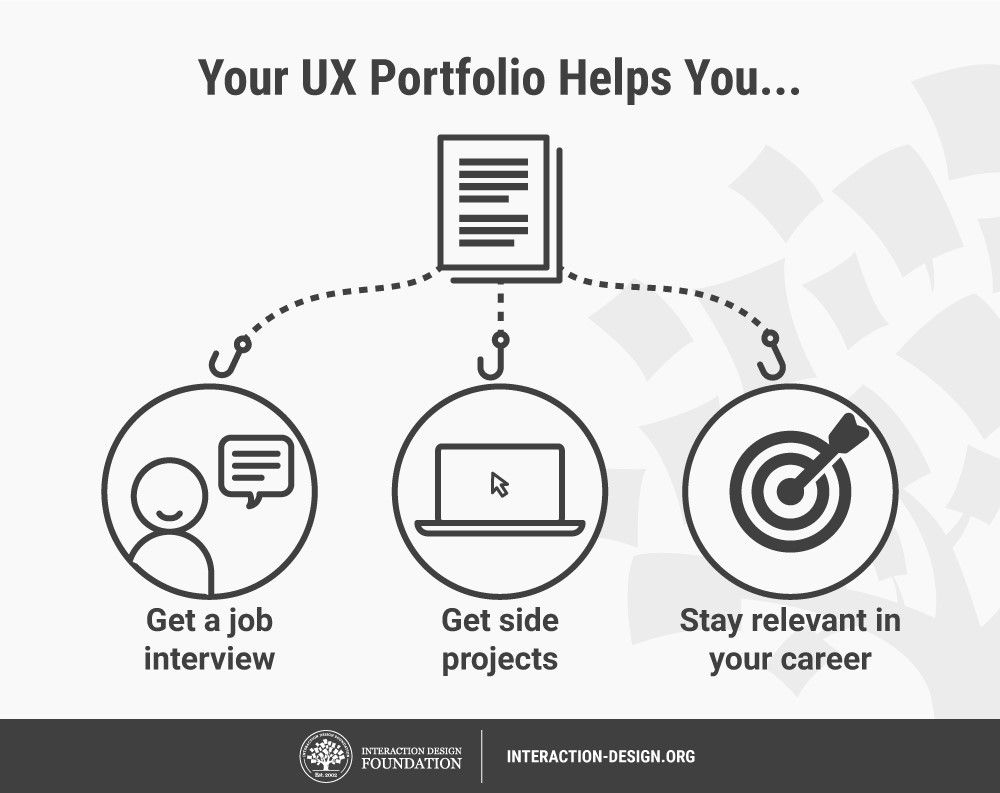
Your UX design portfolio does more than get you your first interview—that’s why you should work on it sooner rather than later! Author/Copyright holder: Teo Yu Siang and the Interaction Design Foundation. Copyright terms and license: CC BY-NC-SA 3.0
The Take Away
There are 3 extremely good reasons you should have a UX design portfolio:
When you’re just starting out in UX, you’ll need it to get your first job interviews. And when you want to advance as a UX designer, it’s essential that your portfolio reflects your skills and work processes.
Whether you’re new to UX or already a UX designer, you can use your portfolio to get freelance projects that help you gain new skills and experiences.
After you’ve become a UX designer, when you maintain your portfolio you force yourself to evaluate your performance and ask tough career questions. That’s why your portfolio will essentially help you take action and, for instance, help you sign up for new courses and/or ask for new and more exciting UX projects at work.
When you see it this way, your UX design portfolio is one of your most important assets in your UX career. It’s not only a passport to the UX world, but also an advertisement for potential clients and a compass to stay focused on your career aspirations. And since it takes time and effort to craft the right portfolio, you should wait no longer and start now!
References and Where to Learn More
Hero image: Author / Copyright holder: Teo Yu Siang and the Interaction Design Foundation. Copyright terms and license: CC BY-NC-SA 3.0.
Okay, so what if you don’t have any experience as a UX designer? Most likely you won’t have anything to put into your portfolio if you’re applying for your first job in UX. Don’t worry, we have you covered at the Interaction Design Foundation (IxDF) as we have several portfolio-building courses to help you build solid case studies as you learn UX skills. Here are some of those courses you can take now:
Design Thinking: The Ultimate Guide, which will let you apply the entire design thinking process on a project.
Conducting Usability Testing, which will enable you to plan and run your own usability test, and then analyze your results.
User Research – Methods and Best Practices, which will guide you through the different user research methods to craft a solid case study.