3 Niche Research Techniques You Might Want to Use on Your UX Project

• 8 min read

529 Shares

Looking for some new techniques to introduce into your UX research? We’ve been thinking about methods that are slowly developing into more popular tools and have compiled a list of three techniques that might give your UX research a bit of added bite.

The three techniques are the diary study, unassisted (or unmoderated) remote usability testing, and tree tests. Let’s take a closer look at each technique and why it might be the right tool for your UX team:

Diary Studies

One of the drawbacks of many research techniques is that they only provide a single snapshot of user behaviour. This doesn’t necessarily produce flawed results, mind you, but it does mean that you can’t see how a user’s behaviour evolves (or indeed devolves) over time with a product.

The user experience isn’t a one-off event, in most cases, it’s a long-term relationship with a product. The way users approach products can change dramatically over time. For example, a new user or intermediate user of an application may only really want the basic features that are easiest to access and understand but an advanced user may want to delve much deeper into all the little goodies you have stashed a bit deeper in the application.

A diary study is a long-term examination of someone’s behaviour. It is self-reported, which introduces the capacity for capturing what people say they do rather than what they actually do, but with careful design you can reduce the likelihood of this. Getting users to capture video and photographic evidence as well as written evidence can help with this.

When the diary study comes to an end, it’s down to the UX research team to wade through the data and find the raw nuggets of interest to the product development and design.



Author/Copyright holder: Kerry Lannert. Copyright terms and licence: CC BY-NC-ND 2.0

Why is a Diary Study a Good Research Technique?

It is, perhaps, the only viable method for examining long-term relationships with a product and measuring how the experience changes over time.

It also offers an “in the wild” element to observation rather than the user being constrained by a formal lab setting (which can influence the results of research).

Remote Unassisted Usability Testing

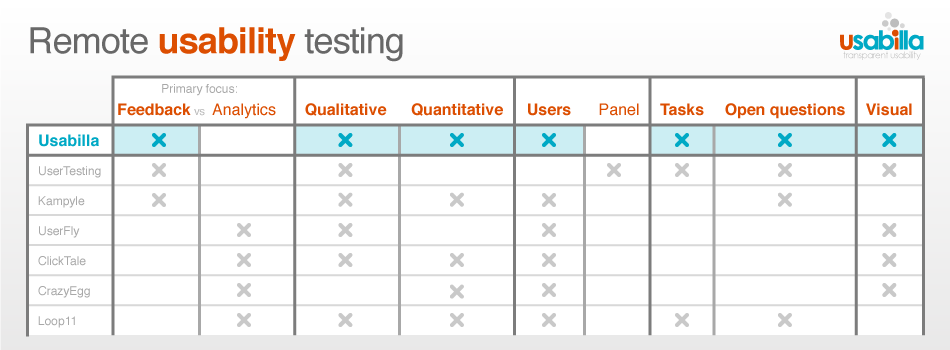
Remote usability testing is a great option for broadening your reach with your research. In many cases, the process is assisted by a moderator who acts as a “live” observer for the test. However, there are plenty of tools out there now which allow for testing without such an observer. Instead the software, to some extent, plays the part of the observer and the tests can then be reviewed by a researcher at a later date.

The big advantage to this kind of research is that again it dramatically increases the potential scale of your testing program. Remote testing provides you the facility to test anywhere but removing the moderation aspect – enables higher volumes of testing and round the clock testing without additional resources (or paying a ton of overtime to your team). This makes global testing in different time zones easier too.

Why is Remote Unassisted Usability Testing a Good Research Technique?

The biggest advantages are the global reach of the testing program, the ability to conduct more tests in the same time period (when compared to lab or assisted remote testing), and the ability to test round the clock with fewer human resources required.

Current tools have evolved dramatically from the early days of remote testing when they were very limited in their approach and they have also become much more accessible for researchers and participants alike. The costs of these tools has also plummeted in recent years and there’s a lot more flexibility in licensing models than there once was.

Author/Copyright holder: Paul Veugen. Copyright terms and licence: CC BY-SA 2.0

Tree Testing

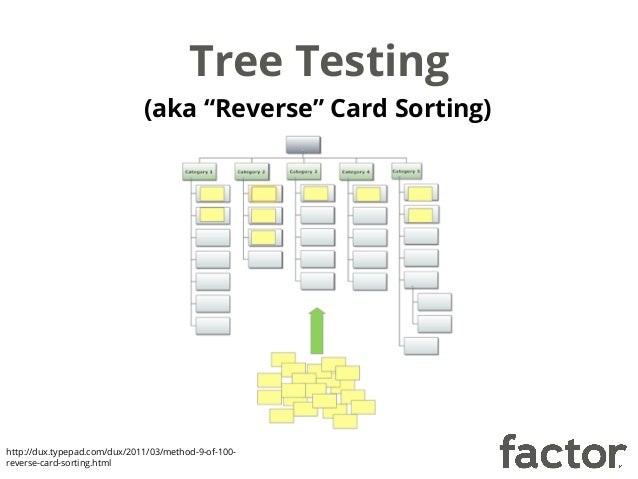
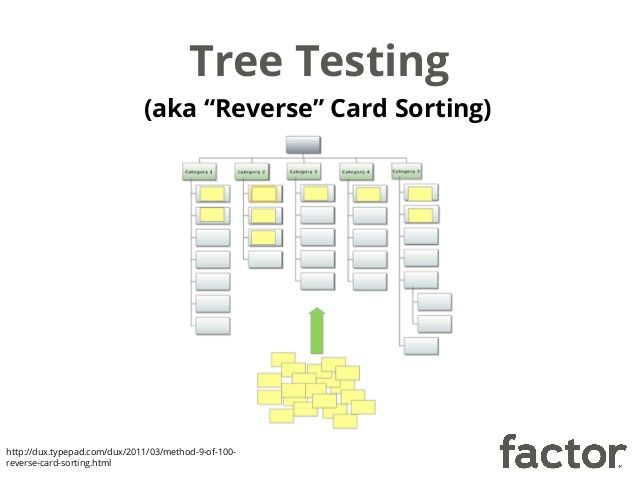
Tree testing focuses on information architecture and specifically navigation/site hierarchy. It is an automated alternative to some forms of card sorting. Obviously, there’s a cost advantage of card sorting – there’s no software required, it takes minutes to set up and can be conducted by pretty much anyone with 10 minutes training.

However, the costs of tree testing software are not astronomical either. You’re not looking at spending hundreds or thousands of dollars on a single test. There are also significant advantages to having automated reporting and analysis tools. Once a tree test is set up – it requires no effort to put into practice.

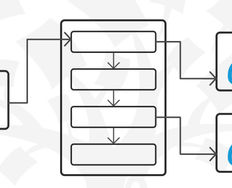
How would a typical tree test work? You’d offer the hierarchy of your site with clickable navigation links and get users to navigate to sections where they’d expect to find certain types of information. This lets you quickly examine whether your proposed IA and content structuring meets user expectations.


Author/Copyright holder: Bram Wessel. Copyright terms and licence: All rights reserved Img source

Why is Tree Testing a Good Research Technique?

Really, it’s just a form of reverse card testing without any cards being present. We know that card sorting is a good UX research method and it follows that tree testing is a good method from this.

It lets you quickly explore whether your initial IA and navigation structures are fit for purpose without spending a lot of money. It is particularly useful during the early phases of a project to inform the design before you need to spend a lot of cash to make changes.

You can use remote tree testing online, for a fee in most cases, to increase the reach of your tree testing and to ensure that multi-cultural audiences are better served by your products.

Tree testing produces actionable and specific results, just like card sorting, and that makes it a fairly easy sell to stakeholders and clients alike.

Summary

It’s always a good idea to be aware of other UX research methodologies even if you don’t intend to employ them on your current project. The more options that are available to you and your team – the easier it is to select the right tool for the right job.

Header Image: Author/Copyright holder: User Experience NZ. Copyright terms and licence: All rights reserved. Img Source

Learn More in This Course:

AI for Designers

12 days
13 % booked
View Course

What You Should Read Next

  • Read full article
    Why Care about Statistical Significance? - Article hero image
    Interaction Design Foundation logo

    Why Care about Statistical Significance?

    The categorical data depicts the success and failure rate of the low-fidelity wireframe above. There is not a large enough difference between the two to determine if the designs were successful.There is an element of error involved in measuring anything. So, when we want to compare measurements, how

    Social shares
    430
    Published
    Read Article
  • Read full article
    Web Fonts: Definition and 10 Recommendations - Article hero image
    Interaction Design Foundation logo

    Web Fonts: Definition and 10 Recommendations

    Web fonts bring digital content to life. They enhance readability, set the tone, and ensure consistency across various platforms—all vital ingredients. When you understand web fonts and their impact, it can help you with effective website creation—and greatly so. We’ll provide a comprehensive overvi

    Social shares
    778
    Published
    Read Article
  • Read full article
    How to Screen Research Participants - Article hero image
    Interaction Design Foundation logo

    How to Screen Research Participants

    Finding the right participants is crucial for gathering user research. We usually need to do research with participants having a particular set of needs or experience. In this short video, you will find out about the basic need for screening and how we make sure that we have suitably qualified parti

    Social shares
    449
    Published
    Read Article
  • Read full article
    Pitfalls in Recruiting Participants for User Research - Article hero image
    Interaction Design Foundation logo

    Pitfalls in Recruiting Participants for User Research

    The level of participant engagement is an important part of the user research results. Our results are dependent on proper engagement with our participants. In this video we look at some of the issues around participant recruitment and hear practical examples that arose in a large online study.[[vid

    Social shares
    417
    Published
    Read Article
  • Read full article
    How to Fit Quantitative Research into the Project Lifecycle - Article hero image
    Interaction Design Foundation logo

    How to Fit Quantitative Research into the Project Lifecycle

    Quantitative research methods fit into the project lifecycle at different stages of the process.In this video, we see where different quantitative research methods fit into a typical project lifecycle. Bear in mind that even with an iterative process such as Agile, the short cycles still address dif

    Social shares
    509
    Published
    Read Article
  • Read full article
    How to Resolve Conflicts Between Design Thinking and Marketing - Article hero image
    Interaction Design Foundation logo

    How to Resolve Conflicts Between Design Thinking and Marketing

    In the past, designers often reported to marketing managers and were neither expected nor allowed to make business decisions. When traditionally-structured companies transition to a design-driven mindset, there can be friction between the marketing and design teams. Let’s take a closer look at this

    Social shares
    682
    Published
    Read Article
  • Read full article
    Stop the Generic Portfolio Trap! Design a Stand-Out Portfolio for Your UX/UI Niche: User Research - Article hero image
    Interaction Design Foundation logo

    Stop the Generic Portfolio Trap! Design a Stand-Out Portfolio for Your UX/UI Niche: User Research

    User research is indispensable—and without it, well... UX design is guesswork. When you’re a user researcher, you know this well—but it can be hard to communicate your work in a way that grabs the viewer and holds their attention. And that’s what a portfolio is all about—grabbing the attention of yo

    Social shares
    380
    Published
    Read Article
  • Read full article
    Top Service Blueprint Templates - Article hero image
    Interaction Design Foundation logo

    Top Service Blueprint Templates

    Service blueprint tools are vital for effective customer experience design—and for designers to make experiences that are exceptional. Here, we’ll discuss why these tools are so important. What’s more, we’ll explore templates and practical resources to create high-quality, efficient service blueprin

    Social shares
    636
    Published
    Read Article
  • Read full article
    How to Write Research Questions that Lead to Confident Design - Article hero image
    Interaction Design Foundation logo

    How to Write Research Questions that Lead to Confident Design

    Designing with Data provides an extensive background to A/B testing.As with all other research methods, we need to start with a research question. A/B testing concerns itself with changes in user behavior, meaning that our questions need to be centered on measurable goals. In many cases, these will

    Social shares
    448
    Published
    Read Article
  • Read full article
    Getting Started - Article hero image
    Interaction Design Foundation logo

    Getting Started

    We start our introduction to A/B and multivariate testing (MVT) by looking at their basic principles and their differences. Note that the video mentions Google Optimize, which has been withdrawn. Google Firebase can be used for mobile platforms. Third-party solutions are needed for A/B testing on th

    Social shares
    218
    Published
    Read Article

Top Articles

Top Topic Definitions

Feel Stuck?
Want Better Job Options?

AI is replacing jobs everywhere, yet design jobs are booming with a projected 45% job growth. With design skills, you can create products and services people love. More love means more impact and greater salary potential.

At IxDF, we help you from your first course to your next job, all in one place.

See How Design Skills Turn Into Job Options
Privacy Settings
By using this site, you accept our Cookie Policy and Terms of Use.
Customize
Accept all

Be the One Who Inspires

People remember who shares great ideas.

Share on:

Academic Credibility — On Autopilot

Don't waste time googling citation formats. Just copy, paste and look legit in seconds.

Feel Stuck? Want Freedom?

Join 326,029+ designers who get one powerful email each week. Learn to design a life you love.

Next email in
1
day
13
hrs
53
mins
21
secs

Free forever. No spam. Unsubscribe anytime.