Personal branding is the practice of creating a public persona for an individual, designer or business, primarily to establish influence, generate trust, and differentiate oneself within a specific industry or market.
In this video, Nakita M. Pope, Chief Chick and Principal Brand Strategist of Branding Chicks, discusses what a brand is and why establishing a personal or business brand is so important:
In the context of UX design, personal branding is the strategic and deliberate process by which a designer cultivates and projects a distinct professional identity. This encompasses showcasing their unique skills, design philosophy, and expertise to target audiences, such as potential employers or clients. Designers with a well-defined personal brand can stand out from the competition and enhance their credibility, attract desired opportunities, and foster career growth within the UX field.
Why Is Personal Branding Important?
In a crowded job market, personal branding is what sets individuals apart from other professionals with similar qualifications and experience. It highlights their unique skills, values, and personality—this makes them more memorable to potential employers, clients, and collaborators. When a designer, individual or business clearly communicates what makes them unique and the specific value they bring, they can stand out from the competition and attract opportunities best suited to their strengths and aspirations. For UX designers, personal branding relates to how they demonstrate their distinctive approach to problem-solving, their unique design philosophy, highlight a particular niche within the field or any number of their methods, skills or experiences that differentiate them. This differentiation is crucial in a field where the ability to understand and innovate based on user needs is not just highly prized, it’s fundamental to success.
Personal branding also provides a buffer against factors that are out of one's control, such as market shifts, organizational changes, or economic downturns. When an individual or designer has a strong personal brand, they establish a reputation and presence in their industry that people recognize and trust. This recognition can help maintain career stability even when external business conditions change. A personal brand acts as a professional insurance policy, which helps navigate and bounce back from business uncertainties with greater ease. For UX designers, this is particularly important as it ensures that their unique approach to user experience and problem-solving is seen and valued, even with fluctuations in the industry.
The Key Components of Personal Branding
Personal branding extends beyond mere reputation management—it encompasses everything from an online presence, such as social media profiles and personal websites, to how someone communicates and presents themselves in various professional settings. A well-crafted personal brand showcases technical skills and also underscores thought leadership, emotional intelligence, empathy and adaptability. In UX design, these components are fundamental in showing a designer’s understanding and commitment to creating exceptional user experiences and can mean the difference between being passed over or getting hired. Here are the key components of personal branding:
Unique Value Proposition (UVP)
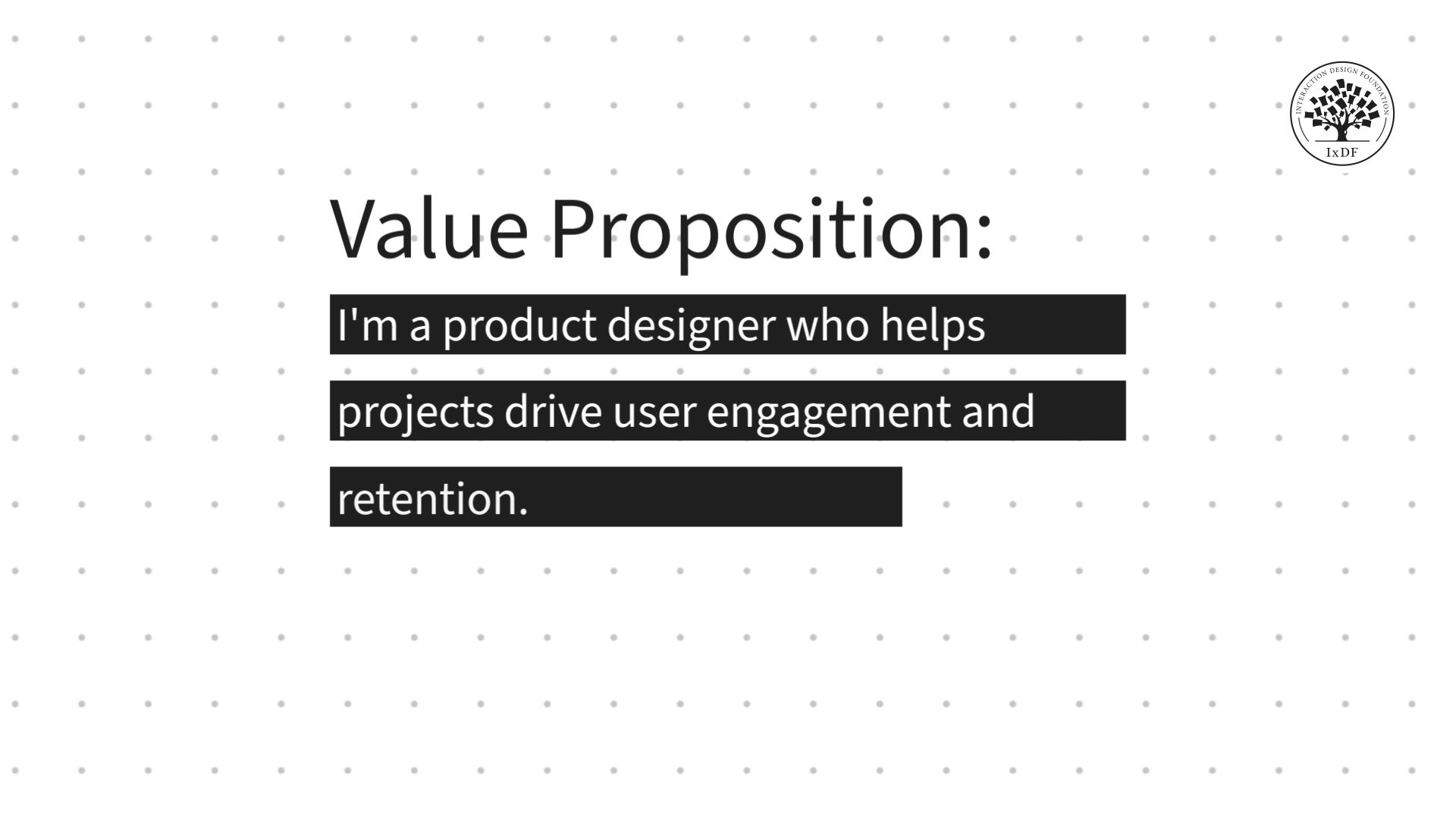
An example of a unique value proposition for a product designer.
© Interaction Design Foundation, CC BY-SA 4.0
A unique value proposition (UVP) identifies what sets an individual apart from others in their field. It should highlight unique skills, experiences, and the value brought to potential employers or clients and answer the question, "Why should someone choose me over others?" For UX designers, the UVP could emphasize a distinct approach to user research, innovative design methodologies or a particular design niche.
Target Audience

© Interaction Design Foundation, CC BY-SA 4.0
It’s crucial to define a target audience—understanding the audience helps develop a strong personal brand that resonates with their needs and desires. A targeted approach allows for greater impact and reach, enhanced through tailored messaging that meets the specific needs and interests of the audience, including potential employers, clients, or peers. For UX design, this means pinpointing specific clients and employers seeking unique skills and design approaches. Knowing the audience guides a designer on how to present their portfolio, case studies, and design philosophy in a way that directly addresses the needs of potential employers or clients. What’s more, highlighting how UX design solutions can solve their specific challenges and goals creates a stronger, more personalized connection. This targeted approach ensures that the personal brand aligns with the expectations of those most likely to hire and ultimately increases the chances of securing desired projects or job opportunities.
Communication and Transparency

© Interaction Design Foundation, CC BY-SA 4.0
Clear communication and transparency are essential for a strong personal brand. Clear communication involves being straightforward and understandable, avoiding jargon, and being concise and consistent in all messaging. Transparency means being open and honest about processes, decisions, and any issues that arise. Together, these elements help create a trustworthy brand where the audience feels informed and valued.
Transparency, in particular, is crucial to building trust and credibility. A transparent brand demonstrates accountability and openness, which are key to establishing trust and reliability. In UX design, clear communication and transparency are greatly important when collaborating with clients and stakeholders—this ensures that everyone understands the design process, decisions, and potential challenges.
Authenticity and Consistency

© Interaction Design Foundation, CC BY-SA 4.0
A personal brand that authentically represents the individual, designer or business and remains consistent across all platforms and interactions strengthens trust and confidence with their audience. Consistency involves delivering a uniform message and visual identity, including the same tone of voice, color schemes, logos, and core messages, which makes it easier for the audience to recognize and trust the brand. Authenticity shows a genuine commitment to the field and to personal growth, further establishing credibility.
A personal brand should be honest about who an individual, designer or business is, what they stand for, and what they can deliver—this increases trust and stronger connections with clients. Heart and head-centered branding, an approach developed by Nakita M. Pope, combines strategic thinking with personal passion and authenticity. The "head" aspect involves using strategic thinking to identify the target audience, set clear goals, and develop a plan to achieve them. The "heart" aspect ensures the brand is true to the individual, reflecting their passions, values, and what drives them. This combination creates a brand that is not only well-planned but also deeply authentic which resonates more powerfully with the audience.
Storytelling
In personal branding, storytelling is closely connected to authenticity. Storytelling is a powerful tool that creates and communicates a memorable personal brand. A well-crafted personal brand tells a story that resonates with its audience which makes a lasting impact. In personal branding, storytelling involves sharing personal experiences, challenges, successes, and lessons learned to highlight one's unique value proposition and professional journey—this humanizes the brand—to make it more relatable and authentic.
In UX design, storytelling is particularly effective. Storytelling allows UX designers to illustrate their design process and the impact of their work in a meaningful way. By narrating their experiences with various projects—including challenges faced and overcome—designers demonstrate their capabilities and passion for the field by showcasing their problem-solving skills and creativity. What’s more, storytelling fosters an emotional connection with an audience. When UX designers share stories about their projects, they provide context and insight into their thought processes, which makes their work more understandable and engaging. This connection builds trust and loyalty, as the audience feels a personal connection to the designer.
Watch this video with Stephen Gay, Design Leader at Google, to learn more about how important storytelling is in UX design, particularly in the context of a portfolio.
Performance Metrics

© Interaction Design Foundation, CC BY-SA 4.0
Tracking and analyzing the performance of personal branding efforts is essential. Metrics such as website traffic, social media engagement, and audience feedback help assess what works and where improvements are needed. This data-driven approach allows designers to refine the strategy to achieve better results. For UX designers, this means evaluating how their portfolio website and online presence resonate with their target audience, understanding which projects and case studies attract the most interest, and adjusting their branding strategy to highlight the aspects of their work that are most appealing to potential clients and employers. UX designers can ensure their personal brand remains relevant and impactful by regularly analyzing these metrics.
Networking and Community Engagement

© Interaction Design Foundation, CC BY-SA 4.0
Engaging with the professional community both online and offline is vital to build and enhance a personal brand, especially in UX design. Attending industry events, participating in discussions, and contributing to relevant forums and groups increase visibility and credibility within the industry. For UX designers, these activities provide opportunities to learn about the latest trends, share insights, and establish themselves as thought leaders. Growing a supportive network involves connecting with like-minded individuals and fostering relationships that support and enhance the brand. This network includes mentors, peers, followers, and advocates who believe in the brand and help spread its message. A strong community not only supports the brand but also provides valuable feedback and opportunities for growth, which is essential for staying relevant and continuously improving design practices.
Once the community is established, it’s important to leverage these relationships to grow the brand. Regularly engaging with the community, seeking their input, and involving them in the brand’s journey are crucial steps. Designers can share case studies, solicit feedback on design iterations, and collaborate on projects to showcase collective expertise. A designer can significantly enhance their brand influence by using their network’s support to amplify reach through word-of-mouth, collaborations, or endorsements. A connected and engaged community can be a brand’s most powerful asset.
Online Presence

© Interaction Design Foundation, CC BY-SA 4.0
A strong online presence through a professional website and/or active social media profiles is an essential asset. An online presence is often the first impression made on potential employers or clients, so it should accurately reflect the personal brand. Regular updates with relevant content that showcase expertise and engage the audience are necessary. For UX designers, this means having a portfolio website that not only highlights their best work but also includes case studies detailing their design process and the impact of their projects. Active engagement on platforms like LinkedIn and Behance can also help UX designers connect with industry professionals and stay current with trends.
Content Strategy

© Interaction Design Foundation, CC BY-SA 4.0
A well-developed content strategy aligns with brand messaging and goals. This includes blogging, social media posts, videos, and other forms of content that demonstrate knowledge and skills. Consistently producing valuable content establishes one as an authority in their field. UX designers can position themselves as thought leaders by creating content that discusses design practices or industry trends, shares insights from their projects, or by offering tutorials. This not only attracts potential clients and employers but also contributes to the broader design community.