The Life and Possible Death of the Mobile App Market

• 8 min read

419 Shares

Mobile Applications have become near ubiquitous with the rise of the mobile web but are they as big a deal as they are being made out to be? What do users really do with mobile apps and what does the future hold for mobile apps? User experience designers need to have their fingers on the pulse of this market if they want to succeed on the mobile web.

Mobile applications have become the standard for the mobile web experience. Back in the year 2012, Silicon Alley Insider, showed that people were spending more than 5 times as much time on the mobile web via apps as they were through standard mobile web browsing. If current data is anything to go by – it appears that mobile apps have become even more dominant in the last couple of years.

The Current State of Play

Nielsen’s recent report on the mobile web shows that the app has become the most important means of interaction with the mobile web.

In the United States they found that the average user interacts with nearly 27 apps a month. Though, it is worth noting that they also found that this has become a relatively flat figure over the last 2 years. Most importantly they report that nearly 70% of all app usage comes from the top 200 apps on the app stores.
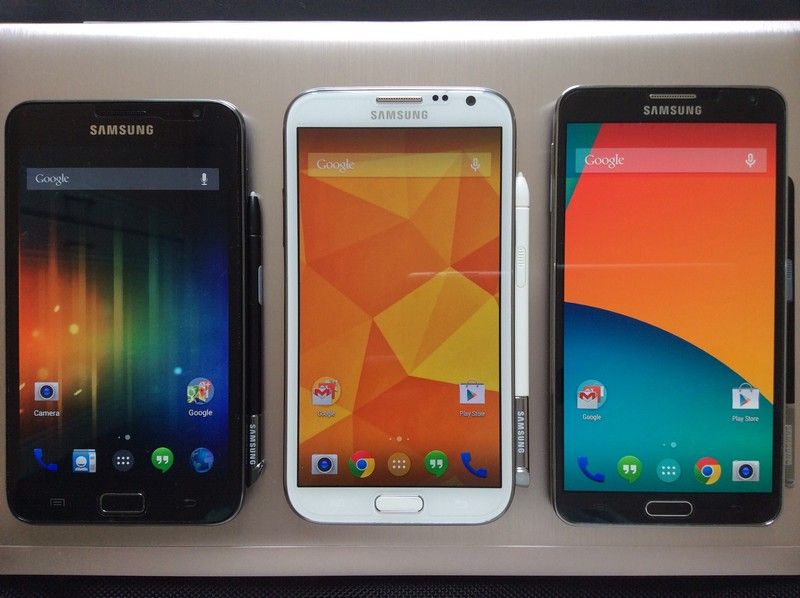


That’s a very important figure for UX designers because it suggests that there is a small cartel of app providers dominating the mobile web. This is to such an extent that most apps are simply not going to be used at all. Nuance, the software company that makes the Dragon Naturally Speaking software, says that 95% of all mobile apps are abandoned.

However, it’s useful to understand that while consumers appear to be reluctant to get involved with more apps than that headline figure of 27 – they are spending more and more time on those apps. Back in 2012 the average user spent a half a working week every month on their apps – in the final quarter of 2014 they were spending a whole working week (2 minutes short of 37 ½ hours a week) on their apps.

The big growth area, according to Nielsen, is in entertainment on mobile apps with both gaming and video (movies mainly) drawing in more users and for longer than in the past.

The Major Players

Quartz, a digitally native news outlet, publishes a regular list of the biggest 25 apps in use in the United States and it’s fair to say that while these may not be a perfect reflection of other markets – they probably won’t be that far off in terms of what people use either.
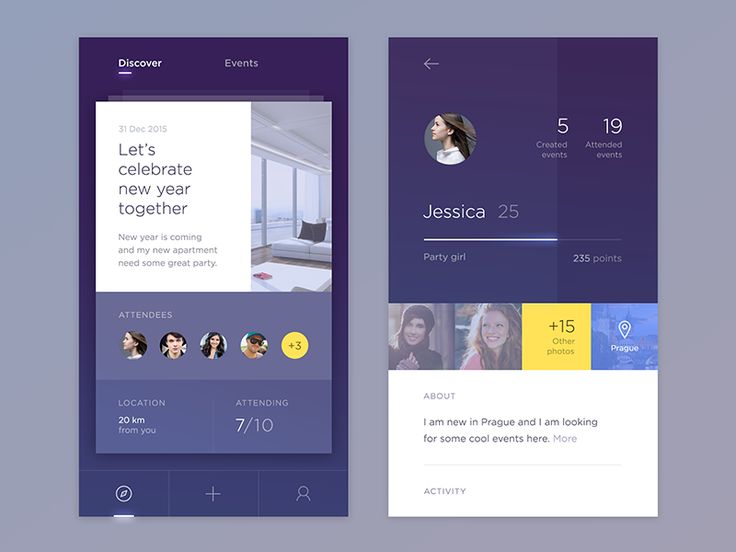

Author/Copyright holder: Jakub Antalík . Copyright terms and licence: All rights reserved Img source


As you’d expect social networks are big deal with Facebook being the number one app and YouTube following close behind. Also in the running are Facebook Messenger, Instagram, Twitter and Pinterest.

Google’s social network Google+ is also there and so are Google’s Search, Maps, Play, Drive and Gmail.

The rest reads pretty much like a “who’s who” of dominant players on the internet with Apple, Amazon, Yahoo, The Weather Channel, Walmart, Netflix, eBay, etc. all getting a look in.

This might be a big worry for those looking at app development to boost the cause of their own web properties on mobile. The same Quartz survey notes that there are no new players featured in the most important apps online and while the big players may vary between countries (you’d expect Sina Weibo and Baidu to be big in China and Lazada to be there in India or Thailand for example) – it appears that the mobile app market has reached maturity and it will take very, very deep pockets to break into the market leadership zone.

The Mobile App is Dead?

Business Insider, an American business, celebrity and technology news website, published their analysis of the mobile app market in late 2014 and we think that this is something important to consider. The mobile app is almost certainly doomed. Everyone and their aunt may be jumping on the mobile app development bandwagon but is it reasonable to expect users to download an app for every website on the internet? All 500 million of them?


Author/Copyright holder: Unknown. Copyright terms and licence: Unknown


Mobile apps have become dominant because mobile search sucks and mobile websites have been lagging behind the curve (possibly because everyone is too busy developing a nice new mobile app to care about their mobile website at the moment).

Business Insider quotes Paul Adams (former Google and Facebook) and his view that the app is dead to support this. "The idea of having a screen full of icons, representing independent apps, that need to be opened to experience them, is making less and less sense."

Paul then goes on to suggest a way that apps could become a more minimal experience in the future and act as a gateway to the mobile web. We’re not certain if his predictions for the way that the mobile app will be replaced are correct but it seems highly unlikely that users are going to swap a full-featured internet experience for a handful of websites for much longer – choice may occasionally be overwhelming but to move from 500 million sites to 25 apps? It doesn’t fit the long observed behaviour of the internet user.

The Take Away

Mobile apps are the dominant platform on the mobile web. Key figures include 40 hours a week spent on mobile apps, users interacting with roughly 23 apps a month and 70% of all app time being spent with the top 200 mobile apps in the app stores. However, UX designers might want to start looking forward to what happens next – the current means of using apps to interact with the mobile web are deeply constraining and favour the dominant internet powers (though neither Wikipedia nor Microsoft get a look in in the top 25 mobile apps).

Keywords:

Mobile apps, mobile app research, mobile app design

Related Concepts:

UX design, mobile web

References:

Silicon Insider’s 2012 graph of the way that app usage dominates the mobile web.

Read Nielsen’s insights into the mobile web and mobile apps.

Nuance’s take on mobile app abandonment and some tips on how to keep your app in a user’s heart and mind.

Quartz’s research on the Top 25 mobile apps in 2015 and their analysis is a great read if you want to see how far we’ve come in the past few years!

Learn More in This Course:

AI for Designers

7 days
32 % booked
View Course

What You Should Read Next

  • Read full article
    Why Care about Statistical Significance? - Article hero image
    Interaction Design Foundation logo

    Why Care about Statistical Significance?

    The categorical data depicts the success and failure rate of the low-fidelity wireframe above. There is not a large enough difference between the two to determine if the designs were successful.There is an element of error involved in measuring anything. So, when we want to compare measurements, how

    Social shares
    433
    Published
    Read Article
  • Read full article
    Web Fonts: Definition and 10 Recommendations - Article hero image
    Interaction Design Foundation logo

    Web Fonts: Definition and 10 Recommendations

    Web fonts bring digital content to life. They enhance readability, set the tone, and ensure consistency across various platforms—all vital ingredients. When you understand web fonts and their impact, it can help you with effective website creation—and greatly so. We’ll provide a comprehensive overvi

    Social shares
    782
    Published
    Read Article
  • Read full article
    How to Screen Research Participants - Article hero image
    Interaction Design Foundation logo

    How to Screen Research Participants

    Finding the right participants is crucial for gathering user research. We usually need to do research with participants having a particular set of needs or experience. In this short video, you will find out about the basic need for screening and how we make sure that we have suitably qualified parti

    Social shares
    451
    Published
    Read Article
  • Read full article
    Pitfalls in Recruiting Participants for User Research - Article hero image
    Interaction Design Foundation logo

    Pitfalls in Recruiting Participants for User Research

    The level of participant engagement is an important part of the user research results. Our results are dependent on proper engagement with our participants. In this video we look at some of the issues around participant recruitment and hear practical examples that arose in a large online study.[[vid

    Social shares
    420
    Published
    Read Article
  • Read full article
    How to Fit Quantitative Research into the Project Lifecycle - Article hero image
    Interaction Design Foundation logo

    How to Fit Quantitative Research into the Project Lifecycle

    Quantitative research methods fit into the project lifecycle at different stages of the process.In this video, we see where different quantitative research methods fit into a typical project lifecycle. Bear in mind that even with an iterative process such as Agile, the short cycles still address dif

    Social shares
    510
    Published
    Read Article
  • Read full article
    How to Resolve Conflicts Between Design Thinking and Marketing - Article hero image
    Interaction Design Foundation logo

    How to Resolve Conflicts Between Design Thinking and Marketing

    In the past, designers often reported to marketing managers and were neither expected nor allowed to make business decisions. When traditionally-structured companies transition to a design-driven mindset, there can be friction between the marketing and design teams. Let’s take a closer look at this

    Social shares
    682
    Published
    Read Article
  • Read full article
    Stop the Generic Portfolio Trap! Design a Stand-Out Portfolio for Your UX/UI Niche: User Research - Article hero image
    Interaction Design Foundation logo

    Stop the Generic Portfolio Trap! Design a Stand-Out Portfolio for Your UX/UI Niche: User Research

    User research is indispensable—and without it, well... UX design is guesswork. When you’re a user researcher, you know this well—but it can be hard to communicate your work in a way that grabs the viewer and holds their attention. And that’s what a portfolio is all about—grabbing the attention of yo

    Social shares
    383
    Published
    Read Article
  • Read full article
    Top Service Blueprint Templates - Article hero image
    Interaction Design Foundation logo

    Top Service Blueprint Templates

    Service blueprint tools are vital for effective customer experience design—and for designers to make experiences that are exceptional. Here, we’ll discuss why these tools are so important. What’s more, we’ll explore templates and practical resources to create high-quality, efficient service blueprin

    Social shares
    638
    Published
    Read Article
  • Read full article
    How to Write Research Questions that Lead to Confident Design - Article hero image
    Interaction Design Foundation logo

    How to Write Research Questions that Lead to Confident Design

    Designing with Data provides an extensive background to A/B testing.As with all other research methods, we need to start with a research question. A/B testing concerns itself with changes in user behavior, meaning that our questions need to be centered on measurable goals. In many cases, these will

    Social shares
    450
    Published
    Read Article
  • Read full article
    Getting Started - Article hero image
    Interaction Design Foundation logo

    Getting Started

    We start our introduction to A/B and multivariate testing (MVT) by looking at their basic principles and their differences. Note that the video mentions Google Optimize, which has been withdrawn. Google Firebase can be used for mobile platforms. Third-party solutions are needed for A/B testing on th

    Social shares
    227
    Published
    Read Article

Top Articles

Top Topic Definitions

Feel Stuck?
Want Better Job Options?

AI is replacing jobs everywhere, yet design jobs are booming with a projected 45% job growth. With design skills, you can create products and services people love. More love means more impact and greater salary potential.

At IxDF, we help you from your first course to your next job, all in one place.

See How Design Skills Turn Into Job Options
Privacy Settings
By using this site, you accept our Cookie Policy and Terms of Use.
Customize
Accept all

Be the One Who Inspires

People remember who shares great ideas.

Share on:

Academic Credibility — On Autopilot

Don't waste time googling citation formats. Just copy, paste and look legit in seconds.

Feel stuck? Want Freedom?

Get one powerful email each week, like 325,655 others.

Learn to design a life you love.

Next email in:
4
days
6
hrs
3
mins
30
secs