The Bias Blind Spot and Unconscious Bias in Design

• 9 min read

742 Shares

It’s useful for designers to understand bias both so that they combat their own biases when they work and so that they can tap into the biases of their users to provide better user experiences. But what happens when we can’t acknowledge our own biases? That’s when we need to understand the bias blind spot so that we can work more effectively despite the limitations of our natural tendencies.

We all have biases. The biases we hold reflect the fact that we only have a partial perspective on the world around us. You can be biased towards or against many things including ideas, cultures, individuals, race, gender, sexuality, political standpoints, social class, species, etc.

Understanding our own biases can help us overcome them. Understanding the biases of others can help us improve the user experience and help us develop the people around us.

Unconscious Bias
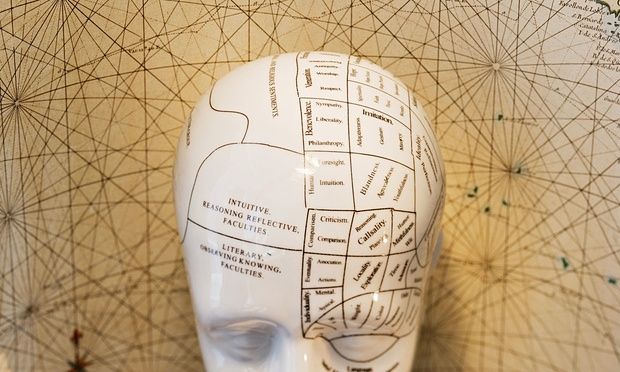
© Alamy, Fair Use

Bias is not, by definition, always a bad thing. Our biases serve a purpose from an evolutionary standpoint. Our 5 senses supply us with incredible amounts of data constantly. It’s impossible for the human brain to process all this information – there’s simply too much of it.

Thus to make our lives easier, our brains are programmed to take short cuts when interpreting data. We develop a bunch of rules that we tap into unconsciously that allow us to make instant decisions and judgements.

There was a time when this was extremely useful. If you were to go back to the time when humanity was a hunter-gatherer society; it’s easy to see how this was useful. Imagine that you were walking through a rainforest and that you saw, out of the corner of your eye, a flash of orange and black in the trees. Your brain would kick in and say; “That could be a tiger!” and you could quickly implement a plan for dealing with tigers (running away, fighting, playing dead, etc.).

The idea is that your learned bias (orange + black = tiger) gave you a head start on preventing being eaten by a tiger. This was true even if the orange and black had a more prosaic reason for being (like being part of the colour of a plant).

In essence your brain works on the principle that it’s usually better to be safe than it is to be sorry. It doesn’t matter whether those colours are a tiger; it matters that we’re ready for one just in case.

Unfortunately, when bias comes into play in the modern world – things become a little more complicated. We develop our biases through genetics, through education, through the work that we do, through the people we interact with, the culture we grow up in, etc. and they don’t always serve a useful purpose.

Everyone is subject to unconscious bias. In fact, once we examine biases – it’s pretty obvious that this is true. Unfortunately, what we struggle to understand is how biased we are and how our biases can work against us and often how they can work against others too.

The Bias Blind Spot
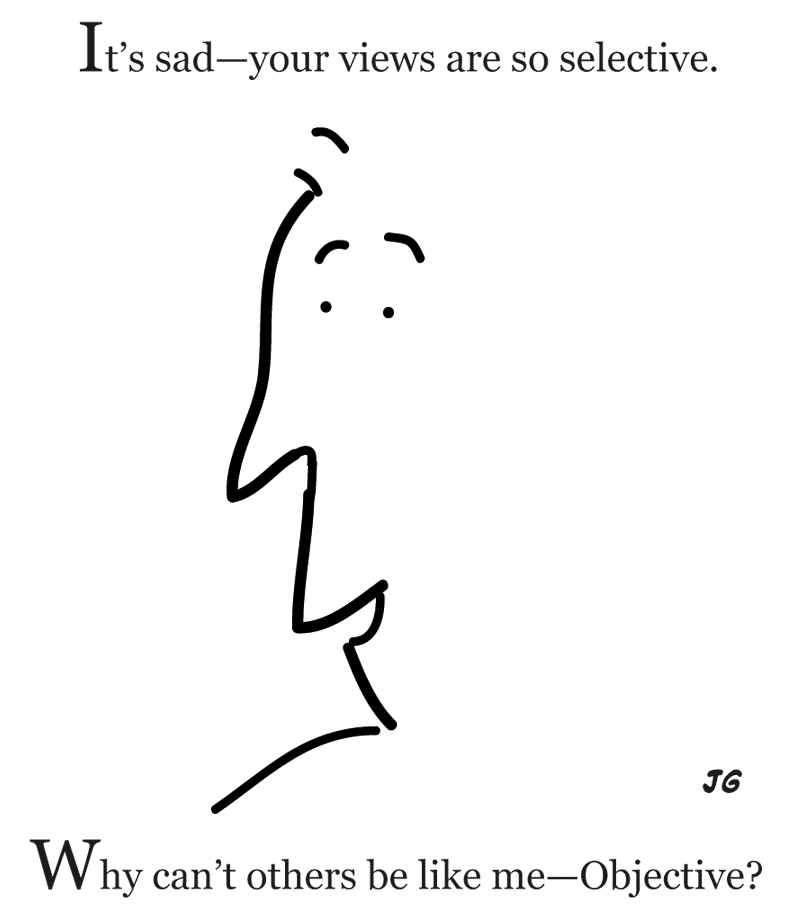
© JG, Fair Use

Everyone has some form of unconscious bias. It’s part of what makes us human. But when you examine our understanding of this – things get a little peculiar.

For example; what percentage of the population will be more biased than the average person? If you think about this; the answer is obvious. 50% of people are more biased than average and as you’d expect 50% are less biased than the average too.

But if you ask people; “Are you more biased than the average person?” you get a strange result. Out of every 661 people you ask, only one will say “yes”! To put that another way only approximately 0.15% of us believe that we’re more biased than average – even though, by definition, 50% of us are!

In fact, research carried out at Boston University found:

  • Most people have no idea of how biased they actually are

  • Most people believe the people around them are more biased than they themselves are

This is the bias blind spot. Our ability to perceive bias in others is actually pretty good. Our ability to perceive bias in ourselves is generally dreadful.

This leads to bias that can damage the way we work and an inability to tackle it – because we can’t see it.

It’s been shown, for example, that female managers are as likely to discriminate against female employees as male managers. Their unconscious bias (a product of many things) actually presents itself in direct contrast to their conscious beliefs (the correct understanding that women are every bit as capable as men).

How Can the Bias Blind Spot Cause Problems for Us?
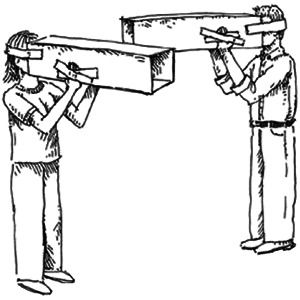
© Unknown

The bias blind spot can be incredibly problematic. When we operate from within our blind spot; it’s been shown that we are more likely to reject the input of peers and/or experts in a subject and that we are also least likely to benefit from education and training concerning our particular bias.

This can be explained rationally too. Society teaches us that bias is a bad thing. The word has negative connotations. Most of us would prefer not to see ourselves as the kind of people who do bad things. In fact, we’re taught from an early age that that’s not who we are.

This leads us to believe that we must be rational. That our actions and judgments are accurate and therefore without bias. However, it doesn’t stop us from seeing the flaws in others because of their biases.

How Can We Tackle the Bias Blind Spot?

It’s very difficult to tackle the blind spot bias on your own. The first step is acknowledging that it may exist but challenging ourselves to take action is difficult. Once you have acknowledged the existence of the blind spot bias you can commit to tackling the biases it masks but it may be easier to enrol the services of a coach to help you with this.

The Take Away

We all have unconscious biases and that’s part of what makes us human. It’s how the brain is designed to work. Most of us also suffer from blind spot bias and that makes it difficult for us to tackle the underlying biases and the way they affect the way we work. It’s very helpful to do so – once we address our biases we can become much more effective in the way we relate to the world and other people.

References & Where to Learn More:

Review some interesting research regarding bias blind spot yourself.

Psychology Today explores the impact and challenges of the bias blind spot.

Forbes magazine examines the bias blind spot in a business context: We All Have A Bias Blind Spot, Argues Study - Some More Tenacious Than Others.

Hero Image: © Unknown

Learn More in This Course:

AI for Designers

11 days
12 % booked
View Course

What You Should Read Next

  • Read full article
    7 Tips to Improve Your UX Design Practice - Article hero image
    Interaction Design Foundation logo

    7 Tips to Improve Your UX Design Practice

    Hey! But my UX design practice is perfect! Thankfully, we don’t hear that very much but the truth is – the longer we’re in a job, the better we consider ourselves to be at that job. Sometimes, it’s worth remembering that even the best professionals still have learning to be done. It’s also worth rem

    Social shares
    967
    Published
    Read Article
  • Read full article
    Do I Need a Degree to Work In User Experience? - Article hero image
    Interaction Design Foundation logo

    Do I Need a Degree to Work In User Experience?

    This is a question that, in slightly different forms, gets asked a lot by those considering a UX design career. The question is a simple one but the answer..? Well, that’s a bit more complicated. A lot depends on you and your approach to life and your career. So let’s take a look at the benefits of

    Social shares
    952
    Published
    Read Article
  • Read full article
    How to Build a UX/UI Design PDF Portfolio That Hiring Managers Will Love (Includes Examples) - Article hero image
    Interaction Design Foundation logo

    How to Build a UX/UI Design PDF Portfolio That Hiring Managers Will Love (Includes Examples)

    If you already have an online UX/UI design portfolio, do you need a PDF version? The answer is – yes; it is better to be safe than sorry! Some hiring managers like to see a more detailed PDF portfolio after reviewing your online portfolio, while some job applications may request an upload instead of

    Social shares
    943
    Published
    Read Article
  • Read full article
    14 Barriers to Ideation and How to Overcome Them - Article hero image
    Interaction Design Foundation logo

    14 Barriers to Ideation and How to Overcome Them

    Would you like to facilitate successful ideation sessions? Or would you like to learn how to contribute to ideation processes in your team more effectively? In either case, you should know the ideation traps and how you can prevent yourself and your team from falling into them. You should give the f

    Social shares
    920
    Published
    Read Article
  • Read full article
    What Tech Job is Right for Me? A Comprehensive Guide to Navigating Your Career Path - Article hero image
    Interaction Design Foundation logo

    What Tech Job is Right for Me? A Comprehensive Guide to Navigating Your Career Path

    Think about which tech career is right for you and you may well find that choosing a career is about getting work that offers fulfilling employment, personal growth opportunities, and—of course—good remuneration. If you’re finding yourself contemplating a change or exploring alternative paths on you

    Social shares
    817
    Published
    Read Article
  • Read full article
    The Bandwagon Bias – The Dangers of Groupthink - Article hero image
    Interaction Design Foundation logo

    The Bandwagon Bias – The Dangers of Groupthink

    Groupthink is dangerous to our objectivity. It prevents us from thinking for ourselves and making the best decisions. Designers need to be cautious about falling into the bandwagon bias trap but also be aware of how it can be exploited in their designs to improve user experiences and get users to ma

    Social shares
    817
    Published
    Read Article
  • Read full article
    The GROW model: Similarities between Coaching and UX - Article hero image
    Interaction Design Foundation logo

    The GROW model: Similarities between Coaching and UX

    The GROW model is used by coaches to enable individuals to reach their objectives. As you will see while reading about this model, there’s a large overlap with the skills already used by UX designers. As a designer, it can be helpful for you to see the parallels between the two professions – as it a

    Social shares
    752
    Published
    Read Article
  • Read full article
    The Illusion of Control – You Are Your Worst Enemy - Article hero image
    Interaction Design Foundation logo

    The Illusion of Control – You Are Your Worst Enemy

    Not everything in life is within our control. Believing that it is can be a serious handicap to getting things done in design work and most of life. Learning how to handle the illusion of control will make it much easier to accept things that aren’t within your control and focus your efforts on area

    Social shares
    751
    Published
    Read Article
  • Read full article
    How to Create the Perfect UX Resume and Cover Letter - Article hero image
    Interaction Design Foundation logo

    How to Create the Perfect UX Resume and Cover Letter

    Your cover letter helps sell you as a good fit for the company and serves to introduce your resume and portfolio. The cover letter plays a major role because this is your first chance to help the recruiter know that you’re the perfect fit for the company and job role. You need your UX design portfol

    Social shares
    725
    Published
    Read Article
  • Read full article
    Outcome Bias – Not All Outcomes are Created Equal - Article hero image
    Interaction Design Foundation logo

    Outcome Bias – Not All Outcomes are Created Equal

    Evaluating the outcomes of our actions makes sense. However, there is a cognitive bias where we place too much weight on the outcome and aren’t critical enough of the process by which we reached that outcome. Learning to avoid the outcome bias can help improve the quality of our decision making proc

    Social shares
    716
    Published
    Read Article

Top Articles

Top Topic Definitions

Feel Stuck?
Want Better Job Options?

AI is replacing jobs everywhere, yet design jobs are booming with a projected 45% job growth. With design skills, you can create products and services people love. More love means more impact and greater salary potential.

At IxDF, we help you from your first course to your next job, all in one place.

See How Design Skills Turn Into Job Options
Privacy Settings
By using this site, you accept our Cookie Policy and Terms of Use.
Customize
Accept all

Be the One Who Inspires

People remember who shares great ideas.

Share on:

Academic Credibility — On Autopilot

Don't waste time googling citation formats. Just copy, paste and look legit in seconds.

Feel Stuck? Want Freedom?

Join 326,571+ designers who get one powerful email each week. Learn to design a life you love.

Next email in
0
days
12
hrs
11
mins
53
secs

Free forever. No spam. Unsubscribe anytime.