There are generally two types of UX design portfolios: online portfolios and static PDF portfolios. So, which of these should you create if you want to get a job in UX design? Well, the answer is both! However, there are pros and cons to each type of portfolio, and if you have to choose, we’d recommend you create an online UX design portfolio. Read on to find out why.
Online and Static (PDF) Portfolios Serve Different Purposes
Stephen Gay, Design Lead at Google Adwords Display and Apps, explains the differences between a static and online portfolio in his video interview with us:
Stephen Gay explains that static portfolios are useful for job interviews, while online portfolios are great for getting recruiters interested in calling you for an interview in the first place. Author / copyright holder: Stephen Gay and the Interaction Design Foundation. Copyright license and terms: CC BY-NC-SA 3.0.
Your online portfolio gives recruiters a quick overview of your abilities. In it, you’ll include short UX case studies to attract recruiters to call you in for a job interview. Your online portfolio is thus a passport that gives you access to job opportunities.
On the other hand, a static portfolio allows you to give in-depth detail about your projects. It’s where you can explain how you chose the colors for your visual design, for example. Most times, you’ll send a static PDF portfolio to recruiters who are already interested in hiring you—usually to prepare for an upcoming interview, because it helps the recruiter formulate deep, probing questions about your design process.
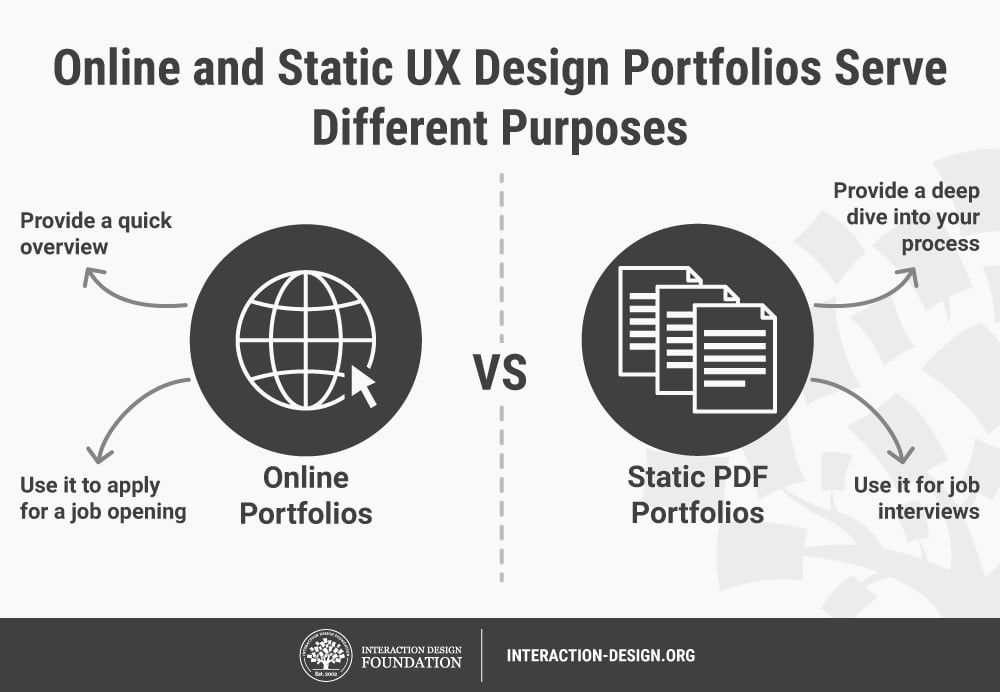
Online and static UX design portfolios serve different purposes; to get the best of both worlds, you should therefore create both an online and a static portfolio. Author / copyright holder: Teo Yu Siang and the Interaction Design Foundation. Copyright license and terms: CC BY-NC-SA 3.0.
Ideally, you should have both an online and a static portfolio. After all, you’ll use them at different points of your job application process. However, if you can create only one portfolio, we recommend that you go with an online portfolio. That’s because recruiters will more easily discover your online UX design portfolio than they will a static portfolio, and so it will help expose you to potential job opportunities.
Advantages of an Online UX Design Portfolio
The main advantage of an online UX design portfolio is that it puts you out there. You can be discovered through search engines, which means it helps potential clients and employers find you. In contrast, you’ll have to send your static PDF portfolio to someone manually to get their attention.
On top of that, there are many ways you can create your online UX design portfolio. You don’t even need any coding knowledge. For instance, you could use portfolio sites—e.g., Behance—to create UX case studies without the need to write a line of code. You can also use services such as Squarespace and WordPress, which contain a wide range of templates you can choose from, to create your own website. Finally, if you’re proficient in coding, you can create your portfolio site from scratch, too.
We’d also like to note that online portfolios have become a standard practice for UX designers. In fact, some companies even reject job applicants who don’t provide a link to their online portfolios. This means you might lose out on job opportunities if you don’t have an online portfolio. However, in such a case, you might still be able to apply if you’ve sent in your static PDF portfolio instead of an online portfolio.
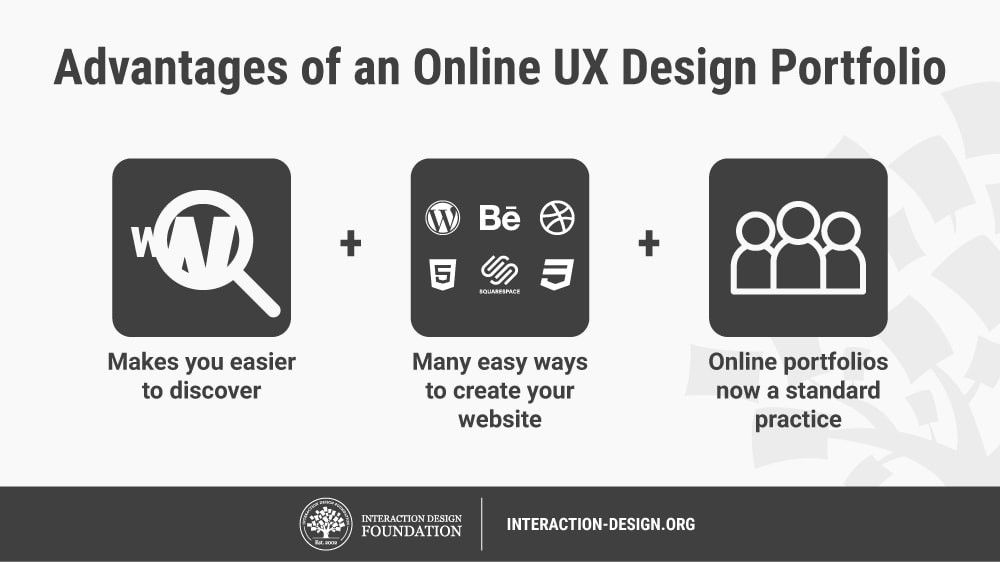
An online UX design portfolio makes it easier for a recruiter to find you, can be fairly simple to create without the need to code and has become an industry standard. Author / copyright holder: Teo Yu Siang and the Interaction Design Foundation. Copyright license and terms: CC BY-NC-SA 3.0.
Advantages of a Static UX Design Portfolio
Well, what about static UX design portfolios?
The main advantage of a static portfolio is that you can give detailed and lengthy explanations of your design process. Unlike an online portfolio, where recruiters tend to spend only 5 minutes to review it, you don’t have to deal with such strict time constraints when it comes to your static portfolio.
A bonus effect of the point above is that your static portfolio helps you prepare for job interviews. When you create your static portfolio, you tend to remember the full details of your project better than when you write short summaries for your online portfolio. You can use these details to highlight your ability to solve challenges and make tough decisions.
Finally, you can include more confidential information in your static portfolio than your online portfolio. Whereas your online portfolio exists on the internet for everyone to see, you only send your static portfolio to a select few interested recruiters. This limited audience means you can include some confidential information—of course, you still have to exercise common sense and avoid revealing excessive information.
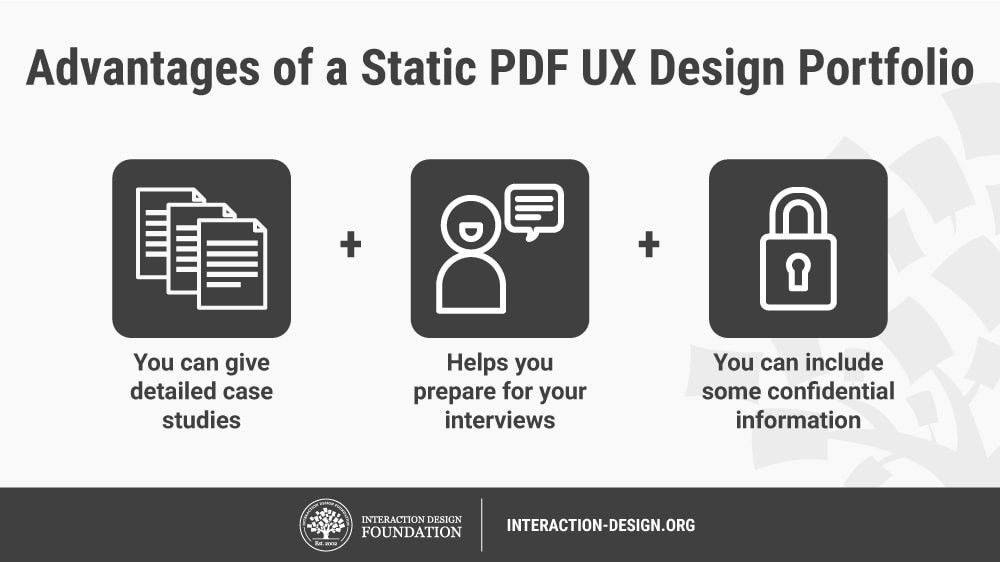
A static PDF portfolio allows you to provide lengthy explanations behind your design decisions, helps you prepare for a job interview and lets you include some confidential information. Author / copyright holder: Teo Yu Siang and the Interaction Design Foundation. Copyright license and terms: CC BY-NC-SA 3.0.
Use Your Online UX Portfolio to be Discoverable; Use Your Static UX Portfolio for Your Interviews
As we mentioned above, you should ideally have both an online and a static UX design portfolio. This way, you’ll play to the strengths of each format. Your online portfolio is important for you to apply for any UX design job. On top of that, your static portfolio will likely serve you well during your interviews and later phases of your job application.
We recommend that you create your online portfolio first. After that, you can then create your static portfolio. This is because your online portfolio is often required for you to apply for a job; however, you don’t really need a static portfolio to get offered a job. For example, you could still talk in detail about your work in your job interviews, even if you don’t have a static portfolio that contains lengthy write-ups of your projects.
The Take Away
UX designers often create two types of portfolios: online portfolios and static PDF portfolios. If you’ve wondered which type of UX design portfolio you should create, the answer is: both! The reason is that both types of portfolios serve different purposes and you’ll use them in different parts of your job application. Online portfolios expose you to more job opportunities, and companies often require one when you apply for a job. Static portfolios help dive deep into your design process and help you in your job interviews.
If you have to choose one type of portfolio to create, we recommend that you create an online one. You’ll most likely need an online portfolio when you apply for a job, whereas you could still ace a job interview without the use of a static portfolio. The best approach is to create your online portfolio first, then create your static portfolio.
References and Where to Learn More
Want to learn how to create an online and static portfolio? You’ll find useful guides here:
Hero image: Author / Copyright holder: Teo Yu Siang and the Interaction Design Foundation. Copyright terms and license: CC BY-NC-SA 3.0.