Our Three Brains - The Rational Brain

by Andreas Komninos • 4 min read

752 Shares

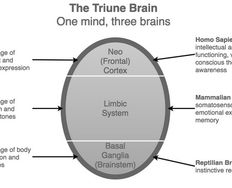
The triune brain model may not be an entirely accurate depiction of the human brain and its development, but the concept of our three brains (reptilian, paleomammalian, and neomammalian) represents a useful guide for us as designers who are looking to capture what it means to be a human user. Thus, many of the insights we derive in this way can be highly instrumental in our fine-tuning products that latch with their target users in the best way possible.

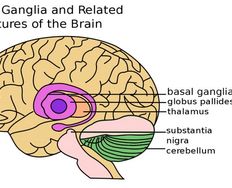
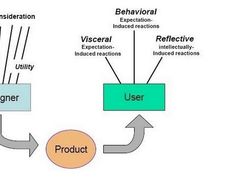
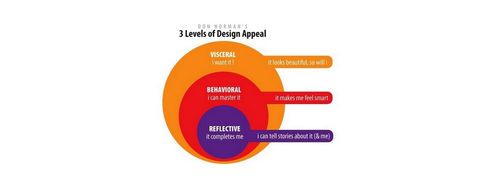
The 'Neomammalian' brain represents the third and outermost structure of Paul McLean's 'Triune Brain' model. MacLean proposed the neomammalian brain is responsible for abstract, rational thought, foresight, hindsight, and insight, which could be thought of as the component functions of Don Norman's reflective processing concept. The neomammalian brain consists of the neocortex and the surrounding thalamic structures. The neocortex is one of the brain structures that help us distinguish the human brain from that of any other animal. In humans, the neocortex is significantly larger, and while other animals have smooth neocortices, the human neocortex is grooved and ridged, which vastly increases its surface area.

The role of the neomammalian brain

The neomammalian brain is thought to be the last major development in the evolution of the human brain, due to its being the outermost structure and imaging studies which have shown this region is implicated in higher-order thinking. Functions of the neomammalian brain include analysis, sensory processing, learning, and memory, motor control, decision-making, reasoning, and problem-solving. The primary and overarching responsibility of the neocortex is to determine what is going on in the outside world. This function has a number of components, such as moving our sensory organs so they are in the best possible position for the receipt of perceptual information, processing the stimulus, storing an accurate representation, and mentally manipulating this representation so as to determine the best possible response.

Studies involving patients with some form of prefrontal damage (i.e. through brain injury or a congenital disorder) have shown the significant role this structure plays in higher-order thinking. When prefrontal cortex functioning is compromised, our short-term memory is usually affected, which often has a catastrophic effect on our ability to make sense of and form a cohesive representation of the world. The prefrontal cortex receives 'information' (in the form of neural activity) from various regions of the brain; then it consolidates this information into a meaningful and practicable representation of the world. Therefore, anything that impedes the functioning of the prefrontal cortex is likely to affect many of the qualities that separate us from the rest of the animal kingdom.

The Take Away

The neomammamilian brain represents the 'third brain' of Paul McLean's 'Triune Brain' model. This region is seen as the brain structure responsible for the 'self' (i.e. what makes you 'you'). The neomammalian brain consists of various structures located on the outermost section of the brain, such as the neocortex and other thalamic structures, and is in control of higher-order functions, such as learning and memory, problem-solving, decision-making, and reasoning. Perhaps most importantly, the neomammalian brain receives, analyzes, and converts information from the rest of the brain to help us form an accurate and usable representation of the world for action. Despite the criticism this model has taken for oversimplifying matters, by viewing users and consumers in terms of their 'three brains', we can strive for the complete experience, encompassing our primal, emotional and rational qualities. Therefore, the triune brain model may not be an entirely accurate depiction of the human brain and its development, but the concept of our three brains (reptilian, paleomammalian, and neomammalian) represents a useful guide for designers looking to capture what it means to be a human user.

References & Where to Learn More

Hero Image: Copyright holder: the Author, Copyright Terms and License: Public Domain

Course: The Brain and Technology: Brain Science in Interface Design

Rakic, P. (2009). “Evolution of the neocortex: a perspective from developmental biology”. Nature Reviews Neuroscience, 10(10), 724-735.


Topics in This Article

Learn More in This Course:

AI for Designers

12 days
13 % booked
View Course

What You Should Read Next

  • Read full article
    Self-Actualization: Maslow's Hierarchy of Needs - Article hero image
    Interaction Design Foundation logo

    Self-Actualization: Maslow's Hierarchy of Needs

    The things we use and consume may satisfy the first four levels of needs in Maslow's hierarchy of needs, but they will never provide us with the characteristics, outlined below, which help us identify the attainment of self-actualization. Take all the safety, love, etc. you like; for all their impor

    Social shares
    1.2k
    Published
    Read Article
  • Read full article
    Our Three Brains - The Reptilian Brain - Article hero image
    Interaction Design Foundation logo

    Our Three Brains - The Reptilian Brain

    Neuroscience has offered many important insights into both the structure and function of the human brain. One of the most well-known models of brain structure, and how it relates to function, was provided by neuroscientist Paul MacLean, whose 'Triune Brain' model is based on three dominant structure

    Social shares
    1.2k
    Published
    Read Article
  • Read full article
    Norman's Three Levels of Design - Article hero image
    Interaction Design Foundation logo

    Norman's Three Levels of Design

    In the human mind there are numerous areas responsible for what we refer to as emotion; collectively, these regions comprise the emotional system. Don Norman proposes the emotional system consists of three different, yet interconnected levels, each of which influences our experience of the world in

    Social shares
    1.2k
    Published
    Read Article
  • Read full article
    Esteem: Maslow's Hierarchy of Needs - Article hero image
    Interaction Design Foundation logo

    Esteem: Maslow's Hierarchy of Needs

    Esteem needs encompass confidence, strength, self-belief, personal and social acceptance, and respect from others. These needs are represented as one of the key stages in achieving contentedness or self-actualization. While esteem is an internal quality, we are affected by external factors, such as

    Social shares
    1.1k
    Published
    Read Article
  • Read full article
    Putting Some Emotion into Your Design – Plutchik’s Wheel of Emotions - Article hero image
    Interaction Design Foundation logo

    Putting Some Emotion into Your Design – Plutchik’s Wheel of Emotions

    Emotional design is a big buzz word within the UX community. Designs which tap into the user’s emotions are considered to do more than just respond to their stated needs and provide a greater level of user experience. One way of understanding emotions is Plutchik’s Wheel of Emotions – this may help

    Social shares
    1.1k
    Published
    Read Article
  • Read full article
    The Concept of the "Triune Brain" - Article hero image
    Interaction Design Foundation logo

    The Concept of the "Triune Brain"

    In the 1960s, American neuroscientist Paul MacLean formulated the 'Triune Brain' model, which is based on the division of the human brain into three distinct regions. MacLean's model suggests the human brain is organized into a hierarchy, which itself is based on an evolutionary view of brain develo

    Social shares
    1.1k
    Published
    Read Article
  • Read full article
    Our Three Brains - The Emotional Brain - Article hero image
    Interaction Design Foundation logo

    Our Three Brains - The Emotional Brain

    In 1952, Paul MacLean introduced the term 'limbic system', which refers to the interconnected brain structures responsible for much of our emotional experience. MacLean's recognition of the limbic system as an important and functional set of connected structures perhaps represents his most prominent

    Social shares
    1k
    Published
    Read Article
  • Read full article
    How to Prevent Negative Emotions in the User Experience of Your Product - Article hero image
    Interaction Design Foundation logo

    How to Prevent Negative Emotions in the User Experience of Your Product

    Learn to prevent negative emotions in the user experience of your product. As a User Experience (UX) designer, you want users to enjoy using your product by eliminating negative experiences and inducing positive emotion in your users. This article will teach you how to prevent anger and frustration

    Social shares
    894
    Published
    Read Article
  • Read full article
    The Reflective Level of Emotional Design - Article hero image
    Interaction Design Foundation logo

    The Reflective Level of Emotional Design

    “Clearly there are some products that stand little chance of ever becoming symbolic in people's lives-like Ethernet routers, for instance—no matter how wonderful they look or well they behave. However, when the design of a product or service addresses users' goals and motivations-possibly going beyo

    Social shares
    864
    Published
    Read Article
  • Read full article
    Creating Emotional Connections - Article hero image
    Interaction Design Foundation logo

    Creating Emotional Connections

    People form emotional connections and associations with the things they use and come across throughout their lives. These connections and associations help guide our behavior and determine how we perceive the world. Designers must grasp how to encourage emotional connections between users and their

    Social shares
    862
    Published
    Read Article

Top Articles

Top Topic Definitions

Feel Stuck?
Want Better Job Options?

AI is replacing jobs everywhere, yet design jobs are booming with a projected 45% job growth. With design skills, you can create products and services people love. More love means more impact and greater salary potential.

At IxDF, we help you from your first course to your next job, all in one place.

See How Design Skills Turn Into Job Options
Privacy Settings
By using this site, you accept our Cookie Policy and Terms of Use.
Customize
Accept all

Be the One Who Inspires

People remember who shares great ideas.

Share on:

Academic Credibility — On Autopilot

Don't waste time googling citation formats. Just copy, paste and look legit in seconds.

Feel Stuck? Want Freedom?

Join 326,020+ designers who get one powerful email each week. Learn to design a life you love.

Next email in
1
day
15
hrs
55
mins
57
secs

Free forever. No spam. Unsubscribe anytime.