The fear of selling is incredibly pervasive in society; unfortunately, if you want to run your own business, you need to learn to sell. The good news is that you can overcome the fear of selling and learn to build your business without selling your soul to the devil. All you have to do is learn to follow a simple process.
Telesales is, perhaps, the most effective way to sell your services as a freelancer or business-to-business entrepreneur (B2B, i.e., doing business that is conducted between companies, rather than between a company and individual consumers). It has the advantage of immediacy (it is quite possible to make a sale very quickly after starting a telesales campaign) and low cost (most people can make national calls cheaply, and in many cases they can make international calls cheaply—for example, by using Skype).
The biggest challenge associated with telesales is one lurking and lumbering within freelancers or entrepreneurs themselves—Fear.
Two chief types of fear inconsiderately prevent people from pursuing telesales:
The fear of becoming a salesperson
The fear of rejection
Salespeople are ******* ****!
You hear it every single day. Estate agents?—the biggest bunch of crooks ever, muscling in on something as sacred as people’s homes. Recruitment consultants?—pah! Parasites! – they get paid loads for doing nothing. Call centre salespeople?—the lowest form of life, skulking beneath even the deepest ocean’s bottom-feeders. How many times do you wonder which type of vampire is after you when you see a number you don’t recognise calling you?
Salespeople are generally treated with disdain by a large chunk of society. That chunk is also incredibly vocal about how awful salespeople are.
Want to know the truth? Without salespeople, 99.99% of businesses would not exist. Are those folks who act like salespeople really a plague on the Earth? Well, very, very many people wouldn’t have jobs were it not for the much-maligned salesperson.
Salespeople play the most essential role in every business. Without sales, a business is a collection of people slowly going bankrupt.
The reason people treat salespeople badly is because sales cost money and many folks have had a few bad experiences with some salespeople’s pushy behaviour. That estate agent?—look at his fee... yes, it’ll be $1000+. As for that recruitment consultant?—her “pound of flesh” off you will feel like more, a fee of a month’s wages for a placement (at least). The list goes on…
People forget that without those salespeople, they would never sell their home or fill that vacancy. They also forget that a salesperson will spend time and money on selling those services/products.
An honest salesperson is no more the devil than any other kind of worker. It’s just that by the nature of sales, their activity is visible, and they are normally paid based on the profits they generate for the businesses for which they work. Salespeople can and do earn more money than anyone else in a business—and that puts noses out of joint and makes people jealous.
Overcoming the fear that “salespeople are ******** **** (insert expletive of your choice here)” is pretty easy. It simply requires an acknowledgement that businesses need salespeople. That small detail called paying the bills and making profits is not an act of evil but one of commercial necessity.
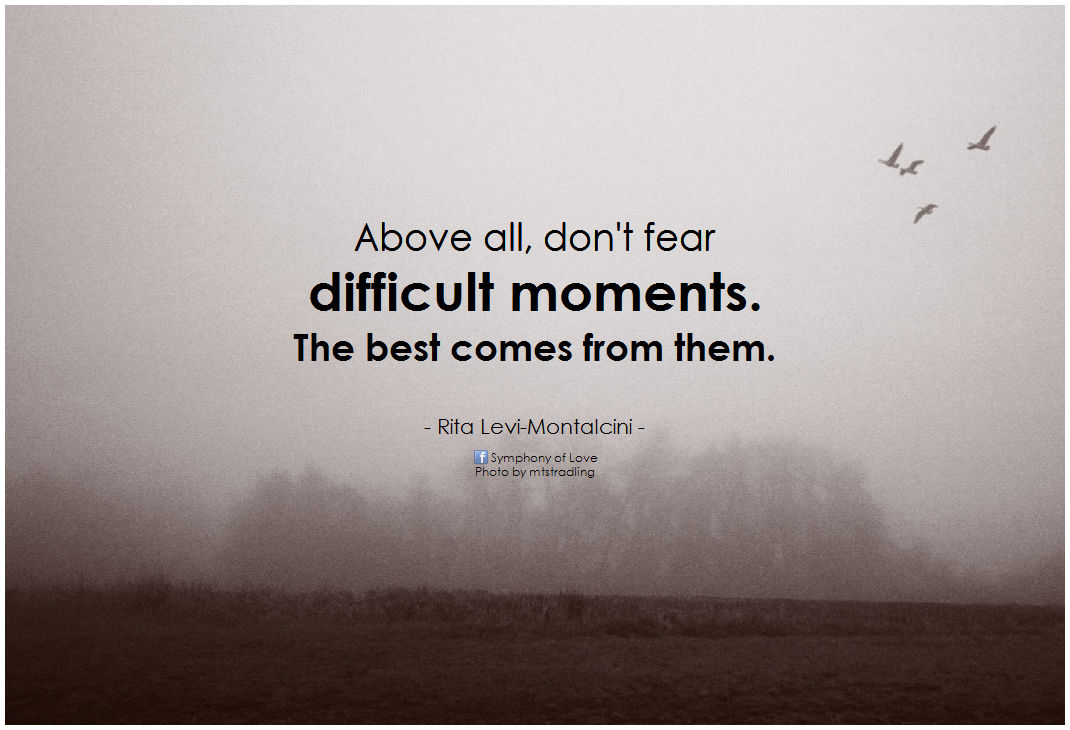 Author/Copyright holder: BK. Copyright terms and licence: CC BY-NC 2.0
It’s not even a difficult moment when you realize that selling your services is essential rather than evil. If your services will add value to your clients’ businesses, then it’s an act of decency to make potential clients aware of what you’ve got. You’re not trying to rip someone off or extort him/her – you’re trying to help that person to become more successful... and, oddly enough, more happy.
Selling is Helping Potential Clients
If your services will add value to your clients’ businesses, then it’s an act of decency to make potential clients aware of your services. You’re not trying to rip someone off or extort him/her – you’re trying to help that person to become more successful... and, oddly enough, more happy.
Whatever form of marketing you use, eventually you’re going to have to sell your services. So, forget the public image of salespeople – it really doesn’t matter. If you are not a bad person, then learning to sell will not make you a bad person.
Don’t forget that without salespeople, you would not have a home, a vehicle, a computer, or anything else in your life. As much as many folks might like to see them all sent to Mars, salespeople make the world go round, and you can be proud to sell services that enrich your customers’ businesses.
“You can have everything in life you want if you will just help enough other people get what they want.”
– Zig Ziglar, Secrets of Closing the Sale, American author, salesman, and motivational speaker
The Fear of Rejection and How to Overcome It
This is the biggest fear of all first-time salespeople—being told “no”. It’s actually a fear that creeps into many parts of people’s lives. We all know someone who is terrified of asking someone on a date or taking up a hobby in case he or she is no good at it.
The fear of rejection is actually quite irrational. Like many other fears, it has no basis in fact. Many of us are scared of spiders even though the chances of being hurt by a spider are minimal, and—outside of the banana fields of the Dominican Republic—the chances of being killed by a spider are next to nil. Conversely, the chances of us dying in road accidents are about 400–4000 times higher than being hurt by a spider. Yet, most of us get into a car fearlessly, only to flinch when an eight-legged visitor who has no interest in us scuttles across the floor.
The fear of rejection is even sillier than the fear of spiders. If someone says “no” – there are no catastrophic consequences. You’re out the cost of a phone call (which in some places may be $0, anyway) and the time you’ve spent on the call. And that’s it.
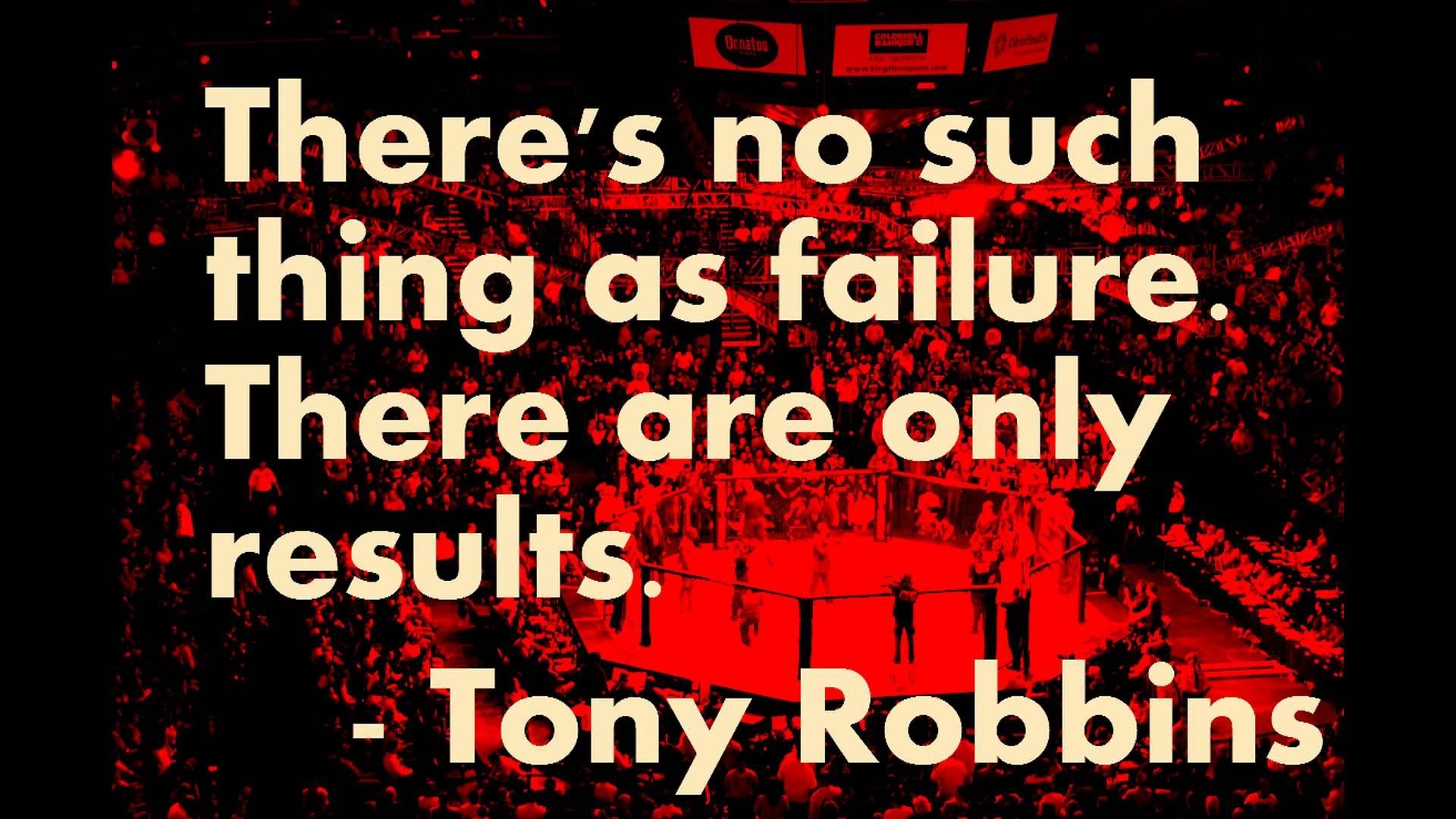
Tony Robbins, the famous coach and author, offers some excellent advice with regard to rejection and failure.
Sometimes, knowing that fact makes it easier to get selling. Sometimes, it’s not enough.
Exposure Therapy and Spiders
How do they treat arachnophobia (the fear of spiders)?—Through exposure therapy. You put a tiny spider in a room with the scared person. When he gets used to it, you swap that one with a bigger spider. You keep repeating this process until ‘the patient’ is prepared to come in contact with a spider. When he finds, finally, that the creepy-crawly is truly not after his ultimate destruction, having hated him all its life, his fear will vanish.
In fact, exposure therapy is the best way to treat most phobias. The good news is that you can also treat the fear of rejection with exposure therapy. The idea is simple. You learn that rejection has no negative consequences—thus, it has no power over you.
You can treat yourself for this, too – there’s no need for someone to bring a big bag of rejection into your life and keep handing it to you in tiny portions until you get used to it. No, there’s a fun way, and we can make it a field trip, so consider it physical exercise, too.
Here’s how you do it…
How to Overcome your Fear of Rejection when Selling Through Exposure Therapy
Go to a shop, say a newsagent (somewhere that sells papers, sweets, etc.) and ask to buy something that they don’t sell, for example – a fire extinguisher. “Good day to you! I’d like to buy a fire extinguisher please.”
The person you ask may laugh but will then say something like—“I’m sorry; we don’t sell fire extinguishers.” (He’s saying “no”.)
This is your cue to say: “Oh, never mind. I’ll look somewhere else.”
Do this a few times (but, please, don’t use the same shop and same member of staff – that’s harassment – always go to different places), and you’ll soon become used to the idea that when someone says “no” to you, nothing really changes.
That’s all you have to do to overcome your fear of rejection. You will find that it makes a lot of other interactions in life easier, too. You’ll be less scared of asking for things, such as the phone number of the person you like, because you’ll know that “no” cannot hurt you. Actually, we have quite a few not-overly-attractive-rich-or-intelligent accountants who always ask the most attractive person in the room to go out for a cup of coffee. Their results are mind-blowing. You wouldn’t believe how many of those persons actually say “yes”.
You can apply this approach on all situations in life. It’s the best way to help you get out of your comfort zone and into the place you want to be. You can use the exposure therapy method if you want to travel more, meet new interesting people, find a new partner in business or in life, and so forth. If you dare to aim a little higher and further, chances are that you’ll actually end up where you aim to be. If you don’t aim for a goal, chances are that you’ll stay where you are. If you’re perfectly happy—that’s just fine. But when it comes to getting your first sales, it’s all about getting started and getting in touch with your first clients.
"Your greatness is limited only by the investments you make in yourself."
– Grant Cardone, New York Times bestselling author, international speaker, business innovator, leading social media personality and top sales trainer
The worst-case scenario in telesales is someone saying “no”. It changes nothing. It doesn’t hurt you or make you a bad person. The other cases, on the other hand, are all beneficial—“Maybe... please send me more information.”—or even—“Yes, let’s do this”.
One Last Tip Regarding People Saying “No”
"In business it is most often all about getting your foot in the door and once you do, everything opens up and things start to naturally progress into bigger and more opportunities."
– Lori Greiner, American inventor and entrepreneur
A lot of people say “no”, some say “maybe” and some say “yes”. Sales is a numbers game. If you make 300 calls, you may get 30 “maybes” and 3 people who say “yes”.
Every time someone says “no”, you are closer to finding a person who says “maybe” or “yes”. There are a lot of sales teams which celebrate each “no”. It is a tick against the list of calls they have to make in order to earn their living.
The more you celebrate the folks who say “no”, the less difficult they are to handle. They are the milestones on the edge of the road between you and your eventual destination (the people who say “maybe” or “yes”). If you can learn to enjoy the journey, sales will become much more fun.
You don’t have to be a “natural salesperson” – you can learn to follow a process and overcome your fear of rejection. Sales is actually pretty easy. If you can communicate coherently and are confident that you can help the potential client, you can sell.
Sales does not require the “gift of the gab”. It requires a great product or service – and persistence, determination and hard work—but you don’t need to be able to talk the shoes off horses to be a great salesperson.
“Never take the position that things just happen to you; rather, they happen because of something you did or did not do.”
― Grant Cardone, The 10X Rule: The Only Difference Between Success and Failure
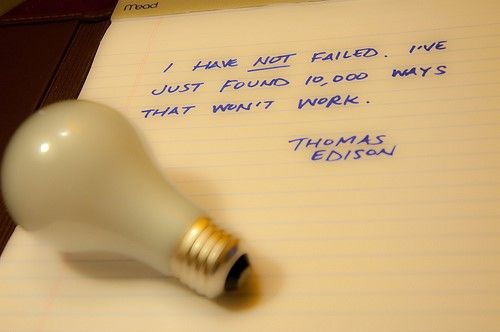
Author/Copyright holder: John Liu. Copyright terms and licence: CC BY 2.0
Thomas Edison knew that it was important to celebrate the bad moments as well as the good.
The Take Away
Fear of selling is irrational. It doesn’t make it any less real for those facing it. Overcoming the idea that salespeople are bad people is easy. Examine the idea and you’ll see it simply doesn’t make any sense. All businesses run on salespeople. Making a profit is why businesses exist. Without salespeople, most businesses would make no money and would very quickly cease to be businesses at all. In the long run, it would be a bleak picture—a desolate world, with little to do or enjoy.
The fear of rejection is without a doubt the most common fear of would-be salespeople. It’s easy to overcome through painless exposure therapy. Then comes a point when you can celebrate each rejection, and then you’ll wonder what you were worried about in the first place.
“We have nothing to fear but fear itself.”
– Franklin Roosevelt, President of the United States from 1933 to 1945
References & Where to Learn More
Hero Image: Author/Copyright holder: BK. Copyright terms and licence: CC BY-SA 2.0
Zig Ziglar, Secrets of Closing the Sale, 2004
Jeffrey Gitomer, Little Red Book of Selling: 12.5 Principles of Sales Greatness, 2004
Daniel H. Pink, To Sell Is Human: The Surprising Truth About Moving Others, 2013
Frank Bettger, How I Raised Myself From Failure to Success in Selling, 1992
Art Sobczak, Smart Calling: Eliminate the Fear, Failure, and Rejection from Cold Calling, 2010
Brian Tracy, The Psychology of Selling, 2006
Jeffrey Gitomer, The Sales Bible: The Ultimate Sales Resource, 2014
Oren Klaff, Pitch Anything: An Innovative Method for Presenting, Persuading, and Winning the Deal, 2011
Tom Hopkins, How to Master the Art of Selling, 2005
Find other techniques for conquering fear here: 5 Sure-fire Ways to Overcome Fear and Anxiety Today
And here: A Guide to Beating the Fears That Are Holding You Back
Read this interesting paper about Exposure Therapy and Anxiety Disorders