Emotion and Design: Affect and Design

by Andreas Komninos • 6 min read

635 Shares
“If the product is something fundamental to life and well-being, then the proper response is to ignore continual shifts in popular sentiment and aim for long-lasting value. Yes, the product must be attractive. Yes, it should be pleasurable and fun. But it must also be effective, understandable, and appropriately priced. In other words, it must strive for balance among the three levels of design.”
Don Norman (2005) in “Emotional Design: Why we love (or hate) everyday things"

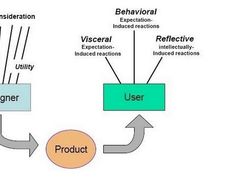
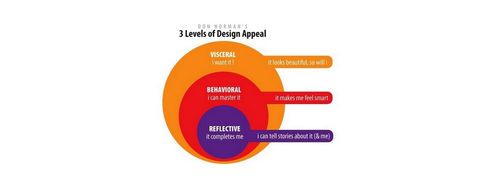
As you are aware, the popular belief is that aesthetics have the potential to influence users at the visceral, behavioral and reflective levels of processing. Attractive things not only make us feel positive but also influence us in terms of how we interact and think about such things. Even slight changes to the visual appeal of products, situations, and even workplaces have been found to influence productivity. For example, a recent study conducted by psychology researcher Marlon Nieuwenhuis at Cardiff University and her colleagues (2014) found offices with plants (i.e. 'green' offices) reported employees were happier and showed higher rates of productivity than offices with a 'lean' design (i.e. stark offices with no greenery).

It would be nonchalant to simply say aesthetics make things better; taken as a whole, aesthetics encompasses a myriad of different considerations, and a misstep on any of these can make the design and user experience worse. The things we found attractive, stylish or appealing ten, fifteen, twenty, thirty years ago are, for the most part, are things we see from our current viewpoint as old-fashioned (although some things we appreciate as 'retro') and outdated. So, we are constantly dealing with changing attitudes of aesthetic appeal. This means aesthetics is something of a moving target, emphasizing the challenge facing us all as designers.

Aesthetics in an ever-changing world

So, how can we contend with changing attitudes and opinions of aesthetic appeal?

Firstly, concentrate on the product. Many of the answers should be found by focusing on what exactly you are designing. For example, a website selling clothes should convey this message instantly, which means the designers must limit the amount of distraction on arrival. Take a look at the Sum Hing Carton Box Factory website pictured above; the user is greeted by a single cardboard box. The navigation options are then placed along the right-hand side of the user interface. This arrangement informs the users of where they are and the potential navigation points. The aesthetic appeal lies in the minimalistic design.

Secondly, keep things simple. This is connected to the previous example; if the users have to search to find what they need, you have, to a degree, failed. What they need should be available and visible as and when they need it. If you manage to reduce the time it takes to identify the necessary element or object, the users/consumers can concentrate on the task at hand and improve their productivity as a result.

Thirdly, keep things functional, effective and transparent. While there is pressure to bend and weave so as to stay in time with the prevailing styles and fashions, functionality, effectiveness, and transparency are just as likely to attract users and consumers. Functionality refers to how the user interacts with the product. If there are significant difficulties, it does not matter how attractive your design is, the users are likely to feel frustrated. Effectiveness refers to how quickly the users are able to identify what they can do, how they can do it, where they can go, and the speed with which they are able to complete their tasks. Transparency is the honesty and openness of your product, branding, message(s), and so on. If the users feel like there is some hidden catch to using or buying your product, you will lose their trust. After all, if we do not feel comfortable or relaxed, anticipating some nasty surprise, how can we be expected to enjoy the user experience? The users should be able to focus their attention on the elements necessary for their task(s).

When products are poorly designed (i.e. affect the interactive experience) and are inefficient and dishonest, the aesthetic qualities of your product will be associated with these negative design characteristics. For example, an attractive banner advert might have aesthetic appeal, but through experience, the users know they are being seduced with little honesty and transparency.

Conclusion

This is by no means an edict or a sure-fire approach to achieving aesthetic appeal, especially if you are working in an industry based on the prevailing fashions of the time. However, thanks to your concentrating on functionality, appropriateness, simplicity, and transparency, the obstacles that often face users are lowered, allowing them to devote their attention to the important aspects of using and interacting with a particular product.

The Take Away

Aesthetics have the capacity to improve an overall user experience. When simple superficial changes are made to a product, setting or any other element in our environment, they can have a significant impact on our productivity and emotions. While attractive things have been found to influence our conscious and subconscious minds, aesthetics can negatively impact our thinking and behavior. In order to exploit the benefits of visual appeal, whilst reducing the potentially deleterious aspects of poor visual (or sensory) design, you must focus on a number of important considerations. What is the product? Who are your intended users? Is the design simple enough to ensure rapid identification of the elements necessary for a specific task? Are you being honest and transparent? Each new product presents a specific set of challenges; however, the principles of functionality, appropriateness, simplicity, and transparency help us make the correct superficial design decisions.

References & Where to Learn More

Hero Image: Copyright holder: the Author, copyright license and terms: Public Domain

Nieuwenhuis, M., Knight, C., Postmes, T., & Haslam, S. A. (2014). “The relative benefits of green versus lean office space: Three field experiments”. Journal of Experimental Psychology: Applied, 20(3), 199.


Topics in This Article

Learn More in This Course:

AI for Designers

12 days
13 % booked
View Course

What You Should Read Next

  • Read full article
    Self-Actualization: Maslow's Hierarchy of Needs - Article hero image
    Interaction Design Foundation logo

    Self-Actualization: Maslow's Hierarchy of Needs

    The things we use and consume may satisfy the first four levels of needs in Maslow's hierarchy of needs, but they will never provide us with the characteristics, outlined below, which help us identify the attainment of self-actualization. Take all the safety, love, etc. you like; for all their impor

    Social shares
    1.2k
    Published
    Read Article
  • Read full article
    Our Three Brains - The Reptilian Brain - Article hero image
    Interaction Design Foundation logo

    Our Three Brains - The Reptilian Brain

    Neuroscience has offered many important insights into both the structure and function of the human brain. One of the most well-known models of brain structure, and how it relates to function, was provided by neuroscientist Paul MacLean, whose 'Triune Brain' model is based on three dominant structure

    Social shares
    1.2k
    Published
    Read Article
  • Read full article
    Norman's Three Levels of Design - Article hero image
    Interaction Design Foundation logo

    Norman's Three Levels of Design

    In the human mind there are numerous areas responsible for what we refer to as emotion; collectively, these regions comprise the emotional system. Don Norman proposes the emotional system consists of three different, yet interconnected levels, each of which influences our experience of the world in

    Social shares
    1.2k
    Published
    Read Article
  • Read full article
    Esteem: Maslow's Hierarchy of Needs - Article hero image
    Interaction Design Foundation logo

    Esteem: Maslow's Hierarchy of Needs

    Esteem needs encompass confidence, strength, self-belief, personal and social acceptance, and respect from others. These needs are represented as one of the key stages in achieving contentedness or self-actualization. While esteem is an internal quality, we are affected by external factors, such as

    Social shares
    1.1k
    Published
    Read Article
  • Read full article
    Putting Some Emotion into Your Design – Plutchik’s Wheel of Emotions - Article hero image
    Interaction Design Foundation logo

    Putting Some Emotion into Your Design – Plutchik’s Wheel of Emotions

    Emotional design is a big buzz word within the UX community. Designs which tap into the user’s emotions are considered to do more than just respond to their stated needs and provide a greater level of user experience. One way of understanding emotions is Plutchik’s Wheel of Emotions – this may help

    Social shares
    1.1k
    Published
    Read Article
  • Read full article
    The Concept of the "Triune Brain" - Article hero image
    Interaction Design Foundation logo

    The Concept of the "Triune Brain"

    In the 1960s, American neuroscientist Paul MacLean formulated the 'Triune Brain' model, which is based on the division of the human brain into three distinct regions. MacLean's model suggests the human brain is organized into a hierarchy, which itself is based on an evolutionary view of brain develo

    Social shares
    1.1k
    Published
    Read Article
  • Read full article
    Our Three Brains - The Emotional Brain - Article hero image
    Interaction Design Foundation logo

    Our Three Brains - The Emotional Brain

    In 1952, Paul MacLean introduced the term 'limbic system', which refers to the interconnected brain structures responsible for much of our emotional experience. MacLean's recognition of the limbic system as an important and functional set of connected structures perhaps represents his most prominent

    Social shares
    1k
    Published
    Read Article
  • Read full article
    How to Prevent Negative Emotions in the User Experience of Your Product - Article hero image
    Interaction Design Foundation logo

    How to Prevent Negative Emotions in the User Experience of Your Product

    Learn to prevent negative emotions in the user experience of your product. As a User Experience (UX) designer, you want users to enjoy using your product by eliminating negative experiences and inducing positive emotion in your users. This article will teach you how to prevent anger and frustration

    Social shares
    894
    Published
    Read Article
  • Read full article
    The Reflective Level of Emotional Design - Article hero image
    Interaction Design Foundation logo

    The Reflective Level of Emotional Design

    “Clearly there are some products that stand little chance of ever becoming symbolic in people's lives-like Ethernet routers, for instance—no matter how wonderful they look or well they behave. However, when the design of a product or service addresses users' goals and motivations-possibly going beyo

    Social shares
    864
    Published
    Read Article
  • Read full article
    Creating Emotional Connections - Article hero image
    Interaction Design Foundation logo

    Creating Emotional Connections

    People form emotional connections and associations with the things they use and come across throughout their lives. These connections and associations help guide our behavior and determine how we perceive the world. Designers must grasp how to encourage emotional connections between users and their

    Social shares
    862
    Published
    Read Article

Top Articles

Top Topic Definitions

Feel Stuck?
Want Better Job Options?

AI is replacing jobs everywhere, yet design jobs are booming with a projected 45% job growth. With design skills, you can create products and services people love. More love means more impact and greater salary potential.

At IxDF, we help you from your first course to your next job, all in one place.

See How Design Skills Turn Into Job Options
Privacy Settings
By using this site, you accept our Cookie Policy and Terms of Use.
Customize
Accept all

Be the One Who Inspires

People remember who shares great ideas.

Share on:

Academic Credibility — On Autopilot

Don't waste time googling citation formats. Just copy, paste and look legit in seconds.

Feel Stuck? Want Freedom?

Join 326,020+ designers who get one powerful email each week. Learn to design a life you love.

Next email in
1
day
15
hrs
41
mins
58
secs

Free forever. No spam. Unsubscribe anytime.