In this lesson, you'll discover why accessibility testing is essential for validating your design work and how it differs from both usability testing and code-level QA. You'll examine the critical importance of testing with users' own devices and configurations in their natural environments, rather than relying on sterile lab setups.
In this video, Frank Spillers, Service Designer and Founder and CEO of Experience Dynamics, shares practical lessons from real testing sessions. You'll learn the chair-side methodology for accessibility testing, how to gather metrics such as success rates and task completion times, and why this hands-on user validation reveals insights that guidelines and automated checkers simply cannot.
Current Testing Standards
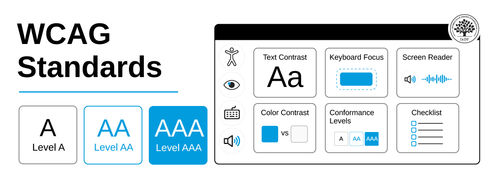
WCAG 2.2 Level AA is the current baseline standard (published October 2023).
New criteria include mobile accessibility, focus appearance, and cognitive considerations.
Section 508 was updated in 2018 to align with WCAG 2.0 Level AA (not an ongoing "refresh").
Modern Assistive Technology Landscape
Testing should include diverse assistive technology beyond traditional desktop screen readers:
Mobile Screen Readers
iOS VoiceOver.
Android TalkBack.
Voice Control
Apple Voice Control.
Dragon NaturallySpeaking.
Switch Access
Single-switch or multi-switch navigation for motor disabilities.
Screen Reader Diversity
The screen reader landscape has diversified significantly since the video was recorded:
NVDA (free, open-source for Windows): Widely adopted.
Built-in options: VoiceOver (macOS/iOS), Narrator (Windows), TalkBack (Android).
Institutional licensing: Better models available for JAWS and other commercial tools.
Demo version limitations remain a consideration for institutional setups.
Remote Testing Capabilities
Post-2020 developments have expanded remote accessibility testing:
Screen-sharing and remote-observation tools are now commonplace.
Remote unmoderated testing platforms are available.
User-controlled environments remain ideal when feasible.
Best practice: Test in the user's natural environment with their configured assistive technology, whether in person or remotely.
Mobile Accessibility Testing
Mobile testing is now essential, not optional:
Touch gesture alternatives (WCAG 2.2 requirement).
Touch target sizes (minimum 24×24 CSS pixels).
Mobile screen reader navigation patterns differ from desktop.
Screen orientation flexibility.
Zoom/magnification at the mobile level.
Cognitive Accessibility Testing
WCAG 2.2 strengthened cognitive accessibility requirements:
Test with users who have cognitive disabilities (dyslexia, ADHD, autism spectrum, memory impairments).
Evaluate clear language, consistent navigation, and error prevention.
Test accessible authentication methods (no cognitive function tests).
Consider situational cognitive load (stress, distraction, multitasking).
Automated Testing as a Complement
Automated tools complement (but don't replace) user testing:
Tools: axe-core, Lighthouse, WAVE, Pa11y.
Coverage: Catch 30-40% of issues automatically.
Integration: CI/CD pipelines enable continuous monitoring.
Limitation: Cannot evaluate usability, context, or user experience quality.
User testing remains essential for validating real-world accessibility.
Testing Across Disability Spectrum
Comprehensive accessibility testing includes:
Visual: Screen readers, magnification, high contrast, and color blindness.
Motor: Keyboard-only, voice control, switch access, reduced dexterity.
Auditory: Captions, transcripts, visual alternatives.
Cognitive: Clear content, consistent navigation, error prevention.
Temporary/situational: Bright environments, noisy contexts, one-handed use.
International Standards
Beyond US Section 508:
European Union: EN 301 549, European Accessibility Act (2025 implementation).
UK: Public Sector Bodies Accessibility Regulations 2018.
Canada: Accessible Canada Act.
Australia: Disability Discrimination Act requirements.
Most standards align with WCAG 2.1 Level AA or WCAG 2.2 Level AA.