Woman points toward Where’s the data? beside DESIGN surrounded by usability, functionality, message, professionalism, branding, accessibility, engaging and simplicity

Challenges that Face Data-Driven UX Design

• 9 min read

472 Shares
Save

Data-driven design, it sounds so reasonable doesn’t it? The idea that we should design based on information that we collect from our users is simply logical. Yet, in practice data-driven design is often poorly understood and even more poorly implemented. Much of this lays with the way that organizations see data and how we, ourselves, approach that data. Let’s take a closer look at some of the challenges UX professionals face when trying to implement data-driven design and how we might address them:

Not all Data is Numerical

It’s important for UX professionals to help the organization understand that not all useful data can be provided numerically. Of course, there are lots of useful numbers that we can collect as UX professionals – Google Analytics is a key tool for many UX designers on web projects and it produces a bunch of useful numbers.

Numbers are quantitative and they bring plenty of valuable insights that we can use. But they are not the whole story. Qualitative data is the rest of the picture.

We need to know why our users didn’t respond well to a particular feature and there’s not a number on earth that can tell us that. When we run an ethnographic study we don’t expect to collect a few easy to use pie charts. Sometimes data isn’t easy to handle. Sometimes it isn’t clean. That doesn’t mean it has no value.
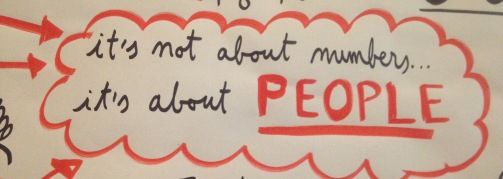


Data is Only as Good as the People Handling It

Data tells a story but only when it is interpreted. That means that the story that the data seems to tell may not be an accurate one. Good UX designers need to help people interpret data and bring attention to the limitations of any data set.

If your Facebook feed lights up one morning with messages from users – that data is useful but it’s important to remember that it only represents the users you have that choose to use Facebook to communicate with you. It’s not representative of all your user base (unless your product is a Facebook only product).

Don’t forget that you can influence data sets. If you go and walk a user through a product; their experience is likely to vary from the user who didn’t get such a walkthrough.

Even in things like surveys, the way we design the questions can influence the responses we get. It’s important to remember that data is rarely a complete picture and that data can be skewed and even the largest data sets can be wrong.
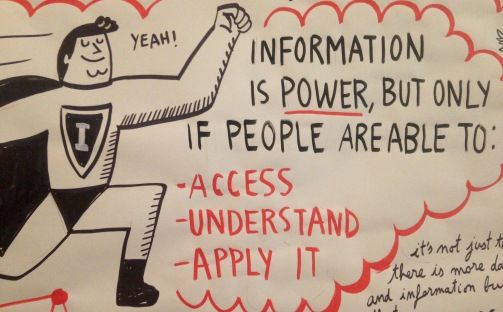


Data Should Not be a Secret

In some organizations it can be impossible to get your hands on the data that you need. Many companies seem to think that data is something that managers should have access to but the rest of the business should not. This can make life as a UX Designer, trying to take a data-driven approach, nearly impossible.

There needs to be a mutual understanding as to what data is for and what it can achieve. There’s no point in any of us trying to work to improve data that is generated, measured and reviewed without our input and oversight.

It is also important that everyone understands that data at a specific point in time is not always reflective of the long-term pattern. In some businesses, for example, sales conversions will be monitored hourly. A bad day can then become, to some managers, indicative of a problem that doesn’t exist.

If you can’t even see that data – it’s unlikely any response you make to it will be flawed. Data really needs to be open in order for it to be used to base design decisions on. It also needs to be able to be questioned. A bad day today is not a disaster. A bad year just might be.



Data Can Be Used to Innovate

Many people feel that data impedes innovation. Why? Because it’s focused on the past – it examines what has happened and not what will happen. There’s a feeling that examining data is reinventing the wheel. This isn’t the case but it is important to realize that there are limitations when it comes to predicting future performance from past performance.

Data is often used tactically but that doesn’t mean that it can’t help strategically. Once again, it’s down to how we use and interpret data rather than a limitation of data itself. You can drive a great user experience through data – it’s a UX designer’s job to do so, you just need to think about the way you do things before you do them.

Then there’s the idea that because most data sets are not a “complete picture” (for example, Google analytics may tell you your bounce rate but it’s hard to determine why people are leaving the site from that data) that they don’t provide enough information to base design decisions on. If that’s the case – get more data. It really is as simple as that. If you find you lack the right data, go and get it. One data set can show you what to look at and another can tell you why something is happening. Don’t let limited data prevent innovation.



Using Data Well Requires Flexibility

The most important thing for UX designers to remember is that there are many ways to skin a cat when it comes to using data. You can use one data set for many purposes and another for only one. You need to be flexible in the way that you approach data and to prepare others to be flexible in the way they review data too.

Be cautious with data, don’t try and infer too much or to push data to fit a theory. Be clear about the drawbacks and downsides of treating the data with too much respect. Always remember that ideas drawn from data can be tested – they don’t have to be spoken as gospel until they have been.

Summary

A data-driven approach to UX design can be a good thing. It’s important to fully understand the data you have, to be able to access enough data to make decisions on and to be clear about the ways that data can and cannot be used in order to make the best of this approach.

Image Sources: The Innovation Enterprise (link to image), Get Hacking Security (link to image), Institute of Development Studies (link to image), Institute of Development Studies (link to image), Analytics Hero (link to image)


Learn More in This Course:

Learn Design and AI From the Best

Get one powerful email each week, like 309,014 others.

Next email in:

What You Should Read Next

  • Read full article
    What Does a User Interface (UI) Designer Do? - Article hero image

    What Does a User Interface (UI) Designer Do?

    What’s in every memorable digital experience is a seamlessly navigable website or an app that feels like second nature—and what lies behind those are user interface (UI) designers; they’re the ones who shape the aesthetics and functionality of any digital interface. But what does a user interface de

    Social shares
    614
    Published
    Read Article
  • Read full article
    Should You Choose between Responsive and Adaptive Design? - Article hero image

    Should You Choose between Responsive and Adaptive Design?

    Designers can choose between adaptive and responsive design to bridge the gap between devices and changing user contexts. Here you’ll learn the merits of each approach, so you’re in a great position to select an approach for your project.  What Are the Main Differences Between Responsive a

    Social shares
    565
    Published
    Read Article
  • Read full article
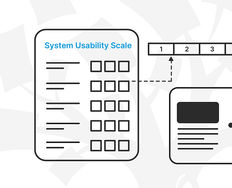
    System Usability Scale for Data-Driven UX - Article hero image

    System Usability Scale for Data-Driven UX

    Ever wondered how the top designers, researchers, and product developers manage to create products that are user-friendly, efficient, and enjoyable—consistently? One of the key things there is what’s called the System Usability Scale (SUS), a vital tool and questionnaire-based method that profession

    Social shares
    967
    Published
    Read Article
  • Read full article
    Don Norman’s Top Tips from the Design for the 21st Century Course - Article hero image

    Don Norman’s Top Tips from the Design for the 21st Century Course

    The design field is evolving. It’s been proven that aside from driving business success and delivering beautiful and successful products, design can be pivotal to solving complex human issues. For instance, GE Healthcare used Design Thinking to improve the MR scanner experience for children—which is

    Social shares
    592
    Published
    Read Article
  • Read full article
    Sustainability Is Not Enough - Article hero image

    Sustainability Is Not Enough

    Sustainable design. Sustainable fashion. Sustainable living. We often hear these terms in marketing campaigns and popular media. But what does sustainability mean and why does pioneer of User Experience Design Don Norman think that sustainability shouldn’t be our goal when we design?In this video, D

    Social shares
    485
    Published
    Read Article
  • Read full article
    Black Friday 2024: Invest in UX Design Education - Article hero image

    Black Friday 2024: Invest in UX Design Education

    “The best investment you can make, is an investment in yourself... The more you learn, the more you'll earn.”—Warren Buffett, Chairman and CEO of Berkshire HathawayHow many items have you added to your Black Friday shopping wishlist? This year, instead of short-term deals on products, why not take a

    Social shares
    564
    Published
    Read Article
  • Read full article
    Why Is AI so Important and How Is It Changing the World? - Article hero image

    Why Is AI so Important and How Is It Changing the World?

    You've heard about AI and all the wonderful (and sometimes scary) possibilities. But unlike sci-fi apocalyptic movies, AI isn't out to destroy humanity. Let's take a look at the challenges and opportunities we face as AI meets design.In this video, Ioana Teleanu, Founder of UX Goodies and former Lea

    Social shares
    487
    Published
    Read Article
  • Read full article
    Who, What, and How: Design Maps Show You the Way for Implementation - Article hero image

    Who, What, and How: Design Maps Show You the Way for Implementation

    For something called a “team project,” it’s amazing how often everyone’s on a different page. Design maps connect the dots. They organize your research, stories of use, and design artifacts into clear, user-centered interfaces that your team can actually build fast. No more “Wait, what did you mean

    Social shares
    403
    Published
    Read Article
  • Read full article
    How Can Designers Adapt to New Technologies? The Future of Technology in Design - Article hero image

    How Can Designers Adapt to New Technologies? The Future of Technology in Design

    The design industry is rapidly evolving with the integration of technologies such as artificial intelligence (AI) and 3D printing. While there may be concerns about job displacement, history has demonstrated that new technologies typically create more job opportunities. Don Norman, author of The Des

    Social shares
    691
    Published
    Read Article
  • Read full article
    Conceptual Models: The Hidden Structure Behind Your Next Great Interface - Article hero image

    Conceptual Models: The Hidden Structure Behind Your Next Great Interface

    Ever wondered why some interfaces feel effortless: like they already know what you’re trying to do, while others leave you guessing? The difference often lies in how well a product’s design matches the way users think. When your interface reflects their mental model, every action feels intuitive, an

    Social shares
    480
    Published
    Read Article

Top Articles

Top Topic Definitions

39% of Today's Skills Will Change by 2030

The World Economic Forum expects 39% of today's skills to be transformed or become outdated by 2030.

The good news is that jobs in UX / UI design and AI are among the fastest-growing professions globally.

Build Skills That Keep You Relevant

Privacy Settings

By using this site, you accept our Cookie Policy and Terms of Use.
Customize
Accept all

Be the One Who Inspires

People remember who shares great ideas.

Share on:

Academic Credibility — On Autopilot

Don't waste time googling citation formats. Just copy, paste and look legit in seconds.

Learn Design and AI From the Best

Get one powerful email each week, like 309,014 others.

Next email in: