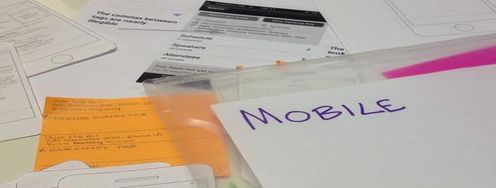
Remote Research Methods

Your constantly-updated definition of Remote Research Methods and collection of videos and articles.
Be a conversation starter: Share this page and inspire others!

197 Shares

What are Remote Research Methods?

Remote research methods are ways that researchers can gather data at a distance on users. Common methods for gathering data remotely include online surveys, keeping a diary, automatic logging through recording, behavioral analytics and experience sampling methods.

Many researchers believe that these user research methods are perhaps the best way to gauge the effectiveness of user-experience products while simultaneously remaining budget-friendly.

Learn More About Remote Research Methods

Make learning as easy as watching Netflix: Learn more about Remote Research Methods by taking the online IxDF Course User Research – Methods and Best Practices.

Why? Because design skills make you valuable. In any job. Any industry.

In This Course, You'll

  • Get excited as you learn the business superpower: user research! Master it, and you'll solve meaningful problems, create better experiences, and drive success in any field. Why? User research empowers you to become a detective of human behavior. You'll discover what people truly need so that you can create products and services they love. You can use user research to reduce abandoned carts in online shopping, improve patient outcomes in healthcare, and solve challenges in any industry. It's easier than you think! With step-by-step guidance, you'll master User Research quickly—no matter your background. Studies show that user research can improve time to market by up to 330% and increase revenue by up to 320%. So get on board, do work you're proud of, and get paid what you're worth.

  • Make yourself invaluable with timeless human-centered skills. At the heart of great design is understanding people: What they need, what holds them back, and what keeps them coming back. As AI becomes part of how teams build and iterate, this deep understanding of people turns AI from a tool into your superpower. Effortlessly transform insights into Return on Investment (ROI) as you design solutions people love. You'll learn to make data-driven decisions that eliminate guesswork as you design products and services based on real user needs. That drives loyalty and outperforms competitors. You'll easily translate research into visuals that win over stakeholders, managers, and clients. Discover exactly what motivates people and build solutions that consistently deliver results.

  • Gain confidence and credibility with hands-on experience in usability testing, contextual inquiries, semi-structured qualitative interviews, and observational methods. Master how to ask the right questions and create actionable personas from your research. You'll plan, conduct, and analyze research in real-world scenarios, fast-tracking your success with 40+ ready-to-use templates like interview guides, affinity diagrams, and customer journey maps. If you want to leave assumptions behind and create with precision, purpose, and impact, this course is perfect for you. If you're interested, we'll even help you build your portfolio around an app, so your new superpowers shine clearly.

It's Easy to Fast-Track Your Career with the World's Best Experts

Master complex skills effortlessly with proven best practices and toolkits directly from the world's top design experts. Meet your experts for this course:

  • Frank Spillers: Service Designer and Founder and CEO of Experience Dynamics.

  • Ann Blandford: Professor of Human-Computer Interaction at University College London.

  • Alan Dix: Author of the bestselling book “Human-Computer Interaction” and Director of the Computational Foundry at Swansea University.

Get an Industry-Recognized IxDF Course Certificate

Increase your credibility, salary potential and job opportunities by showing credible evidence of your skills.

IxDF Course Certificates set the industry gold standard. Add them to your LinkedIn profile, resumé, and job applications.

Course Certificate Example

Be in distinguished company, alongside industry leaders who train their teams with the IxDF and trust IxDF Course Certificates.

Our clients: IBM, HP, Adobe, GE, Accenture, Allianz, Phillips, Deezer, Capgemin, Mcafee, SAP, Telenor, Cigna, British Parliament, State of New York

All Free IxDF Articles on Remote Research Methods

Read full article
User Research Methods for Mobile UX - Article hero image
Interaction Design Foundation logo

User Research Methods for Mobile UX

Remote research is becoming increasingly common in today's digital age, and for a good reason. As remote work and virtual collaboration continue to gain popularity, it's necessary to understand how to conduct effective user research remotely. Whether you work with a remote team or research users in

Social shares
681
Published
Read Article
Read full article
Unmoderated Remote Usability Testing (URUT) - Every Step You Take, We Won’t Be Watching You - Article hero image
Interaction Design Foundation logo

Unmoderated Remote Usability Testing (URUT) - Every Step You Take, We Won’t Be Watching You

Unmoderated Remote Usability Testing (URUT) is a technique designed to help you overcome the downsides of moderated usability testing. While moderated usability testing is undeniably useful it suffers from the fact that it’s time consuming, it takes a lot of effort to recruit participants, the costs

Social shares
699
Published
Read Article

User Research Methods for Mobile UX

User Research Methods for Mobile UX

Remote research is becoming increasingly common in today's digital age, and for a good reason. As remote work and virtual collaboration continue to gain popularity, it's necessary to understand how to conduct effective user research remotely. Whether you work with a remote team or research users in different locations, remote research can offer unique opportunities and challenges. Here, we explore the best practices for effective remote research that delivers actionable insights.

Mobile app user research in the lab may not be as effective as remote research. Ethnographic research is first prize—mobile app users will face continued distractions when they use their smartphones, and there's no better simulation for these distractions than to monitor the user in their familiar environment. There is a strong business case for remote research for mobile apps, and it should help designers build better mobile user experiences.

Yet, while remote research is a valuable tool in UX research, it should not be the sole method in your UX toolbox. In fact, remote research provides an even more comprehensive understanding of users if you combine it with other methods. For example, in-person interviews or usability testing can offer additional context and allow researchers to observe users' behavior firsthand.

Remote Research Methods for Mobile UX

Here are some remote user research methods that can help you get useful feedback for mobile UX.

1. Remote Usability Testing

You can conduct usability tests remotely using software like UserTesting, which allows you to record the user's screen as they navigate through your app and identify areas that need improvement.

2. Surveys and Questionnaires

Surveys and questionnaires are a great way to gather feedback from your target audience. You can create these online with SurveyMonkey or Google Forms and distribute them to your target audience via email or social media. Surveys can help you understand user preferences, expectations, and pain points.


3. Remote Interviews

Remote interviews can help you gather in-depth knowledge about user behavior and preferences. You can conduct remote interviews with tools like Zoom, Skype, or Google Meet. Remote interviews allow you to ask follow-up questions and clarify doubts in real time.

4. Analytics

Analytics can provide practical information about user behavior and usage patterns. You can use tools like Google Analytics or Mixpanel to track interesting bits about your users, such as how long they spend on each screen, which features they use most frequently, and where they drop off. This data can help you optimize your mobile UX.

5. A/B Testing

A/B testing involves comparing two versions of your mobile app to see which one performs better in terms of user engagement and conversion rates. You can use tools like Optimizely or Google Optimize to conduct A/B testing.

Remote user research methods are essential to collect user feedback about their experience with your digital products. In the fast-paced world of mobile technology, it is crucial to design an intuitive and user-friendly mobile app that meets the needs and preferences of the target audience. User research plays a significant role in this process, as it helps designers understand user behavior and expectations.


How Do We Capture Data in Mobile Usability Research?

There are various useful tools available for capturing data in mobile usability research. Among the most frequently used tools are:

  1. Mobile screen recording software

Captures the user's interaction with the mobile device, which includes tapping, swipes, and gestures.

  1. Mobile heat mapping software

Catches the areas of the mobile screen that users interact with the most. You can use this sort of data to optimize the placement of buttons, links, and other interactive elements.

  1. Mobile analytics software

Tracks user behavior within the mobile app, such as the number of times they use a feature, the time spent on each screen, and the rate at which users perform particular tasks.

  1. Mobile survey tools

With surveys, you can get feedback from users about their experience with the mobile app. This data can help you prioritize future development efforts.

  1. Mobile eye-tracking software

Detects the user's eye movements and gaze patterns as they interact with the app. This data lets you determine what features attract the user's attention.

The Take Away

In today's world, where mobile apps are omnipresent, it's important to design intuitive and user-friendly mobile user experiences. User research is a crucial step in this process, as it helps designers understand the needs and preferences of their target audience. However, this type of research poses unique challenges, especially when the team works remotely, so ensure you use a combination of methods for better results.

Modern technology provides designers with the unique opportunity to collect insights from users in their natural environment, thanks to the tools that make remote research possible, which include technological marvels like eye-tracking and heat-mapping software; use these tools to your advantage!

References and Where to Learn More

Check out this great round-up of mobile testing tools, which includes open-source options.

Can you do UX research online? Mostly!

Read this classic article by UX professional and usability expert Lorraine Patterson on Mobile User Research Methods.

Learn about how you can use Figma Mirror to test your prototype on your device.

Hero Image: © Interaction Design Foundation, CC BY-SA 4.0

Feel Stuck?
Want Better Job Options?

AI is replacing jobs everywhere, yet design jobs are booming with a projected 45% job growth. With design skills, you can create products and services people love. More love means more impact and greater salary potential.

At IxDF, we help you from your first course to your next job, all in one place.

See How Design Skills Turn Into Job Options
Privacy Settings
By using this site, you accept our Cookie Policy and Terms of Use.
Customize
Accept all

Be the One Who Inspires

People remember who shares great ideas.

Share on:

Academic Credibility — On Autopilot

Don't waste time googling citation formats. Just copy, paste and look legit in seconds.