Product-service hybrids are where products and services fuse into a single entity whilst retaining aspects of both the product and the service. In a digital world, the development of product-service hybrids is becoming increasingly common as it becomes harder to separate the two in code and in the mind of the user/customer. UX designers will be increasingly more involved in creating such hybrids as the trend continues. Of course, this doesn't mean the end of the line for products but it does mean service design will become more and more important over time.
Product-Service Hybrids
Your constantly-updated definition of Product-Service Hybrids and collection of videos and articles.
Be a conversation starter: Share this page and inspire others!
Get 1 Powerful Email Each Week
Join 312,909 subscribers.
What are Product-Service Hybrids?
All Free IxDF Articles on Product-Service Hybrids


Product-Service Hybrids – When Products and Services Become One
Mikal Hallstrup,, the Chief Visionary Officer of Designit says; “The world doesn’t necessarily need more products, it needs better solutions.” While a solution may commonly be a product or a service, it’s more likely to be a combination of the two in many instances today.The combination of a product
- Social shares
- 903
- Published
Read Article
Product-Service Hybrids – When Products and Services Become One
Mikal Hallstrup,, the Chief Visionary Officer of Designit says; “The world doesn’t necessarily need more products, it needs better solutions.” While a solution may commonly be a product or a service, it’s more likely to be a combination of the two in many instances today.
The combination of a product and a service is a product-service hybrid. For example, the iPod and iTunes were a famous example of this approach. Yet, they were complementary hybrids – it was possible to use an iPod without iTunes and vice-versa. This hybrid approach meant that Apple would be able to treat them as separate components of a product-service hybrid and manage them individually.
Another example would be something like a satellite radio service where a purchaser must also then subscribe to the radio bundle that works with that service. So, you can’t use the receiver without the subscription or vice-versa. That leads to a product-service hybrid which is fully dependent and thus must be managed as a single entity.
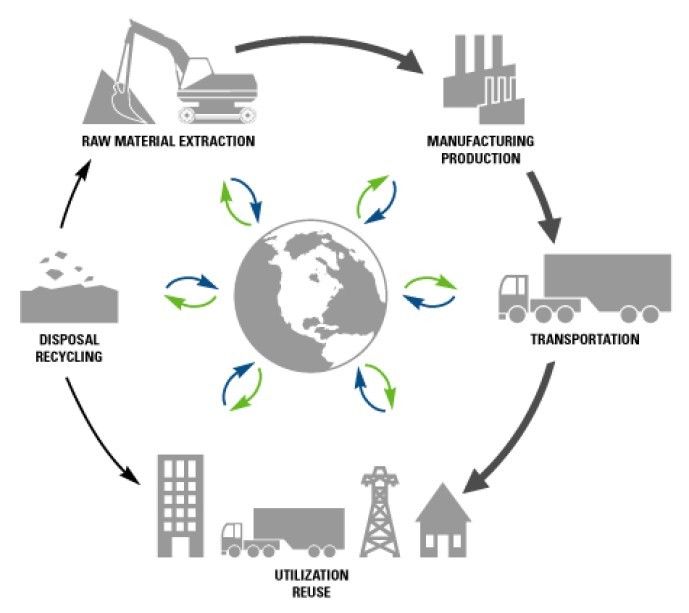
Author/Copyright holder: National Institute of Standards and Technology’s Manufacturing Engineering. Copyright terms and licence: Public Domain.
As you can see from this product lifecycle diagram many products have the assumption of services (such as reuse and recycling) already built in to them.
Common Types of Product-Service Hybrid
The Harvard Business Review offers 4 types of product-service hybrid that are commonly found in today’s market place:
- Flexible bundles. These are collections of products and services can be completely independent but which add large value when combined. Think Microsoft products and their support.
- Peace-of-mind bundles. A combination of product(s) and service(s) that amount to a “best of breed” offering where a market leading product can be combined with a “faceless” service (or vice-versa) to bring additional value. The product(s) and service(s) involved here are likely to be complementary rather than dependent on each other.
- Multi-benefit bundles. The hybrid here is both complementary and dependent and brings big benefits to the customer.
- One-stop bundles. Unrelated products and services brought together to offer larger value to a customer. These generally focus on convenience at point of sale.
How Do You Develop a Product-Service Hybrid?
To launch a successful hybrid, you’re going to need to overcome the barriers to entry in a given market place. That means you might want to look at:
- Product commoditization. How do you reduce the commoditization of a product by tying it to a service?
- Problem complexity. If a hybrid solution solves a complex problem and does it well it’s going to make it harder for a competitor to break in to the market.
- Service quality. Can the service be improved? Products may be much-of-a-muchness but services should be streamlined and highly effective to add the most value to the client.
- Scalability. You’re going to struggle to make a mark with a product-service hybrid that can’t be scaled to meet market demand.
- Centralization. Can you group the actors carrying out a service together to make them most productive?
- Automation. Can you automate some or all of the service by building a software solution? Reducing the costs of service delivery while maintaining standards can provide significant market advantage.
- Profitability. Which part of the hybrid (the product or the service) offers the best opportunities for profits? Can you reduce the costs of the side which offers less opportunities to drive market share in the higher opportunity area?
- Lifecycle. How often will a customer replace the product? How often will they use the service? Can you balance these to deliver continuous revenue flow?
- Appeal. What will get your customer to pay for the hybrid – the product or the service? Try to lead with what’s most important to the customer.

Author/Copyright holder: Kristiyan Bogdanov. Copyright terms and licence: CC BY-SA 3.0
Even companies like Microsoft which provide commodity products have service hybrid models which involve customer support, upgrading, etc. to add additional value and support customer loyalty and dependency.
Advantages of Product-Service Hybrids
Why develop product-service hybrids? It’s because they offer advantages over product or service single solutions:
- They offer the opportunity for increased margins (selling two things rather than one)
- They offer the opportunity to create increased dependence on the brand (and in particular the cost of changing to a competitor theoretically rises)
- They offer the chance to meet all of a customer’s needs or wants rather than some of them (for improved user experience)
- They offer the opportunity to deepen the relationship with a customer by providing more touchpoints to interact with that customer
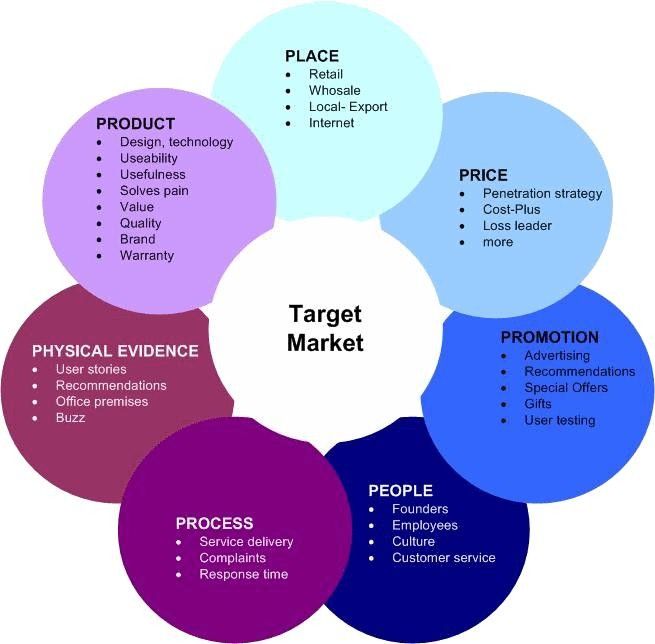
Author/Copyright holder: Henripontes. Copyright terms and licence: CC BY-SA 3.0
The product-service hybrid model better considers the placement within a target market than a pure product or service model can.
The Take Away
Product-service hybrids are not new; car dealers, for example, have for years tied the purchase of a new car to servicing, repair, MOTs etc. where possible. However, in the digital age they have become increasingly more common. They allow the opportunity to create more profits and increased customer loyalty whilst supplying increased customer value. UX designers will find that they increasingly become involved with not just product design but also service design and marrying the two to provide the best possible user and customer experiences.
Resources
Find the full Harvard Business Review Article Here - https://hbr.org/2009/11/a-practical-guide-to-combining-products-and-services
DesignIT examine the product-service hybrid here - https://designit.com/happening/thoughts/the-product-service-experience-hybrid