Latest UX / UI Design Articles

Read full article
Innovation vs. Incremental Improvement - Article hero image

Innovation vs. Incremental Improvement

Not all teams build products in highly uncertain environments or try to create cutting-edge new features. Many incrementally improve existing products and try to do so in a way that doesn’t alienate large existing user bases. Neither of these tasks is particularly easy, and they often require very d

Social shares
622
Published
Read Article
Read full article
MatchDog Build Your Portfolio Project: Flow - Article hero image

MatchDog Build Your Portfolio Project: Flow

The most important tasks found in the upper-left quadrant of your prioritization matrix are those which most users will spend the majority of their time performing. At a minimum, these are the ones that need a full flow design to show how (and with what logic) the user will transition from screen to

Social shares
432
Published
Read Article
Read full article
MatchDog Build Your Portfolio Project: Screen Visualization & Content - Article hero image

MatchDog Build Your Portfolio Project: Screen Visualization & Content

Congratulations! You have finished the longest chapter in the book, which describes the full hierarchy of design pattern layers from simple components up to the master diagrams of UX Architecture alternatives. As noted in the book, the multi-level pattern framework is best taught from the bottom

Social shares
416
Published
Read Article

Read full article
Rule of Thirds: The Definitive Guide & Examples - Article hero image

Rule of Thirds: The Definitive Guide & Examples

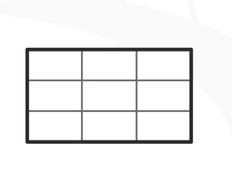
You may well have seen the “Rule of Thirds” plenty of times at work in a photograph or image on a website and not even realized it; it’s a well-known (and well-applied!) photography technique that’s been making pictures more captivating for a long time—including making websites have more harmonious

Social shares
1.3k
Published
Read Article
Read full article
MatchDog Build Your Portfolio Project: Grids and Grammar - Article hero image

MatchDog Build Your Portfolio Project: Grids and Grammar

Project Brief Review the full project brief for MatchDog again. You may draw ideas during this step from the examples in the book regarding MatchDog conceptual model options. The book intentionally scaffolds this project step with examples and discussion of various options. Two finished possibil

Social shares
424
Published
Read Article
Read full article
MatchDog Build Your Portfolio Project: Preliminary Analysis and Conceptual Model Definition - Article hero image

MatchDog Build Your Portfolio Project: Preliminary Analysis and Conceptual Model Definition

Project Brief Review the full project brief for MatchDog. You may draw ideas from the examples in the book regarding various MatchDog conceptual model options. The book intentionally scaffolds this project with examples and discussion within the framework layer chapters. However, you are the desig

Social shares
464
Published
Read Article
Read full article
Build Your Portfolio Project: UX Magic - Article hero image

Build Your Portfolio Project: UX Magic

Welcome to UX Magic’s supplemental exercise sequence on the Interaction Design Foundation website. UX Magic is a breakthrough book introducing the power of the Semantic IxD approach, but no one ever became a great designer by reading books alone. Hands-on application of both the theory and practices

Social shares
510
Published
Read Article
Read full article
How to Design with AI: 5 Insights to Supercharge Your Work - Article hero image

How to Design with AI: 5 Insights to Supercharge Your Work

Designers who master AI aren’t just faster. You'll make better decisions, explore more ideas, and spend more time on the rewarding work that requires your human creativity. Here are five key insights from the AI for Designers course that you can use to take your design process to new levels and acce

Social shares
656
Published
Read Article
Read full article
How to Pair Fonts: A Practical Guide - Article hero image

How to Pair Fonts: A Practical Guide

Nearly every designer working with type has a strong opinion on the right way to combine letterforms and pair fonts. Like most things in visual communication, the best solutions are both subjectively and objectively formed, pairing what we prefer with what is most appropriate for any given use or co

Social shares
804
Published
Read Article
Read full article
MatchDog Project Brief - Article hero image

MatchDog Project Brief

Welcome to the project brief for MatchDog. In this brief, you’ll get all the information you need to start on the Build Your Portfolio exercises hosted here on the Interaction Design Foundation website. Goal Create a complete UX Design for the MatchDog Non-profit spanning a web and mobile experi

Social shares
481
Published
Read Article
Read full article
Designing the Smallest Possible Thing - Article hero image

Designing the Smallest Possible Thing

We conducted research with hundreds of people working on agile teams about their experiences in order to understand some of the biggest design problems they encounter. Designers who work in sprints of one or two weeks can be under pressure to deliver fast, skip research and cut corners, which can pr

Social shares
758
Published
Read Article
Read full article
How We Use Long-Term Memory and How it Informs Us Who We Are - Article hero image

How We Use Long-Term Memory and How it Informs Us Who We Are

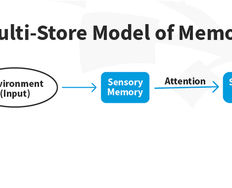
The sensory, short-term, and long-term components of memory come from the well-established multi-store model of memory, first proposed by Atkinson and Shiffrin in the late 1960s (see below for the original paper). While not without its detractors, it is still the most commonly accepted description o

Social shares
507
Published
Read Article
Read full article
What is Sensory Memory and How Does it Work? - Article hero image

What is Sensory Memory and How Does it Work?

Sensory memory isn’t a “true” type of memory because it doesn’t involve the hippocampus, which is the part of the brain where most conscious memory is stored. However, we’d be a bit lost without sensory memory since, without it, we wouldn’t be able to use our senses in a meaningful way.For example,

Social shares
515
Published
Read Article
Read full article
What Types of Memory do we Have? - Article hero image

What Types of Memory do we Have?

Our focus here will be on how human memory is organized, along with a brief look at how it works. Our main goal is that you come away with a better understanding of how memory functions and some of its limitations so that we can be more effective as designers.The main topics are:Sensory memoryPercep

Social shares
528
Published
Read Article
Read full article
Start Your UX Journey: Essential Insights for Success - Article hero image

Start Your UX Journey: Essential Insights for Success

One in three consumers (32%) will abandon a brand they love after a single poor experience—yes, all it takes is just one bad experience. It’s a statistic that drives home the point that designers can’t afford to gamble against user feedback. What users think is a reality that’s total for you as a de

Social shares
527
Published
Read Article
Read full article
The Role of Micro-interactions in Modern UX - Article hero image

The Role of Micro-interactions in Modern UX

Micro-interactions are small but crucial elements that enhance user experience (UX). They offer intuitive cues and turn routine tasks into enjoyable moments. Learn about their significance in modern UX design through examples and best practices. Understand how these subtle interactions contribute to

Social shares
903
Published
Read Article
Read full article
Common UX Research Interview Questions - Article hero image

Common UX Research Interview Questions

If you’ve got an interview invitation for the role of UX (user experience) researcher at the organization you want to get into, well done! Your UX portfolio—one major part of why they’re interested in you—may have done the trick, but what about the UX research interview questions the hirers are goin

Social shares
721
Published
Read Article
Read full article
Learn the Language of Service Design - Article hero image

Learn the Language of Service Design

It’s important to know the terminology of service design so we can fully understand what it is, and so we are able to talk about it in an effective way. Here we’ll hear from different service designers about how they define service design and why a theater is such a fitting metaphor for staging a se

Social shares
519
Published
Read Article
Read full article
How to use Sensation and Perception when we design - Article hero image

How to use Sensation and Perception when we design

Although the terms sensation and perception are often used interchangeably, they have quite specific meanings. Sensations are the raw data from our senses, while perception is how the brain interprets them. If we understand how perception works, and how it can sometimes fool us, we can make better d

Social shares
537
Published
Read Article
Read full article
Data Analysis: Techniques, Tools, and Processes - Article hero image

Data Analysis: Techniques, Tools, and Processes

Data analysis is one of those terms that “is what it sounds like,” although there’s more to it than may meet the eye. In any case, it’s a valuable skill for making better decisions—a skill that you can bring to bear on both your professional and personal life, from personal budgeting to analyzing cu

Social shares
1.3k
Published
Read Article

39% of Today's Skills Will Change by 2030

The World Economic Forum expects 39% of today's skills to be transformed or become outdated by 2030.

The good news is that jobs in UX / UI design and AI are among the fastest-growing professions globally.

Build Skills That Keep You Relevant

Privacy Settings

By using this site, you accept our Cookie Policy and Terms of Use.
Customize
Accept all