Several tools including pens, cords, lego bricks and elastic bands.

Essential Design Thinking Videos, Methods and Tools

by Rikke Friis Dam and Yu Siang Teo • 48 min read

1,006 Shares

Do you want to know how design thinking is currently taught and applied in some of the world’s most prestigious institutions and successful businesses? Look no further. The following videos, methods and tools will help you familiarize yourself with how design thinking is being used across organizations such as IBM, IDEO and the d.school. This knowledge is crucial if you want to effectively apply the design thinking process in your own work, and we therefore highly recommend you take a look at each of them in turn.

Different organizations and design leaders may use slightly different models of design thinking; however, what’s clear to see is they all share a similar passion for the overall methodology. This shared passion for design thinking is what will teach you, excite you and inspire you to apply the process to your own work. Hear all about design thinking straight from the leaders in the field through the following compilation of videos, methods and tools!

Must-Watch Design Thinking Videos

1. Design & Thinking (74 min)

“So many people think it’s in your genes—you’re a creative person or you’re not. I don’t buy that.”

—David Kelley, Founder of IDEO

The movie Design & Thinking is a documentary-style glimpse into the world of design thinking from the perspective of some of its leading practitioners, thought leaders and critics. The movie is by no means exhaustive; nor does it unpack the process or techniques in major detail.

Even though we highly recommend this movie, unfortunately, you'll have to pay to watch it. If you get the chance and ability to pay for the bundle and see it, it will definitely be useful as it provides an insightful introduction to the methodology and mindset of those who are well-experienced in the world of design thinking www.designthinkingmovie.com

2. 60 Minutes Interview with David Kelley (13 min)

David Kelley is an early founding member of what would later become IDEO, and he’s also a leading figure in the Stanford d.school. Kelley is one of the pioneers of the design thinking methodology and is still highly engaged in its promotion and development.

The following interview aired on 60 Minutes and provides an insight into David Kelley’s approach to design thinking, as well as how the methodology is applied at IDEO and the d.school:

You can read more about David Kelley in his bio:
http://www.ideo.com/people/david-kelley

3. Design Kit—IDEO.org (7 videos, 1-2 mins each)

This set of videos feature the key mindsets you should adopt when you try to solve problems as a design thinking practitioner. Each mindset is explained by a design thinking champion or leader of a company that successfully adopted the design thinking process. They’re a must-watch if you want to get into the minds of the world’s best design thinkers!
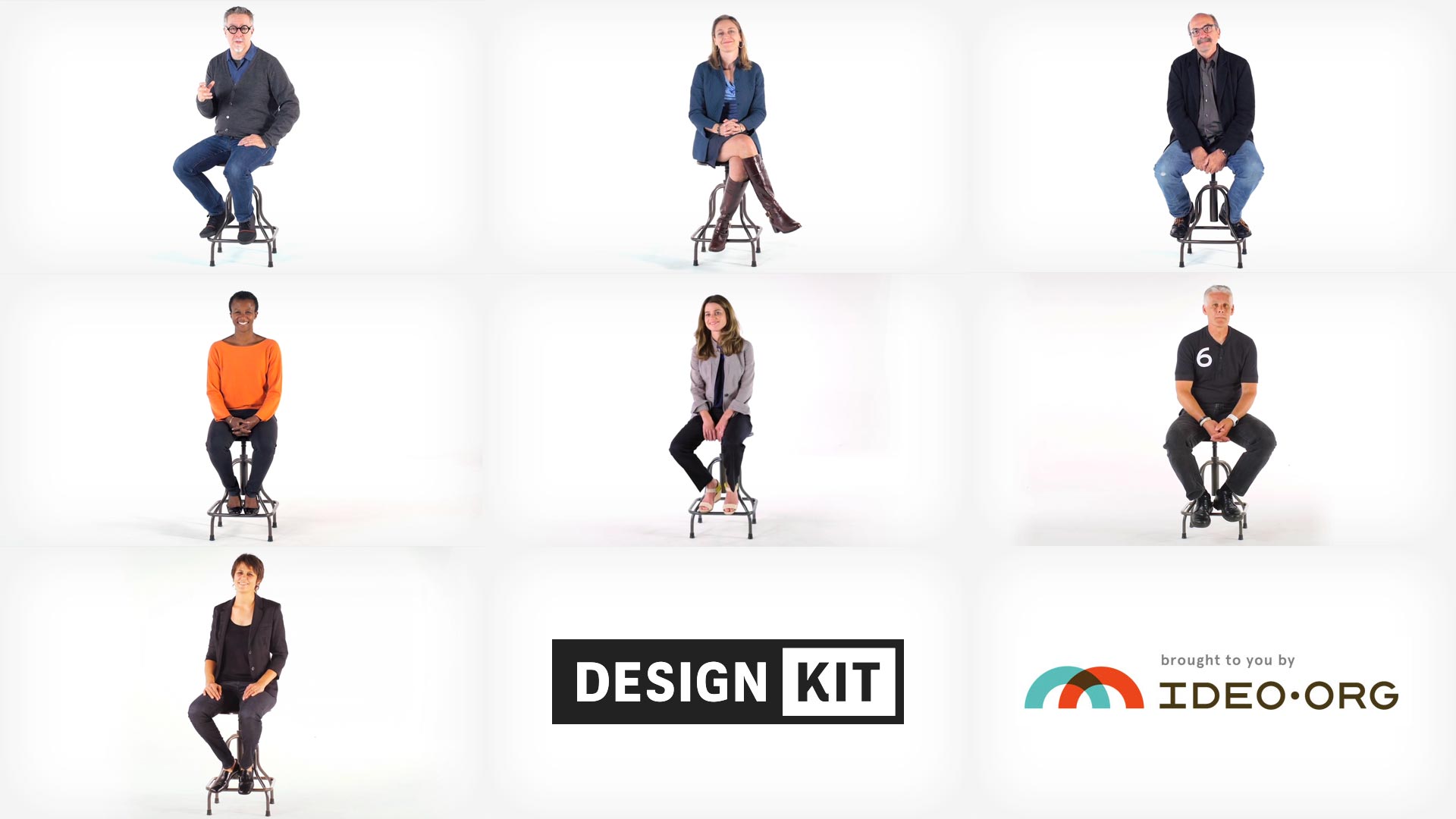
Photo of seven people from IDEO sitting on chairs for portraits.

  1. Learn From Failure—Tim Brown, CEO of IDEO: http://www.designkit.org/mindsets/1

  2. Make It—Krista Donaldson, CEO of D-Rev: http://www.designkit.org/mindsets/2

  3. Creative Confidence—David Kelley, Founder of IDEO: http://www.designkit.org/mindsets/3

  4. Empathy—Emi Kolawole, Editor-in-Residence of the d.school: http://www.designkit.org/mindsets/4

  5. Embrace Ambiguity—Patrice Martin, Creative Director of IDEO.org: http://www.designkit.org/mindsets/5.

  6. Optimism—John Bielenberg, Founder of Future Partners: http://www.designkit.org/mindsets/6

  7. Iterate, Iterate, Iterate—Gaby Brink, Founder of Tomorrow Partners: http://www.designkit.org/mindsets/7

4. Want to Make Better Decisions? Know the Difference between Engineering and Design Thinking—Dave Evans via Big Think (7 min)

“Design Thinking is an innovation methodology, not a craft.”

In this short video, Stanford University lecturer Dave Evans covers a range of topics related to design thinking with exceptional clarity. The difference between tame and wicked problems, the different types of thinking (optimization thinking, analytical thinking and, of course, design thinking) and how prototyping can be used to design your life are all covered within just six minutes. Dave Evans shows that design thinking is more than a skill—it’s a transferable methodology which can be applied in almost all complex situations.

Trusty Design Thinking Methods and Tools

1. Human-centered Design Methods—IDEO.org

Along with the video series mentioned above, IDEO.org also provide access to a wealth of practical, human-centered design methods relevant to the design thinking process. They choose to separate the methods into three categories: Inspiration, Ideation and Implementation, and you can use this structure as a guide as you start to unleash your creativity. By the end, you’ll have figured out how to put the people you serve (your users) at the center of your design process, as well as how to generate innovative solutions to difficult problems.

http://www.designkit.org/methods

To give you a bit more background on IDEO: they’re one of the world’s most successful design and innovation companies. IDEO placed design thinking at the very core of their problem-solving methodology and have developed a number of tools, books and videos to help people understand how design thinking operates, and how to use it within different settings.

Tim Brown is CEO of IDEO and is recognized as the person who made the term design thinking popular in the world of innovation. Tim provides great insight into what design thinking is, why it’s needed and how it can be used in a variety of settings through his spoken and written work, as well as his project focus at IDEO. His book Change by Design is a must-read for anyone who wants to gain a deeper understanding of the roots of design thinking and its potential to help us create a brighter future.
http://www.ideo.com/people/tim-brown

2. Design Thinking Artifacts—Stanford d.school
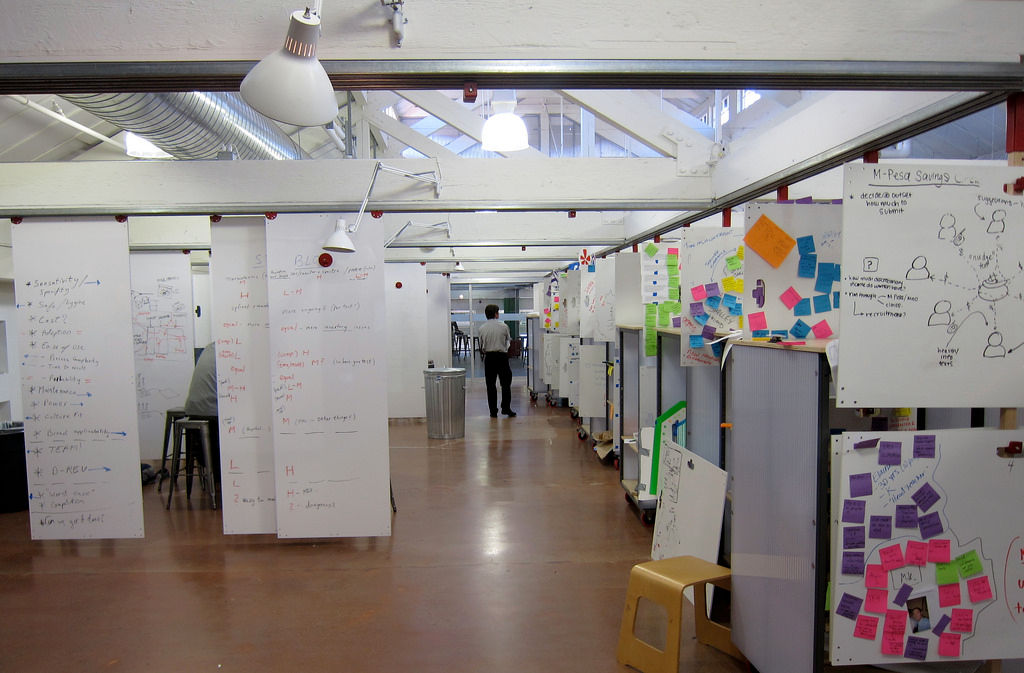
Photo of a studio at Stanford's design school showing sliding whiteboards with lots of post its and notes on the whiteboards.

© Steve Jurvetson, CC BY 2.0.

As world leaders in design thinking education, the Stanford d.school provide a set of artifacts to help you kick-start your design thinking journey. From content cards to furniture plans, visual aids and music recommendations, this set of tools will prove hugely beneficial to anyone who wants to apply design thinking in their place of work.

https://dschool.stanford.edu/resources/design-thinking-artifacts

The Stanford d.school, known officially as the “Hasso Plattner Institute of Design”, gave design thinking its public face with their world-famous program—which they openly promote and share. The way they created, packaged and shared aspects of the design thinking process has driven many organizations and businesses across the world to uptake the design thinking methodology.

The Take Away

A wealth of inspirational resources exist in the world of design thinking, and they serve to educate, inspire and facilitate thousands of people to embrace the design thinking methodology every year. From thought-provoking videos, to prepackaged tools and music suggestions, you’re never alone when it comes to design thinking—even if you’re a complete newbie!

Images

Hero Image: Unknown.

Learn More in This Course:

AI for Designers

12 days
13 % booked
View Course

What You Should Read Next

  • Read full article
    What is Design Thinking and Why Is It So Popular? - Article hero image
    Interaction Design Foundation logo

    What is Design Thinking and Why Is It So Popular?

    Design Thinking is not an exclusive property of designers—all great innovators in literature, art, music, science, engineering, and business have practiced it. So, why call it Design Thinking? What’s special about Design Thinking is that designers’ work processes can help us systematically extract,

    Social shares
    1.6k
    Published
    Read Article
  • Read full article
    Personas – A Simple Introduction - Article hero image
    Interaction Design Foundation logo

    Personas – A Simple Introduction

    Personas are fictional characters, which you create based upon your research to represent the different user types that might use your service, product, site, or brand in a similar way. Creating personas will help you understand your users’ needs, experiences, behaviors and goals. Creating personas

    Social shares
    1.6k
    Published
    Read Article
  • Read full article
    What is Interaction Design? - Article hero image
    Interaction Design Foundation logo

    What is Interaction Design?

    Interaction design is an important component within the giant umbrella of user experience (UX) design. In this article, we’ll explain what interaction design is, some useful models of interaction design, as well as briefly describe what an interaction designer usually does.A simple and useful unders

    Social shares
    1.5k
    Published
    Read Article
  • Read full article
    Apple’s Product Development Process – Inside the World’s Greatest Design Organization - Article hero image
    Interaction Design Foundation logo

    Apple’s Product Development Process – Inside the World’s Greatest Design Organization

    Apple’s Product Development Process may be one of the most successful design processes ever implemented. With a valuation that exceeds $2 trillion, there’s a lot that designers can learn from Apple and introduce into their own design environments.Apple is a notoriously secretive business. In Steve J

    Social shares
    1.4k
    Published
    Read Article
  • Read full article
    Stage 2 in the Design Thinking Process: Define the Problem and Interpret the Results - Article hero image
    Interaction Design Foundation logo

    Stage 2 in the Design Thinking Process: Define the Problem and Interpret the Results

    An integral part of the Design Thinking process is the definition of a meaningful and actionable problem statement, which the design thinker will focus on solving. This is perhaps the most challenging part of the Design Thinking process, as the definition of a problem (also called a design challenge

    Social shares
    1.4k
    Published
    Read Article
  • Read full article
    Shneiderman’s Eight Golden Rules Will Help You Design Better Interfaces - Article hero image
    Interaction Design Foundation logo

    Shneiderman’s Eight Golden Rules Will Help You Design Better Interfaces

    Follow Ben Shneiderman’s 'Eight Golden Rules of Interface Design' if you want to design great, productive and frustration-free user interfaces. Apple, Google and Microsoft are among some of the highly successful companies whose well-designed products reflect Shneiderman’s rules. The characteristics

    Social shares
    1.4k
    Published
    Read Article
  • Read full article
    How to Change Your Career from Graphic Design to UX Design - Article hero image
    Interaction Design Foundation logo

    How to Change Your Career from Graphic Design to UX Design

    If there’s an occupation that is 100% linked with the public’s idea of what design is all about, it’s graphic design. From the familiar golden arches of the McDonald’s brand to the typography and colors of movie posters, graphic designers create some of the most iconic and ubiquitous designs around

    Social shares
    1.4k
    Published
    Read Article
  • Read full article
    What is Ideation – and How to Prepare for Ideation Sessions - Article hero image
    Interaction Design Foundation logo

    What is Ideation – and How to Prepare for Ideation Sessions

    Ideation is the process where you generate ideas and solutions through sessions such as Sketching, Prototyping, Brainstorming, Cheatstorming, Brainwriting, Worst Possible Idea, and a wealth of other ideation techniques. Ideation is also the third stage in the Design Thinking process. Although many p

    Social shares
    1.4k
    Published
    Read Article
  • Read full article
    The Grid System: Building a Solid Design Layout - Article hero image
    Interaction Design Foundation logo

    The Grid System: Building a Solid Design Layout

    Now that we’ve seen some grids at work in the Rule of Thirds article, let’s examine them a little more deeply. As a concept that deals so fundamentally with the fabric and background of our work as designers, it’s easy to overlook the power of grids and think more about the elements we want to creat

    Social shares
    1.4k
    Published
    Read Article
  • Read full article
    Empathy Map – Why and How to Use It - Article hero image
    Interaction Design Foundation logo

    Empathy Map – Why and How to Use It

    Here’s an interesting fact you may—or may not—know: users are more likely to choose, buy, and use products that meet their needs than products that just meet their wants. And an Empathy map will help you understand your user’s needs while you develop a deeper understanding of the persons you’re desi

    Social shares
    1.4k
    Published
    Read Article

Top Articles

Top Topic Definitions

Feel Stuck?
Want Better Job Options?

AI is replacing jobs everywhere, yet design jobs are booming with a projected 45% job growth. With design skills, you can create products and services people love. More love means more impact and greater salary potential.

At IxDF, we help you from your first course to your next job, all in one place.

See How Design Skills Turn Into Job Options
Privacy Settings
By using this site, you accept our Cookie Policy and Terms of Use.
Customize
Accept all

Be the One Who Inspires

People remember who shares great ideas.

Share on:

Academic Credibility — On Autopilot

Don't waste time googling citation formats. Just copy, paste and look legit in seconds.

Feel Stuck? Want Freedom?

Join 326,000+ designers who get one powerful email each week. Learn to design a life you love.

Next email in
1
day
18
hrs
1
mins
57
secs

Free forever. No spam. Unsubscribe anytime.