5 Ideas to Help Bring Lean #UX into Your Research

• 9 min read

598 Shares

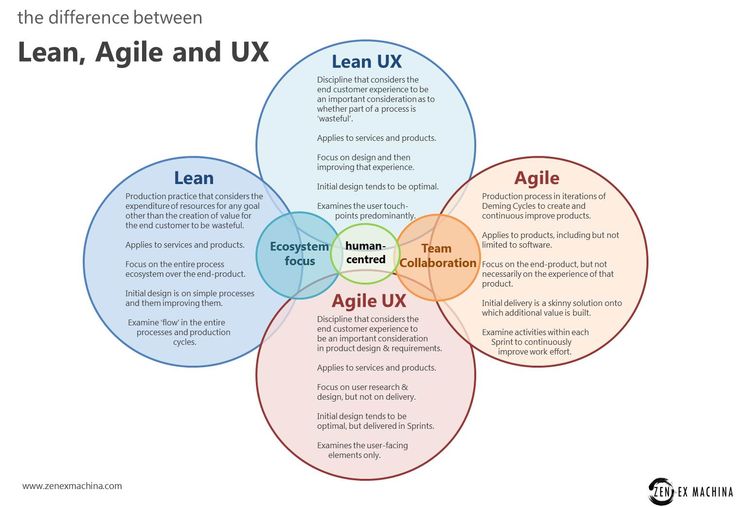
Lean UX can be a tricky beast to get to grips with at first. For those used to working in more traditional UX environments it can be very challenging to move to an environment where the focus is on making decisions rather than producing deliverables.

That means there’s a change in the way that the UX design team works. The idea is simply to channel your energy into delivering an end product with a great user experience and less energy on large scale test plans, presenting detailed research and getting the look and feel of your reporting perfect.

You have far less time when using Lean UX to capture data at any stage of development. That means looking for ways to bring in data that enables quick decision making at any point in the process. The development team needs your input to be able to decide what to build, which fixes are necessary and when, and what to kill off if it’s interfering with the user experience.

So how do we go about developing UX research that focuses on decision making? Here are 5 ideas that might get you started:

Schedule Regular User Testing

Pick a sensible time in your monthly calendar and book a number of users for that time each month. You’re going to vary the testing depending on the specific project needs at that point in time but having your users lined up and ready to go makes things much easier.

These tests may focus on the UI, or conceptual testing, or content, or playing with wireframes and prototypes. It doesn’t really matter. In Agile environments you don’t have much time between bursts to schedule participants and then get moving – so don’t, book the users ahead of time and then focus on developing the user’s understanding of what’s needed as soon as you’re ready to start testing.

The number of users you book for these sessions is up to you. What is generally the most meaningful number to use? Use that number.

Regular feedback from users during Lean UX research is, perhaps, the most valuable output of them all.



Author/Copyright holder: Samuel Mann. Copyright terms and licence: CC BY 2.0


Share Data Early

Lean UX requires a bit more trust in the UX team than other UX approaches. Because the focus is on making decisions, it means that as soon as meaningful data is created – it needs to be shared with the relevant stakeholders.

Beautiful, long form, fully comprehensive reports simply take too much time to generate. So don’t do them. Shine a spotlight on the issue and send out simple headline reports – if stakeholders want to dig deeper, they need to be aware it may take time to answer their questions, but rough and ready data is better than no data at all when you’re making a decision.

The more you do this and the more your observations are perceived as useful, the less likely you are to have to spend hours writing long form reports at all.

Take Pruning Shears to the Test Plan

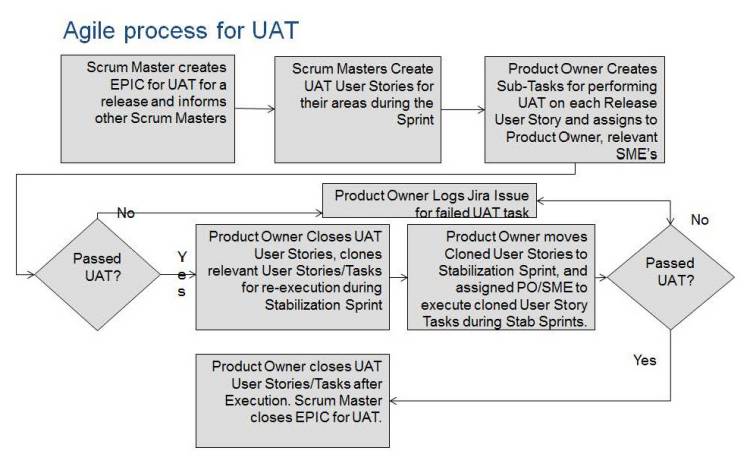
We’ve all worked in companies with huge formal documentation requirements. From the indentations on pages to the change control process at the start of every document. The trouble with all of this is that it interferes with delivering just the information everyone needs to understand your plan.

It may take some cunning negotiation on your part but you want to try and skip all the unnecessary junk. Your plans should be bare bones outlines that convey all the data that everybody needs to know and absolutely nothing else.

Big documents may make a corporate documentation manager happy but in practice – people struggle to engage with them. You can always go back and make the formal version for the archives later if you can’t get out of the requirement completely.


Author/Copyright holder: Scrum Alliance. Copyright terms and licence: All rights reserved Img source


Let Developers Observer Usability Tests

There’s no time to argue over points when you’re working in an Agile environment, either the developers are on-board with your observations or they’re going to be ignored. The process won’t stop without becoming deeply inefficient.

We all know that usability tests can generate a ton of useful insight. However, the trouble is that if it’s just the UX team sitting in on these tests – they then have to explain the results and problems second hand to the development team.

It’s much easier, and faster, to bring a developer in and let them see the issues as they unfold during a usability test. In our experience when a developer recognizes a problem, they want to spring into action and fix it. This saves us explaining the issue and leads to much faster decision making. Which is what we’re looking for when we employ Lean UX.



Author/Copyright holder: Luca Mascaro. Copyright terms and licence: CC BY-SA 2.0


Pre-Build Reports and Fill Them In as You Go

Template reports can save you a ton of time. Develop your test reports before you start testing then just fill them as you go through the testing. This also has another benefit – it helps you test your expected outputs ahead of time, if you generate a report and think; “How exactly does this method lead to this data?” – you can fix the test before it’s conducted too.

It also means that when testing is complete, the report should be pretty much complete too. That’s a great way to ensure that stakeholders have enough time to digest the content and offer their own input into the decision making process.

Summary

Author/Copyright holder: Zen Ex Machina. Copyright terms and licence: All rights reserved Img source

Agile development is here to stay and that means that Lean UX opportunities are going to keep opening up. Integrating Lean UX into Agile environments is all about learning to focus on making decisions. It doesn’t mean you can just stop doing everything you currently do and it may mean that sometimes “the formal stuff” is created after a decision has been made. That’s not the end of the world, you can still use that formal approach to help you learn lessons in the future and use it to inform the way you approach Lean UX in your business.

Header Image: Author/Copyright holder: UXcellence Copyright terms and licence: All rights reserved. Img Source

Learn More in This Course:

AI for Designers

12 days
13 % booked
View Course

What You Should Read Next

  • Read full article
    Why Care about Statistical Significance? - Article hero image
    Interaction Design Foundation logo

    Why Care about Statistical Significance?

    The categorical data depicts the success and failure rate of the low-fidelity wireframe above. There is not a large enough difference between the two to determine if the designs were successful.There is an element of error involved in measuring anything. So, when we want to compare measurements, how

    Social shares
    430
    Published
    Read Article
  • Read full article
    Web Fonts: Definition and 10 Recommendations - Article hero image
    Interaction Design Foundation logo

    Web Fonts: Definition and 10 Recommendations

    Web fonts bring digital content to life. They enhance readability, set the tone, and ensure consistency across various platforms—all vital ingredients. When you understand web fonts and their impact, it can help you with effective website creation—and greatly so. We’ll provide a comprehensive overvi

    Social shares
    778
    Published
    Read Article
  • Read full article
    How to Screen Research Participants - Article hero image
    Interaction Design Foundation logo

    How to Screen Research Participants

    Finding the right participants is crucial for gathering user research. We usually need to do research with participants having a particular set of needs or experience. In this short video, you will find out about the basic need for screening and how we make sure that we have suitably qualified parti

    Social shares
    449
    Published
    Read Article
  • Read full article
    Pitfalls in Recruiting Participants for User Research - Article hero image
    Interaction Design Foundation logo

    Pitfalls in Recruiting Participants for User Research

    The level of participant engagement is an important part of the user research results. Our results are dependent on proper engagement with our participants. In this video we look at some of the issues around participant recruitment and hear practical examples that arose in a large online study.[[vid

    Social shares
    417
    Published
    Read Article
  • Read full article
    How to Fit Quantitative Research into the Project Lifecycle - Article hero image
    Interaction Design Foundation logo

    How to Fit Quantitative Research into the Project Lifecycle

    Quantitative research methods fit into the project lifecycle at different stages of the process.In this video, we see where different quantitative research methods fit into a typical project lifecycle. Bear in mind that even with an iterative process such as Agile, the short cycles still address dif

    Social shares
    509
    Published
    Read Article
  • Read full article
    How to Resolve Conflicts Between Design Thinking and Marketing - Article hero image
    Interaction Design Foundation logo

    How to Resolve Conflicts Between Design Thinking and Marketing

    In the past, designers often reported to marketing managers and were neither expected nor allowed to make business decisions. When traditionally-structured companies transition to a design-driven mindset, there can be friction between the marketing and design teams. Let’s take a closer look at this

    Social shares
    682
    Published
    Read Article
  • Read full article
    Stop the Generic Portfolio Trap! Design a Stand-Out Portfolio for Your UX/UI Niche: User Research - Article hero image
    Interaction Design Foundation logo

    Stop the Generic Portfolio Trap! Design a Stand-Out Portfolio for Your UX/UI Niche: User Research

    User research is indispensable—and without it, well... UX design is guesswork. When you’re a user researcher, you know this well—but it can be hard to communicate your work in a way that grabs the viewer and holds their attention. And that’s what a portfolio is all about—grabbing the attention of yo

    Social shares
    380
    Published
    Read Article
  • Read full article
    Top Service Blueprint Templates - Article hero image
    Interaction Design Foundation logo

    Top Service Blueprint Templates

    Service blueprint tools are vital for effective customer experience design—and for designers to make experiences that are exceptional. Here, we’ll discuss why these tools are so important. What’s more, we’ll explore templates and practical resources to create high-quality, efficient service blueprin

    Social shares
    636
    Published
    Read Article
  • Read full article
    How to Write Research Questions that Lead to Confident Design - Article hero image
    Interaction Design Foundation logo

    How to Write Research Questions that Lead to Confident Design

    Designing with Data provides an extensive background to A/B testing.As with all other research methods, we need to start with a research question. A/B testing concerns itself with changes in user behavior, meaning that our questions need to be centered on measurable goals. In many cases, these will

    Social shares
    448
    Published
    Read Article
  • Read full article
    Getting Started - Article hero image
    Interaction Design Foundation logo

    Getting Started

    We start our introduction to A/B and multivariate testing (MVT) by looking at their basic principles and their differences. Note that the video mentions Google Optimize, which has been withdrawn. Google Firebase can be used for mobile platforms. Third-party solutions are needed for A/B testing on th

    Social shares
    218
    Published
    Read Article

Top Articles

Top Topic Definitions

Feel Stuck?
Want Better Job Options?

AI is replacing jobs everywhere, yet design jobs are booming with a projected 45% job growth. With design skills, you can create products and services people love. More love means more impact and greater salary potential.

At IxDF, we help you from your first course to your next job, all in one place.

See How Design Skills Turn Into Job Options
Privacy Settings
By using this site, you accept our Cookie Policy and Terms of Use.
Customize
Accept all

Be the One Who Inspires

People remember who shares great ideas.

Share on:

Academic Credibility — On Autopilot

Don't waste time googling citation formats. Just copy, paste and look legit in seconds.

Feel Stuck? Want Freedom?

Join 326,029+ designers who get one powerful email each week. Learn to design a life you love.

Next email in
1
day
13
hrs
33
mins
19
secs

Free forever. No spam. Unsubscribe anytime.