Handwritten sign offering coffee in exchange for opinions, displayed beside a café seating area

10 Hints for Carrying Out Better Guerrilla Usability Testing

• 8 min read

572 Shares
Save

Guerrilla usability testing is a very popular technique. It’s quick, it’s low cost and it enables real user feedback. The way that guerrilla usability testing is implemented is always going to be dictated by the situation itself, yet there are some fairly simple hints that can help ensure that you guerrilla testing produces better results.

Be Certain of Your Objective

It’s always worth, no matter what research technique you employ, being certain of your objectives before you start testing. If you don’t know what you expect to get from your research; it’s probably time that could have been better spent doing other things. That doesn’t mean a big-detailed plan (which would be kind of self-defeating for a cheap, flexible, “on the fly” technique) but it does mean having a clear definition of what you’re looking for when you start.

Be Aware of Introducing Bias

If you always look for subjects in your local internet café, you need to realize you’re biasing your results to people who use internet cafes (which might be a bit awkward if most of your users log on from home on their smartphones). Acknowledging the potential for bias can help you redesign your test protocols to minimize its impact. The more diversity you use in your guerrilla testing – the more likely it is to present a clear picture of your user base.

Keep Participants Informed

Before you start testing make sure your participants have a good idea of what you’re doing, who you are, and why you’re doing it. You might also want to specify the outputs (feedback) that you’re looking for too. Ideally, you might want to create a simple release form that clarifies the potential implications of getting involved in the testing. While it may seem a bit awkward – this kind of process helps develop trust between the researcher and the user.



Author/Copyright holder: European Parliament. Copyright terms and licence: CC BY-NC-ND 2.0

Reward People for Their Time

You don’t have to hand out $100 bills to your participants but it’s nice to do something for them in exchange for their time. A cup of coffee or a spot of lunch can work wonders by making the participant realize that you genuinely value their time and input. They may also provide a convenient break from the proceedings where you can chat a little and build a stronger relationship bond with the participant.

Keep it Honest

It’s sometimes necessary to use a little sleight of hand or tell a white lie at the start of a usability test – particularly distancing yourself from the product team (people will hold back on negative feedback if they think it might hurt your feelings or get you in trouble). However, there’s a time to come clean about all this too. If you do use any form of minor deceit at the start, you need to explain this to the user at the end of the test. It’s only fair and it will help them perceive your brand as an ethical one too.

Encourage Creativity in User Feedback

All too often we can end up asking a routine list of questions and running a routine list of observations. There’s nothing wrong with these things (they help keep our research consistent) but you might also want to consider helping your users get creative. Get them to sketch ideas or feelings, or if there’s something wrong with the UI – get them to circle what they don’t like… mix and match feedback mechanisms and you may find you get much greater insights.
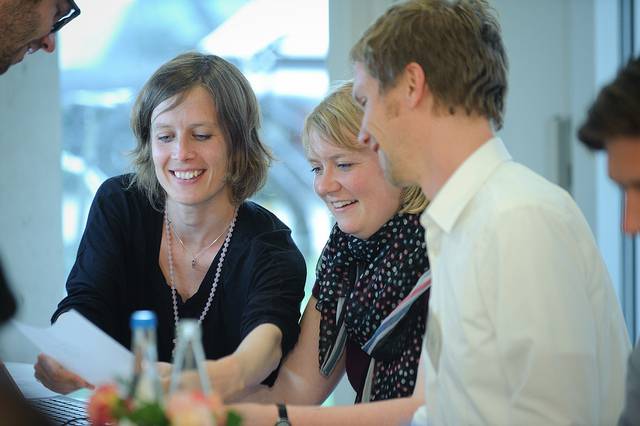


Author/Copyright holder: Heinrich-Böll-Stiftung. Copyright terms and licence: CC BY-SA 2.0

Hand Holding is Fine, Leading is Not

You should, of course, support your participants and help them answer any questions that they may have. However, this shouldn’t turn into leading them through each step of your test – if they’ve been told how to use the product, it’s not really much of a usability test is it? Encourage them to try things and come up with ideas instead; that’s the process that real users out following the launch of the product will go through. If someone ends up completely stuck… you may need to lead them out but remember that moment, it suggests a big usability problem.

Keep a Notebook To Hand

Sure, you’ll have a neat little sheet designed to record the usability test’s results in but… sometimes you see things or hear things that don’t fit in a neat little box. It’s best to have a notebook to hand (or a Dictaphone) that you can then scribble these snippets into and review later. You don’t need to have everything formally laid out at the end of each test anyway. If you need formal documentation – you can always add these ideas at a later date but most of the time, it’s the idea that counts not the format in guerrilla testing.

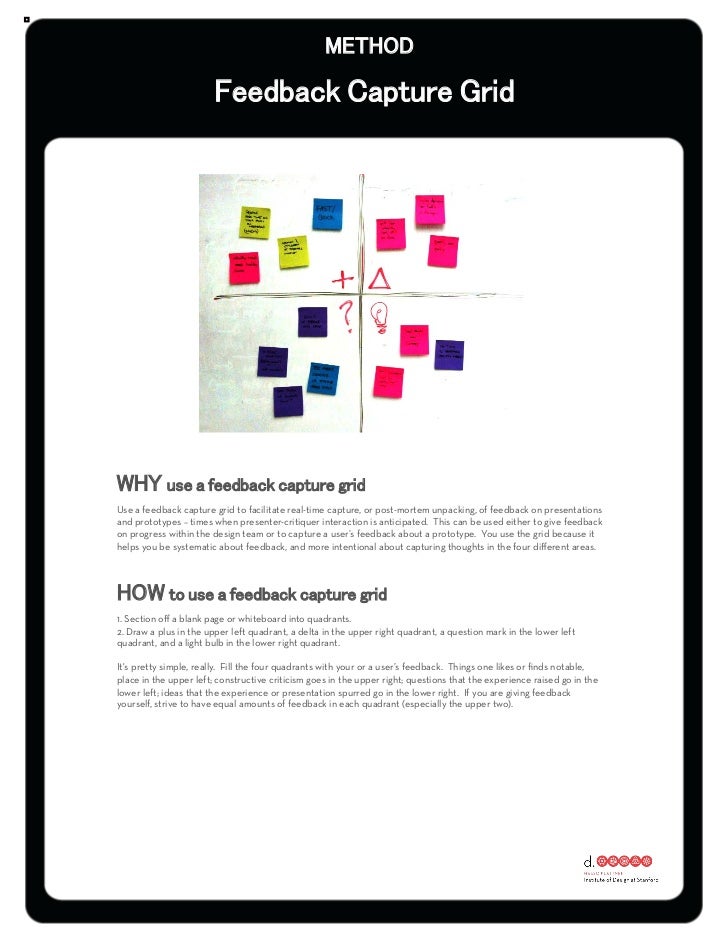
Have a Formal Feedback Capture Process

It can be very handy to use automated tools to capture the session’s feedback. There are plenty of cheap usability test tools that can be unleashed on the platform you’re testing on to do this for you. Or you can come up with your own method, as long as it’s portable and quick to set up, and use that instead. The important thing when choosing a tool is to work out who will need the data and in what format… team collaboration can be much easier when the tool does the heavy lifting on data capture and dissemination.
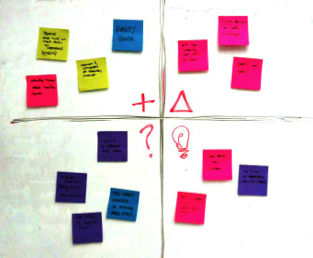


Author/Copyright holder: Praludium Liu. Copyright terms and licence: All rights reserved Img source

Finish on Time

If you ask someone for 10 minutes of their time, make it 10 minutes and not 30 minutes. Remember that people are taking a break from their busy lives for your research; if you don’t respect their time – they’re not going to very happy and that unhappiness is likely to raise its ugly head in the responses that they give you.

Summary

These tips should help shape your guerrilla research. Of course, you probably do many of these things already, but in our experience even long-term users of guerrilla techniques often neglect some of these areas in the rush to get the job done.

Header Image: Author/Copyright holder: Francine Lee. Copyright terms and licence: All rights reserved. Img Source



Learn More in This Course:

Learn Design and AI From the Best

Get one powerful email each week, like 312,754 others.

Next email in:

What You Should Read Next

  • Read full article
    Turn Your Non-Design Experience into Design Portfolio Gold - Article hero image

    Turn Your Non-Design Experience into Design Portfolio Gold

    Have you ever wondered how to transition into UX and product design from a different career background without feeling insecure? Let's uncover strategies to confidently bridge the gap and showcase your skills to prospective employers with confidence and clarity.In this video, Morgane Peng, Desi

    Social shares
    506
    Published
    Read Article
  • Read full article
    Structure First: The Inverted Pyramid and Visual Organization - Article hero image

    Structure First: The Inverted Pyramid and Visual Organization

    This clip examines two principles that work hand in hand to make web content readable: the inverted pyramid approach to information order and the use of visual structure to help users scan efficiently. William Hudson, UX Strategist and Founder of Syntagm Ltd, describes the theoretical basis and prac

    Social shares
    193
    Published
    Read Article
  • Read full article
    What Is Card Sorting? - Article hero image

    What Is Card Sorting?

    In this video, William Hudson, UX Strategist and Founder of Syntagm Ltd, introduces card sorting: what it is, where it comes from, and the broad range of problems it can help solve.Card sorting is a research technique in which participants organize a set of items into groups that make sense to them,

    Social shares
    159
    Published
    Read Article
  • Read full article
    Design Accessible Navigation for Keyboards and Screen Readers - Article hero image

    Design Accessible Navigation for Keyboards and Screen Readers

    Accessibility is often treated as a finishing touch, but for navigation, it belongs at the foundation. Menus are how users reach everything else on a site, so a menu that works only with a mouse quietly shuts out anyone who depends on a keyboard, a screen reader, or another form of assistive technol

    Social shares
    161
    Published
    Read Article
  • Read full article
    The Scent of Information: Give Users the Confidence to Click - Article hero image

    The Scent of Information: Give Users the Confidence to Click

    William Hudson, UX Strategist and Founder of Syntagm Ltd, introduces the scent of information as a model for understanding how users navigate toward their goals, and sets out the principles for writing navigation links that strengthen that scent.Information Foraging and the Scent of InformationThe s

    Social shares
    158
    Published
    Read Article
  • Read full article
    4 UI Design Tips Every Designer Needs to Know - Article hero image

    4 UI Design Tips Every Designer Needs to Know

    User interface (UI) design can make or break any digital product. A user often won’t even notice when they interact with a great UI. They feel the visual appeal and simply trust it. On the contrary, a bad UI design can prevent the user from interacting with a product intuitively or at all and lead t

    Social shares
    646
    Published
    Read Article
  • Read full article
    How to Design Use Cases in UX - Article hero image

    How to Design Use Cases in UX

    Imagine a new mobile app or an e-commerce site gets launched; it looks great, sure, and it should be a hit because it at least looks like it’s got what it takes, but—drumroll—it tanks in the marketplace, all because people find it hard to complete even the simplest tasks. That’s rough, but—behind th

    Social shares
    803
    Published
    Read Article
  • Read full article
    How to Become a Product Manager: Best Career Advice - Article hero image

    How to Become a Product Manager: Best Career Advice

    Pick any product and you’ll find that product management is vital to how successful it is—and product managers are who make sure that a product’s life cycle runs smoothly, and it means they know how to align strategy, vision, and user needs. Product managers split into multiple roles that have got u

    Social shares
    602
    Published
    Read Article
  • Read full article
    Bad UX Exposed: A Comprehensive Guide to Avoiding Pitfalls - Article hero image

    Bad UX Exposed: A Comprehensive Guide to Avoiding Pitfalls

    In today’s vibrant digital design landscape, creating meaningful connections with users goes beyond offering innovative products or services. It leads us into the world of user experience design (or UX design). This critical factor shapes our interaction with the users and plays a big role in making

    Social shares
    975
    Published
    Read Article
  • Read full article
    Understand the Various Types of Creativity - Article hero image

    Understand the Various Types of Creativity

    When you want to be more creative, you’ll want to learn the techniques for creative thinking and understand the various forms of creativity and creative processes. This video will give you an overview of some of the different forms of creativity. For example, you’ll learn that there are two types of

    Social shares
    577
    Published
    Read Article

Top Articles

Top Topic Definitions

39% of Today's Skills Will Change by 2030

The World Economic Forum expects 39% of today's skills to be transformed or become outdated by 2030.

The good news is that jobs in UX / UI design and AI are among the fastest-growing professions globally.

Build Skills That Keep You Relevant

Privacy Settings

By using this site, you accept our Cookie Policy and Terms of Use.
Customize
Accept all

Be the One Who Inspires

People remember who shares great ideas.

Share on:

Academic Credibility — On Autopilot

Don't waste time googling citation formats. Just copy, paste and look legit in seconds.

Learn Design and AI From the Best

Get one powerful email each week, like 312,754 others.

Next email in: