Color blindness, or color deficiency, is a condition where individuals struggle to distinguish between certain colors. It occurs when there is a problem with the pigments in the eye's cones.
Approximately 10% of men but only 1% of women have some form of color vision deficiency, including color blindness and other conditions that affect color perception.
Color blindness can vary in degrees of severity. Individuals with mild color deficiencies may see colors as usual in good light but struggle in dim lighting. In contrast, those with more severe color blindness cannot distinguish certain colors in any lighting conditions. Although it’s uncommon, some people experience complete color blindness, which means they see everything in shades of gray. Color blindness is a condition that usually affects both eyes equally, and the severity of the condition does not typically change over time.
Types of Color Blindness
Color blindness is a spectrum of conditions, each with its own unique characteristics. The most common forms of color blindness are:
Deuteranopia: Also known as red-green color blindness. People with deuteranopia have difficulty distinguishing between shades of green and red and may see these colors as brown or gray. People with red-green color blindness couldn't see the number 5 in the image below.
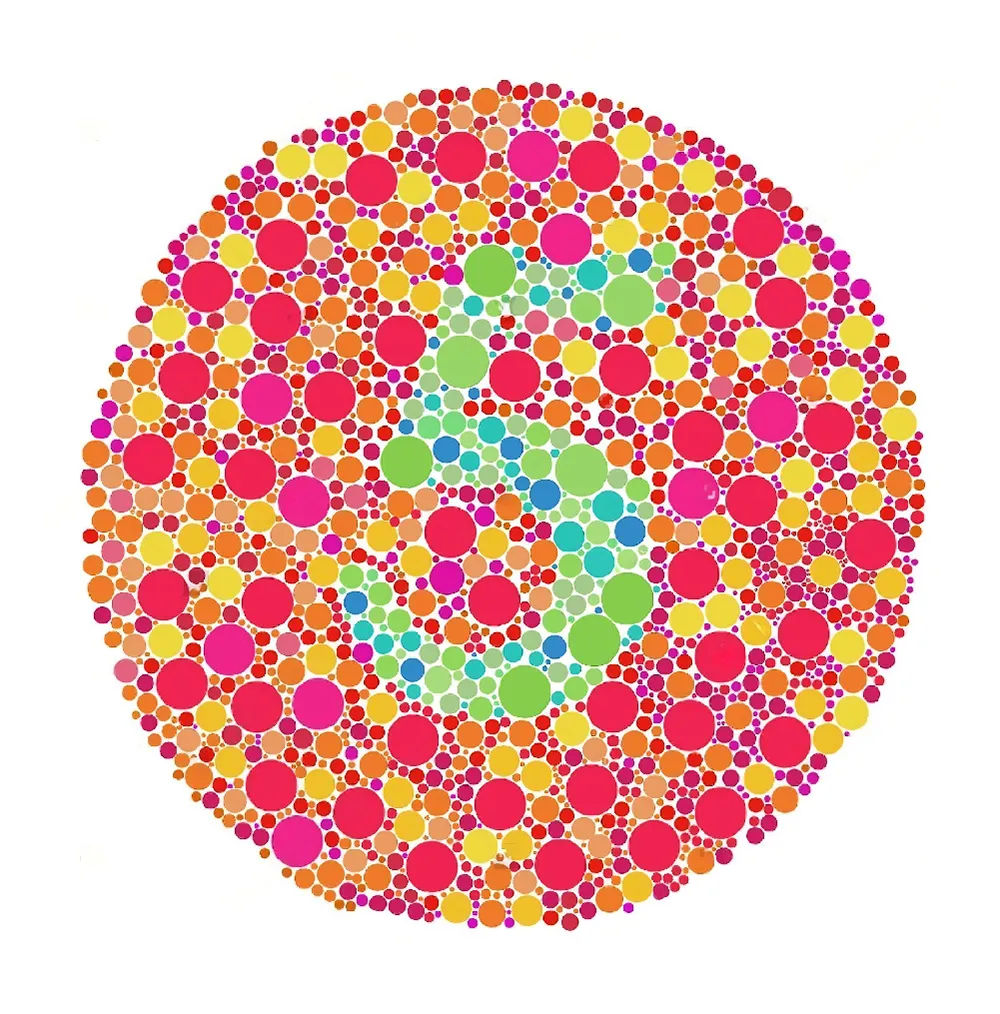
Ishihara color blindness test showing the numeral 5.
Protanopia: This type of color blindness also affects the ability to distinguish between red and green colors, but in this case, people have difficulty seeing the color red.
Tritanopia: Unlike deuteranopia and protanopia, tritanopia affects the ability to distinguish between blue and yellow colors. People with tritanopia may see blue colors as greenish-yellow or pink.
Here is an example of what color blindness might look like:
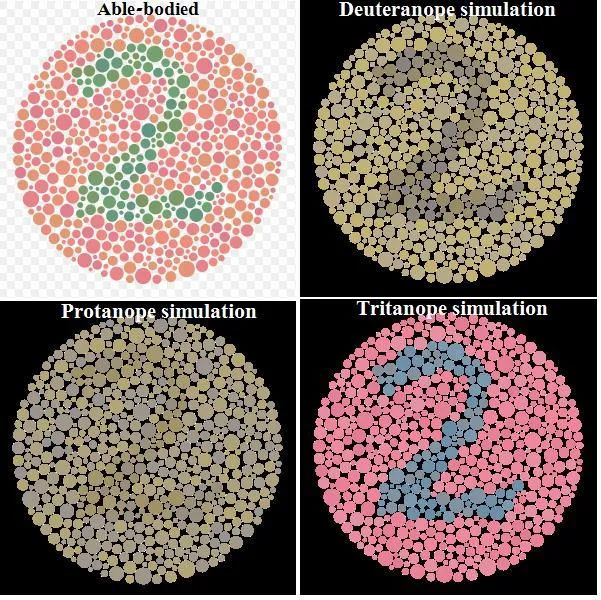
© Wikimedia Commons (CC BY-SA 3.0), Fair Use
It's important to note that not all color-blind individuals experience the same symptoms or degree of severity. Some may only have mild difficulties, while others experience more severe symptoms that can impact their daily lives.
How Color Blindness Affects Daily Life
Color blindness can have a significant impact on daily life activities. For instance, color-blind individuals may have difficulty performing tasks that require color differentiation, such as cooking or driving. They may also need help with specific jobs that require the ability to distinguish between colors, such as electricians or graphic designers.
Individuals with color vision deficiency can use assistive technology like color filters and screen readers to help them navigate digital interfaces more easily. Additionally, some organizations provide training programs and resources for individuals with visual deficiencies to help them develop strategies to manage their condition in the workplace and other settings.
Designing for Color Blindness
To help make their designs accessible to people with color blindness, designers can take various steps:
Use high-contrast colors: High-contrast colors help people with color blindness to distinguish between different elements on a web page or app. Using colors with a high-contrast ratio can also improve readability.
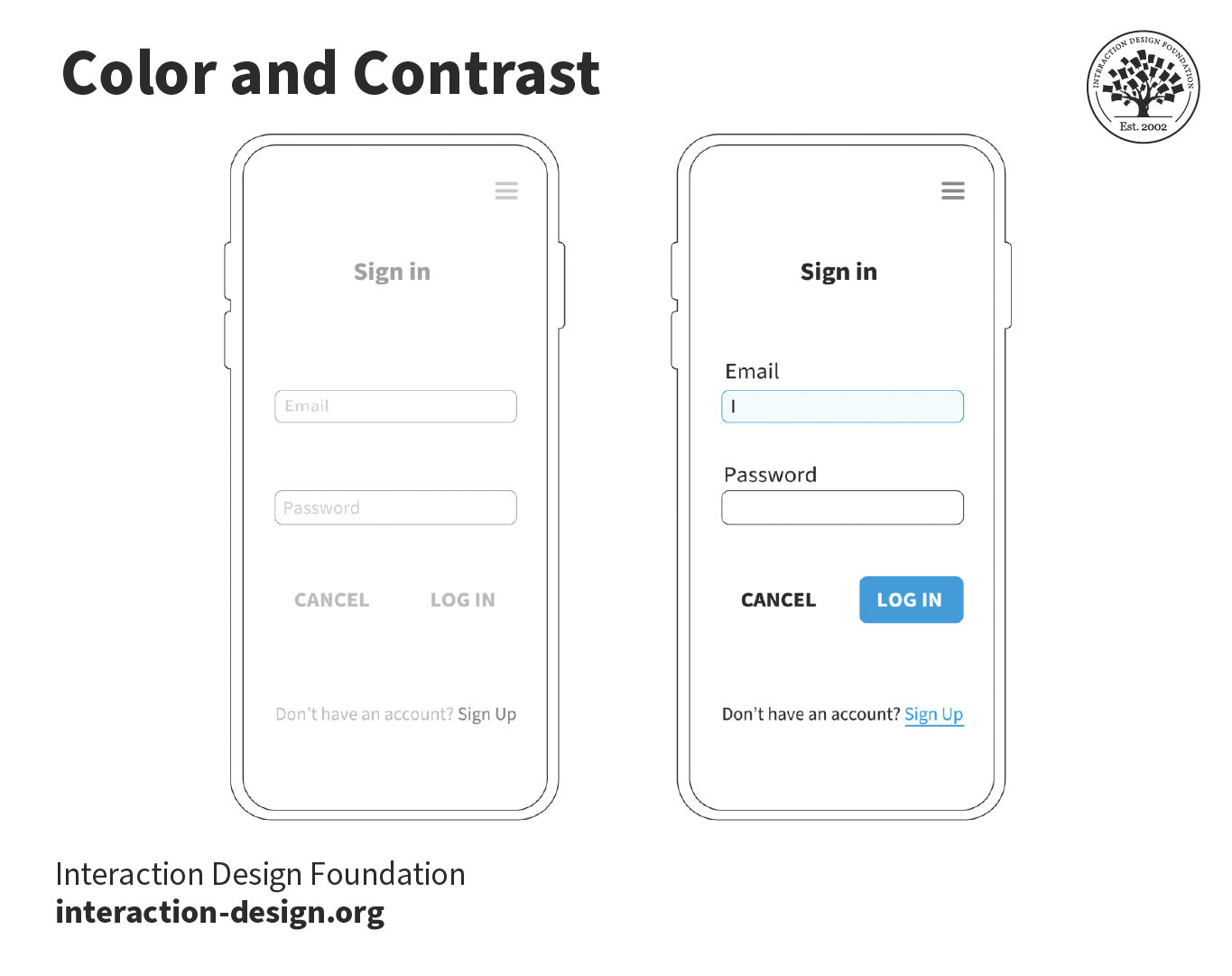
© Interaction Design Foundation, CC BY-SA 4.0
Don't rely solely on color to convey important information: Avoid using color as the only way to communicate important information, such as error messages or notifications.
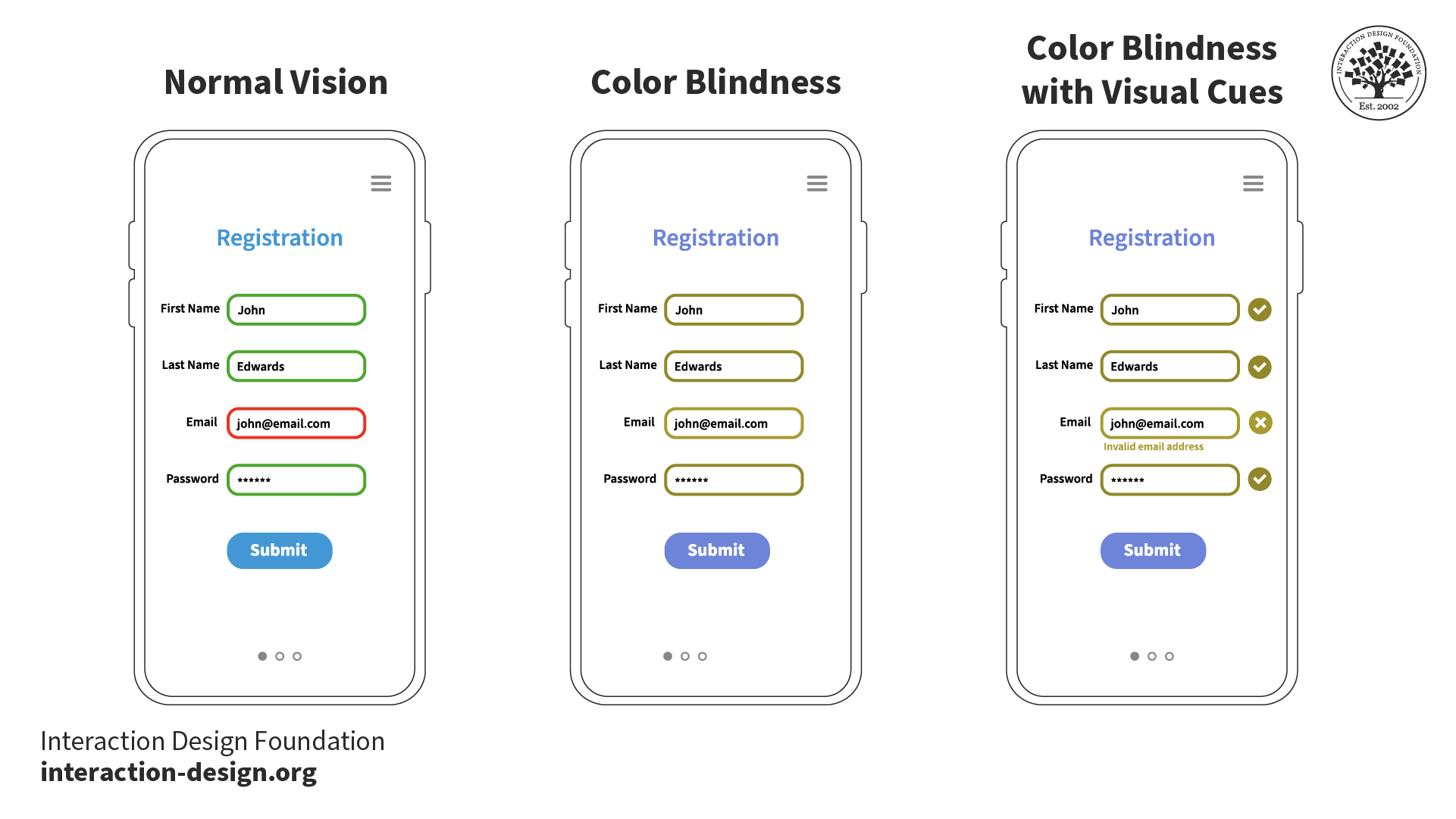
© Interaction Design Foundation, CC BY-SA 4.0
Choose color combinations carefully: Some color combinations are more difficult for people with color blindness to distinguish than others. For example, red and green are often indistinguishable for individuals with red-green color blindness.
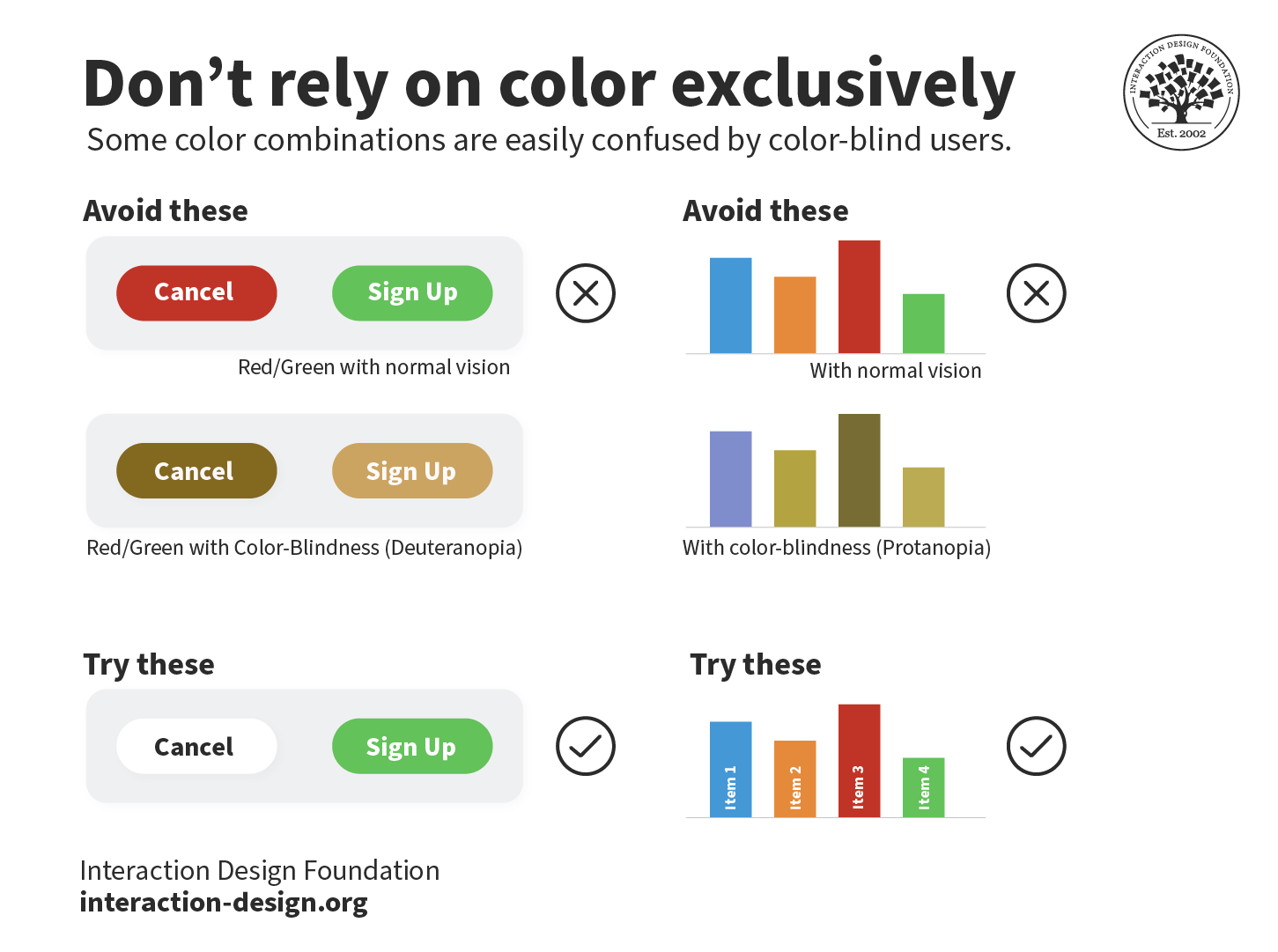
© Interaction Design Foundation, CC BY-SA 4.0
Use texture, pattern, or shape to differentiate between elements: Besides high-contrast colors, you can use textures, patterns, or shapes to differentiate between elements on a web page or app.
Test designs with color blindness simulation tools: Use tools that simulate different types of color blindness to ensure they are accessible to as many people as possible.

© Interaction Design Foundation, CC BY-SA 4.0