UX research methods chart compares qualitative–quantitative approaches and attitudinal–behavioral data sources; colors indicate product use

UX Research Communication – Report Writing

• 5 min read

517 Shares
Save

Yesterday we examined how knowing your audience can make reporting on UX research easier. Today, we’re going to take a look at one of the key communication skills – report writing.

Reports for UX Research

It is unlikely that for most reports that you’ll find a one-size fits all format that keeps everyone in the stakeholder group happy. You may find that you need to do three reports for every report you need to file. A very brief high-level report for those who may be interested in the output of your research but have no intention of reviewing the data or the method itself.


Author/Copyright holder: Loros. Copyright terms and licence: All rights reserved Img source


Then a mid-sized report for decision makers with enough explanation of what needs to be done and what you did to be informative without becoming overwhelming.

Then a bigger report for those who will be carrying out the work that results from the report. This should go into more detail about what needs to be done and probably into less detail about what has been done (though given that research shows that giving a reason for a request makes it more likely that someone will comply with the request – some explanation of what’s been done won’t hurt).
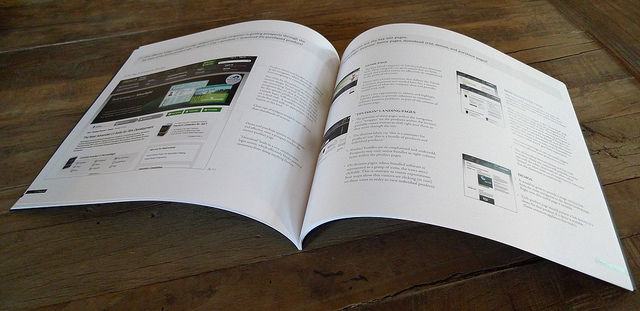

Author/Copyright holder: Juhan Sonin. Copyright terms and licence: CC BY 2.0


There are some fairly standard rules that you can apply to writing better reports:

  • Reports should be in plain English. Do not give into the academic urge to use 12 words when one will do. The easier they are to read, the better. When you use specific terminology or acronyms – explain them even if you think the audience already knows them. Don’t leave people reaching for dictionaries or feeling a little bit stupid because you’re talking over their heads.
  • Break your reports into clear and simple sections. No-one likes a wall of text. Use standard sections where possible; an executive summary, an introduction, a methodology statement, a results section, a recommendation section, a summary, etc.
  • Keep the reports honest. A lot of reporting suffers from a bad case of over-optimism on the part of the report writer. In order for people to use a report to make an informed decision – you have to report on the data that contradicts your recommendations. You have to explain limitations in methodologies. The bright side of this approach is that if things go wrong; they become a team failure rather than an individual one.
  • Keep reports as short as possible. You have to provide enough detail for people to be able to use the report. You do not have to provide so much detail that it takes a week to read. I recently read someone recommending a 20 page maximum on reports. I’d say in most cases that might be 15-18 pages too much information for many people. Refining your language and the way you present data (use visuals, tables, etc. rather than long form explanations) can help you keep the word count to a minimum and visuals can also keep the reader engaged with the work.

Header Image: Author/Copyright holder: Dustin Chambers. Copyright terms and licence: All rights reserved. Img

Image Source: Loros (link to image)

Learn More in This Course:

Learn Design and AI From the Best

Get one powerful email each week, like 314,486 others.

Next email in:

What You Should Read Next

  • Read full article
    Don Norman: How You Can Rapidly Move Up by Thinking in Systems (Not Features) - Article hero image

    Don Norman: How You Can Rapidly Move Up by Thinking in Systems (Not Features)

    How can you move up in a company? Learn the fundamentals of business such as statistics, finance, accounting, marketing, supply chain and administration. How do you do that? One way to do this is to get a Master of Business Administration (MBA) degree. But Don says you can also learn them without go

    Social shares
    609
    Published
    Read Article
  • Read full article
    How to Find Your Voice: Speak with Confidence and Clarity - Article hero image

    How to Find Your Voice: Speak with Confidence and Clarity

    You’ve heard it before “It’s not what you said—it’s how you said it.” Your voice can change how people feel—even if your message doesn’t. If you vary your tone and pacing, you can make your ideas sound more trustworthy, exciting, or urgent. Harness this neuroscience-backed communication power and yo

    Social shares
    448
    Published
    Read Article
  • Read full article
    Avoid Death by PowerPoint: Structure Your Slides for Maximum Impact - Article hero image

    Avoid Death by PowerPoint: Structure Your Slides for Maximum Impact

    Your message is ready, your delivery honed. Now, how do you put that brilliance on slides? Discover how to structure your slide deck strategically so that it supports your message, whether you present live or share it for independent review.Whether you're pitching to stakeholders, leading a team mee

    Social shares
    420
    Published
    Read Article
  • Read full article
    Use Feedback as Your Superpower: Learn, Improve, Shine - Article hero image

    Use Feedback as Your Superpower: Learn, Improve, Shine

    Feedback: the word alone can inspire apprehension. Yet, it’s the lifeblood of great design. Whether it’s subtle critique or blunt rejection, how you respond to feedback matters more than you think. You can defend your design—or you can use that moment to learn, improve, and show you're the kind of p

    Social shares
    334
    Published
    Read Article
  • Read full article
    Overcome the Self-Doubt That Stops You from Being an Excellent Presenter - Article hero image

    Overcome the Self-Doubt That Stops You from Being an Excellent Presenter

    Do you doubt your ability to speak up, thinking you’re not the public speaking type? Many people do. But the truth is, most beliefs about presentation skills are simply wrong. Let’s break down these myths and boost your confidence—you’ve got far more potential than you think.In the next video, Morga

    Social shares
    308
    Published
    Read Article
  • Read full article
    Present Like a Pro: Become a Designer Who Leads - Article hero image

    Present Like a Pro: Become a Designer Who Leads

    Your ideas are only as powerful as your ability to communicate them. You can design the perfect solution ... but if nobody understands it, cares about it, or champions it? It goes nowhere. If you can master presentation skills, you’ll open new doors in your design career, access new opportunities, a

    Social shares
    315
    Published
    Read Article
  • Read full article
    Presentation Pitfalls and How You Avoid Them - Article hero image

    Presentation Pitfalls and How You Avoid Them

    You’ve worked hard on your ideas—don’t let simple messaging missteps keep them from landing. Make your brilliant ideas shine in every presentation by deftly sidestepping common messaging missteps, and give your hard work the influence it deserves every time.Morgane Peng, Head of Product Design & AI

    Social shares
    324
    Published
    Read Article
  • Read full article
    How to Change Your Career from Software Development to UX Design - Article hero image

    How to Change Your Career from Software Development to UX Design

    Most people believe that an aesthetic sense or a formal education in visual design is necessary to become a user experience (UX) designer. This perception unfortunately becomes an obstacle for software developers who want to switch their career to UX design.If you’re a software developer who wants t

    Social shares
    726
    Published
    Read Article
  • Read full article
    Design League Savings, AI Tutor, and Pricing Updates - Article hero image

    Design League Savings, AI Tutor, and Pricing Updates

    Rikke and I started IxDF in 2002 with nothing. We lived in a bamboo hut in Thailand with no investors, no safety net, and no plan B. We had a conviction that world-class design education should not be a privilege reserved for people who could afford a $15,000 degree.That conviction has never changed

    Social shares
    152
    Published
    Read Article
  • Read full article
    If You Don’t Fail, You’re Not Trying Hard Enough - Article hero image

    If You Don’t Fail, You’re Not Trying Hard Enough

    In some cultures, people never recover from failure, and Don Norman says this is wrong. In other cultures, failure is seen as a way to learn. David Kelley, the founder of design firm IDEO, once said, “Fail faster, succeed sooner.” Don says this is good, but encourages us to take it one step further,

    Social shares
    605
    Published
    Read Article

Top Articles

Top Topic Definitions

39% of Today's Skills Will Change by 2030

The World Economic Forum expects 39% of today's skills to be transformed or become outdated by 2030.

The good news is that jobs in UX / UI design and AI are among the fastest-growing professions globally.

Build Skills That Keep You Relevant

Privacy Settings

By using this site, you accept our Cookie Policy and Terms of Use.
Customize
Accept all

Be the One Who Inspires

People remember who shares great ideas.

Share on:

Academic Credibility — On Autopilot

Don't waste time googling citation formats. Just copy, paste and look legit in seconds.

Learn Design and AI From the Best

Get one powerful email each week, like 314,486 others.

Next email in: