User-centred Design in a Gamification Context

by Janaki Kumar, Mario Herger and Rikke Friis Dam • 8 min read

530 Shares

Gamification, like many other forms of design, has its roots in user-centred design (UCD). If you’re going to develop awesome gamified systems, you’ll need to get a handle on UCD before you can be certain that your efforts are going to have the desired outcomes.

Before You Get Started

Imagine you are sitting at your desk and your boss approaches you. He says, “Congratulations, you have an interview for the CEO’s job! They want to see you now.” How do you feel? If you’re like most people, you’re going to feel terrified more than you’re going to feel excited. You’ve had no time to prepare, and you simply aren’t ready for an experience of this magnitude. And if you’re like a lot of people, perhaps the adrenalin is pumping so furiously that you’ve forgotten all about telling your best friend the other day how lucky you were not to have a high-flying role in your company, drowning in responsibilities, having a swimming pool but never having time to be in it!

Almost everything in life benefits from a more structured approach. If you’re of CEO calibre, are prepared to commit to all the duties entailed (including a brilliantly self-maintaining blood pressure and a saintly stoic anger-management system in your ‘wetware’), and have been given a week or two to prepare, you’ll probably stand a great chance of getting the job. Given no notice, however, you probably won’t… or maybe that’s a relief if all you want to do is design!

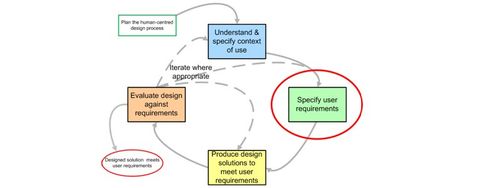
Author/Copyright holder: Spreadshirt. Copyright terms and licence: CC BY 2.0

An interview for a CEO’s job takes a certain amount of preparation, never mind a certain kind of candidate; the same is true for design projects. Working out what to say on the fly might result in: “Umm… yes, well, I think I’d be quite good” or some other hopelessly insipid justification.

The same is true for gamification. Before you start throwing out ideas and building in points, rewards, etc., you need to spend a little time working through the right approach to gamifying your system(s), and that approach is user-centred design.

About User-Centred Design

The principle of user-centred design is that the user is the first consideration in everything you do. It enables you to develop a product that the user is happy with and which engages them with their work.

“User-centred design means understanding what your users need, how they think, and how they behave - and incorporating that understanding into every aspect of your process.”
—Jesse James Garrett, the information architect and co-founder of Adaptive Path

Badly designed products often result from centring your design on other aspects, such as technology or data. Here, you would perhaps think about the methods you intend to use without considering whether or not the user will actually appreciate them. It’s natural for developers to prefer technical and data-driven design approaches – they’re easier to deliver on. The developer is almost always a technical and data expert, but not so much a user expert.
Author/Copyright holder: Paul Veugen. Copyright terms and licence: CC BY 2.0

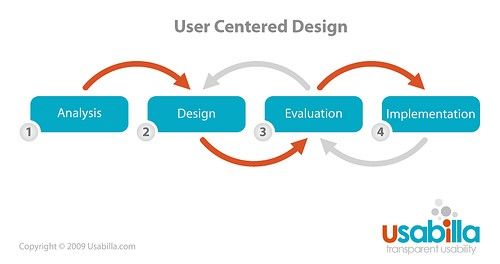
The user-centred design process consists of analysis, design, evaluation and implementation all with a user focus. (Note the American-English spelling in the diagram.)

Considering your users is a vital step in the gamification process. The success or failure of your gamification project will depend upon how users relate to the system. If they hate it, it doesn’t matter how clever or technically brilliant your solution is. It’s still a failure.

Users expect fun and not complexity. They won’t necessarily share your understanding of the data map and how best to approach it. They may not even care even if they do share that understanding. Your job is to deliver a system that the user wants to use. That’s what user-centred design is all about.

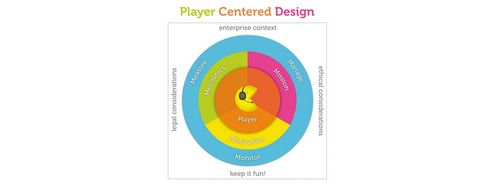
User-centred design is a step in the right direction for gamification projects; however, it is not the final step. Gamification expands on this concept and uses its own revised version – player-centred design.
Author/Copyright holder: VFS Digital Design. Copyright terms and licence: CC BY 2.0

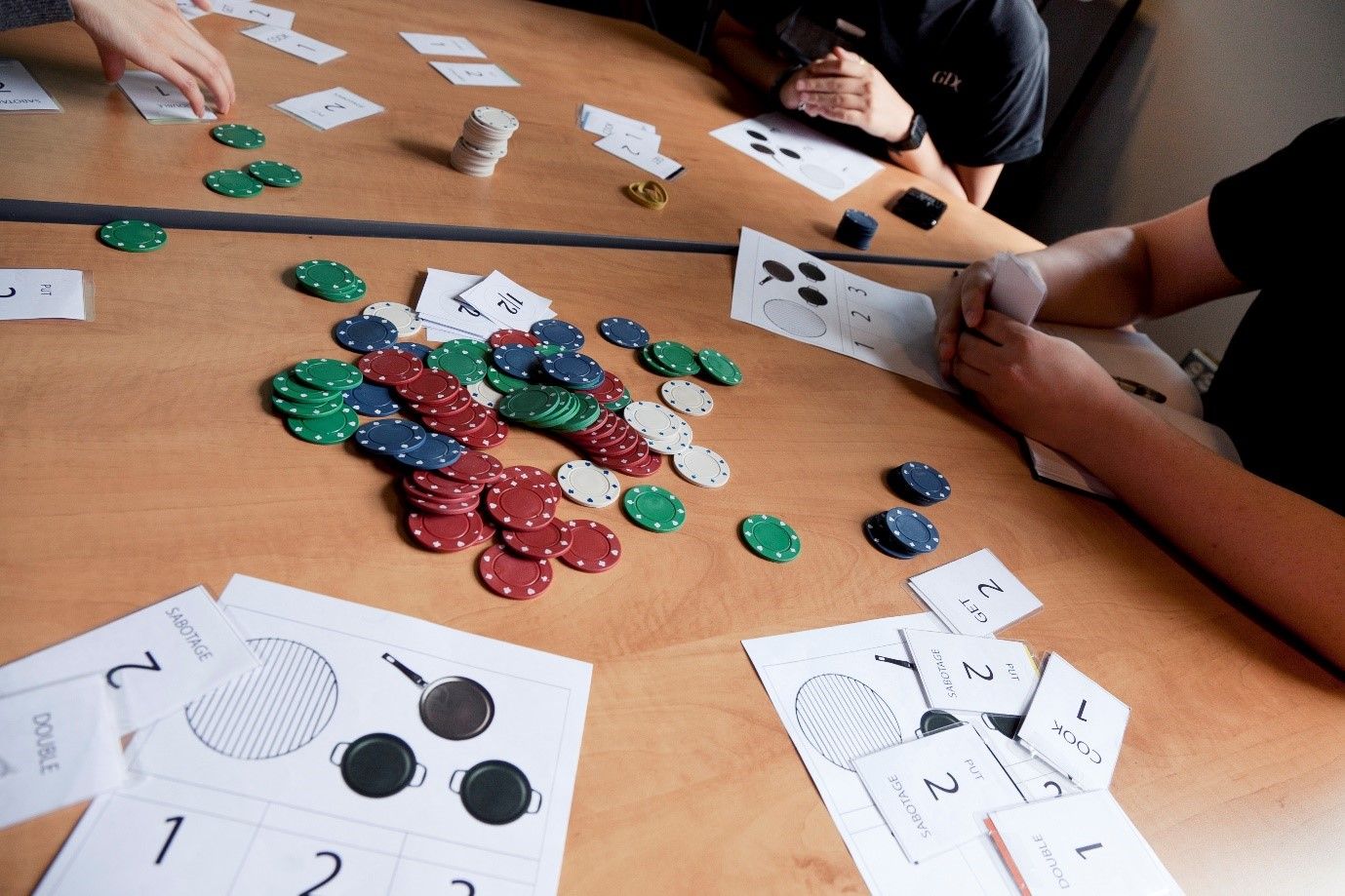
Gamification requires more than user-centred design; users must seek new challenges within gamified systems so as to increase their overall engagement.

Designers who adopt the user-centred design philosophy in their daily work pay attention to the user’s goals, and strive to build products that help the user achieve them in an efficient, effective, and satisfactory manner.

While effectiveness, efficiency, and satisfaction are worthy goals, gaming and gamification extends and adds increased engagement to these goals. In the context of a game, players voluntarily seek out challenges so as to enhance their playing experience. They seek empowerment over efficiency, and delight and fun over mere satisfaction. These factors will increase a user’s level of engagement in a game.

To address this issue, Janacki Kumar and Mario Herger of SAP introduced a methodology for Gamification. Called Player-Centred Design, it offers a powerful advantage to you as you work towards engaging your users in the optimal way.

The Take Away

User-centred design (UCD) is a great starting point for gamification design; it’s vital to understand what your users want and need to be able to progress when using your work. How well they can relate to the system you eventually offer them will be the chief aspect in determining whether it stands or falls flat on its face. However, this point is also not the final stage of design—the next step is to understand player-centred design before you begin work on your gamification projects.

References & Where to Learn More

Janaki Mythily Kumar and Mario Herger, Gamification at Work: Designing Engaging Business Software, The Interaction Design Foundation, 2014

Hero Image: Author/Copyright holder: Jorge Abreu. Copyright terms and licence: CC BY-SA 3.0

Topics in This Article

Learn More in This Course:

AI for Designers

10 days
16 % booked
View Course

What You Should Read Next

  • Read full article
    Minimum Viable Product (MVP) and Design - Balancing Risk to Gain Reward - Article hero image
    Interaction Design Foundation logo

    Minimum Viable Product (MVP) and Design - Balancing Risk to Gain Reward

    The idea of the minimum viable product (MVP) has been around for some time. The term itself was coined by Frank Robinson but was made popular by two influential names in product design – Steve Blank, a serial-entrepreneur and academic, and Eric Ries, the pioneer of the Lean Startup movement.What is

    Social shares
    1.1k
    Published
    Read Article
  • Read full article
    5 Steps for Human-Centered Mobile Design - Article hero image
    Interaction Design Foundation logo

    5 Steps for Human-Centered Mobile Design

    Many businesses start with the end-point in mind; “We need a mobile app or a mobile website!” They do not consider why their users would want it. Having a mobile website or app isn’t the key to success—you must provide value to your users. When you take a user- and task-centered approach to mobile (

    Social shares
    900
    Published
    Read Article
  • Read full article
    The Seven Simple Principles of Conversion Centred Design (CCD) and How to Use Them - Article hero image
    Interaction Design Foundation logo

    The Seven Simple Principles of Conversion Centred Design (CCD) and How to Use Them

    Oli Gardner – the Creative Director of Unbounce (a landing page builder for marketers), is an advocate of CCD. He says that deploying CCD makes each page you create on a website a piece of “accountable content”. In that you can measure the impact, purpose and success of each page as that page plays

    Social shares
    854
    Published
    Read Article
  • Read full article
    Player-Centered Design: Moving Beyond User-Centered Design for Gamification - Article hero image
    Interaction Design Foundation logo

    Player-Centered Design: Moving Beyond User-Centered Design for Gamification

    We’ve all come to think in terms of user-centred design over the years. It’s a critical component of UX design, and it helps us focus on what really matters when developing products. However, user-centred design is not enough for gamification. Here, we introduce the concept of player-centred design,

    Social shares
    744
    Published
    Read Article
  • Read full article
    Stand on the shoulders of giants and follow international standards - Article hero image
    Interaction Design Foundation logo

    Stand on the shoulders of giants and follow international standards

    Design can be very subjective. This leads UX practitioners facing criticism and a lack of credibility when dealing with other more scientific disciplines. Fortunately, you can rely on international standards to refer to and easily bridge the gap. The ISO 9241 Standard for the Ergonomics of Human-Sy

    Social shares
    675
    Published
    Read Article
  • Read full article
    Revolutionize UX Design with VR Experiences - Article hero image
    Interaction Design Foundation logo

    Revolutionize UX Design with VR Experiences

    Is the future of user experience design (UX design) going to exist on screens or will it find immersive, three-dimensional spaces as its main home? You can design for both views—and interactions—within a digital environment that’s boundless in virtual reality (VR), so read on to find five fundamenta

    Social shares
    621
    Published
    Read Article
  • Read full article
    5 Proven Tactics for Evangelizing UX - Article hero image
    Interaction Design Foundation logo

    5 Proven Tactics for Evangelizing UX

    If you work in an area related to UX, you’ll probably agree that good UX has a huge business value. Good UX helps you create the most relevant products and services for your customers and ensure that they are a joy to use. But if you have any practical experience of working with UX in organizations

    Social shares
    612
    Published
    Read Article
  • Read full article
    How to Improve Your UX with HCI Insights - Article hero image
    Interaction Design Foundation logo

    How to Improve Your UX with HCI Insights

    Design plays a role that’s utterly crucial in our daily lives—it bridges functionality with aesthetics to meet user needs. In product development, it’s design that determines how user-friendly and appealing a product is. The field of human-computer interaction (HCI) is foundational to UX design. To

    Social shares
    579
    Published
    Read Article
  • Read full article
    What’s the point of doing UX? - Article hero image
    Interaction Design Foundation logo

    What’s the point of doing UX?

    From a business perspective, differentiation is one of the primary reasons for investing in UX. If your products and services stand out from those of your competitors, they’re much more likely to be a market success – and having the most compelling and relevant user experiences is a great way to sta

    Social shares
    552
    Published
    Read Article
  • Read full article
    How to Empower UX teams to Boost Innovation and ROI - Article hero image
    Interaction Design Foundation logo

    How to Empower UX teams to Boost Innovation and ROI

    As a UX designer, you want to make sure that your team is doing everything possible to boost your organization’s innovation and the return on investment (ROI) of your work. After all, the better the ROI on your work, the more resources you will have to create awesome user experiences, which – again

    Social shares
    519
    Published
    Read Article

Top Articles

Top Topic Definitions

Feel Stuck?
Want Better Job Options?

AI is replacing jobs everywhere, yet design jobs are booming with a projected 45% job growth. With design skills, you can create products and services people love. More love means more impact and greater salary potential.

At IxDF, we help you from your first course to your next job, all in one place.

See How Design Skills Turn Into Job Options
Privacy Settings
By using this site, you accept our Cookie Policy and Terms of Use.
Customize
Accept all

Be the One Who Inspires

People remember who shares great ideas.

Share on:

Academic Credibility — On Autopilot

Don't waste time googling citation formats. Just copy, paste and look legit in seconds.

Feel Stuck? Want Freedom?

Get one powerful email each week, like 326,263 others.

Learn to design a life you love.

Next email in
7
days
0
hrs
10
mins
53
secs